
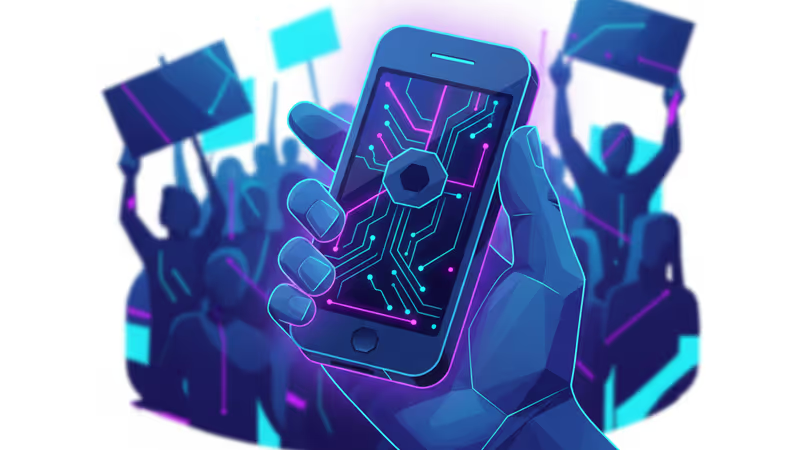
Protester Digital Privacy 2026: Shielding Your Data from High-Tech Surveillance
Essential digital privacy guide for protesters in 2026. Learn how to protect your smartphone from Stingrays, biometric seizures, and location tracking during unrest.
Your phone is the ultimate witness—but is it testifying against you? Just days into 2026, civil unrest has ignited across the U.S. following the fatal shooting of 37-year-old Renee Nicole Good by a federal officer in Minneapolis on January 7. While DHS Secretary Kristi Noem defends the officer's actions, leaked footage suggests otherwise, pushing thousands into the streets. For those joining the front lines, digital security isn't just an option—it's a necessity as the administration ramps up its surveillance apparatus.
Protester Digital Privacy 2026: Facing the Stingray Threat
Law enforcement agencies are deploying sophisticated tools like Stingray devices, or IMSI catchers, which impersonate cell towers to trick phones into connecting. This allows authorities to harvest identifying data from everyone in the vicinity. Harlo Holmes of the Freedom of the Press Foundation warns that your primary device can broadcast your location in real-time. Experts suggest leaving your main phone at home or using a Faraday bag, such as those from Mission Darkness, to block all radio communications when not in use.

Hardening Your Device Against Seizure
If you're detained, your phone's biometrics—FaceID and TouchID—could be your weakest link. It's much easier for an officer to force a thumb onto a sensor than to compel a numeric passcode. Disable biometrics before you arrive. For communication, stick to Signal with disappearing messages enabled. These steps ensure that even if your device is confiscated, the data remains unreadable. As Evan Greer from Fight for the Future puts it, the government is weaponizing every lever of technology to suppress dissent, making proactive security essential.
Authors
Related Articles
New macOS app Fomi uses AI to analyze screenshots and block distractions contextually. Privacy advocates question whether productivity gains justify constant surveillance.
Anonymous developers transform Jeffrey Epstein's email data into Wikipedia-style profiles, documenting connections and potential crimes of associates. A new frontier in citizen journalism or digital vigilantism?
ICE and CBP agents patrol Minneapolis streets as daily life continues. The normalization of surveillance reveals how democracy erodes in plain sight.
In Jan 2026, over 3,000 ICE agents have occupied Minneapolis for three weeks. Residents describe a situation worse than the pandemic as daily life is ruptured.
New macOS app Fomi uses AI to analyze screenshots and block distractions contextually. Privacy advocates question whether productivity gains justify constant surveillance.
Anonymous developers transform Jeffrey Epstein's email data into Wikipedia-style profiles, documenting connections and potential crimes of associates. A new frontier in citizen journalism or digital vigilantism?
ICE and CBP agents patrol Minneapolis streets as daily life continues. The normalization of surveillance reveals how democracy erodes in plain sight.
In Jan 2026, over 3,000 ICE agents have occupied Minneapolis for three weeks. Residents describe a situation worse than the pandemic as daily life is ruptured.
Thoughts
Share your thoughts on this article
Sign in to join the conversation