
Epstein's Emails Get the Wikipedia Treatment
Anonymous developers transform Jeffrey Epstein's email data into Wikipedia-style profiles, documenting connections and potential crimes of associates. A new frontier in citizen journalism or digital vigilantism?
20,000 Emails Become 600 Detailed Dossiers
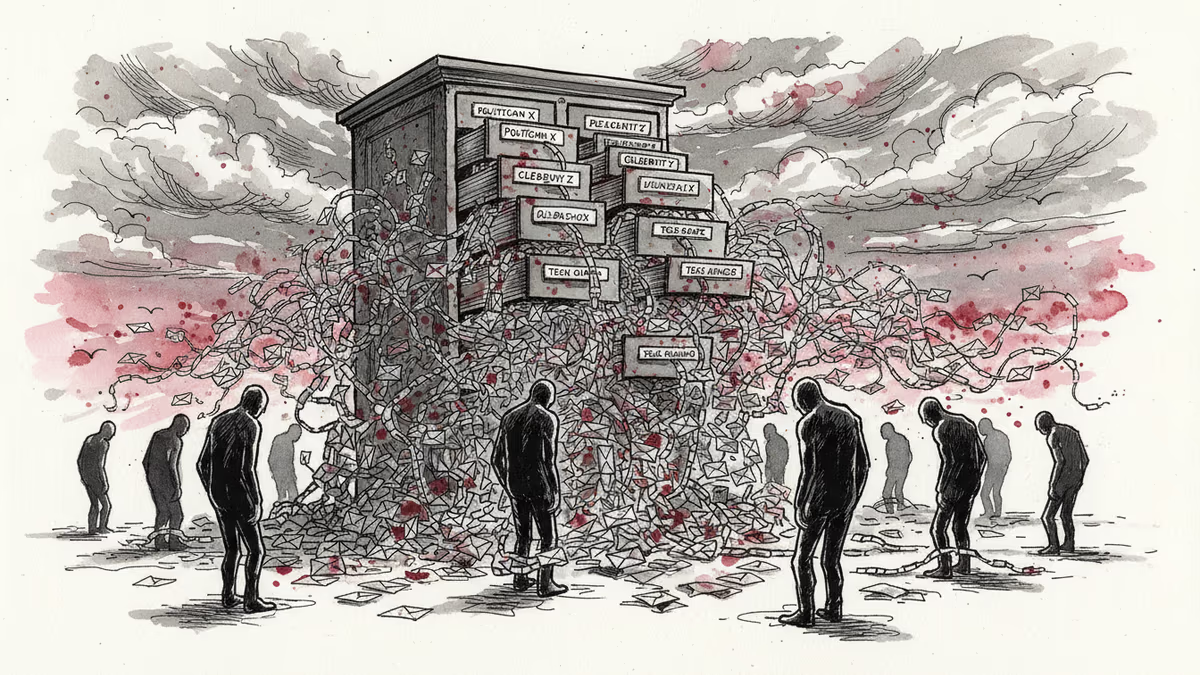
Jeffrey Epstein's email archive just got the Wikipedia treatment. The team behind Jmail has created a comprehensive database that transforms over 20,000 emails into detailed profiles of Epstein's associates. Each entry reads like an intelligence briefing: number of emails exchanged, property visits, potential criminal knowledge, and possible law violations.
Lesley Groff, Epstein's executive assistant, gets her own page. So do nearly 600 others who appeared in his digital rolodex. This isn't just a contact list—it's a forensic reconstruction of a network, complete with property-by-property visit logs and legal risk assessments.
The Transparency vs. Vigilantism Divide
Reactions split along predictable lines. Transparency advocates hail it as "citizen journalism at its finest"—finally giving the public tools to trace connections that traditional media missed or couldn't publish. The crowd-sourced verification model, they argue, is more reliable than any single news outlet.
Legal experts aren't convinced. "Email correspondence doesn't equal criminal complicity," warns digital rights attorney Sarah Johnson. "We're essentially creating guilt-by-association profiles based on business communications." The concern: legitimate professional contacts getting lumped into conspiracy theories.
Tech workers are conflicted too. One Silicon Valley developer noted: "The code is neutral, but the interpretation framework isn't. Who decides what constitutes 'suspicious' email frequency?"

Wikipedia Meets Intelligence Analysis
What makes this different from typical leak sites is the infrastructure. Using Wikipedia's editing system, users can verify information, add context, and flag disputed claims. Every assertion links back to source emails, making fact-checking possible.
The property breakdowns are particularly detailed. Epstein's Manhattan townhouse, Palm Beach estate, and Virgin Islands compound each get dedicated pages documenting alleged activities, visitor logs, and acquisition details. It's like having access to an FBI case file, organized by location.
The Regulatory Reckoning Ahead
This raises uncomfortable questions about data protection laws. In Europe, GDPR would likely shut this down immediately—even public figures have privacy rights regarding personal communications. The US operates in a legal gray area, especially when dealing with deceased individuals and matters of public interest.
But here's the twist: similar techniques are already used by investigative journalists and law enforcement. The difference is scale and accessibility. What happens when every citizen has intelligence-grade analysis tools?
Beyond Epstein: A New Model?
This isn't really about one scandal—it's about information asymmetry. For decades, only journalists and investigators had the resources to map complex networks. Now, a small team with coding skills can democratize that capability.
The implications extend far beyond criminal cases. Political donations, corporate board connections, regulatory capture—any network with a digital footprint becomes fair game for crowd-sourced investigation.
Authors
Related Articles

xAI's failed legal challenge against California's AB 2013 reveals deeper tensions between AI innovation and public accountability
New macOS app Fomi uses AI to analyze screenshots and block distractions contextually. Privacy advocates question whether productivity gains justify constant surveillance.

Essential digital privacy guide for protesters in 2026. Learn how to protect your smartphone from Stingrays, biometric seizures, and location tracking during unrest.

Five stories from late September, traced to where the paper trail stops: Korea's export record, Nvidia's Hugging Face 8-K, a US-China AI channel, the UN on AI, and rising births.
xAI's failed legal challenge against California's AB 2013 reveals deeper tensions between AI innovation and public accountability
New macOS app Fomi uses AI to analyze screenshots and block distractions contextually. Privacy advocates question whether productivity gains justify constant surveillance.
Essential digital privacy guide for protesters in 2026. Learn how to protect your smartphone from Stingrays, biometric seizures, and location tracking during unrest.
Five stories from late September, traced to where the paper trail stops: Korea's export record, Nvidia's Hugging Face 8-K, a US-China AI channel, the UN on AI, and rising births.
Thoughts
Share your thoughts on this article
Sign in to join the conversation