

AI at a Crossroads: Three Big Questions Shaping 2026 AI Predictions
Explore the 2026 AI predictions and challenges. We analyze the potential plateau of LLM intelligence, the public backlash against data centers, and the regulatory chaos.
AI is no longer a niche topic; it's a household concern. As of January 6, 2026, holiday dinner tables are filled with debates over chatbot-induced anxiety and soaring electricity bills driven by data centers. According to MIT Technology Review, predicting the future of AI has never been more difficult despite its ubiquity.
The Intelligence Plateau: Can LLMs Keep Scaling?
The most pressing question for 2026 AI predictions and challenges is whether Large Language Models (LLMs) will continue to get incrementally smarter. Since this technology underpins everything from customer service agents to AI companions, a slowdown would be a massive deal. The industry is already bracing for a 'post-AI-hype' era where incremental gains may no longer satisfy investors or the public.
The $500 Billion Backlash and Public Opinion

Public opinion has turned increasingly frosty. Roughly one year ago, OpenAI's Sam Altman stood with President Trump to announce a $500 billion project to build data centers across the US. They didn't anticipate the staunch opposition from local communities. Today, Big Tech's battle to keep building is an uphill struggle against citizens worried about their resources and environment.
Meanwhile, the regulatory landscape is a mess. While Trump has pushed for federal-level AI regulation to please CEOs, a diverse coalition—ranging from progressive California lawmakers to the FTC—is focused on reining in AI firms to protect children and competition. Whether these conflicting motives can coexist remains unclear.
Scientific Breakthroughs vs. Chatbot Hype
While newer chatbots like ChatGPT are excellent at summarizing research, their track record for genuine scientific discovery is modest. In contrast, specialized deep learning tools like AlphaFold have already transformed biology by predicting protein structures. The industry is now asking if AI's real value lies in these specialized scientific models rather than general-purpose conversationalists.
Authors
Related Articles

OpenAI has reorganized for the second time in a month, merging ChatGPT and Codex into a single agentic platform under president Greg Brockman's unified product leadership.
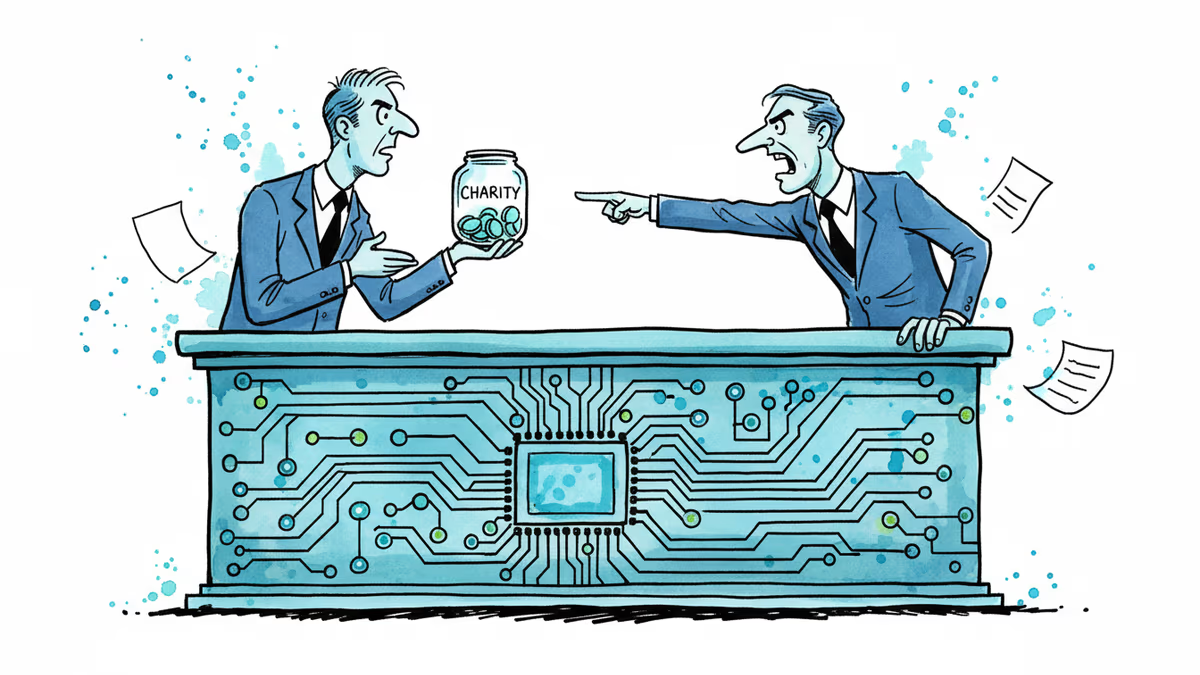
After two weeks of witnesses calling him a liar, OpenAI CEO Sam Altman testified in his own defense, claiming Elon Musk tried to kill the company twice.

Sam Nelson, 19, died after following ChatGPT's advice to mix Kratom and Xanax. His parents are suing OpenAI for wrongful death, raising urgent questions about AI trust, liability, and design.
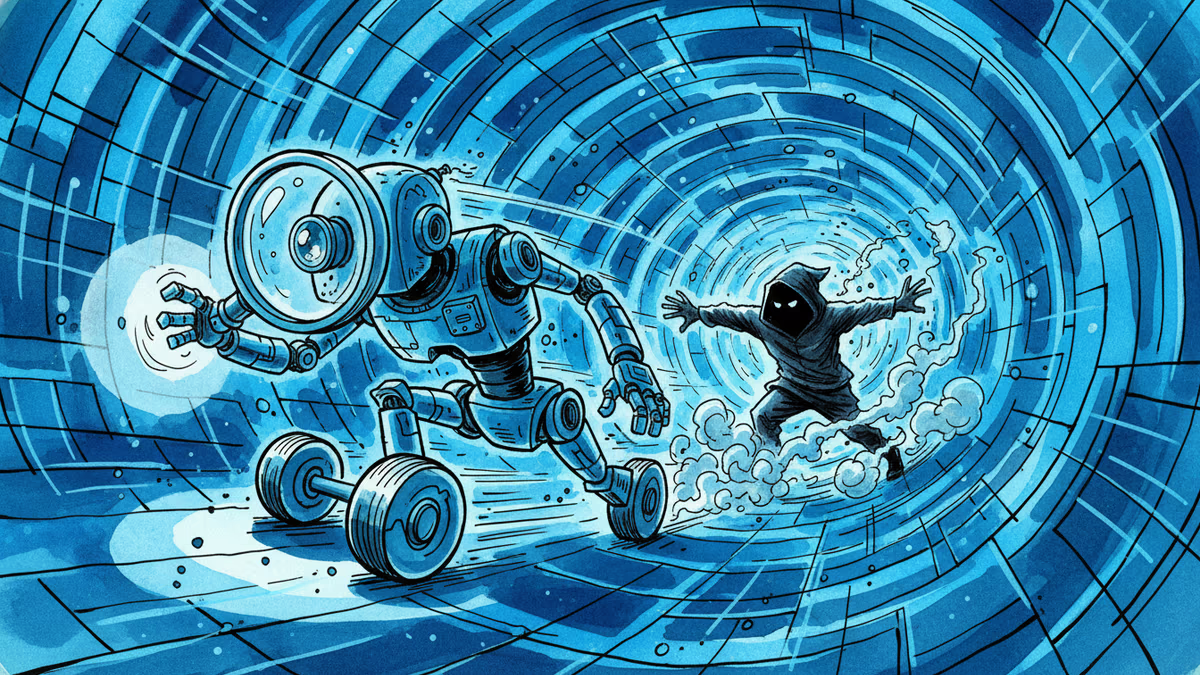
OpenAI's new Daybreak initiative uses the Codex AI agent to find and patch security vulnerabilities before attackers do—putting it in direct competition with Anthropic's secretive Claude Mythos.
OpenAI has reorganized for the second time in a month, merging ChatGPT and Codex into a single agentic platform under president Greg Brockman's unified product leadership.
After two weeks of witnesses calling him a liar, OpenAI CEO Sam Altman testified in his own defense, claiming Elon Musk tried to kill the company twice.
Sam Nelson, 19, died after following ChatGPT's advice to mix Kratom and Xanax. His parents are suing OpenAI for wrongful death, raising urgent questions about AI trust, liability, and design.
OpenAI's new Daybreak initiative uses the Codex AI agent to find and patch security vulnerabilities before attackers do—putting it in direct competition with Anthropic's secretive Claude Mythos.
Thoughts
Share your thoughts on this article
Sign in to join the conversation