

The Great Energy Regression: AI Power Demand Nuclear Coal 2025 Trends
Explore how AI power demand nuclear coal 2025 trends are reshaping the energy landscape. Analyzing the Trump administration's policy and tech giants' energy strategies.
Is the future of intelligence being powered by the ghosts of the past? As of December 2025, the insatiable hunger of AI data centers has triggered an unlikely revival of nuclear and coal energy. Despite years of decline, these legacy power sources are seeing a second act as Washington and Silicon Valley scramble to keep the servers humming.
The Forced Renaissance of AI Power Demand Nuclear Coal 2025
Throughout 2025, the Trump administration hasn't just promoted nuclear energy; it's positioned it as the ultimate solution for AI's infrastructure needs. In May 2025, executive orders mandated the construction of 10 new large reactors by 2030. Energy Secretary Chris Wright claims that AI's progress is directly tied to "unlocking commercial nuclear power." Tech giants like Google and Microsoft have already inked massive deals to secure stable, carbon-free baseload power.

| Energy Source | 2010 Mix | 2025 Status | Key Driver |
|---|---|---|---|
| Coal | 45% | Resuscitated | Regulatory Rollbacks |
| Nuclear | 20% | Expanding | AI Data Centers |
Coal's Lifeline vs. Market Realities
While nuclear is the tech industry's darling, coal is getting a political lifeline. Over two dozen units scheduled for retirement are staying online thanks to emergency orders. However, big tech companies remain wary of coal's PR nightmare. They don't want to be seen as "frying the planet" to train the next LLM. Meanwhile, utility-scale solar and wind remain cheaper than coal, even without the heavy subsidies favored by the current administration.
Authors
Related Articles
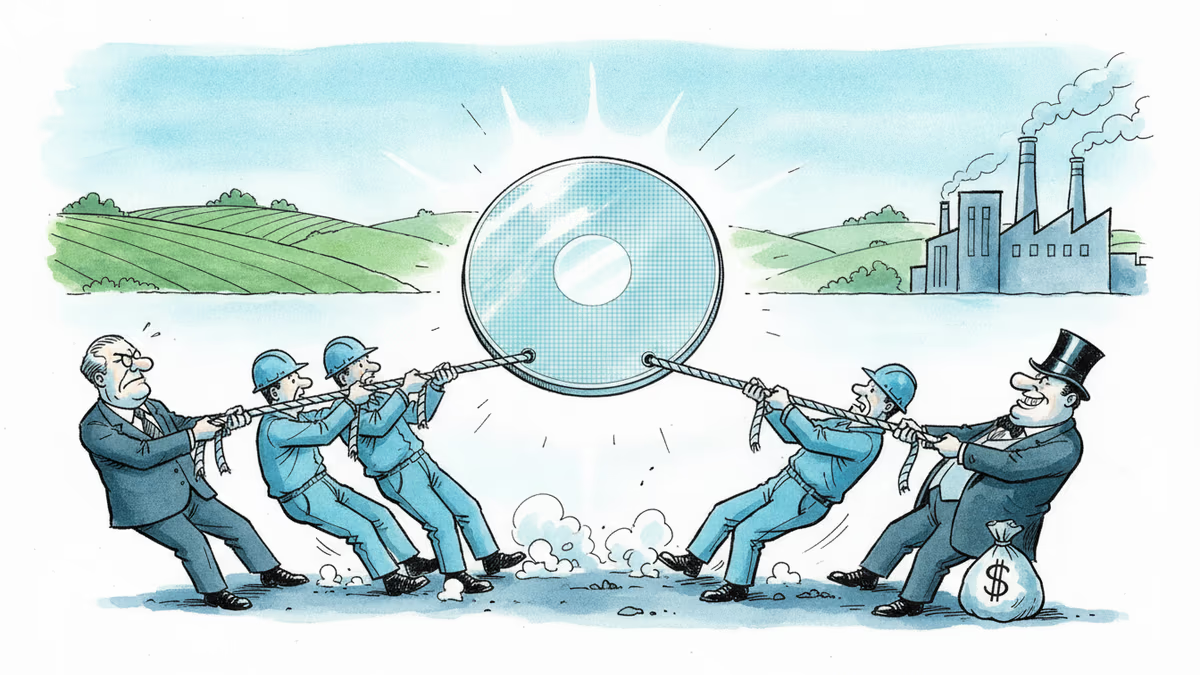
Samsung Electronics' union branch revealed that 84% of survey respondents oppose the government's roughly $290 billion (₩400 trillion) semiconductor megaproject in Gwangju. Government, management, the union and shareholders are all reading the same national project in sharply different ways.

Nvidia shipped roughly a billion RISC-V cores in 2024, then announced it would run CUDA on the open standard. We break down how royalty-free instruction sets and open software stacks are trying to route around CUDA's lock-in. Part 2 of the Semiconductor Sovereignty series.

US AI-chip export controls split into three layers in the first half of 2026 — January easing, a May crackdown on circumvention, and a pending bill. Nvidia erased China from its guidance and still posted a record $81.6 billion quarter. A look at the export policy that both shields and cages it.
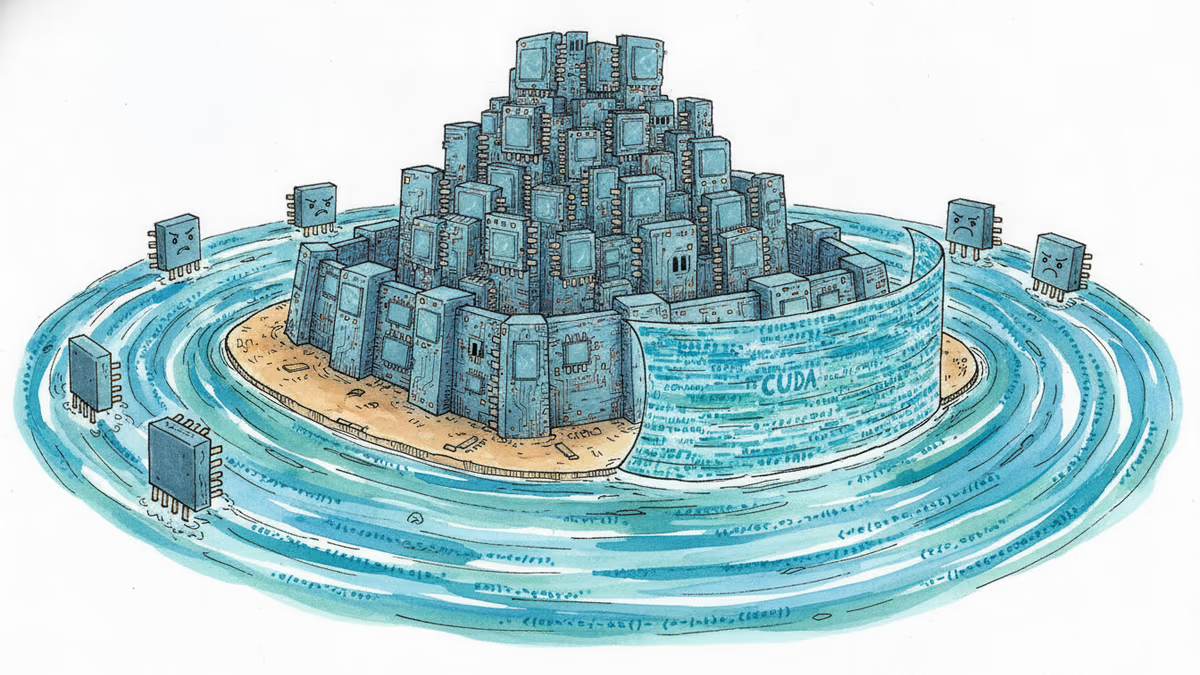
AMD's MI325X matches or beats Nvidia on memory and bandwidth — yet Nvidia's 86-92% share holds. The real moat is CUDA, 20 years in the making. Part 1 of 4.
Samsung Electronics' union branch revealed that 84% of survey respondents oppose the government's roughly $290 billion (₩400 trillion) semiconductor megaproject in Gwangju. Government, management, the union and shareholders are all reading the same national project in sharply different ways.
Nvidia shipped roughly a billion RISC-V cores in 2024, then announced it would run CUDA on the open standard. We break down how royalty-free instruction sets and open software stacks are trying to route around CUDA's lock-in. Part 2 of the Semiconductor Sovereignty series.
US AI-chip export controls split into three layers in the first half of 2026 — January easing, a May crackdown on circumvention, and a pending bill. Nvidia erased China from its guidance and still posted a record $81.6 billion quarter. A look at the export policy that both shields and cages it.
AMD's MI325X matches or beats Nvidia on memory and bandwidth — yet Nvidia's 86-92% share holds. The real moat is CUDA, 20 years in the making. Part 1 of 4.
Thoughts
Share your thoughts on this article
Sign in to join the conversation