

NYC Food Carts Go Silent: The E-Bike Battery Revolution
New York food carts are ditching noisy gas generators for e-bike batteries. PopWheels' innovation could solve urban noise and emissions simultaneously, but can it scale?
$10 a day. That's what New York food cart owners spend on gas to keep their generators humming. But now, those noisy, smelly machines are going quiet.
Last week, La Chona Mexican food cart on the corner of 30th and Broadway made history. Instead of firing up its usual gas generator, it ran an entire day on e-bike battery packs. The result? Dead silence, zero emissions, and plenty of curious customers asking, "What's different about this cart?"
When Delivery Riders Save Food Carts
The idea came from PopWheels, a Brooklyn startup that started as a "lark" but might just transform New York's street food scene. CEO David Hammer, a former early Google employee, originally built the company to solve a different problem: e-bike battery swapping for delivery riders.
PopWheels operates 30 charging cabinets across Manhattan, serving gig workers who pay $75 per month for unlimited battery swaps. It's a bargain compared to bodega charging services, which cost riders nearly $2,000 annually when factoring in battery wear.
But Hammer noticed something interesting about his infrastructure. "If you build urban-scale, fire-safe battery swapping infrastructure, you're creating an infrastructure layer that lots of people are going to want to get on board with," he explained.
The Math That Changes Everything
When Hammer read about NYC's push to decarbonize food carts, he ran the numbers. A typical food cart needs about five kilowatt-hours of electricity per day – exactly what four PopWheels battery packs can provide. The daily cost? Around $10, matching what cart owners already spend on gas.

The difference is dramatic. No noise. No fumes. No customers walking away because of generator exhaust ruining their appetite.
"I had multiple food cart owners come up to me and say, 'Wait, there's no noise with this cart. What are you guys doing? Can I get this?'" Hammer recalled from the La Chona demonstration.
Infrastructure Meets Opportunity
What makes this work isn't just the batteries – it's the network. PopWheels has already solved the hardest parts: distribution, charging, and fire safety. Each cabinet can extinguish battery fires automatically, addressing the e-bike fire crisis that plagued NYC a few years ago.
The startup raised $2.3 million in seed funding last year and has a long waitlist for its delivery rider service. Now they're planning an "aggressive rollout" for food carts starting this summer.
Each swap site requires minimal infrastructure – just small open spaces like parking lots, retrofitted with fences and electrical connections. The power draw equals a Level 2 EV charger, meaning no strain on the city's grid.
Beyond the Cart: Urban Battery Ecosystem
This isn't just about quieter lunch breaks. It's about reimagining how cities handle distributed energy needs. The same infrastructure serving delivery riders can power food carts, and potentially other small businesses that need portable, clean energy.
PopWheels has created what Hammer calls a "de facto decentralized fleet" by stocking just a few battery types to serve hundreds of customers. It's urban resource sharing at its most efficient.
The company started with a mission to stamp out e-bike fires in NYC. Now it's accidentally building the foundation for a cleaner, quieter city – one battery swap at a time.
Authors
Related Articles

Samsung Electronics' union branch revealed that 84% of survey respondents oppose the government's roughly $290 billion (₩400 trillion) semiconductor megaproject in Gwangju. Government, management, the union and shareholders are all reading the same national project in sharply different ways.
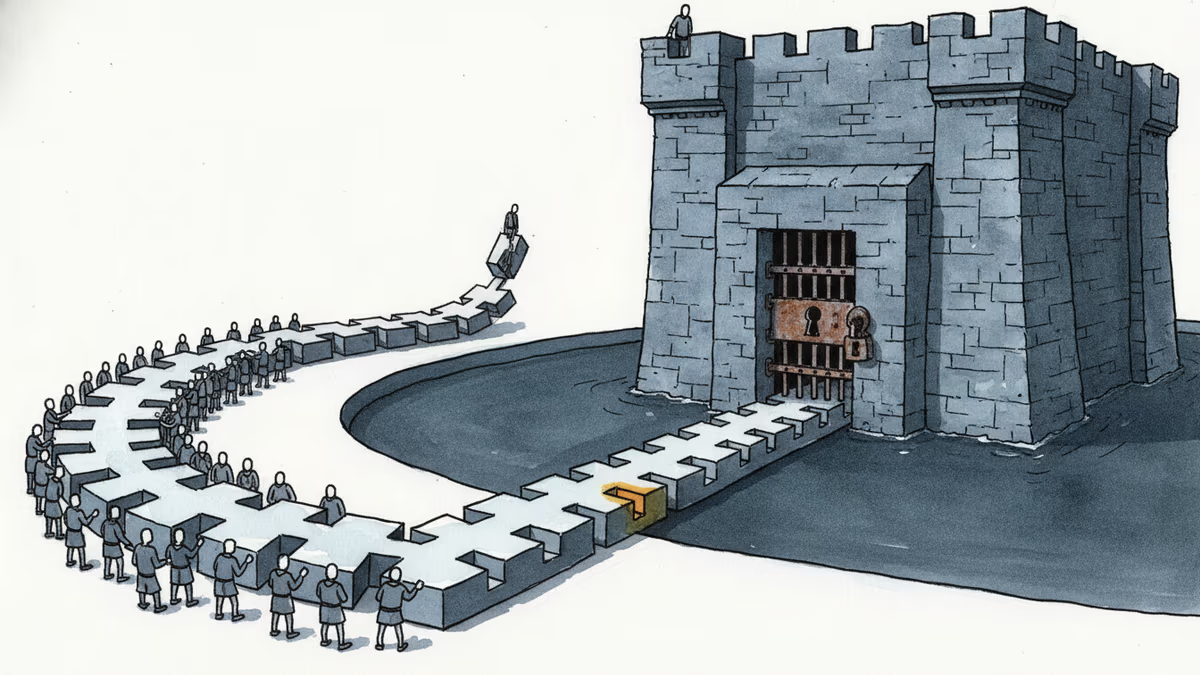
Nvidia shipped roughly a billion RISC-V cores in 2024, then announced it would run CUDA on the open standard. We break down how royalty-free instruction sets and open software stacks are trying to route around CUDA's lock-in. Part 2 of the Semiconductor Sovereignty series.
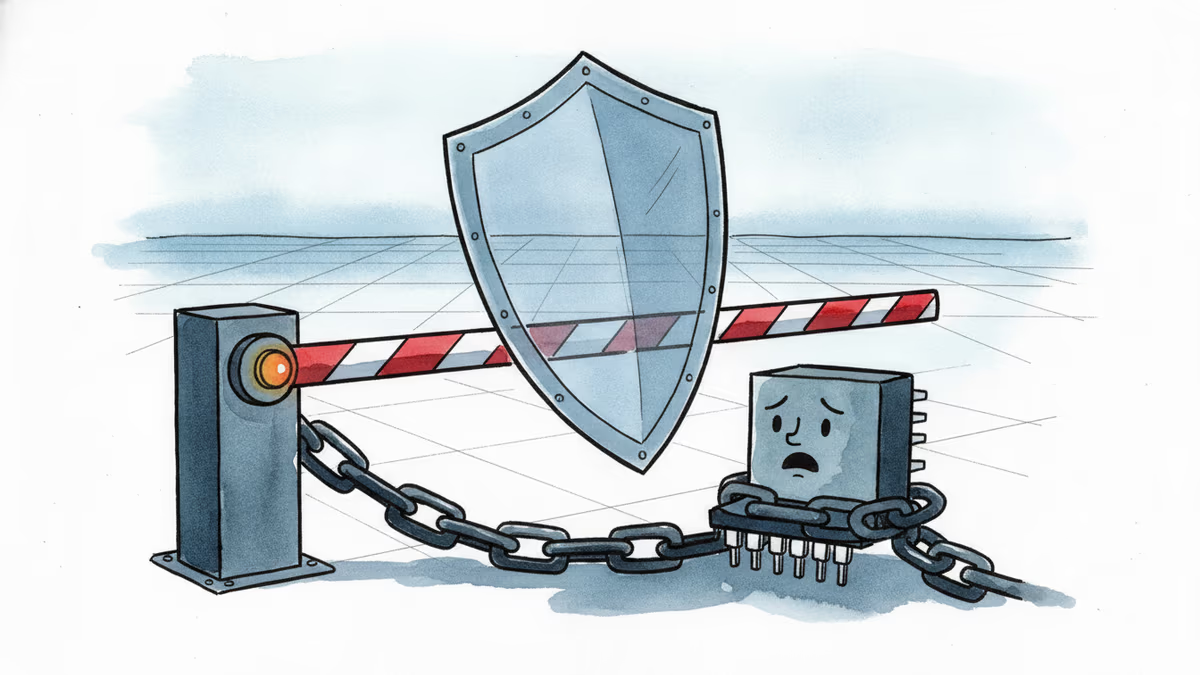
US AI-chip export controls split into three layers in the first half of 2026 — January easing, a May crackdown on circumvention, and a pending bill. Nvidia erased China from its guidance and still posted a record $81.6 billion quarter. A look at the export policy that both shields and cages it.
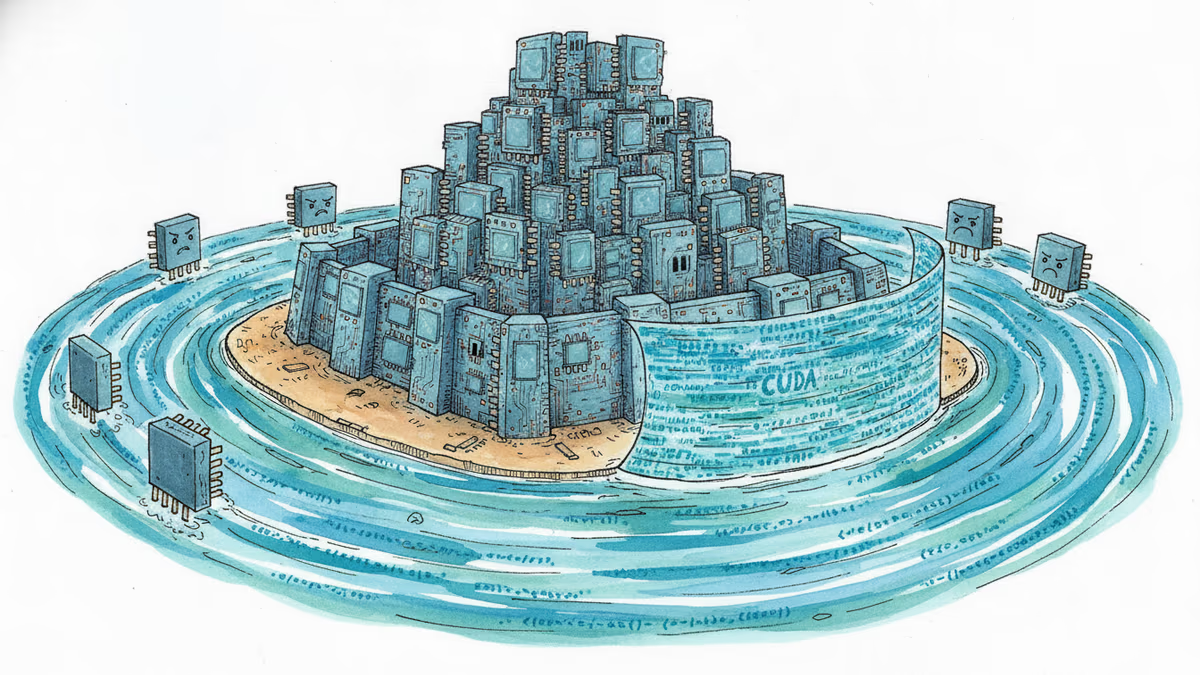
AMD's MI325X matches or beats Nvidia on memory and bandwidth — yet Nvidia's 86-92% share holds. The real moat is CUDA, 20 years in the making. Part 1 of 4.
Samsung Electronics' union branch revealed that 84% of survey respondents oppose the government's roughly $290 billion (₩400 trillion) semiconductor megaproject in Gwangju. Government, management, the union and shareholders are all reading the same national project in sharply different ways.
Nvidia shipped roughly a billion RISC-V cores in 2024, then announced it would run CUDA on the open standard. We break down how royalty-free instruction sets and open software stacks are trying to route around CUDA's lock-in. Part 2 of the Semiconductor Sovereignty series.
US AI-chip export controls split into three layers in the first half of 2026 — January easing, a May crackdown on circumvention, and a pending bill. Nvidia erased China from its guidance and still posted a record $81.6 billion quarter. A look at the export policy that both shields and cages it.
AMD's MI325X matches or beats Nvidia on memory and bandwidth — yet Nvidia's 86-92% share holds. The real moat is CUDA, 20 years in the making. Part 1 of 4.
Thoughts
Share your thoughts on this article
Sign in to join the conversation