
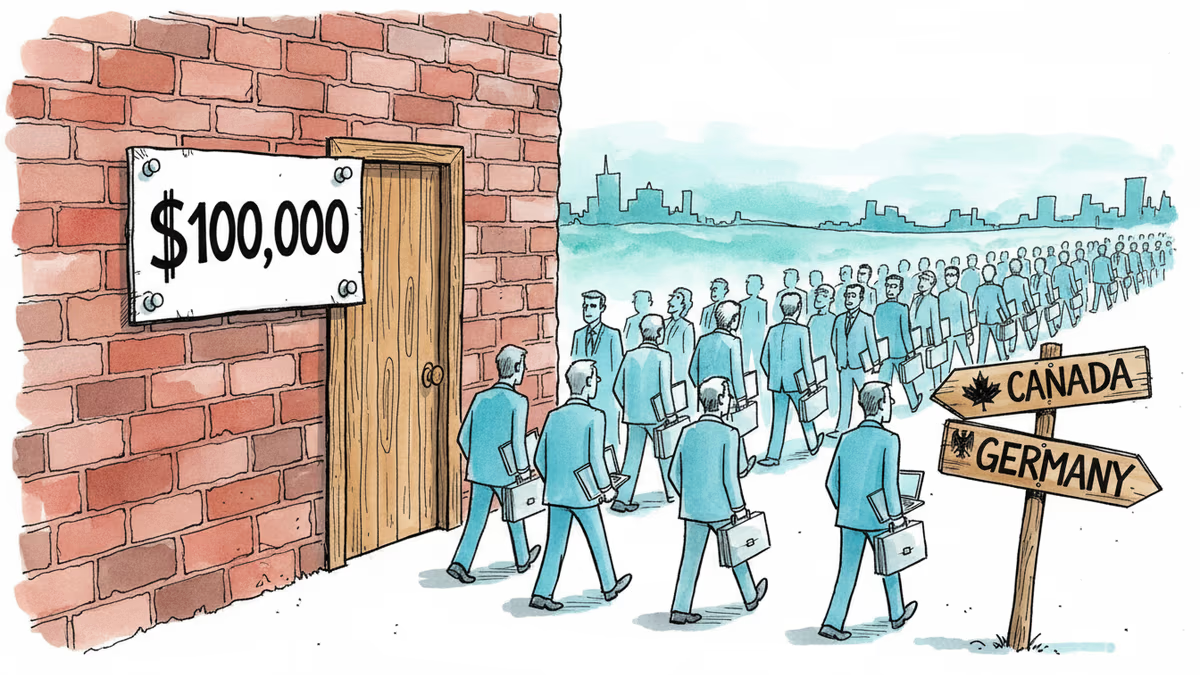
The $100,000 Visa Wall: Who Actually Pays?
Trump's H-1B fee hike to $100,000 has passed the six-month mark. The chaos has settled, but the deeper questions about US tech competitiveness and global talent are just beginning.
What's the price of working in America? As of last fall, the answer is $100,000 — at least if you need an H-1B visa.
What Happened, and Why It Matters Now
When President Trump signed an executive order hiking the H-1B visa fee to $100,000, the fallout was immediate and messy. Thousands of foreign-born tech workers who had traveled abroad to renew their visas found themselves stranded — unable to return to their jobs, their apartments, their lives in the US. Details about exactly who was affected, and under what circumstances, trickled out only after the policy was already in motion.
Six months on, the acute chaos has largely settled. But the H-1B registration window for fiscal year 2027 just opened, with applications closing on March 19th. That makes right now the moment to take stock: what has this policy actually done, and what comes next?
Experts are cautious. The full impact on hiring patterns, immigration flows, and workforce composition won't be visible for months, possibly years. But the structural pressures are already visible.
Not All Companies Are Equal
Here's the uncomfortable math. For Google, Microsoft, or Amazon, a $100,000 visa fee on a senior engineer earning $200,000+ per year is an inconvenience, not a dealbreaker. Legal and HR teams absorb it. Hiring continues.
For a 50-person startup trying to bring in a specialized machine learning engineer, the calculus is entirely different. That fee doesn't just raise costs — it can make the hire impossible. Some startups are already pivoting toward fully remote international hires, keeping talent offshore rather than sponsoring visas. Others are simply competing for a smaller pool of US-based candidates, often at higher salaries.

The irony that critics are quick to point out: a policy designed to protect American workers may be inadvertently concentrating the best foreign talent inside the largest tech companies — the ones already accused of having too much market power.
The Other Side of the Argument
It would be incomplete to dismiss the policy's rationale entirely. H-1B reform advocates have long argued that the program was being systematically gamed — particularly by IT staffing firms that used it to replace American workers with cheaper foreign labor, sometimes having those American workers train their own replacements. The documented cases are real, and the frustration is legitimate.
A steep fee, the argument goes, filters out low-margin visa mills while leaving room for genuinely high-value hires. Whether $100,000 is the right number, or whether it's a blunt instrument hitting the wrong targets, is where the debate gets complicated.
Meanwhile, the Competition Noticed
While Washington debates the merits, other countries are moving fast. Canada's Global Talent Stream now promises visa processing in under two weeks. Germany expanded its Skilled Immigration Act. Singapore has been quietly courting displaced US-bound talent for years.
Reports from 2025 suggest tech visa applications to Canada rose by more than 30% year-over-year. That's not just individual workers making personal choices — it's a measurable shift in where global talent flows are pointing.
The US has spent decades benefiting from being the default destination for the world's most ambitious engineers. That default is no longer automatic.
For companies, this creates a genuine strategic question: if your best candidates are choosing Toronto or Berlin over San Francisco, does your talent strategy need to follow them?
Authors
Related Articles
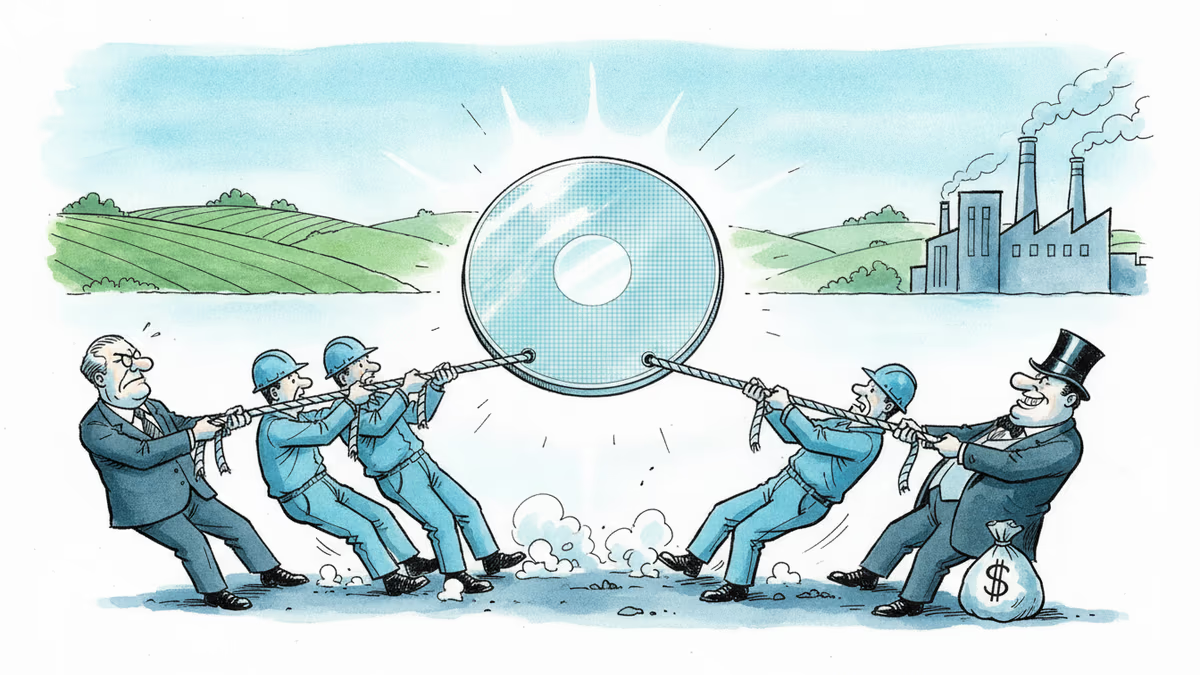
Samsung Electronics' union branch revealed that 84% of survey respondents oppose the government's roughly $290 billion (₩400 trillion) semiconductor megaproject in Gwangju. Government, management, the union and shareholders are all reading the same national project in sharply different ways.
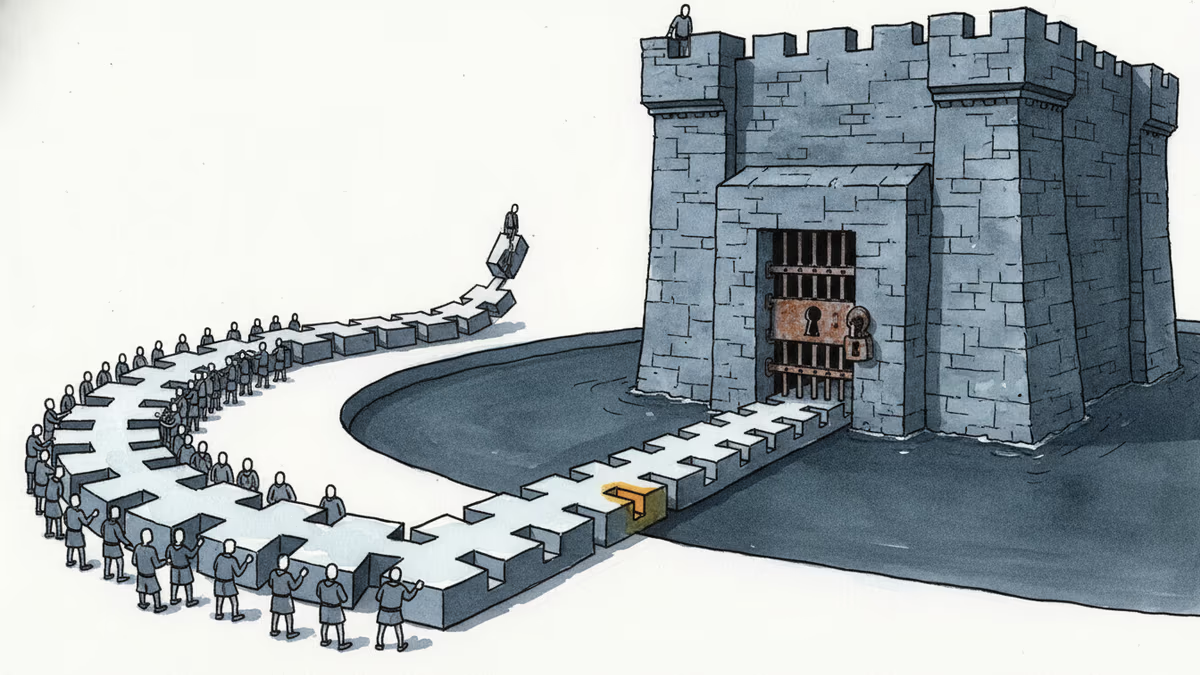
Nvidia shipped roughly a billion RISC-V cores in 2024, then announced it would run CUDA on the open standard. We break down how royalty-free instruction sets and open software stacks are trying to route around CUDA's lock-in. Part 2 of the Semiconductor Sovereignty series.
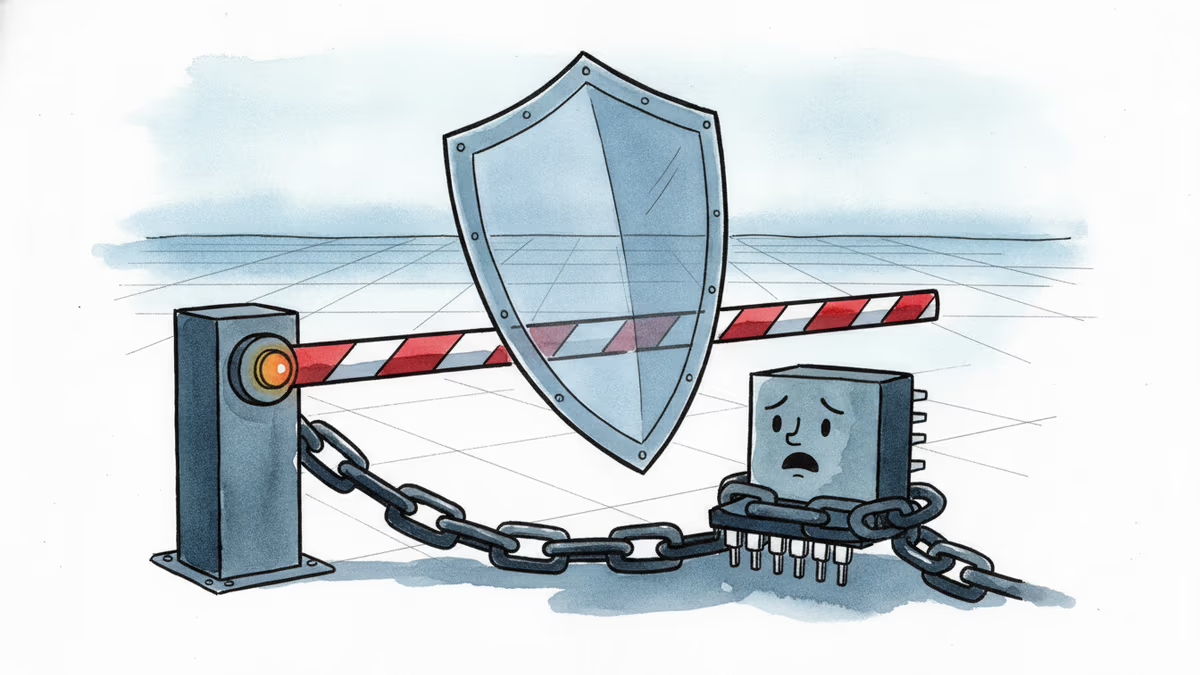
US AI-chip export controls split into three layers in the first half of 2026 — January easing, a May crackdown on circumvention, and a pending bill. Nvidia erased China from its guidance and still posted a record $81.6 billion quarter. A look at the export policy that both shields and cages it.
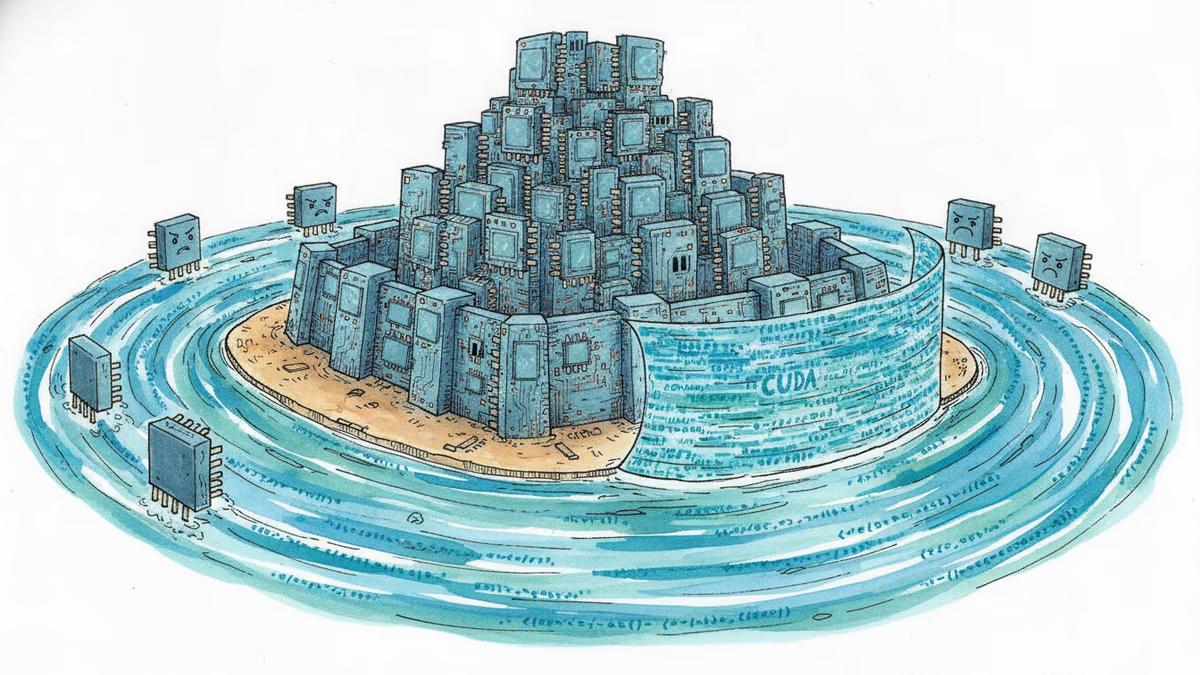
AMD's MI325X matches or beats Nvidia on memory and bandwidth — yet Nvidia's 86-92% share holds. The real moat is CUDA, 20 years in the making. Part 1 of 4.
Samsung Electronics' union branch revealed that 84% of survey respondents oppose the government's roughly $290 billion (₩400 trillion) semiconductor megaproject in Gwangju. Government, management, the union and shareholders are all reading the same national project in sharply different ways.
Nvidia shipped roughly a billion RISC-V cores in 2024, then announced it would run CUDA on the open standard. We break down how royalty-free instruction sets and open software stacks are trying to route around CUDA's lock-in. Part 2 of the Semiconductor Sovereignty series.
US AI-chip export controls split into three layers in the first half of 2026 — January easing, a May crackdown on circumvention, and a pending bill. Nvidia erased China from its guidance and still posted a record $81.6 billion quarter. A look at the export policy that both shields and cages it.
AMD's MI325X matches or beats Nvidia on memory and bandwidth — yet Nvidia's 86-92% share holds. The real moat is CUDA, 20 years in the making. Part 1 of 4.
Thoughts
Share your thoughts on this article
Sign in to join the conversation