
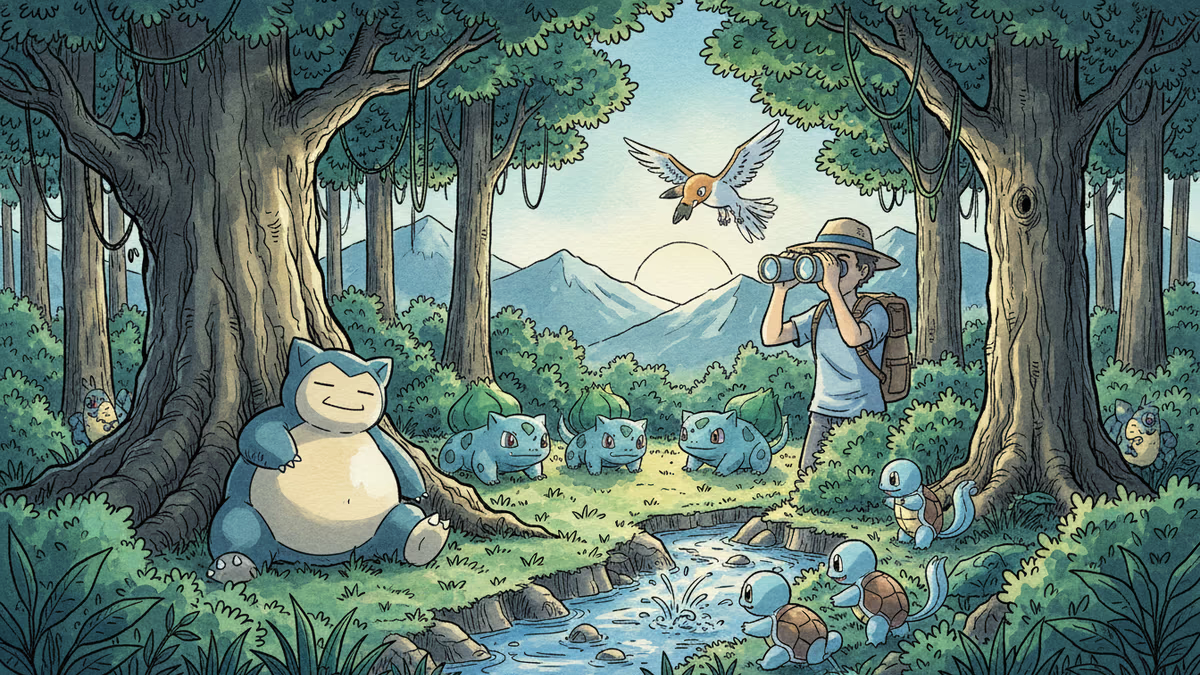
When Pokémon Don't Need Trainers Anymore
Nintendo's Pokémon spinoffs are quietly revolutionizing the franchise's core philosophy, shifting from trainer-centric to Pokémon-centric worldbuilding. What this means for IP evolution.
The $15 Billion Question Nobody's Asking
For 26 years, Pokémon has sold one simple premise: catch 'em all. But Nintendo's recent spinoffs are quietly asking a more uncomfortable question—what if Pokémon are better off without us?
Pokémon Snap and Detective Pikachu already planted the seeds. Instead of battles and captures, they focused on observation and coexistence. Pokémon weren't tools waiting for commands—they had rich, independent lives. Now Legends: Z-A is pushing further, suggesting that maybe humans should keep their distance.
This isn't just game design evolution. It's a fundamental challenge to the franchise's DNA.
The Spinoff Strategy: Safe Rebellion
Why are these radical ideas emerging in spinoffs rather than mainline games? Simple economics. Scarlet and Violet generated over $10 billion in revenue. You don't mess with that formula lightly.
Spinoffs offer a different playground. They're contained experiments with lower stakes. If Pokémon Snap 2 flops, the core franchise survives. If it succeeds, it opens new creative territories. Nintendo has mastered this "safe rebellion" approach—testing controversial ideas in controlled environments before potentially scaling them up.

The Disney Dilemma
Nintendo isn't alone in this challenge. Every major entertainment company with decades-old IP faces the same question: how do you evolve without alienating your base? Disney struggled with this when The Last Jedi challenged traditional Star Wars mythology. Marvel faces it as superhero fatigue sets in.
But Pokémon's shift feels different. It's not just adding new characters or updating graphics—it's questioning the fundamental power dynamic between humans and creatures. That's philosophically radical territory.
The Generational Divide
Fan reactions split predictably along age lines. Gen Z players, raised on environmental consciousness and animal rights activism, embrace the "Pokémon liberation" narrative. Millennials who grew up with the original games feel like their childhood is being deconstructed.
This tension mirrors broader cultural shifts. The same generation questioning factory farming and pet ownership is naturally drawn to Pokémon stories that critique capture-based relationships.
Industry Implications
Other gaming giants are watching closely. World of Warcraft has already experimented with morally ambiguous faction dynamics. The Legend of Zelda increasingly portrays Link as a guardian rather than a conqueror. Even Grand Theft Auto has added more consequence-based gameplay.
The pattern suggests we're entering a "post-dominance" era in game design, where power fantasies are giving way to empathy-driven narratives.
Authors
Related Articles
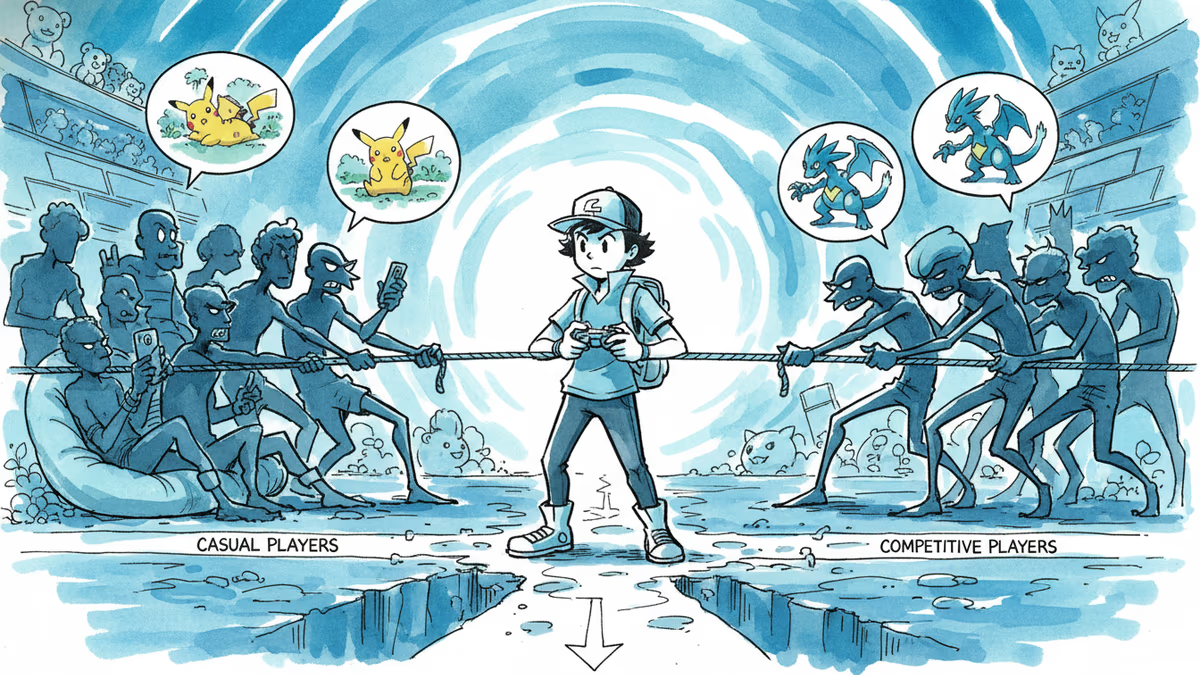
Pokémon Champions launched on Switch with bugs breaking core battle mechanics. But the deeper issue isn't the bugs — it's whether a game trying to please all players can satisfy any of them.
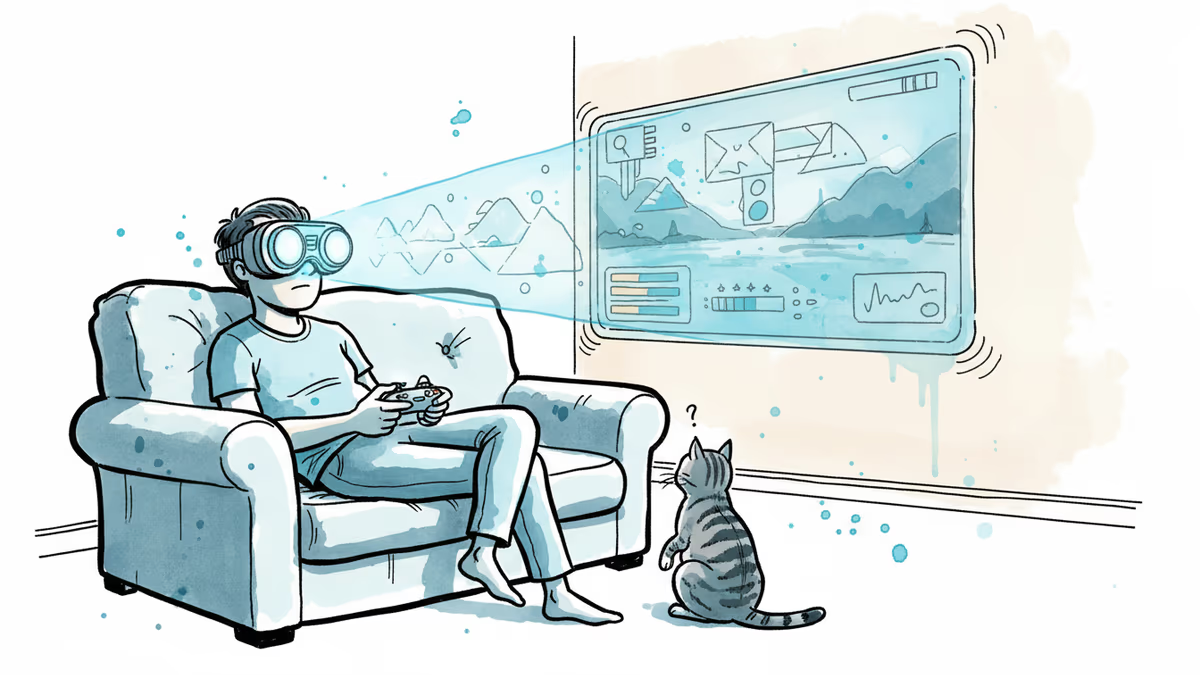
Xreal and Viture's latest AR glasses all do a few things well and a few things poorly. Here's what the best pair would look like — and why none of them are there yet.
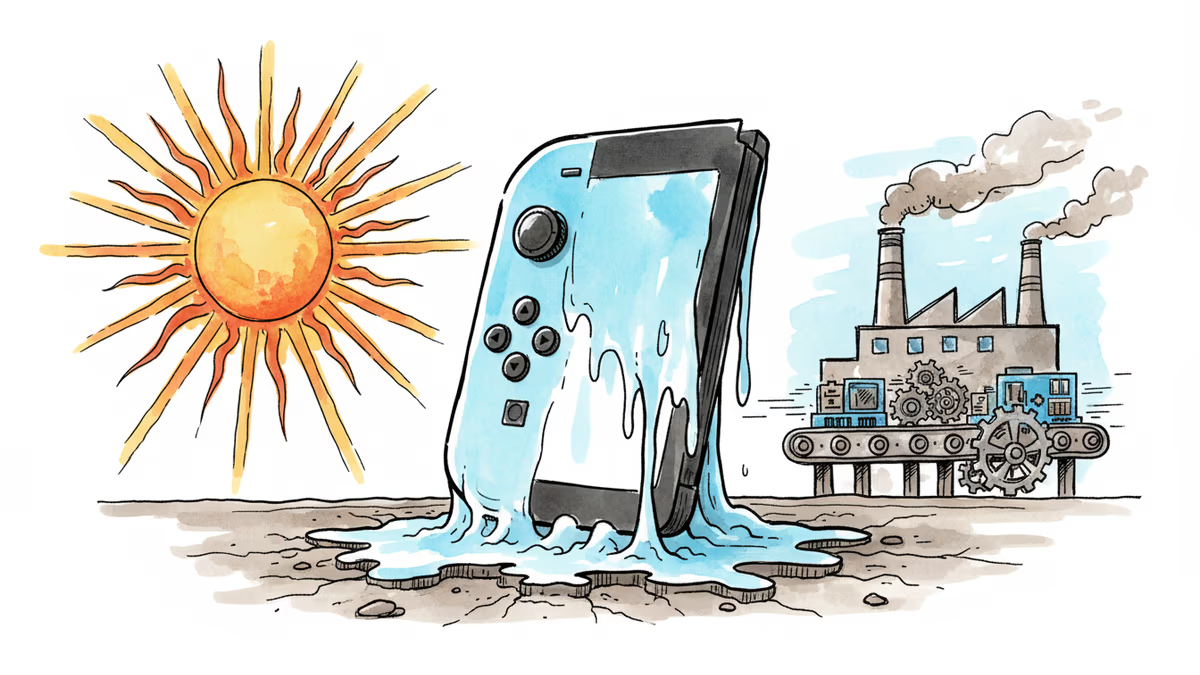
Nine months after a record-breaking launch, Nintendo is cutting Switch 2 production from 6 million to 4 million units per quarter. What went wrong, and what does it signal for the console market?
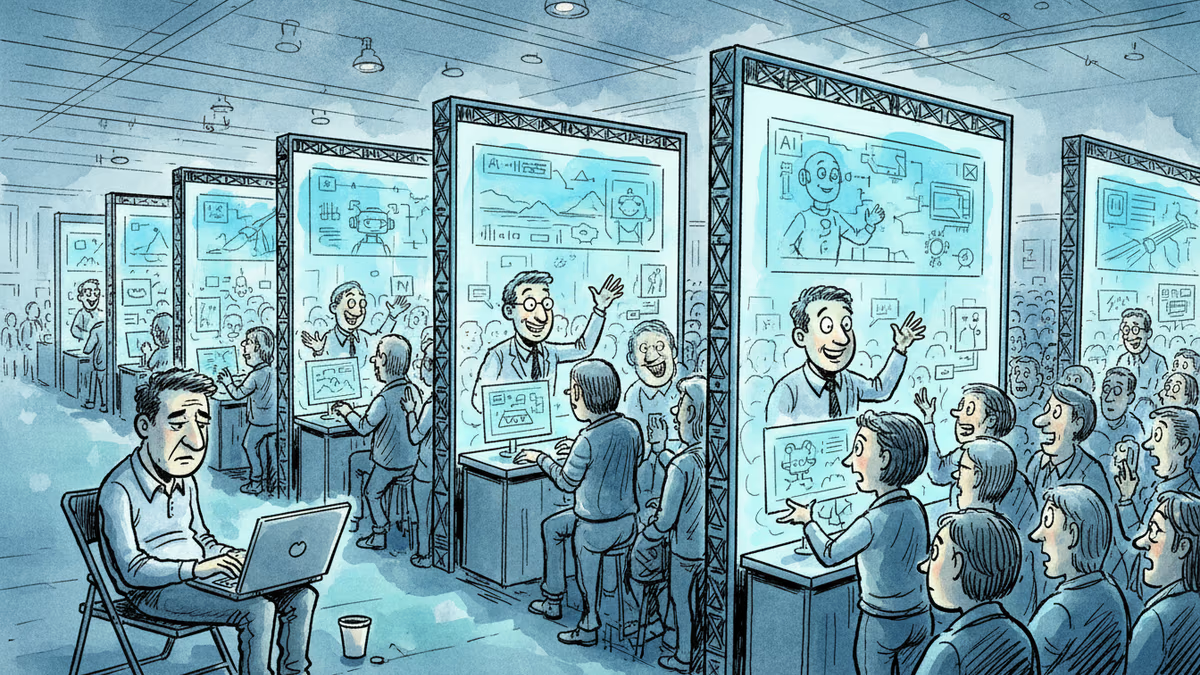
Generative AI tools dominated GDC 2026 — but most developers aren't shipping them in real games. What's holding the industry back, and what does that gap reveal?
Pokémon Champions launched on Switch with bugs breaking core battle mechanics. But the deeper issue isn't the bugs — it's whether a game trying to please all players can satisfy any of them.
Xreal and Viture's latest AR glasses all do a few things well and a few things poorly. Here's what the best pair would look like — and why none of them are there yet.
Nine months after a record-breaking launch, Nintendo is cutting Switch 2 production from 6 million to 4 million units per quarter. What went wrong, and what does it signal for the console market?
Generative AI tools dominated GDC 2026 — but most developers aren't shipping them in real games. What's holding the industry back, and what does that gap reveal?
Thoughts
Share your thoughts on this article
Sign in to join the conversation