
Pokémon Champions Wants Everyone. That Might Be Its Biggest Problem.
Pokémon Champions launched on Switch with bugs breaking core battle mechanics. But the deeper issue isn't the bugs — it's whether a game trying to please all players can satisfy any of them.
A game built entirely around battling launched with battles that don't work.
Pokémon Champions is now live on Nintendo Switch and Switch 2 as a free-to-start title, with a mobile release planned later this year. Within hours of launch, players discovered bugs affecting core battle mechanics — the one thing this game was supposed to do well. For a battle simulator with no other features to fall back on, that's not a great look.
How We Got Here
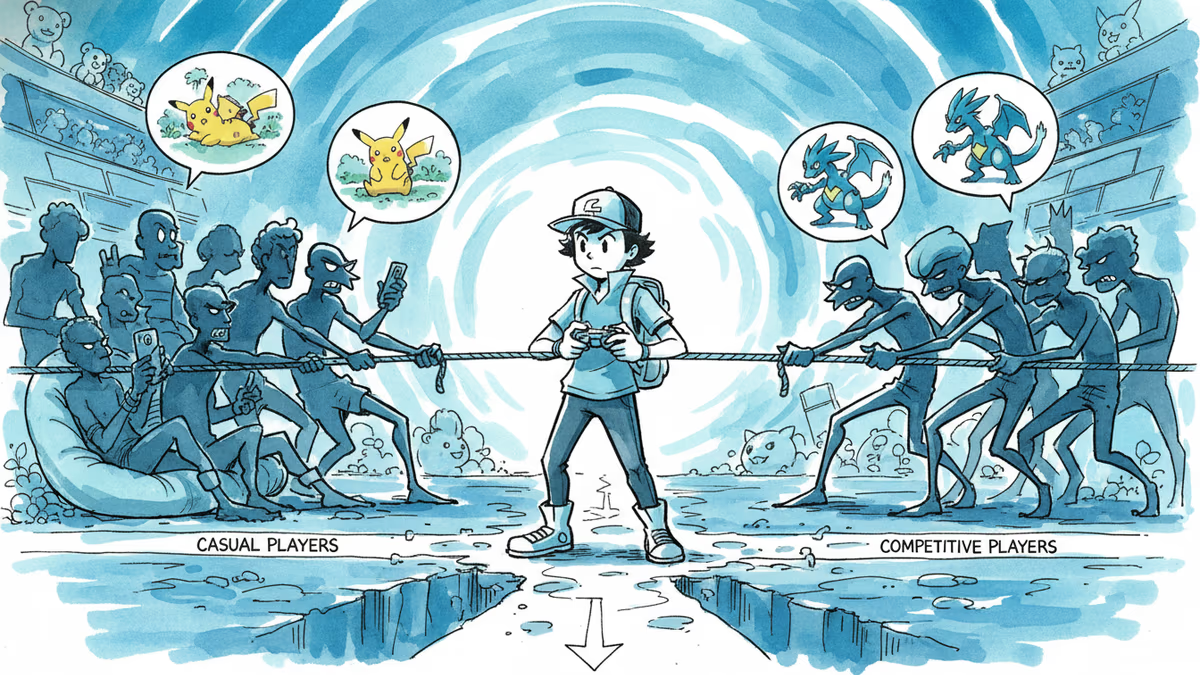
For decades, the mainline Pokémon games have tried to serve two very different audiences. Casual fans want to explore colorful worlds and collect cute creatures. Competitive players want a precise, deep system where EV spreads, move coverage, and speed tiers determine outcomes. Cramming both into a single RPG has always meant compromising on both.
Pokémon Champions was The Pokémon Company's answer: a dedicated battle platform, stripped of the RPG trappings, designed to give competitive players a proper home. The timing makes the strategy explicit. Just before Champions launched, the company released Pokopia — a creative, cozy spinoff with zero battling. The two games together represent a deliberate attempt to split the fanbase and serve each half separately.
It's a logical plan. Whether it works is another question.
The Live-Service Trap

Bugs at launch are, at this point, almost a genre tradition for live-service games. Pokémon GO launched in 2016 with servers that collapsed under demand, yet went on to generate over $1 billion annually at its peak. Some of Champions' bugs have already been patched, which suggests the development team is moving quickly.
But the more durable problem isn't technical. It's structural.
Champions is pitching itself as a competitive battling platform while simultaneously trying to be accessible to casual players — low barrier to entry, something for everyone. Live-service history is littered with cautionary tales about exactly this approach. Overwatch 2 chased casual-friendly changes and spent years fighting accusations that it alienated its competitive core. League of Legends has spent over a decade trying to balance ranked integrity with newcomer accessibility, and the debate never really ends.
Meanwhile, Pokémon Showdown — a fan-made battle simulator built without any official backing — has been the competitive community's tool of choice for years. It's free, fast, and functional. Champions needs to offer something meaningfully better to pull that community over, and right now, it's not clear what that is.
Who's Watching This Closely
For Nintendo, Champions represents a test of whether Pokémon can anchor a live-service ecosystem the way Fortnite or Genshin Impact have for their respective publishers. The free-to-start model implies ongoing monetization — cosmetics, seasonal content, potentially more — and that model only works if players stick around.
For competitive Pokémon players, the reaction is cautious optimism mixed with familiar skepticism. An official platform with proper matchmaking and anti-cheat infrastructure would be genuinely valuable. But the community has seen official Pokémon competitive tools underdeliver before.
For casual fans who just finished Pokopia and wandered over, Champions might feel like a jarring tonal shift — a game that expects you to know what a priority move is.
Authors
Related Articles
Xreal and Viture's latest AR glasses all do a few things well and a few things poorly. Here's what the best pair would look like — and why none of them are there yet.
Nine months after a record-breaking launch, Nintendo is cutting Switch 2 production from 6 million to 4 million units per quarter. What went wrong, and what does it signal for the console market?
Generative AI tools dominated GDC 2026 — but most developers aren't shipping them in real games. What's holding the industry back, and what does that gap reveal?
From Times Square launch events to silent server shutdowns, live-service games promised forever but keep delivering finality. What went wrong, and what comes next?
Xreal and Viture's latest AR glasses all do a few things well and a few things poorly. Here's what the best pair would look like — and why none of them are there yet.
Nine months after a record-breaking launch, Nintendo is cutting Switch 2 production from 6 million to 4 million units per quarter. What went wrong, and what does it signal for the console market?
Generative AI tools dominated GDC 2026 — but most developers aren't shipping them in real games. What's holding the industry back, and what does that gap reveal?
From Times Square launch events to silent server shutdowns, live-service games promised forever but keep delivering finality. What went wrong, and what comes next?
Thoughts
Share your thoughts on this article
Sign in to join the conversation