
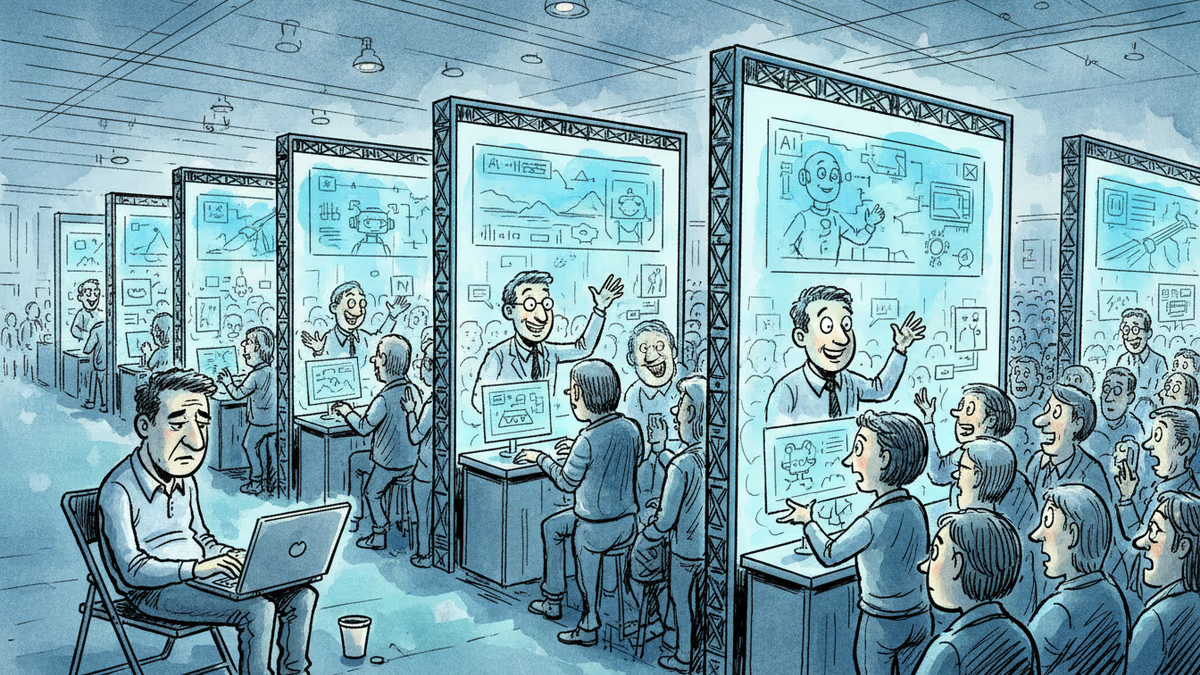
AI Flooded GDC. Actual Games Barely Used It.
Generative AI tools dominated GDC 2026 — but most developers aren't shipping them in real games. What's holding the industry back, and what does that gap reveal?
For 10 minutes, a reporter wandered through a pixel-art fantasy world that didn't exist until an AI built it — generated in real time by Tencent's tools on the GDC show floor. Down the hall, a standing-room-only crowd watched Google DeepMind researchers demo playable AI-generated spaces. In a side briefing, Razer's AI QA assistant was autonomously logging bugs in a shooter game faster than any human tester could.
AI was everywhere at GDC 2026. Except in the games.
The Gap Nobody's Talking About
This year's Game Developers Conference was a showcase of generative AI's ambitions: tools that create AI-driven NPCs, platforms that generate entire games from a chat prompt, automated QA pipelines that slash testing costs. The vendor floor buzzed. The talk sessions overflowed.
But when journalists spoke to the developers actually building games — the ones who will ship titles players pay for — a different picture emerged. Few of them were integrating generative AI into their actual products. The energy in the expo hall and the reality in the studio were running on entirely different frequencies.
This isn't a story about technology being unready. It's a story about why a technically capable tool sits on the shelf.
Three Walls Between Demo and Shipping
The reasons developers aren't pulling the trigger are consistent across studios, large and small.
The first is quality control. Games are products where millions of players spend hundreds of hours. When AI generates content — dialogue, environments, quests — the variance is unpredictable. The cost of validating that output, ensuring it doesn't break narrative consistency or produce something offensive or broken, can exceed the cost of doing it manually. Razer's AI catching bugs is one thing. AI authoring the world those bugs live in is another.

The second wall is legal uncertainty. Copyright questions around AI-generated content remain unresolved in most jurisdictions. Who owns what an AI creates? What happens if a generated asset resembles copyrighted work from the training data? For major publishers with legal teams and shareholders, these aren't abstract questions — they're blockers. The lawsuit landscape around generative AI is still being drawn.
The third is community sentiment. Gamer backlash against AI-generated art has already cost studios real money and goodwill. When players discovered AI assets in shipped games, the response was swift and loud. Developers know this. Even where AI use is technically defensible, the marketing risk is real. In an industry where community trust is a product feature, that calculus matters.
What's Actually Getting Adopted
None of this means AI is absent from game development. It's just operating backstage.
Studios are quietly using AI for localization, voiceover prototyping, asset tagging, and test automation — the invisible infrastructure of game production. These applications don't touch what players experience directly, which means they don't trigger the same scrutiny. They also deliver measurable ROI without the reputational exposure.
This pattern — AI in the pipeline, not in the product — is likely where the industry spends the next two to three years. It's less dramatic than AI-generated worlds, but arguably more durable.
The Tencent Signal
What makes Tencent's presence at GDC notable is that they didn't just talk about AI tools — they demoed a playable product. Chinese tech giants have been investing aggressively in AI game generation, and they're less encumbered by the community sentiment dynamics that constrain Western studios. If a compelling AI-generated game ships from that direction first, it could reset the conversation entirely.
For Western developers and publishers, that's a competitive pressure point worth watching. The question isn't whether AI-generated games will exist. It's whether the studios that hesitate on legal and community grounds will find themselves playing catch-up when the market shifts.
What Google DeepMind's Demo Actually Proved
The standing-room crowd at the Google DeepMind session wasn't there because the technology was polished. They were there because the idea was genuinely interesting: spaces that exist because you're playing in them, generated on the fly.
But interesting and fun are not the same thing. Decades of game design knowledge — pacing, tension, reward loops, emotional arc — aren't automatically embedded in a generative model. The demo proved the technology can render. It didn't prove the technology can design. That distinction is where most of the hard work still lives.
Authors
Related Articles
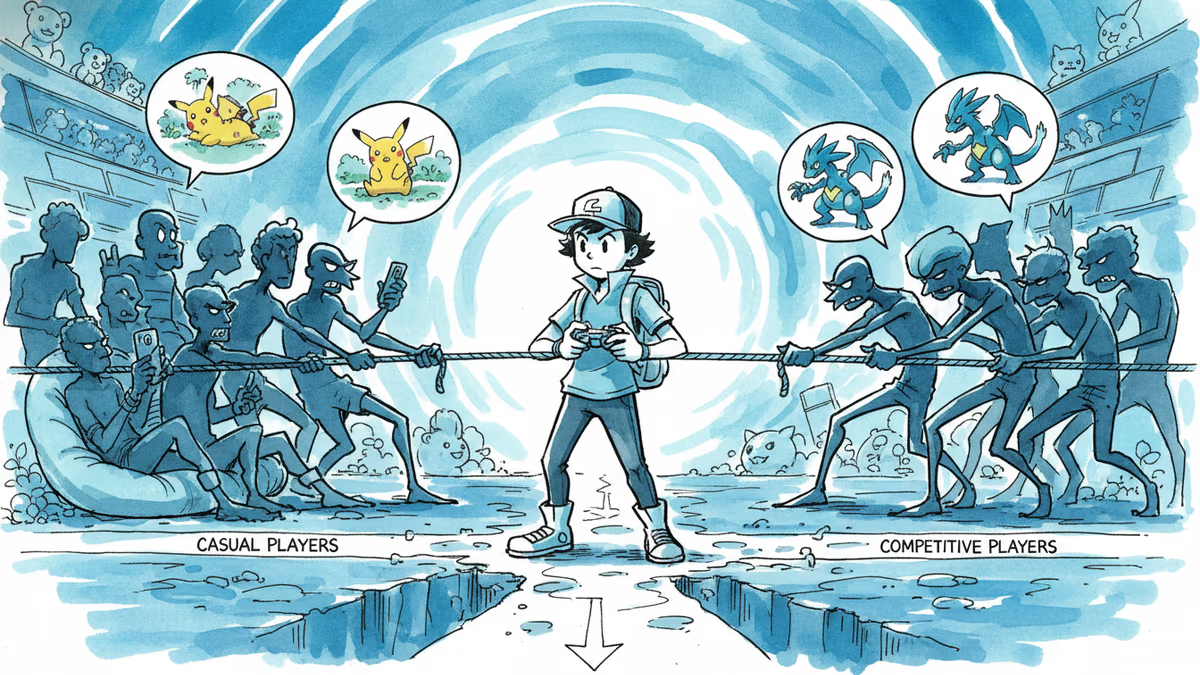
Pokémon Champions launched on Switch with bugs breaking core battle mechanics. But the deeper issue isn't the bugs — it's whether a game trying to please all players can satisfy any of them.
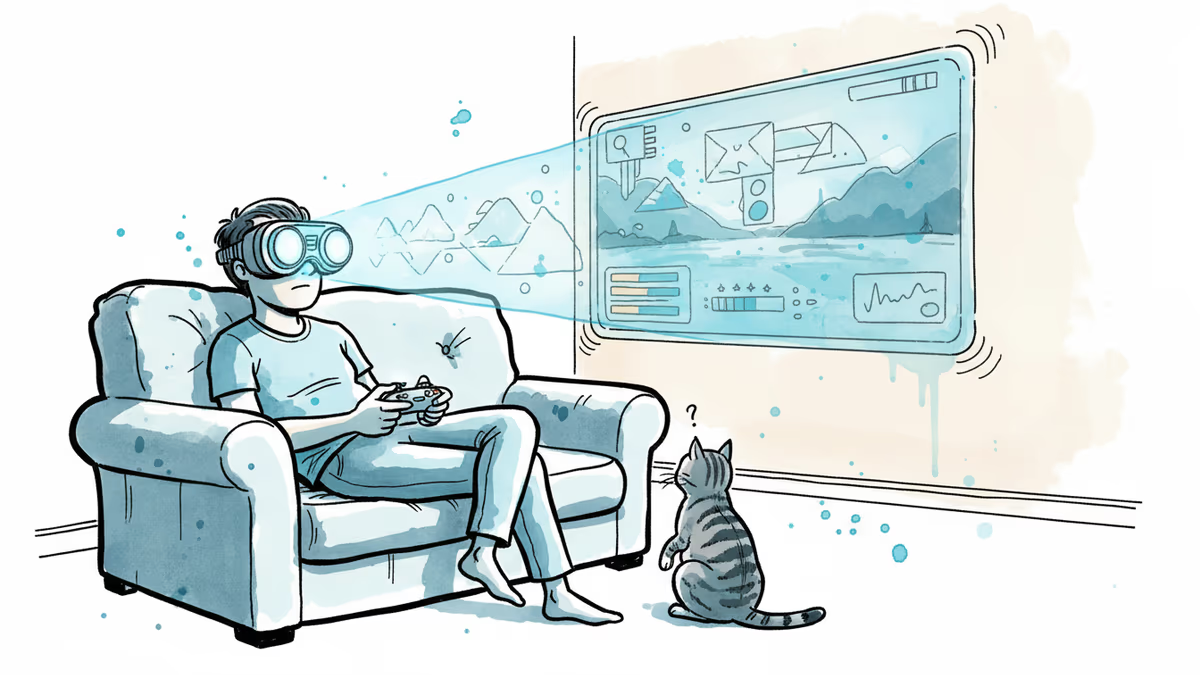
Xreal and Viture's latest AR glasses all do a few things well and a few things poorly. Here's what the best pair would look like — and why none of them are there yet.
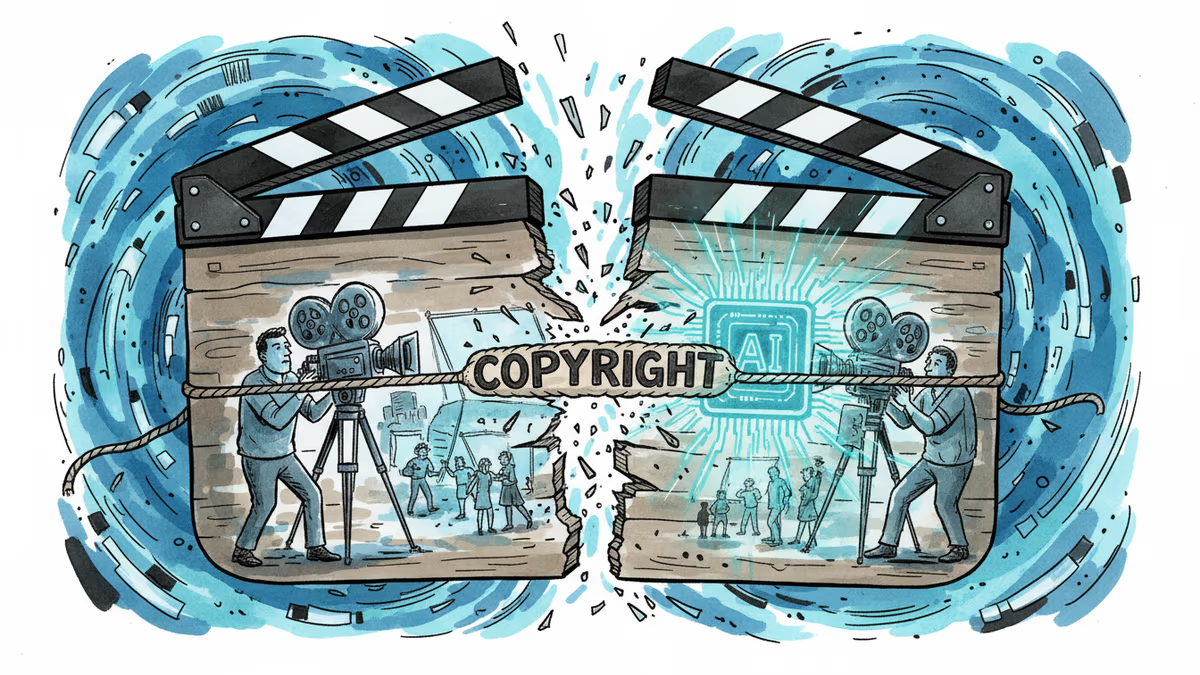
ByteDance's Dreamina Seedance 2.0 is now live in CapCut for seven markets. The US is missing. Here's what that tells us about AI video's biggest unsolved problem — and what it means for creators.
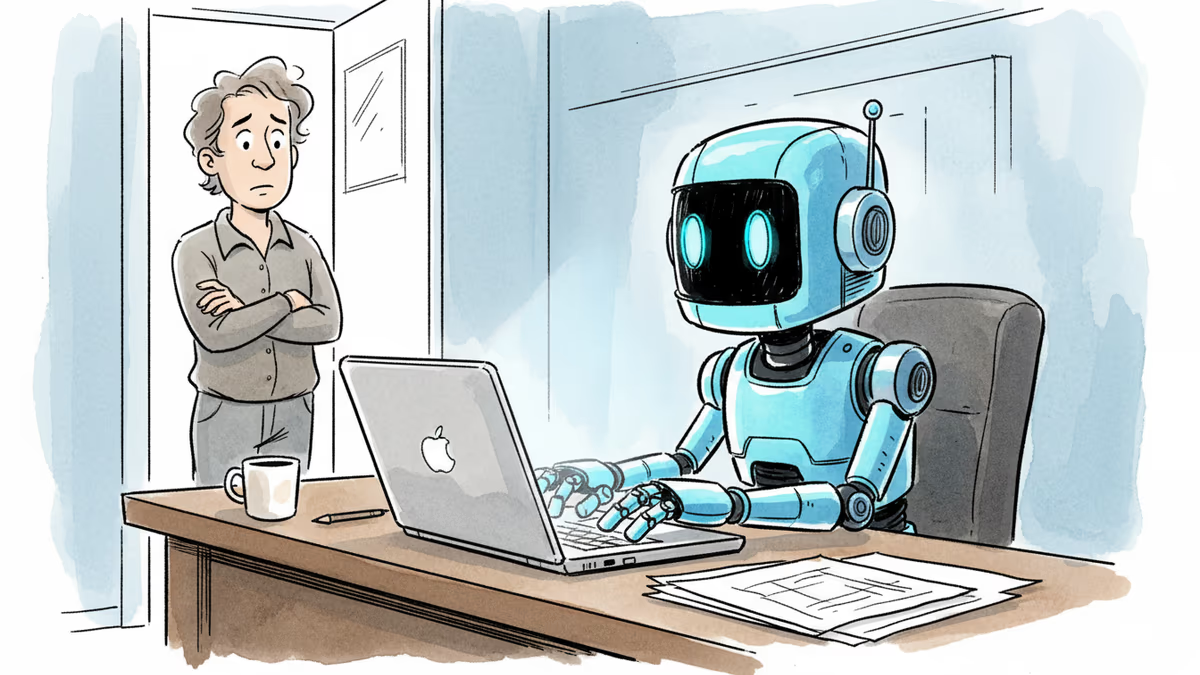
Anthropic has launched a research preview letting Claude autonomously operate your Mac—opening files, browsing the web, running dev tools. Here's what it means for work, privacy, and the AI agent race.
Pokémon Champions launched on Switch with bugs breaking core battle mechanics. But the deeper issue isn't the bugs — it's whether a game trying to please all players can satisfy any of them.
Xreal and Viture's latest AR glasses all do a few things well and a few things poorly. Here's what the best pair would look like — and why none of them are there yet.
ByteDance's Dreamina Seedance 2.0 is now live in CapCut for seven markets. The US is missing. Here's what that tells us about AI video's biggest unsolved problem — and what it means for creators.
Anthropic has launched a research preview letting Claude autonomously operate your Mac—opening files, browsing the web, running dev tools. Here's what it means for work, privacy, and the AI agent race.
Thoughts
Share your thoughts on this article
Sign in to join the conversation