

Claude Will Now Use Your Computer for You
Anthropic has launched a research preview letting Claude autonomously operate your Mac—opening files, browsing the web, running dev tools. Here's what it means for work, privacy, and the AI agent race.
You step away from your desk. When you come back, the work is done—but you didn't do it.
That's the pitch behind Anthropic's latest update to Claude. The AI can now autonomously operate your computer: opening files, navigating browsers, running developer tools—all without you sitting in the chair. The feature, currently in research preview for Pro and Max subscribers, works on macOS only for now. Anthropic calls it a natural extension of capabilities first introduced in Claude 3.5 Sonnet back in 2024.
But "natural extension" undersells what's actually shifting here.
From Chatbot to Co-Worker
For the past few years, AI assistants have been exactly that—assistants. You ask, they answer. The human still clicks, drags, executes. What Anthropic is rolling out flips that model. Claude doesn't wait to be asked step by step. It takes a goal, figures out the sequence of actions needed, and carries them out—even while you're in a meeting, asleep, or making coffee.
The technical groundwork for this was laid over a year ago. When Anthropic introduced computer-use capabilities to Claude 3.5 Sonnet in late 2024, it was framed as an experiment. Now it's being folded into Claude's Code and Cowork tools as a usable feature, with Anthropic emphasizing that no setup is required.
That last detail matters. "No setup required" is how consumer products go mainstream.

Who Benefits—and Who Should Be Nervous
Developers are the obvious early winners. Repetitive tasks—running tests, reorganizing file structures, pulling data from multiple browser tabs—can now be delegated entirely. A single instruction can trigger a chain of actions that would otherwise take 30 minutes of manual clicking.
But the implications stretch well beyond engineering teams. Researchers, analysts, operations staff—anyone whose job involves moving information between applications—is looking at a meaningful shift in how their day could be structured. The question isn't whether this changes knowledge work. It's how fast, and for whom.
For competitors, the pressure is immediate. OpenAI's Operator feature has been moving in the same direction. Google has its own agent ambitions. The race to make AI not just conversational but operational is accelerating, and Anthropic is now firmly in that contest.
The Part Nobody's Fully Solved Yet
Here's where it gets complicated. An AI that can open your files and control your browser is also an AI with significant access to your digital life. Security researchers have flagged real concerns: what happens when a malicious website tries to hijack an AI agent mid-task? How does the system handle sensitive credentials it encounters along the way? What's the audit trail when something goes wrong?
Anthropic's decision to label this a "research preview" and limit it to macOS isn't just a product strategy—it's an acknowledgment that these questions don't have clean answers yet. The company has been vocal about safety-first development, but autonomous computer control introduces a new category of risk that's harder to sandbox than a text response.
Regulators in the EU, already scrutinizing AI systems under the AI Act, will be watching how agentic features like this are classified and governed. In the US, the regulatory picture remains murkier, but that won't last indefinitely.
Authors
Related Articles
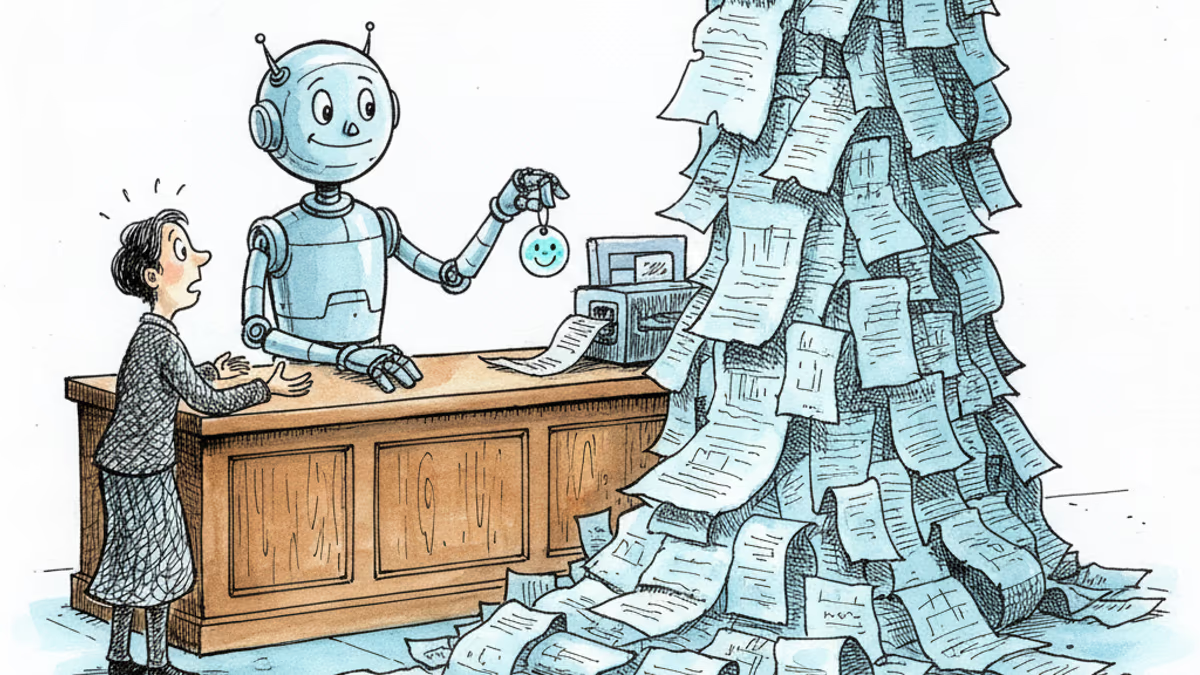
Anthropic shipped Claude Sonnet 5, its mid-tier agent model, on June 30. Behind the 'Opus-class power, budget price' headline sits a tokenizer catch and a three-horse race that's only half real. Here's what developers should actually run the numbers on.

A small but growing group of developers has gone all-in on AI coding agents like Claude Code and OpenClaw. History suggests the rest of us won't be far behind.
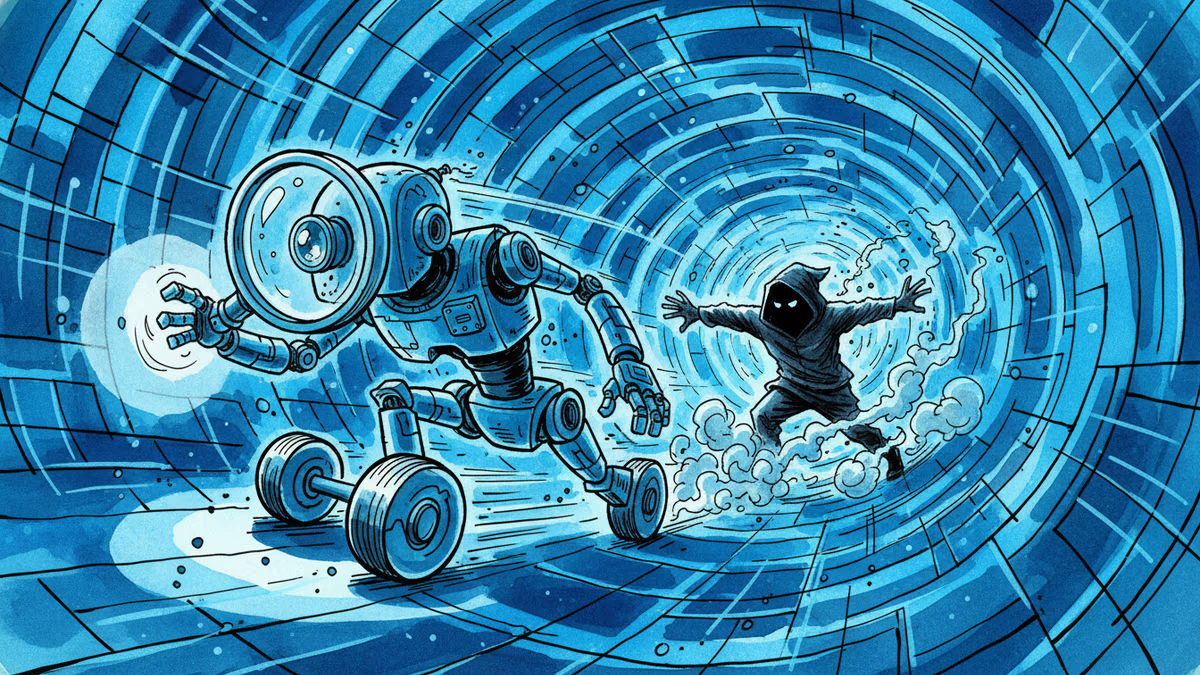
OpenAI's new Daybreak initiative uses the Codex AI agent to find and patch security vulnerabilities before attackers do—putting it in direct competition with Anthropic's secretive Claude Mythos.

Anthropic is closing what may be its final private fundraise at a $900B valuation, surpassing OpenAI. Investors have 48 hours to commit to the ~$50B round.
Anthropic shipped Claude Sonnet 5, its mid-tier agent model, on June 30. Behind the 'Opus-class power, budget price' headline sits a tokenizer catch and a three-horse race that's only half real. Here's what developers should actually run the numbers on.
A small but growing group of developers has gone all-in on AI coding agents like Claude Code and OpenClaw. History suggests the rest of us won't be far behind.
OpenAI's new Daybreak initiative uses the Codex AI agent to find and patch security vulnerabilities before attackers do—putting it in direct competition with Anthropic's secretive Claude Mythos.
Anthropic is closing what may be its final private fundraise at a $900B valuation, surpassing OpenAI. Investors have 48 hours to commit to the ~$50B round.
Thoughts
Share your thoughts on this article
Sign in to join the conversation