
Live-Service Games Are Dying. Who's Really Surprised?
From Times Square launch events to silent server shutdowns, live-service games promised forever but keep delivering finality. What went wrong, and what comes next?
The Butterflies Were Beautiful. The Game Is Gone.
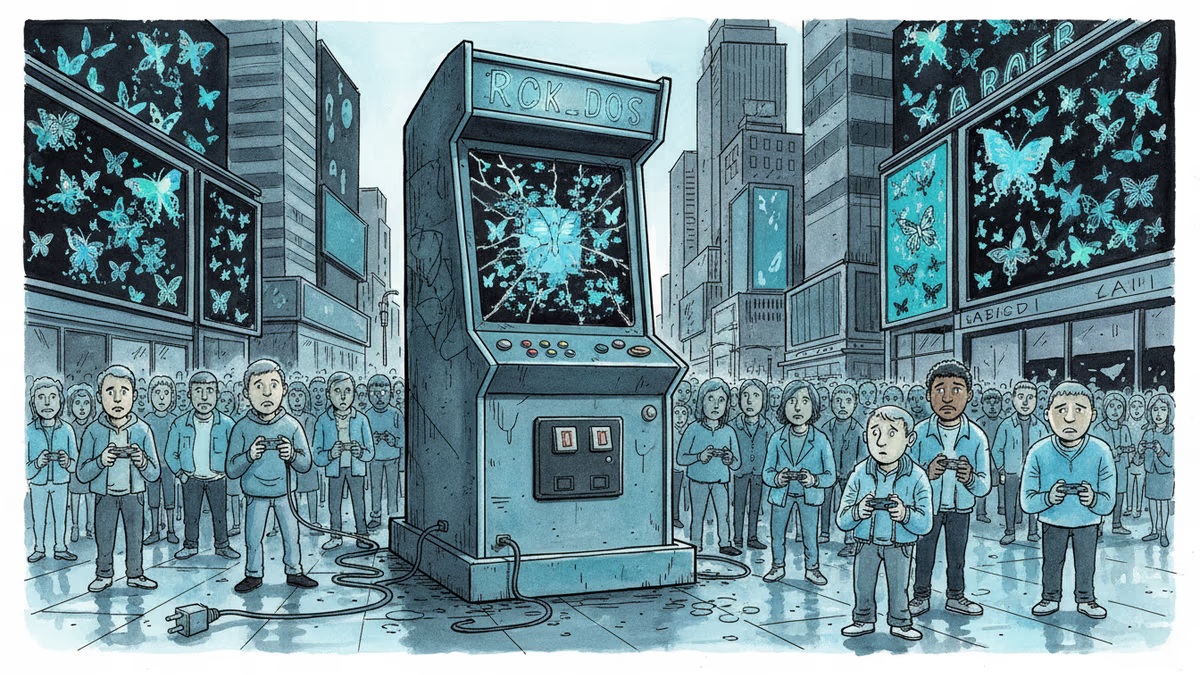
Two years ago, glowing butterflies danced across Times Square's screens. A countdown. A crowd that didn't know what it was watching but knew it was something. Ice Spice appeared. A new game was born with a multimillion-dollar launch event at the center of the world.
Today, that game is gone.
This is the defining arc of live-service gaming in the 2020s: launch loud, die quietly.
What Live-Service Actually Means
Live-service isn't a genre. It's a business model — and a seductive one. Instead of selling a game once, developers keep players engaged through seasonal updates, battle passes, cosmetic stores, and limited-time events. Revenue doesn't stop at launch; theoretically, it compounds forever.
Fortnite proved the model could work in 2017, and the industry stampeded in that direction. Sony, EA, Activision, Ubisoft — everyone wanted their own forever-game. The logic was clean: a living game means living revenue. A big player base means cultural relevance. Cultural relevance means more players.
The problem is that the model only works if you win. And almost nobody wins.
A Winner-Take-Most Market
Player time is finite. Live-service games don't just compete for purchases — they compete for evenings. Fortnite, League of Legends, Valorant, Apex Legends have already colonized those evenings. A new entrant doesn't just need to be good. It needs to be so different that players rearrange their lives around it.

Few games clear that bar. The pattern that follows is grimly predictable: a splashy launch, a spike of interest, a cliff-drop in player counts after the first season, and eventually a shutdown notice that gives players 90 days to spend their remaining in-game currency on a dying storefront.
Between 2023 and 2025, industry estimates suggest the number of live-service titles that shut down more than doubled compared to the prior three-year period. The Times Square butterflies were a symptom, not a cause.
Three Very Different Reactions
For developers, the math is becoming untenable. A AAA live-service game costs hundreds of millions of dollars to build — and that's before the ongoing operational costs of running servers, producing content, and keeping a community team employed. When the game fails, studios close. Sony's London Studio scrapped its live-service ambitions entirely and shut down in 2024. It wasn't alone. The human cost — layoffs hitting 10,000+ game industry workers in 2024 alone — is the part that doesn't make it into the launch trailers.
For players, the frustration is specific: you can't own what you buy. Spend $80 on cosmetics in a game that shuts down, and you have nothing. This isn't hypothetical anxiety — it's happened repeatedly. The backlash has given rise to a genuine consumer rights conversation. In the EU, regulators are beginning to ask whether digital goods in shuttered games constitute a refund case. In the US, that conversation is just starting.
For investors, the calculus is shifting. The blockbuster live-service bet is looking riskier. Meanwhile, Baldur's Gate 3 — a single-player RPG with a beginning, middle, and end — became one of the best-selling games of 2023 without a battle pass in sight. The signal is hard to ignore: there's a market for games that end.
The Indie Counter-Signal
While major studios doubled down on live-service, smaller developers quietly built something different. Games like Hades, Hollow Knight, and Stardew Valley found massive audiences with no seasonal content, no live events, no Times Square launches. They just shipped a complete game and let word-of-mouth do the work.
This isn't nostalgia. It's a market correction. When players have been burned by enough shutdowns, a game that promises to exist in five years becomes a selling point.
What Comes Next
The live-service model isn't dead — Fortnite alone generates an estimated $2 billion+ annually and shows no signs of slowing. But the era of every major studio chasing that dream simultaneously appears to be closing. The industry is quietly bifurcating: a handful of dominant live-service platforms on one end, and a growing ecosystem of premium, finite experiences on the other.
The studios that survive will likely be those that pick a lane clearly — and stop pretending that a Times Square launch event is a substitute for a game worth staying in.
Authors
Related Articles
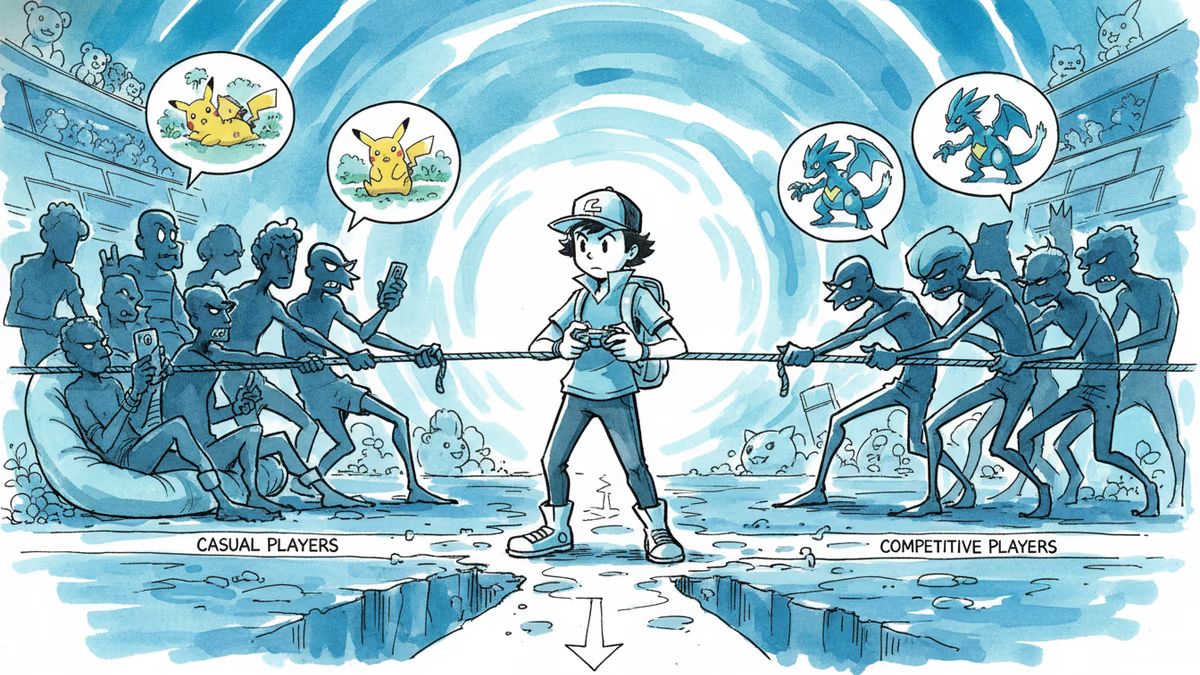
Pokémon Champions launched on Switch with bugs breaking core battle mechanics. But the deeper issue isn't the bugs — it's whether a game trying to please all players can satisfy any of them.
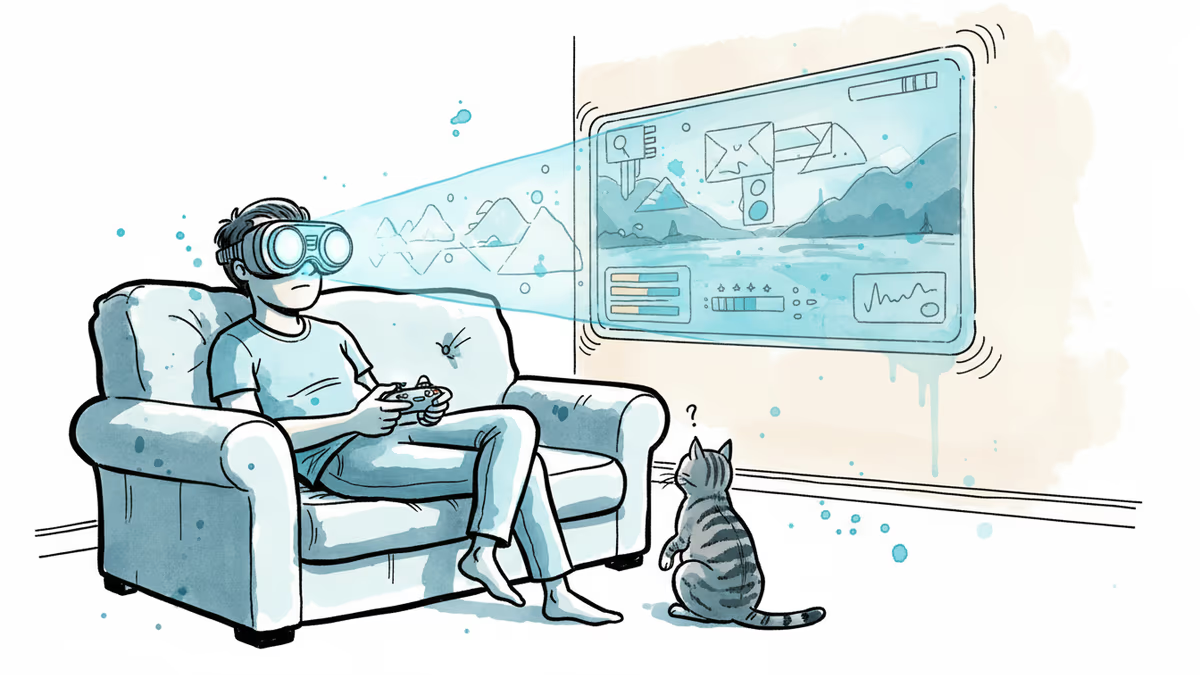
Xreal and Viture's latest AR glasses all do a few things well and a few things poorly. Here's what the best pair would look like — and why none of them are there yet.
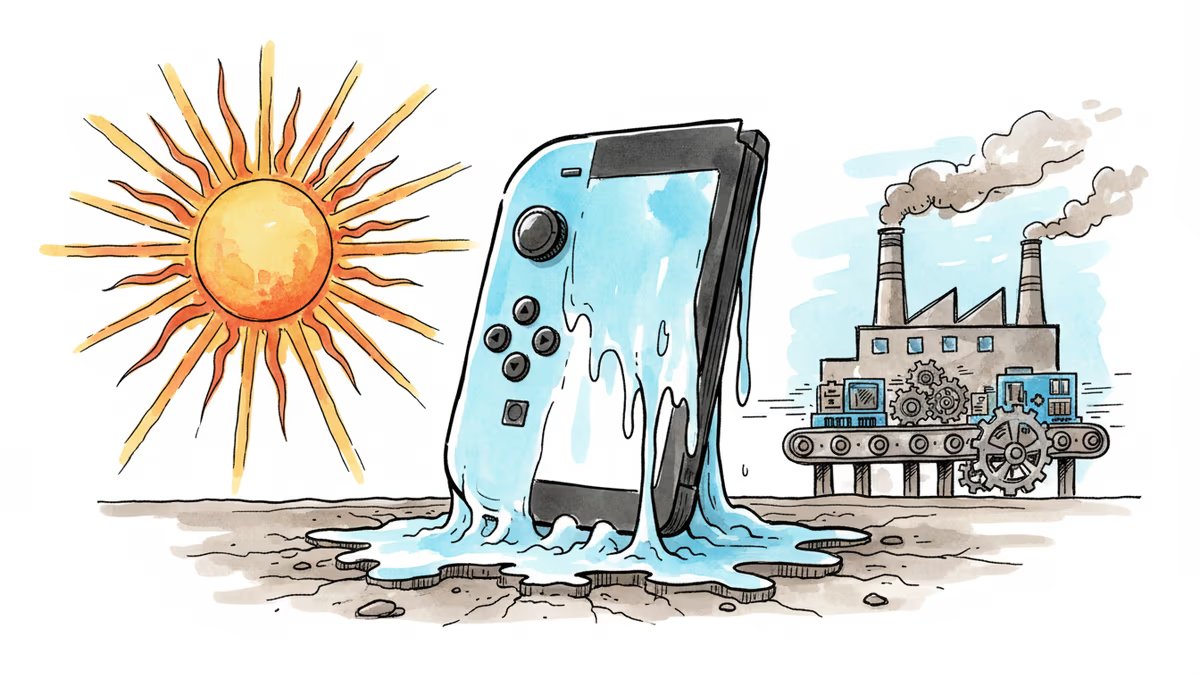
Nine months after a record-breaking launch, Nintendo is cutting Switch 2 production from 6 million to 4 million units per quarter. What went wrong, and what does it signal for the console market?
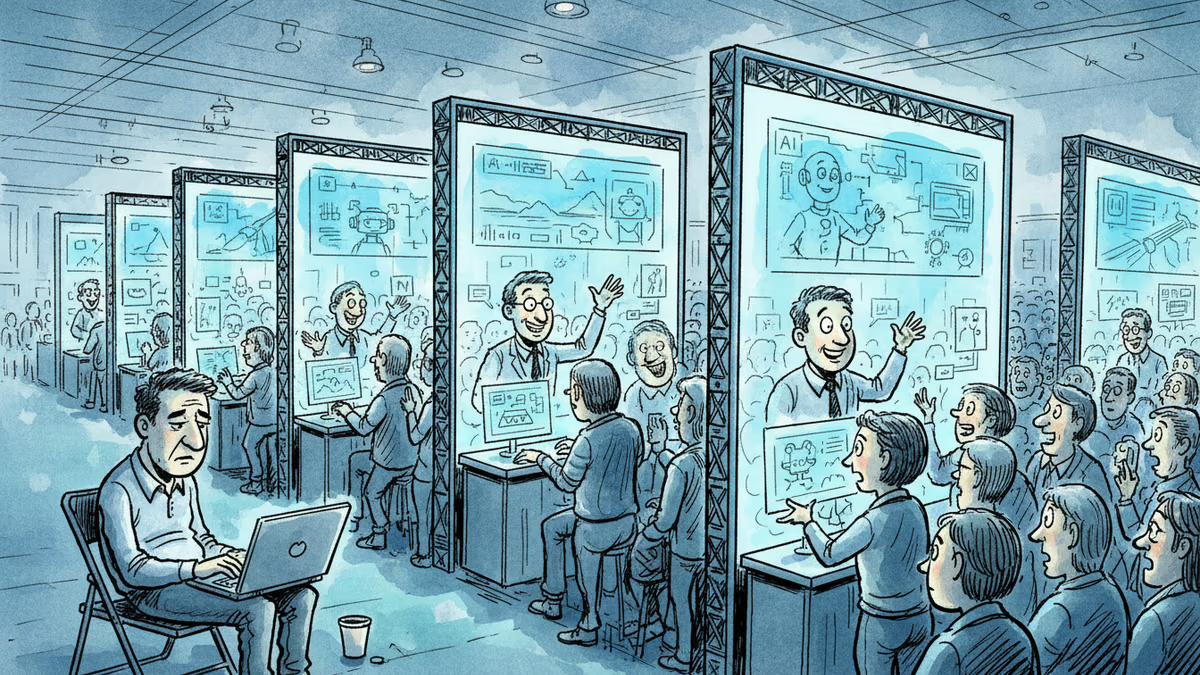
Generative AI tools dominated GDC 2026 — but most developers aren't shipping them in real games. What's holding the industry back, and what does that gap reveal?
Pokémon Champions launched on Switch with bugs breaking core battle mechanics. But the deeper issue isn't the bugs — it's whether a game trying to please all players can satisfy any of them.
Xreal and Viture's latest AR glasses all do a few things well and a few things poorly. Here's what the best pair would look like — and why none of them are there yet.
Nine months after a record-breaking launch, Nintendo is cutting Switch 2 production from 6 million to 4 million units per quarter. What went wrong, and what does it signal for the console market?
Generative AI tools dominated GDC 2026 — but most developers aren't shipping them in real games. What's holding the industry back, and what does that gap reveal?
Thoughts
Share your thoughts on this article
Sign in to join the conversation