
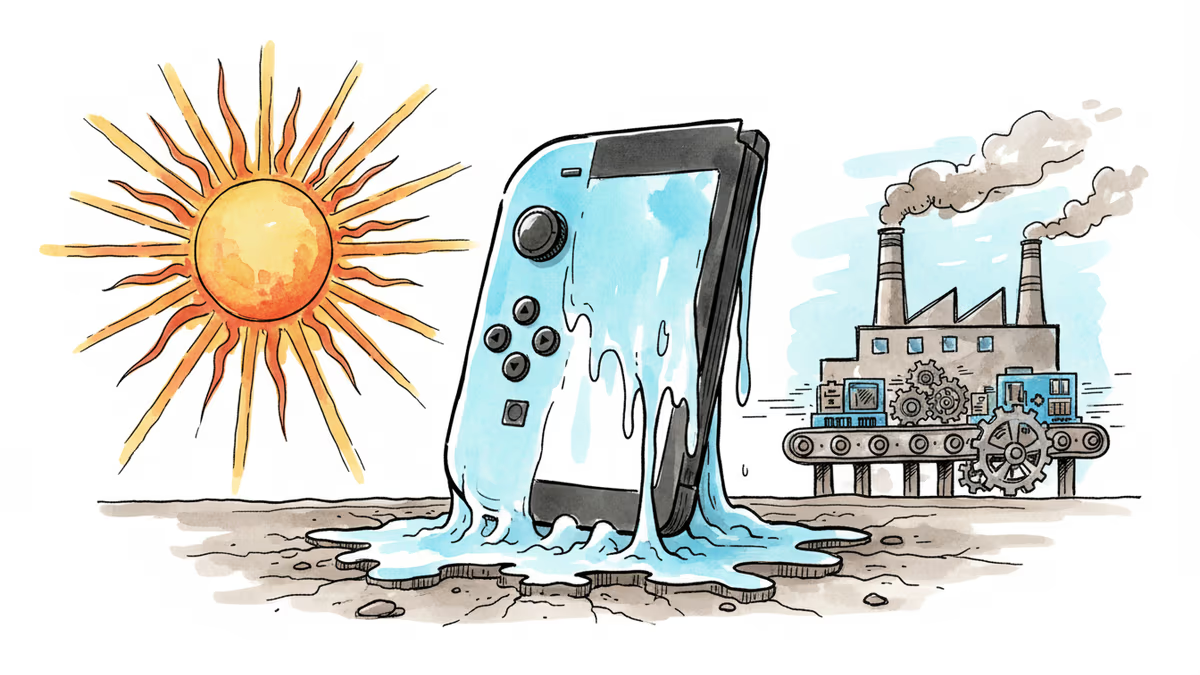
Switch 2 Stumbles: Nintendo Cuts Production by a Third
Nine months after a record-breaking launch, Nintendo is cutting Switch 2 production from 6 million to 4 million units per quarter. What went wrong, and what does it signal for the console market?
The Fastest-Selling Console Just Hit the Brakes
Nine months ago, the Nintendo Switch 2 was a phenomenon. It broke the company's own launch records, selling faster than any console in Nintendo's history. Today, Nintendo is cutting its quarterly production target by 33% — from 6 million units down to 4 million — and the slowdown is expected to carry into April. Bloomberg broke the story, citing unnamed sources close to Nintendo's supply chain.
This isn't a quiet internal adjustment. Nintendo president Shuntaro Furukawa publicly acknowledged the problem last month during an earnings call, admitting that "overseas sales were somewhat weaker than expected." For a company that rarely telegraphs weakness, that's a notable admission.
What's Cooling the Demand
The demand drop is concentrated in the US, and the timing isn't coincidental. A few forces are converging at once.
The most immediate is price sensitivity. The Switch 2 launched at a higher price point than its predecessor, landing in the $400+ range at a moment when American consumers are still navigating elevated costs across the board. A game console isn't a necessity — and at that price, it's competing directly with rent increases, grocery bills, and subscription fatigue. The purchase gets deferred.
Then there's the tariff overhang. The Trump administration's ongoing trade policy has injected uncertainty into consumer electronics pricing. When buyers suspect a product might get cheaper — or more expensive — due to tariff shifts, many simply wait. That hesitation alone can meaningfully suppress near-term sales.

Software depth is the third factor. Early adopters and gaming communities have noted that the Switch 2's launch window lineup feels thinner than the original Switch's did. Hardware sells on the promise of great games. If the killer titles aren't there yet, the hardware sits on the shelf — both in stores and in consumers' mental shopping carts.
Two Ways to Read This
Not everyone agrees on what this production cut actually signals.
The optimistic read: This is disciplined supply chain management, not panic. Nintendo is avoiding the trap of overproduction and channel stuffing — a mistake that has haunted console makers before. Cutting production to match real demand is exactly what a well-run hardware business should do. The record launch quarter still happened. The library will grow. Demand will recover.
The cautious read: The Switch 2's growth curve may be flattening earlier than projected. Console generations typically have a multi-year adoption ramp. If demand is softening in the first year — before the major franchise titles have even landed — that's worth watching closely. The original Switch had a remarkably long tail. Whether the Switch 2 can replicate that is no longer a given.
The Bigger Picture: Is the Dedicated Console Fading?
Zoom out, and Nintendo's challenge sits inside a larger question about the console category itself. Microsoft has been deliberately blurring the line between Xbox hardware and Game Pass streaming. Sony is expanding PlayStation titles to PC. Cloud gaming services are maturing. Meanwhile, the average smartphone in 2026 runs games that would have required dedicated hardware five years ago.
The dedicated gaming device used to offer something irreplaceable: the best experience for the best games, period. That gap is narrowing. Not gone — but narrowing. Nintendo's answer has always been its IP moat: Mario, Zelda, Metroid, Pokémon. No other platform has those. But moats require maintenance, and the moat only works if consumers are willing to pay the toll.
For investors, the near-term question is whether upcoming software releases — likely heavy hitters in the back half of 2026 — can reverse the trajectory before the next earnings call. For consumers, the more interesting question is whether this dip creates buying opportunities, either through promotions or a potential price adjustment.
Authors
Related Articles
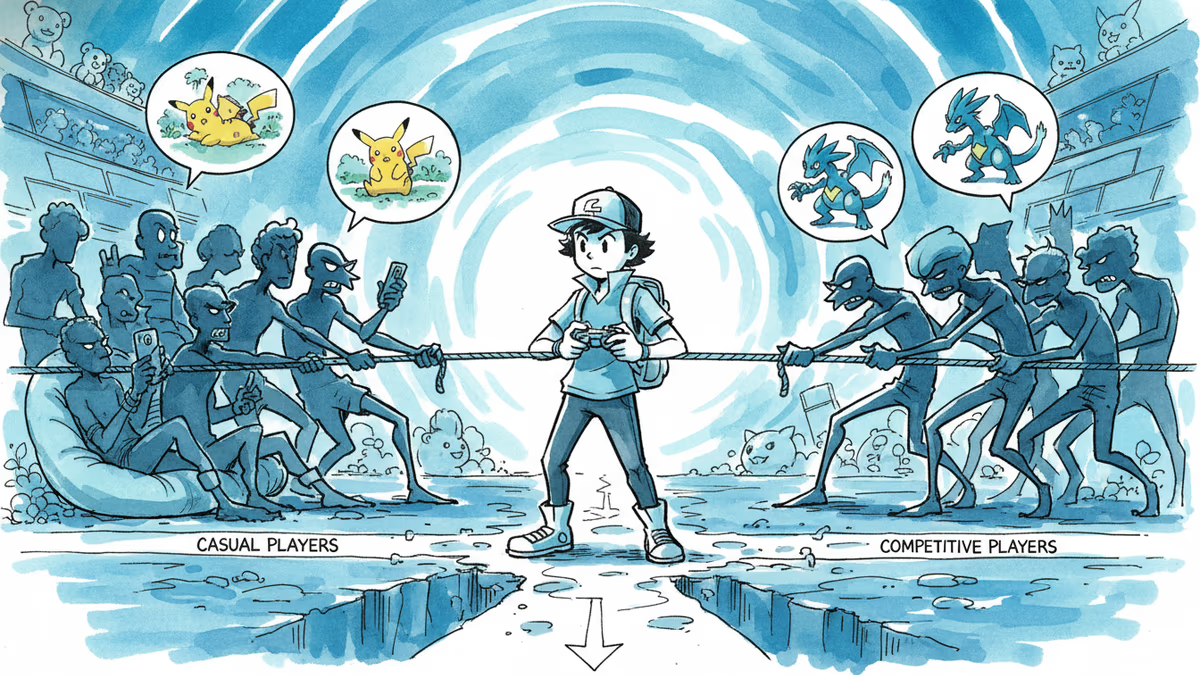
Pokémon Champions launched on Switch with bugs breaking core battle mechanics. But the deeper issue isn't the bugs — it's whether a game trying to please all players can satisfy any of them.
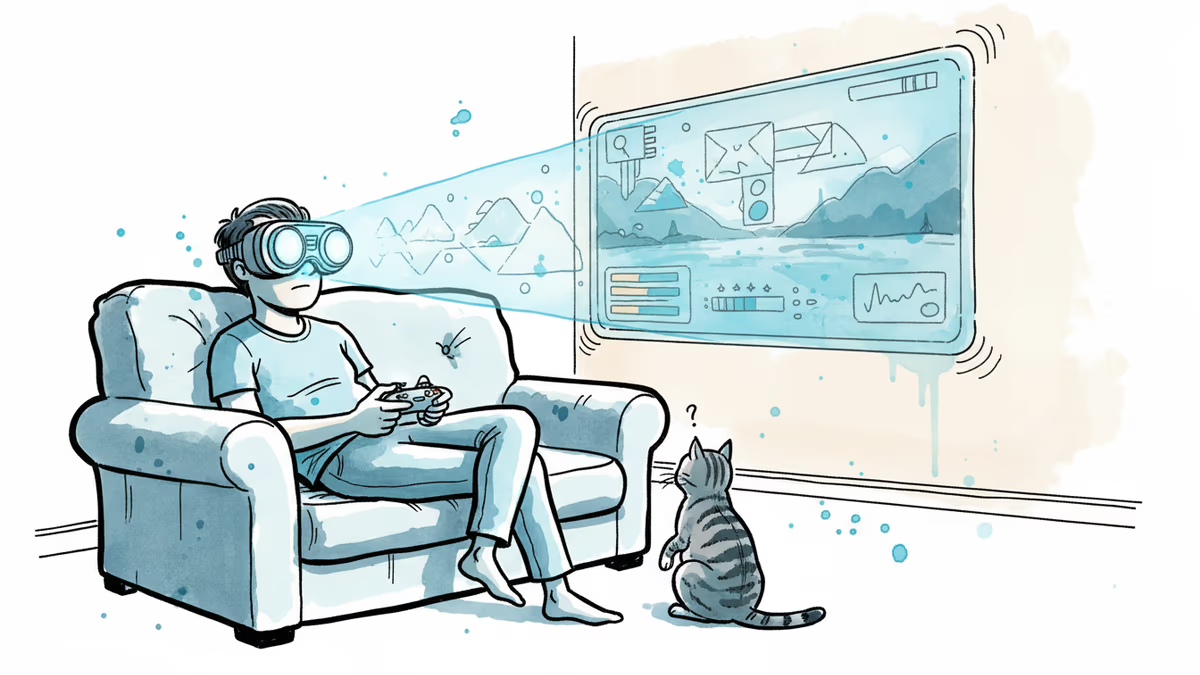
Xreal and Viture's latest AR glasses all do a few things well and a few things poorly. Here's what the best pair would look like — and why none of them are there yet.
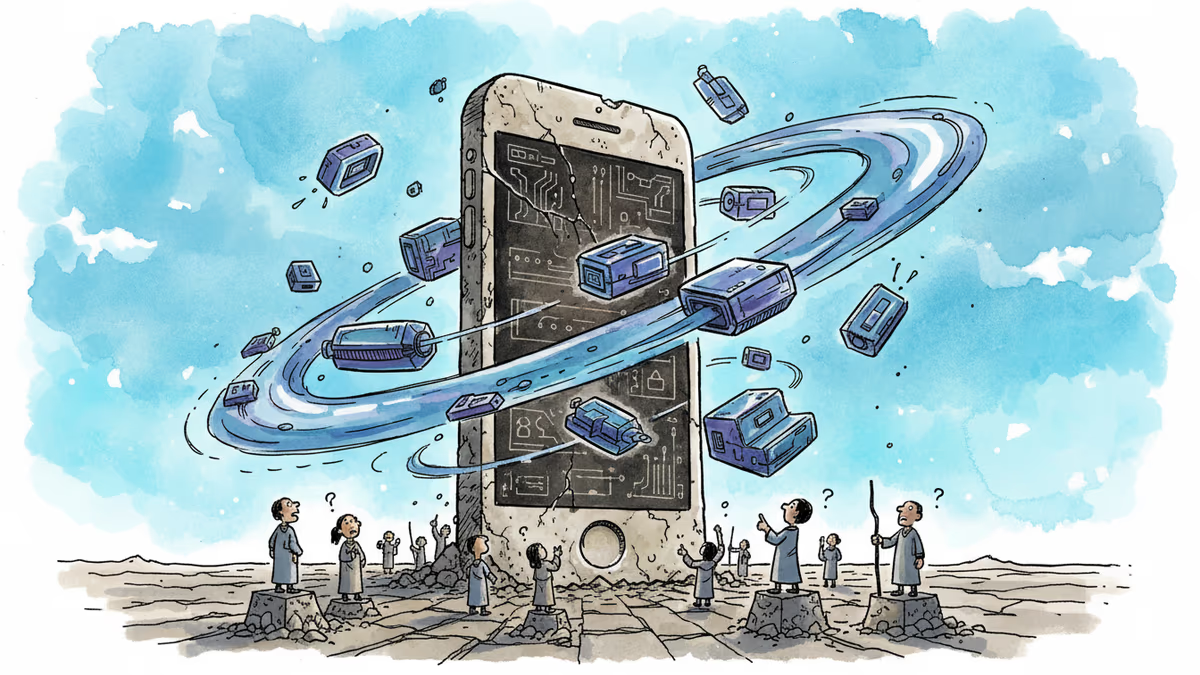
At Apple's 50th anniversary, top executives insisted the iPhone will anchor the AI era—and beyond. But is that confidence visionary or a warning sign?
Generative AI tools dominated GDC 2026 — but most developers aren't shipping them in real games. What's holding the industry back, and what does that gap reveal?
Pokémon Champions launched on Switch with bugs breaking core battle mechanics. But the deeper issue isn't the bugs — it's whether a game trying to please all players can satisfy any of them.
Xreal and Viture's latest AR glasses all do a few things well and a few things poorly. Here's what the best pair would look like — and why none of them are there yet.
At Apple's 50th anniversary, top executives insisted the iPhone will anchor the AI era—and beyond. But is that confidence visionary or a warning sign?
Generative AI tools dominated GDC 2026 — but most developers aren't shipping them in real games. What's holding the industry back, and what does that gap reveal?
Thoughts
Share your thoughts on this article
Sign in to join the conversation