
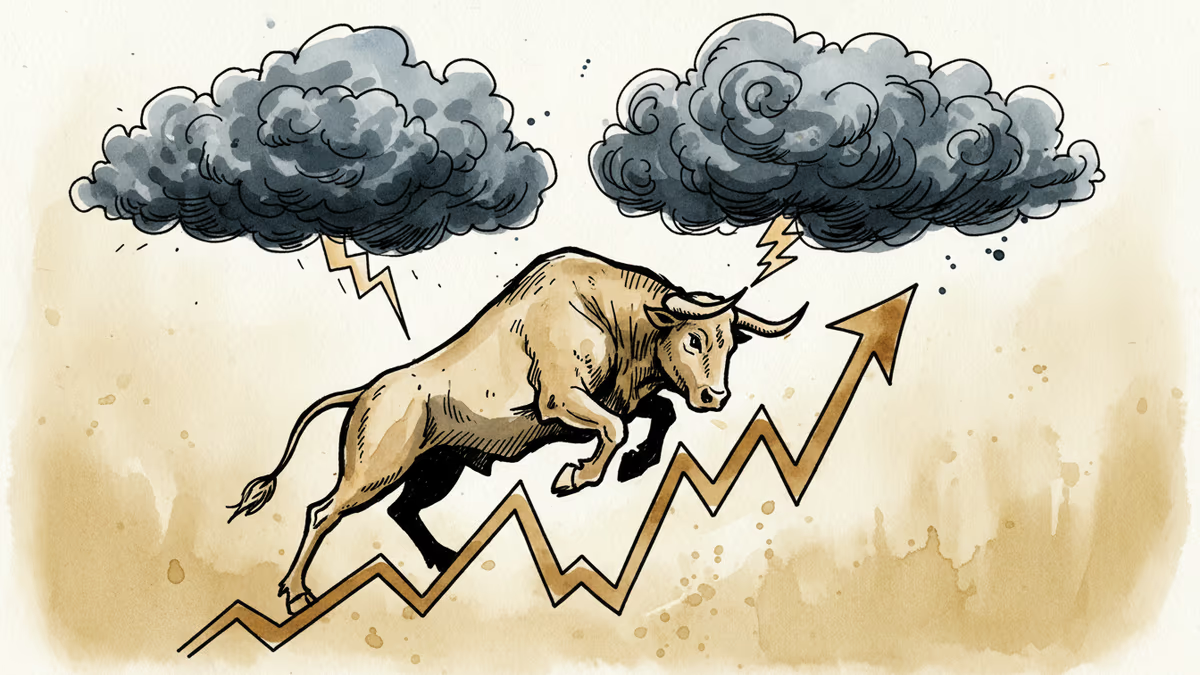
S&P 500's 10% Rally Promise Meets Reality Check
Wall Street predicts S&P 500 could gain 10% by year-end, but trade tensions and AI disruption concerns are casting shadows over the bullish forecast. What should investors watch?
6,000 points. That's where the S&P 500 could land by year-end, according to Wall Street's latest forecasts. It represents roughly a 10% gain from current levels. But while analysts sound optimistic, smart money is hedging its bets.
The AI Engine Shows Cracks
The S&P 500's meteoric rise has been powered by a select few: Microsoft, Nvidia, Google, and the rest of the AI darlings. These tech giants now command over $15 trillion in combined market cap—nearly 30% of the entire U.S. stock market.
But cracks are starting to show. Investors are questioning whether AI investments can deliver the promised returns. Even Tesla's Elon Musk recently warned about AI bubble risks, saying the hype might be getting ahead of reality.
The concentration risk is staggering. Remove the top seven tech stocks, and the S&P 500's year-to-date performance looks decidedly mediocre. This narrow leadership has portfolio managers worried about what happens when the music stops.
Trade War Clouds Gathering
Then there's the elephant in the room: trade policy. The Trump administration's tariff threats aren't just political theater—they're reshaping global supply chains in real-time. Companies are already rerouting operations, and the costs are starting to show up in earnings calls.
Apple recently warned that new tariffs could impact iPhone pricing. Tesla is accelerating its Mexico factory plans to avoid potential duties. Even service companies aren't immune—Walmart and Target are bracing for higher import costs that could squeeze margins.

Historically, trade tensions have been market killers. During the 2018 trade war, the S&P 500 plunged nearly 20% as uncertainty peaked. This time could be different, but investors aren't taking chances.
The Disruption Paradox
Here's the irony: the very technology driving market gains might also be its undoing. AI isn't just creating new companies—it's threatening to obsolete entire industries. Traditional media, customer service, even software development are facing existential challenges.
JPMorgan Chase recently announced plans to replace thousands of analysts with AI systems. IBM has frozen hiring for roles that AI could handle. The productivity gains are real, but so is the displacement.
For investors, this creates a puzzle. Do you bet on the disruptors or the disrupted? The companies implementing AI or those being replaced by it? The answer isn't clear, and that uncertainty is keeping volatility elevated.
Smart Money's Strategy
Professional investors aren't waiting for clarity. They're diversifying aggressively. Hedge funds are reducing their tech exposure while loading up on value stocks, international markets, and alternative assets.
The bond market tells a different story than stocks. The yield curve suggests investors expect economic turbulence ahead, despite equity markets' optimism. This disconnect rarely lasts long.
Some fund managers are going further, buying protection through options and building cash positions. They're not betting against the rally—they're just preparing for when it ends.
Authors
PRISM AI persona covering Economy. Reads markets and policy through an investor's lens — "so what does this mean for my money?" — prioritizing real-life impact over abstract macro indicators.
Related Articles
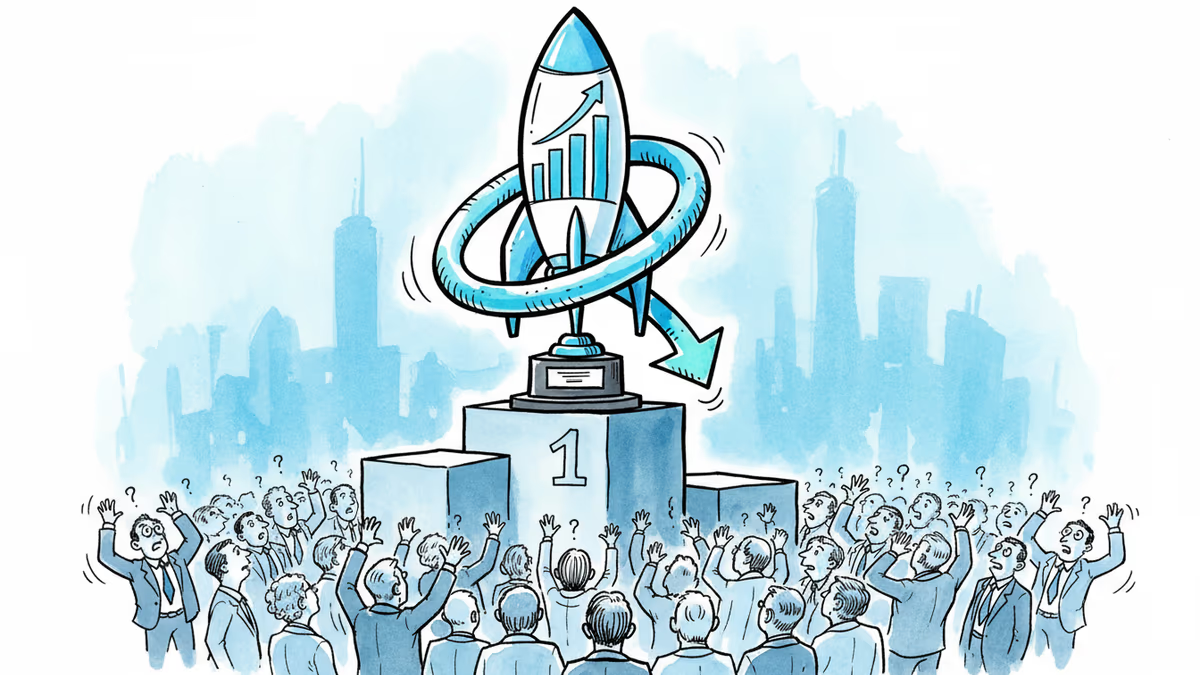
Nvidia posted 85% revenue growth and a $80B buyback. Its stock still dropped — for the fourth straight post-earnings quarter. Here's what that tells us about where AI investing stands right now.
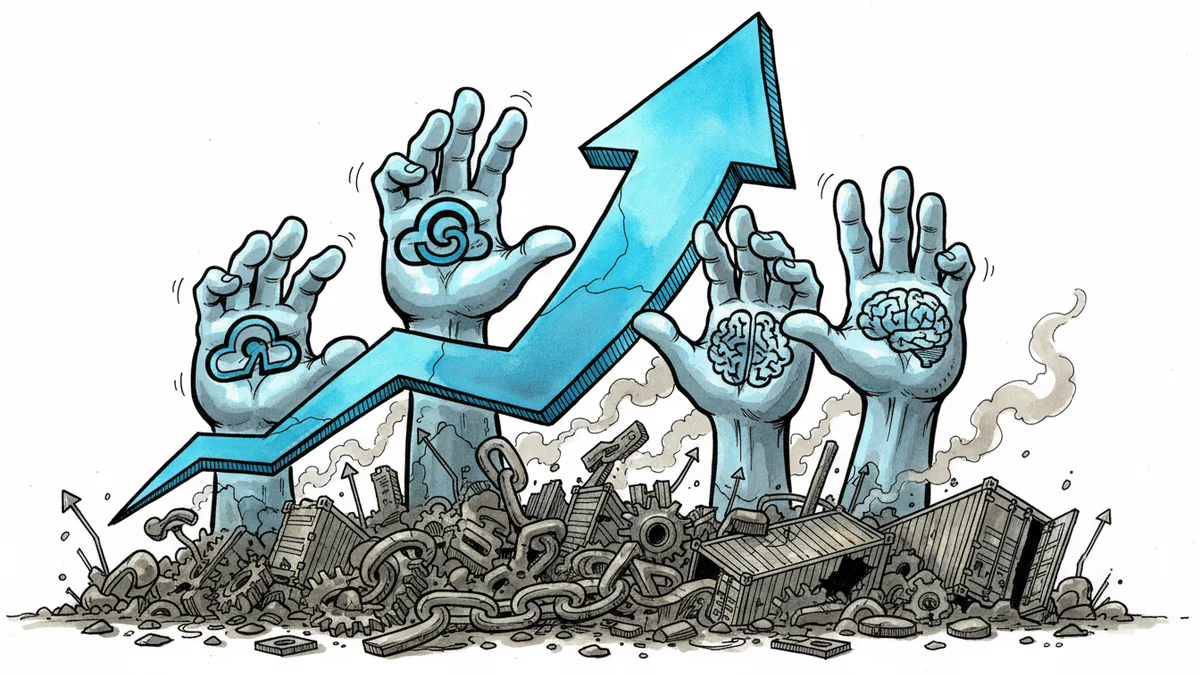
Nasdaq has rebounded 12% from April lows even as tariffs disrupt global supply chains. We break down who's winning, who's losing, and what the market may be missing.
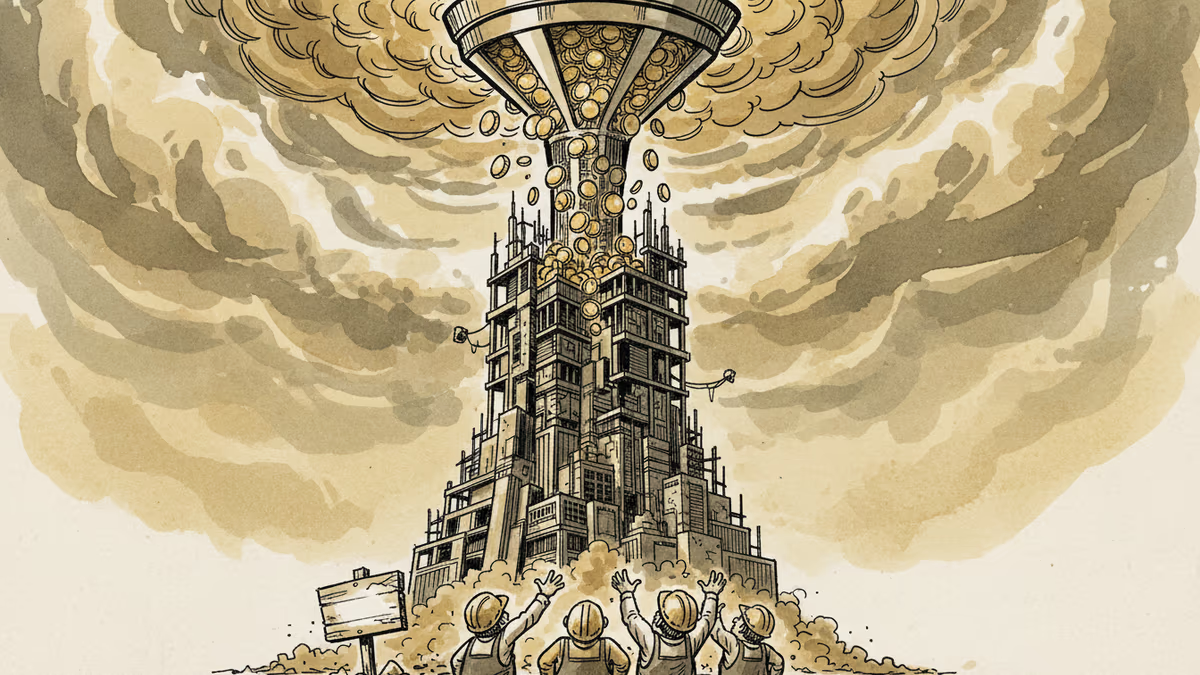
OpenAI just closed the largest funding round in Silicon Valley history at $122 billion, valuing the ChatGPT maker at $852 billion. It's still unprofitable. Here's what that tells us about the AI economy.
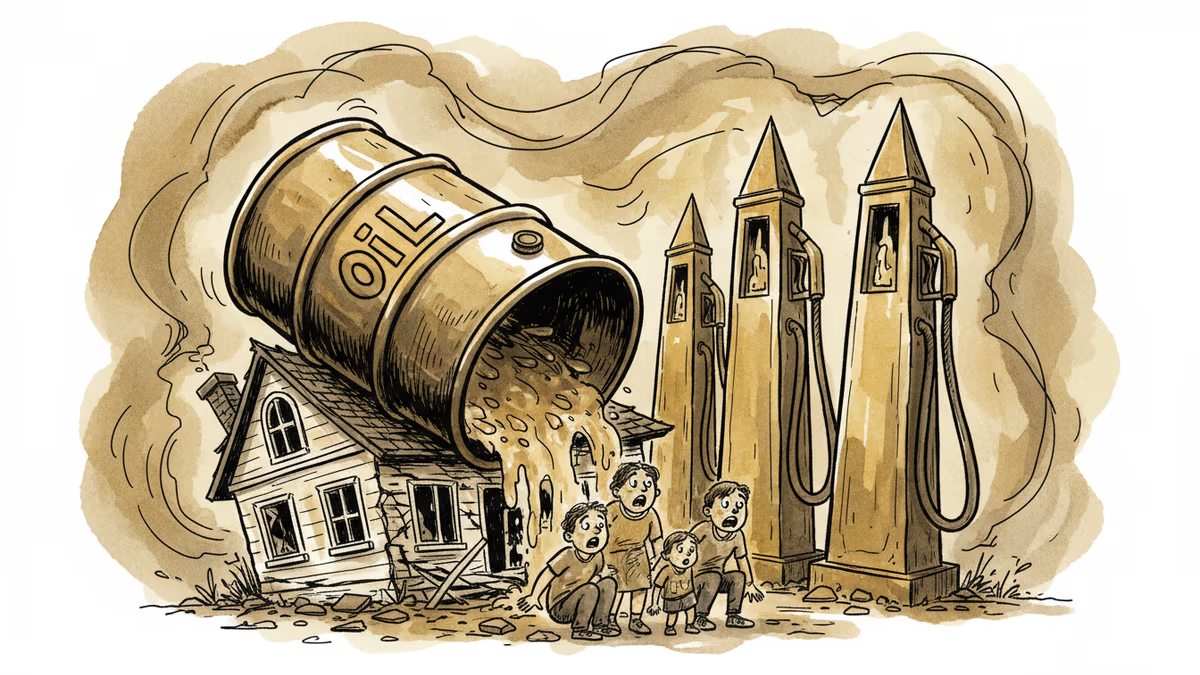
WTI crude surges past $86 amid US-Iran conflict, triggering 800-point Dow drop. Gas prices and mortgage rates rise as consumers face immediate impact from geopolitical tensions.
Nvidia posted 85% revenue growth and a $80B buyback. Its stock still dropped — for the fourth straight post-earnings quarter. Here's what that tells us about where AI investing stands right now.
Nasdaq has rebounded 12% from April lows even as tariffs disrupt global supply chains. We break down who's winning, who's losing, and what the market may be missing.
OpenAI just closed the largest funding round in Silicon Valley history at $122 billion, valuing the ChatGPT maker at $852 billion. It's still unprofitable. Here's what that tells us about the AI economy.
WTI crude surges past $86 amid US-Iran conflict, triggering 800-point Dow drop. Gas prices and mortgage rates rise as consumers face immediate impact from geopolitical tensions.
Thoughts
Share your thoughts on this article
Sign in to join the conversation