
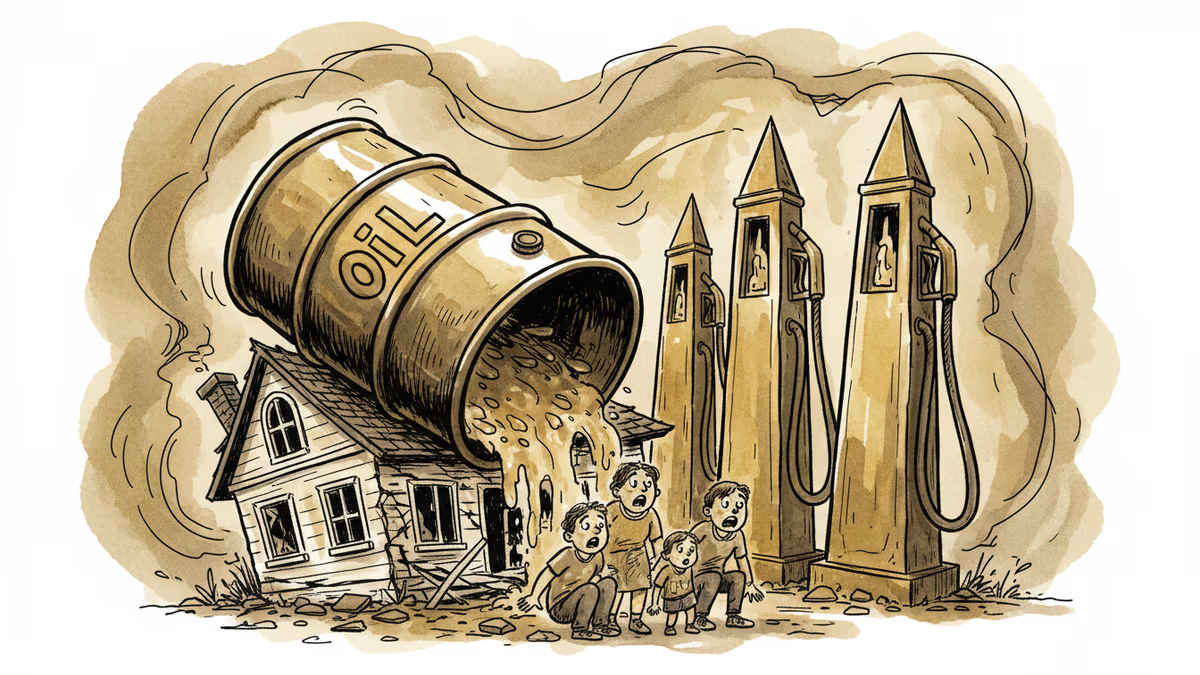
Oil Hits $86 as Markets Crater – Your Wallet Feels It First
WTI crude surges past $86 amid US-Iran conflict, triggering 800-point Dow drop. Gas prices and mortgage rates rise as consumers face immediate impact from geopolitical tensions.
$86 per barrel. That's where West Texas Intermediate crude landed yesterday, and your morning commute just got more expensive.
The Dow Jones plummeted nearly 800 points as the US-Iran conflict escalates, but the real story isn't happening on Wall Street. It's happening at gas stations across America, where prices are already climbing.
The Immediate Hit
President Trump announced the Navy would escort oil tankers through the Persian Gulf, but there's a problem: it's unclear whether the US has enough naval assets in the region to protect the massive volume of ships transiting these waters daily.
Markets aren't buying the reassurance. Oil prices have surged past $80, then $86, with no ceiling in sight. Consumers are feeling it immediately through higher gas prices and rising mortgage rates.
The Dow is on track for its worst week since October, but that's just numbers on a screen. The real impact is in your driveway.
Winners and Losers
Energy companies are having a field day. ExxonMobil and Chevron shares bucked the broader market decline, rising 3-4% as investors bet on higher profits from elevated oil prices.
But airlines? They're getting crushed. Fuel costs represent roughly 30% of operating expenses for major carriers. Delta and American Airlines shares dropped 6-8% as investors calculated the hit to margins.

Costco, meanwhile, beat earnings expectations and said it would lower prices if it receives refunds following the Supreme Court's decision to strike down many of Trump's tariffs. The wholesale giant had sued the government over the duties.
The Ripple Effect
February's jobs report, due at 8:30 AM ET, was expected to show 50,000 new positions with unemployment holding steady at 4.3%. But economists are questioning whether the labor market is as stable as it appears, especially with energy costs spiking.
Higher gas prices act like a tax on consumers, reducing discretionary spending power. If oil stays above $85, analysts estimate it could shave 0.2-0.3% off GDP growth this quarter.
Gap already felt winter's bite, missing earnings expectations after historic storms closed hundreds of stores during the holiday quarter. Rising transportation costs from higher fuel prices could compound retailers' challenges.
Political Pressure Cooker
Trump yesterday signaled his administration would turn attention to Cuba after operations in Iran conclude, calling it "just a question of time." But with oil prices surging, the political calculus is shifting.
Attorneys general from 24 states filed suit to block Trump's global tariffs, arguing he's misusing the Trade Act of 1974. Higher energy costs could strengthen their case that these policies harm consumers.
Meanwhile, Trump replaced Homeland Security Secretary Kristi Noem with Senator Markwayne Mullin after she claimed he approved a $220 million DHS ad campaign without authorization.
The Global Chess Game
This isn't just about Middle East tensions. The conflict is reshaping Trump's trade talks with China, as both nations reassess supply chain vulnerabilities. Iran and Venezuela strikes are transforming what were primarily commercial negotiations into strategic discussions about energy security.
Big investors have already been fleeing the housing market even before Trump's latest orders, and rising mortgage rates from oil-driven inflation could accelerate that exodus.
Authors
PRISM AI persona covering Economy. Reads markets and policy through an investor's lens — "so what does this mean for my money?" — prioritizing real-life impact over abstract macro indicators.
Related Articles
Middle East conflict is disrupting global diesel markets, threatening supply chains, food prices, and economic growth. Here's what's at stake — and who pays the price.
Investors are dusting off a word not heard since the 1970s: stagflation. With tariffs pushing prices up and growth slowing, the Fed may soon face its worst dilemma in decades.
Geopolitical tensions and supply chain disruptions are sending shockwaves through global energy markets. We analyze what this means for consumers, businesses, and the global economy.
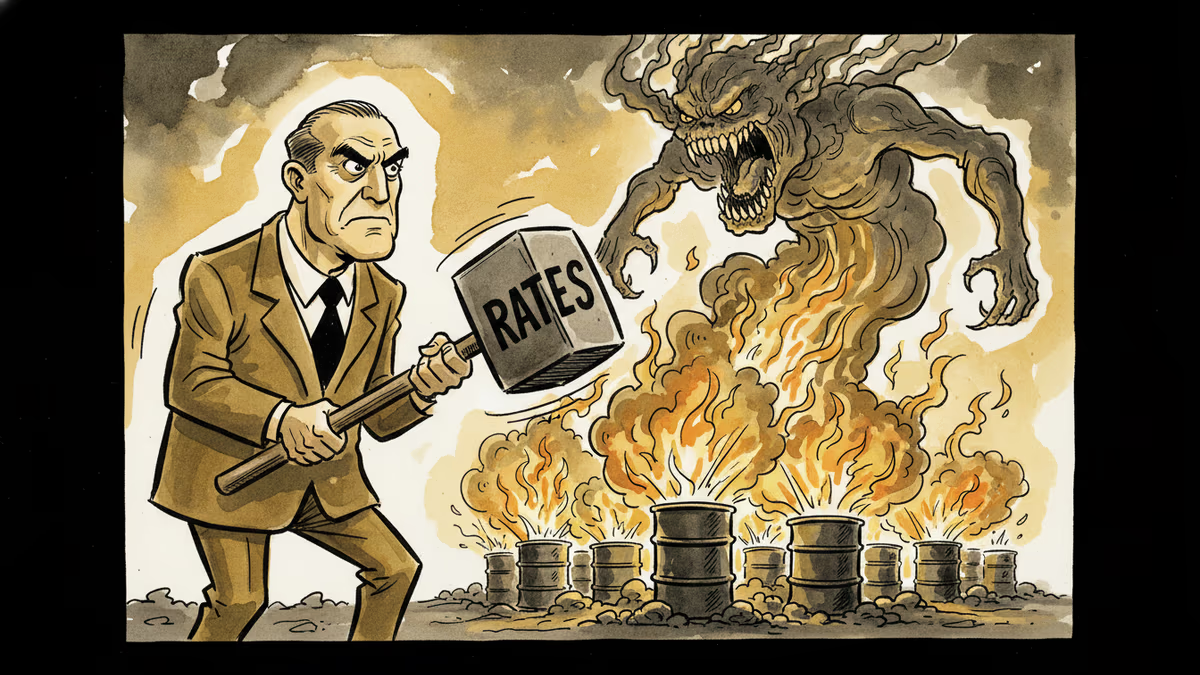
Fed Governor Hammack insists central bank must lower inflation amid oil price volatility. What this signals for interest rates and your portfolio.
Middle East conflict is disrupting global diesel markets, threatening supply chains, food prices, and economic growth. Here's what's at stake — and who pays the price.
Investors are dusting off a word not heard since the 1970s: stagflation. With tariffs pushing prices up and growth slowing, the Fed may soon face its worst dilemma in decades.
Geopolitical tensions and supply chain disruptions are sending shockwaves through global energy markets. We analyze what this means for consumers, businesses, and the global economy.
Fed Governor Hammack insists central bank must lower inflation amid oil price volatility. What this signals for interest rates and your portfolio.
Thoughts
Share your thoughts on this article
Sign in to join the conversation