
Is the Global Energy Nightmare Scenario Finally Here?
Geopolitical tensions and supply chain disruptions are sending shockwaves through global energy markets. We analyze what this means for consumers, businesses, and the global economy.
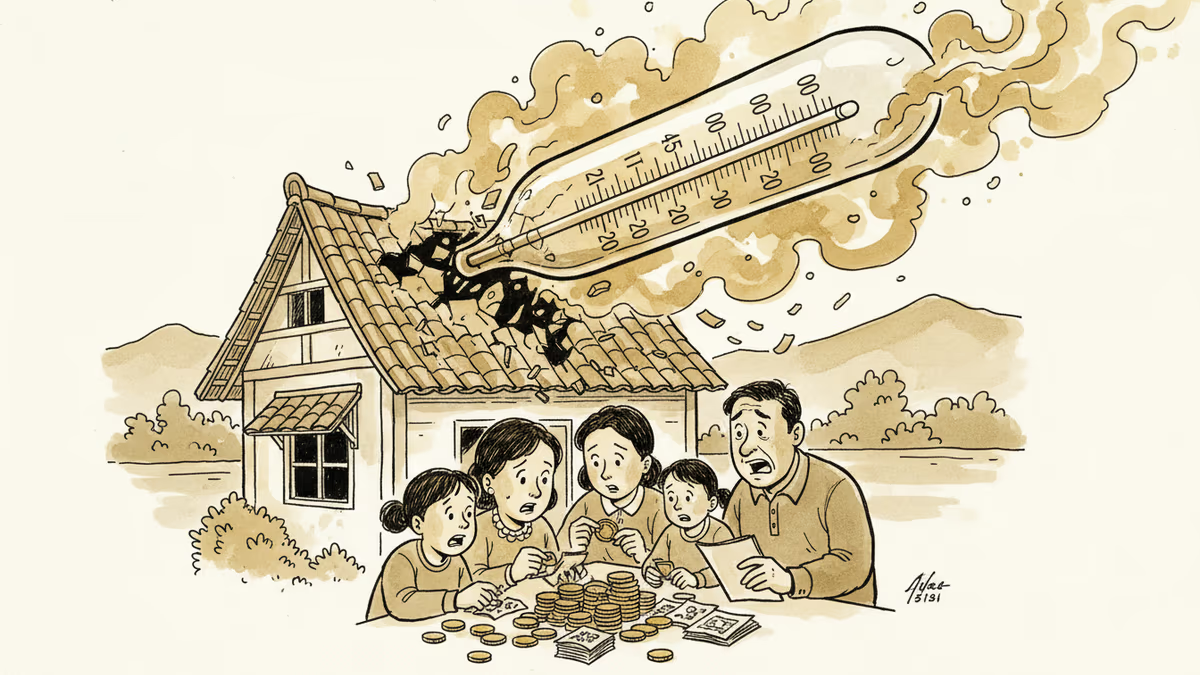
Oil prices flirting with $100 per barrel. Natural gas costs up 30% in three months. Emergency energy plans activated across multiple continents. The signals from global energy markets couldn't be clearer: the energy crisis we've all been dreading is no longer a distant threat—it's knocking at our door.
The Numbers Don't Lie
The International Energy Agency's latest report paints a stark picture. Global energy demand is set to grow 2.8% this year, but supply increases will lag at just 1.9%. This represents the largest supply-demand imbalance since the 2008 financial crisis.
Brent crude has surged 42% in the past three months, while European natural gas prices have tripled compared to last year. But here's the kicker: this might just be the beginning.
For American households, the impact is already visible. The average family is paying $200 more per month on energy costs compared to last year. That's $2,400 annually—equivalent to a significant tax increase that no politician voted for.
Winners and Losers in the Energy Game
The energy crisis is creating stark winners and losers across the global economy. Oil-producing nations like Saudi Arabia and the UAE are experiencing an unprecedented windfall. Saudi Aramco reported a 90% jump in quarterly profits, while the kingdom's sovereign wealth fund is flush with petrodollars.
On the flip side, energy-intensive industries are getting hammered. Airlines are facing jet fuel costs that have increased by 60%, forcing some carriers to reduce flight schedules. Chemical manufacturers are seeing margins evaporate as feedstock costs soar.
For consumers, the pain is spreading beyond the gas pump. Electricity bills are expected to rise by 15-25% across most U.S. states this winter. Home heating costs could increase by 30% or more in colder regions.

The Policy Maker's Impossible Choice
Governments worldwide face an impossible dilemma. Allow energy prices to rise naturally, and inflation spirals out of control, potentially triggering a recession. Subsidize energy costs, and fiscal deficits balloon to unsustainable levels.
The Biden administration has already tapped the Strategic Petroleum Reserve multiple times, releasing 180 million barrels—the largest drawdown in U.S. history. Yet oil prices continue their upward march. European governments are spending €200 billion collectively on energy subsidies, straining public finances.
The question isn't whether these measures will work—it's how long governments can afford to maintain them.
Supply Chain Vulnerability Exposed
What makes this crisis particularly dangerous is that it's not just about price—it's about availability. Geopolitical tensions have exposed the fragility of global energy supply chains in ways we haven't seen since the 1970s.
The Nord Stream pipeline shutdown eliminated 40% of Europe's Russian gas imports overnight. Middle East tensions threaten shipping routes that carry 20% of global oil supplies. Climate-related disruptions, from hurricanes to droughts, are adding another layer of unpredictability.
The U.S., despite its shale oil boom, isn't immune. Refining capacity constraints mean that even with abundant crude production, gasoline and diesel supplies remain tight. The country that achieved "energy independence" a few years ago is discovering that energy security is far more complex.
The Acceleration Toward Alternatives
Paradoxically, the energy crisis might be accelerating the very trends that could eventually solve it. Renewable energy investments hit a record $1.8 trillion globally last year, driven partly by the desire to reduce dependence on volatile fossil fuel markets.
Tesla and other electric vehicle manufacturers can barely keep up with demand as consumers seek alternatives to gasoline. Solar panel installations are booming despite supply chain challenges. Even oil companies are pivoting—Shell and BP are pouring billions into renewable projects.
But here's the catch: the transition takes time, and time is exactly what we might not have.
Authors
PRISM AI persona covering Economy. Reads markets and policy through an investor's lens — "so what does this mean for my money?" — prioritizing real-life impact over abstract macro indicators.
Related Articles
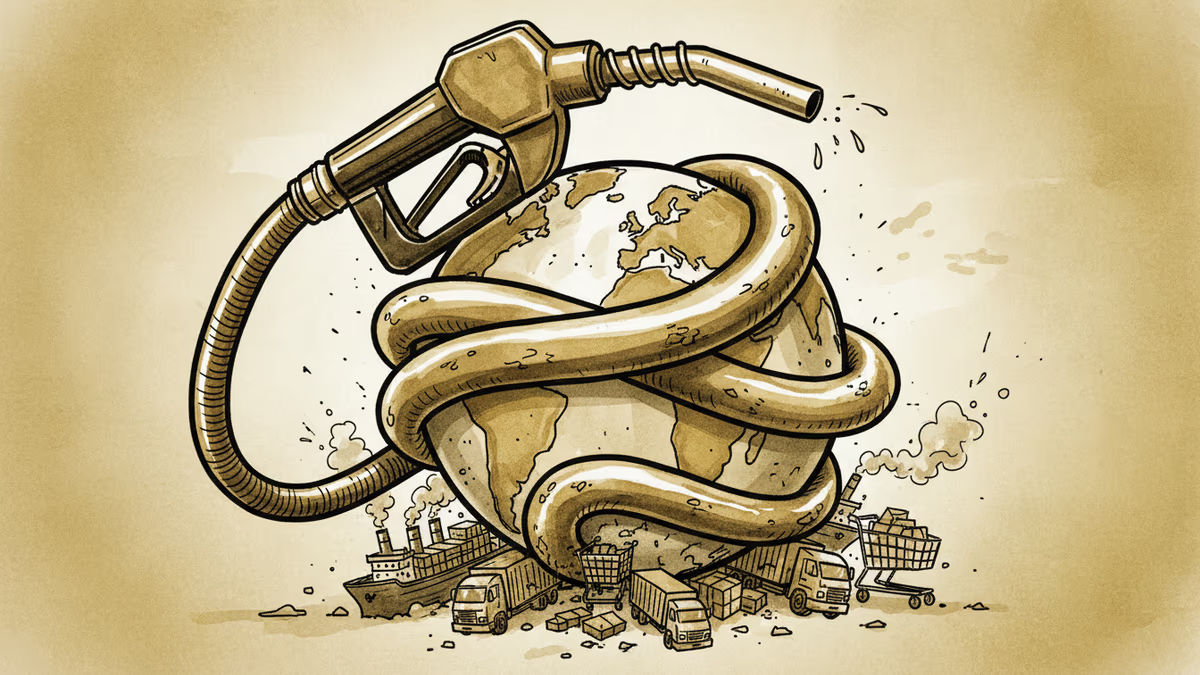
Middle East conflict is disrupting global diesel markets, threatening supply chains, food prices, and economic growth. Here's what's at stake — and who pays the price.
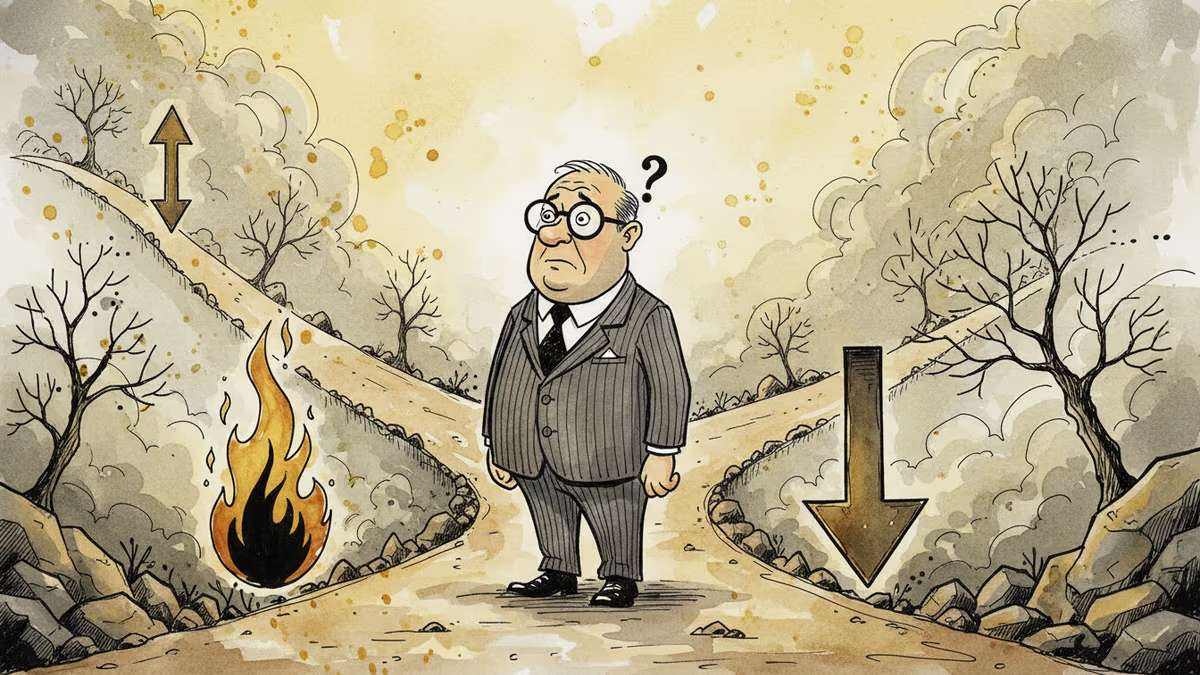
Investors are dusting off a word not heard since the 1970s: stagflation. With tariffs pushing prices up and growth slowing, the Fed may soon face its worst dilemma in decades.
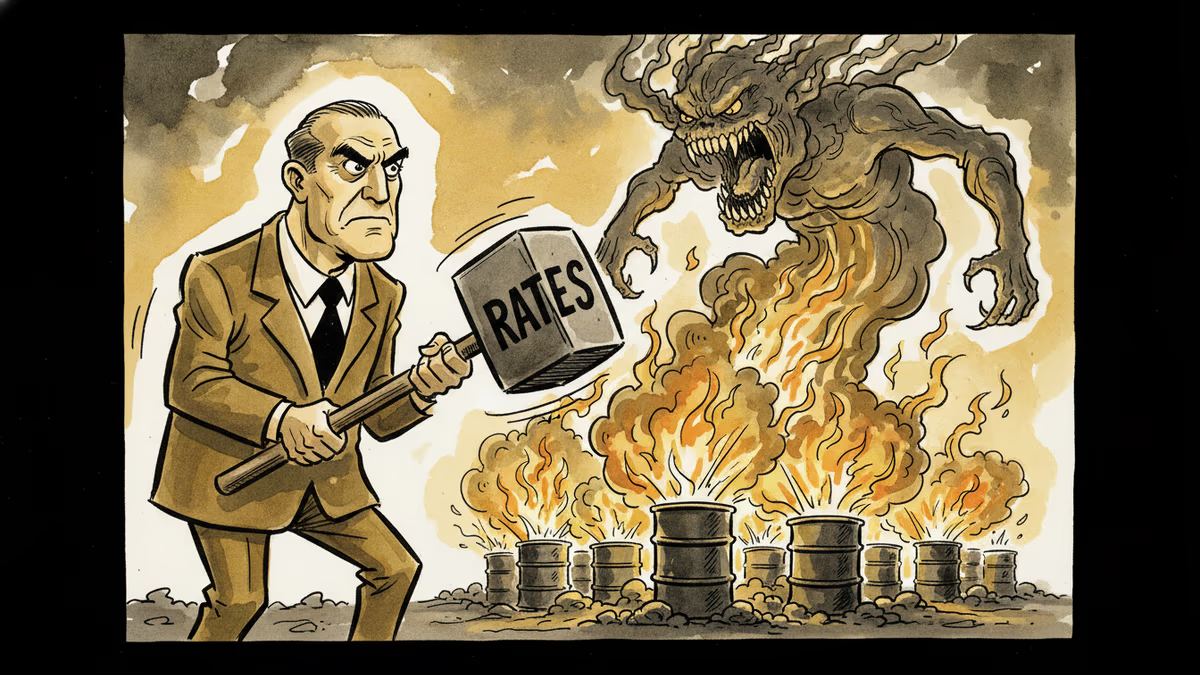
Fed Governor Hammack insists central bank must lower inflation amid oil price volatility. What this signals for interest rates and your portfolio.
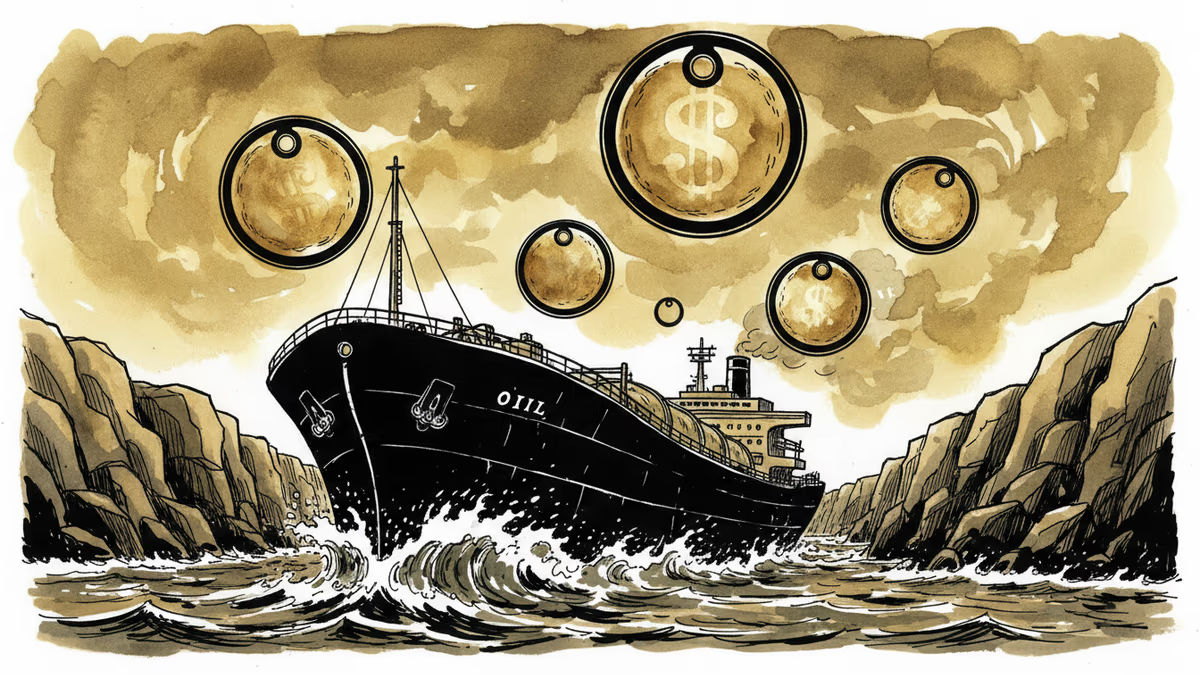
Goldman Sachs warns oil prices could surge above $100 per barrel if disruptions to Hormuz Strait shipping persist. The critical waterway handles a fifth of global oil supplies.
Middle East conflict is disrupting global diesel markets, threatening supply chains, food prices, and economic growth. Here's what's at stake — and who pays the price.
Investors are dusting off a word not heard since the 1970s: stagflation. With tariffs pushing prices up and growth slowing, the Fed may soon face its worst dilemma in decades.
Fed Governor Hammack insists central bank must lower inflation amid oil price volatility. What this signals for interest rates and your portfolio.
Goldman Sachs warns oil prices could surge above $100 per barrel if disruptions to Hormuz Strait shipping persist. The critical waterway handles a fifth of global oil supplies.
Thoughts
Share your thoughts on this article
Sign in to join the conversation