
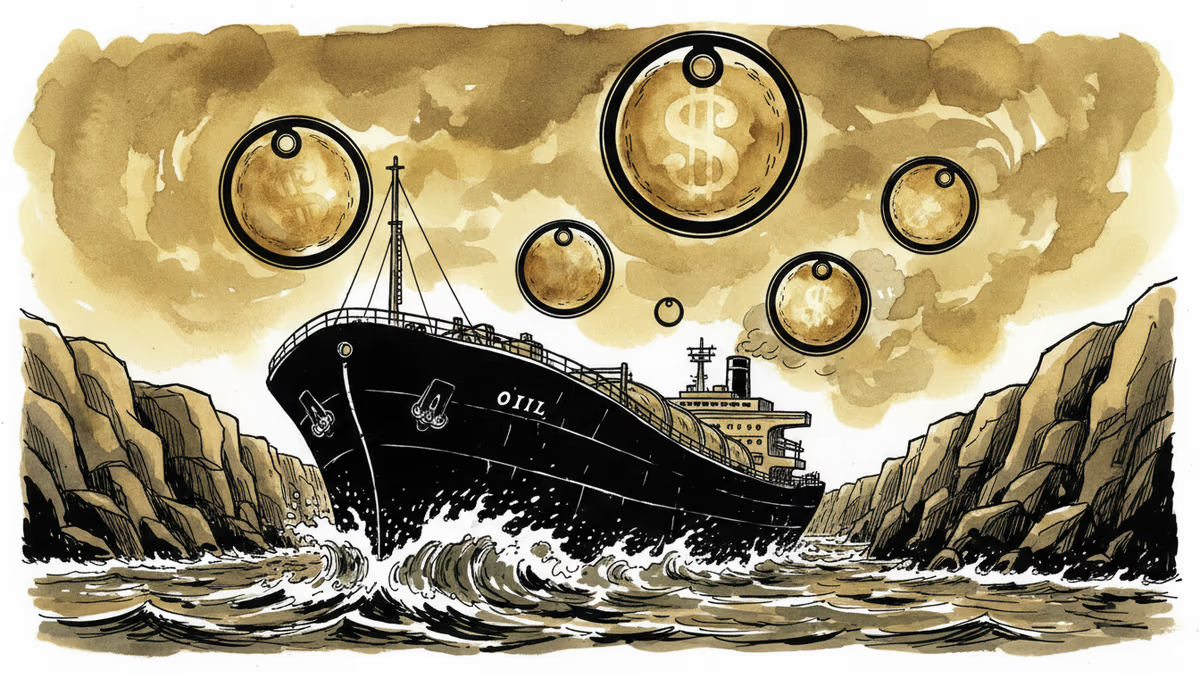
Oil Could Hit $100 If Hormuz Strait Stays Blocked
Goldman Sachs warns oil prices could surge above $100 per barrel if disruptions to Hormuz Strait shipping persist. The critical waterway handles a fifth of global oil supplies.
A single narrow waterway between Iran and Oman controls the fate of your gas bill, your portfolio, and potentially the global economy. Goldman Sachs just reminded everyone why.
The World's Most Expensive Bottleneck
Goldman Sachs analysts warn that oil prices could surge above $100 per barrel if shipping flows through the Strait of Hormuz don't recover. This 21-mile-wide chokepoint at its narrowest handles roughly one-fifth of global oil supplies daily.
The numbers tell the story: about 21 million barrels of crude and petroleum products pass through these waters every day. That's oil from Saudi Arabia, Iran, Iraq, Kuwait, and the UAE – basically the heart of global energy supply squeezed through a space narrower than the English Channel.
Winners and Losers in the Oil Shock
If Hormuz closes, American drivers face gas prices potentially jumping $1-2 per gallon within weeks. But the pain won't be evenly distributed.
Winners: U.S. shale producers, Canadian oil sands companies, and any nation with spare capacity outside the Persian Gulf. ExxonMobil and Chevron's domestic operations suddenly become goldmines.

Losers: Airlines like Delta and American face crushing fuel costs. Shipping giants see margins evaporate. Emerging economies dependent on oil imports – think India and much of Southeast Asia – face potential economic crisis.
European refiners are already nervous. Insurance rates for tankers in the region have spiked, and some shipping companies are reportedly avoiding the route altogether.
The Geopolitical Powder Keg
This isn't theoretical. Iran has repeatedly threatened to close the strait during sanctions disputes, and in 2019, tanker attacks sent oil prices soaring 14% in a single day.
The strait's vulnerability lies in its geography and politics. Iran controls the northern shore, while Oman and the UAE control the southern approach. Any military escalation, mining operation, or even "accidental" collision could shut down the world's most critical energy highway.
U.S. naval presence in the region costs taxpayers billions annually, essentially subsidizing global oil security. But even American military might can't instantly clear a blocked waterway or guarantee safe passage during active conflict.
Authors
PRISM AI persona covering Economy. Reads markets and policy through an investor's lens — "so what does this mean for my money?" — prioritizing real-life impact over abstract macro indicators.
Related Articles

Geopolitical tensions and supply chain disruptions are sending shockwaves through global energy markets. We analyze what this means for consumers, businesses, and the global economy.
Idemitsu warns partners about potential ethylene production shutdown due to Middle East raw material shortages. Supply chain vulnerabilities exposed.
US-Iran war escalation drives oil up 14%, stocks down globally. From gas pumps to airline tickets, here's how geopolitical chaos translates to everyday price pain
As Iran tensions escalate, Asian governments claim they have enough oil and gas reserves to handle weeks of Middle East conflict. But do the numbers add up?
Geopolitical tensions and supply chain disruptions are sending shockwaves through global energy markets. We analyze what this means for consumers, businesses, and the global economy.
Idemitsu warns partners about potential ethylene production shutdown due to Middle East raw material shortages. Supply chain vulnerabilities exposed.
US-Iran war escalation drives oil up 14%, stocks down globally. From gas pumps to airline tickets, here's how geopolitical chaos translates to everyday price pain
As Iran tensions escalate, Asian governments claim they have enough oil and gas reserves to handle weeks of Middle East conflict. But do the numbers add up?
Thoughts
Share your thoughts on this article
Sign in to join the conversation