
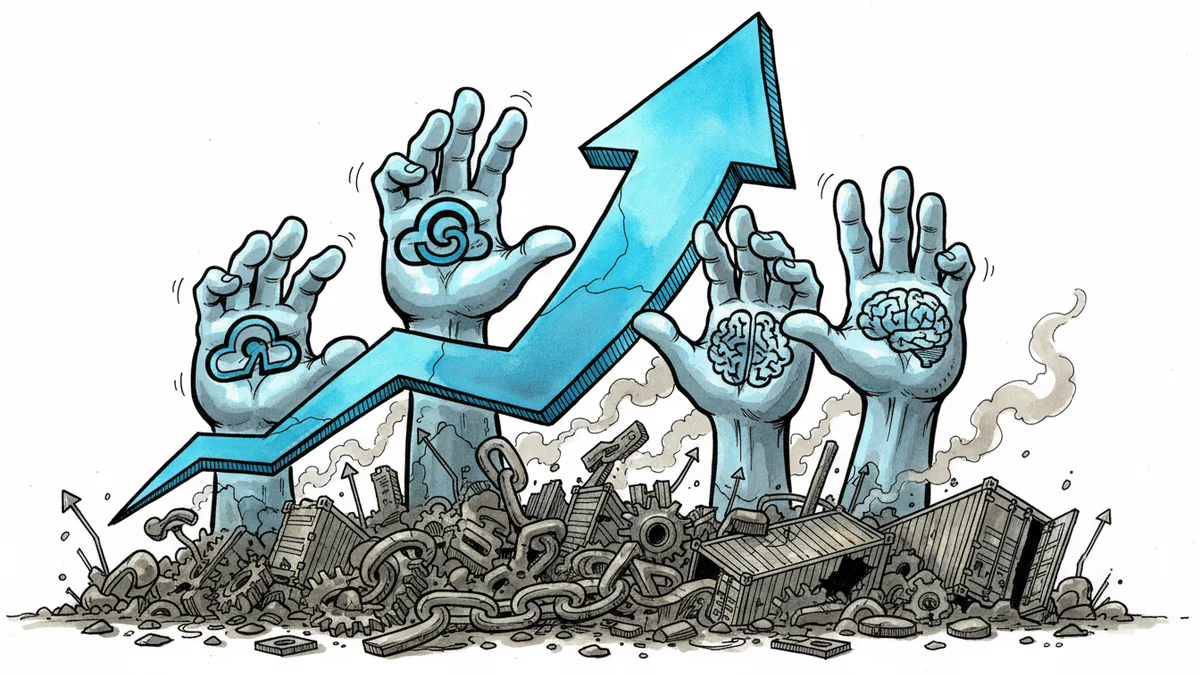
Tech Stocks Are Rising Through a Supply Shock. Should You Trust It?
Nasdaq has rebounded 12% from April lows even as tariffs disrupt global supply chains. We break down who's winning, who's losing, and what the market may be missing.
The factories are slowing down. The stock charts are going up. Both things are true right now.
Since late 2025, sweeping U.S. tariff measures have rattled global supply chains in measurable ways—component sourcing costs are up, some electronics manufacturers have pushed back production schedules, and shipping bottlenecks have returned to conversations that had quieted down since 2022. And yet the Nasdaq Composite has rebounded roughly 12% from its April 2026 lows, with Nvidia, Microsoft, and Meta leading the charge. The question investors are quietly asking: is this rally reading the situation correctly, or is it looking the other way?
What the Numbers Say—and What They Don't
On the surface, the earnings case for big tech holds up. Nvidia's data center revenue grew 78% year-over-year. Microsoft Azure posted 29% growth. The AI infrastructure build-out is absorbing cost pressures that would have derailed a less momentum-driven sector.
But here's the split that the headline indices obscure: this rally is not a tech-sector story. It's a five-or-six-company story. Hardware-dependent mid-caps, PC component suppliers, and consumer electronics firms have largely gone sideways or lower over the same period. When a handful of mega-caps carry enough index weight, a sector-wide malaise can hide in plain sight behind a green number.
The S&P 500's top 10 holdings now account for roughly 37% of the entire index. That concentration means the index increasingly reflects the fortunes of a narrow slice of the economy—not the broader industrial and consumer landscape that supply shocks actually bite into.
The Bull Case, and Where It Strains
Market optimists are working from two premises.
First, AI capex is tariff-resistant. The companies building out data centers—Amazon, Google, Meta—have collectively signaled capital expenditure increases of roughly 30% year-over-year for 2026. That level of committed demand doesn't evaporate because of a supply-chain cost bump. The software and cloud layer of AI sits well above the physical disruption.

Second, trade negotiations tend to find a floor. Markets are pricing in a scenario where U.S.-China tensions stop short of full decoupling and some tariff relief emerges through negotiation. Recent signals of selective exemptions on certain semiconductor-adjacent goods have reinforced that bet.
Both arguments have merit. But they share a structural weakness: AI infrastructure investment ultimately requires hardware, and that hardware is not insulated from supply constraints. Industry observers have flagged that TSMC's advanced packaging bottlenecks, rare earth material export controls from China, and delays in U.S. domestic fab expansion could translate into real AI chip supply constraints by late 2026. The optimism may be correctly timed for now—and premature for what comes next.
Winners, Losers, and the Consumer in the Middle
The winners in this environment are clear: cloud and AI software companies with low physical supply-chain exposure and enterprise customers who are still expanding their AI budgets. Investors concentrated in those names have done well.
The losers are quieter about it. Consumer hardware companies—smartphones, laptops, appliances—are absorbing tariff-driven cost increases and facing an unpleasant choice: pass them to consumers, compress margins, or both. Apple has reportedly been weighing price increases on certain U.S.-market products. For the average household, this translates to a longer upgrade cycle—keeping the current phone one more year, deferring the laptop replacement.
That behavioral shift matters beyond the individual purchase. Consumer hardware demand is a leading indicator for the semiconductor cycle downstream. If consumers pull back on device upgrades, the ripple eventually reaches chip orders—which eventually reaches the same AI-darling companies the market is currently celebrating.
What the Market May Be Pricing Too Optimistically
The most sober read of the current rally is this: markets are pricing what's working now, not what might break later.
AI capex commitments are real and large. But the signal that would actually challenge the current thesis won't arrive as a dramatic earnings miss—it will show up first in quieter data: data center construction order cancellations, cloud contract renewal rates softening, or enterprise IT budget freezes in a weakening macro. Those numbers tend to lag the narrative by two to three quarters.
There's also a reflexivity risk worth naming. When index concentration is high and a small number of stocks are doing the heavy lifting, a sentiment shift in those names doesn't just affect those stocks—it affects the index, which affects passive fund flows, which amplifies the move. The same mechanism that made the rally fast could make a reversal faster.
This content is AI-generated based on source articles. While we strive for accuracy, errors may occur. We recommend verifying with the original source.
Related Articles

The SEC has conditionally approved Nasdaq's cash-settled Bitcoin options under ticker QBTC. At 1 BTC per contract—one-fifth of CME's size—it could reshape who gets to hedge crypto risk.

Nvidia posted 85% revenue growth and a $80B buyback. Its stock still dropped — for the fourth straight post-earnings quarter. Here's what that tells us about where AI investing stands right now.
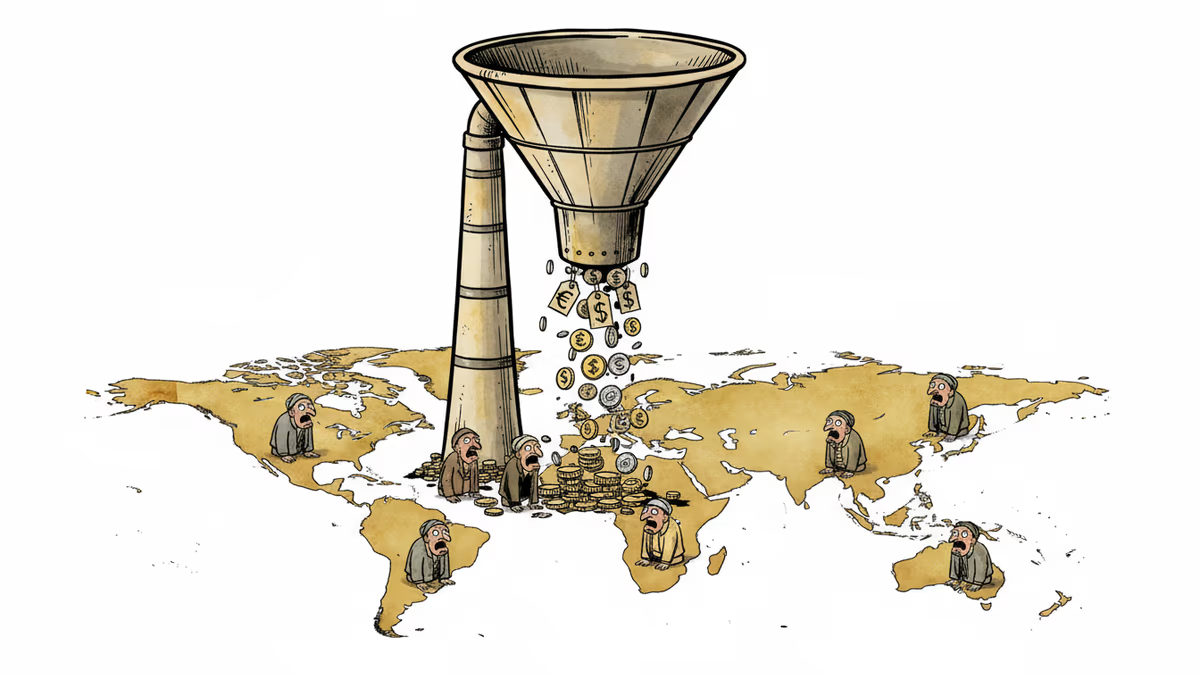
China's consumer prices hit a three-year low in April 2026. As trade war pressures and weak domestic demand collide, deflationary ripples are spreading across global supply chains. Here's what it means for your investments and industries.
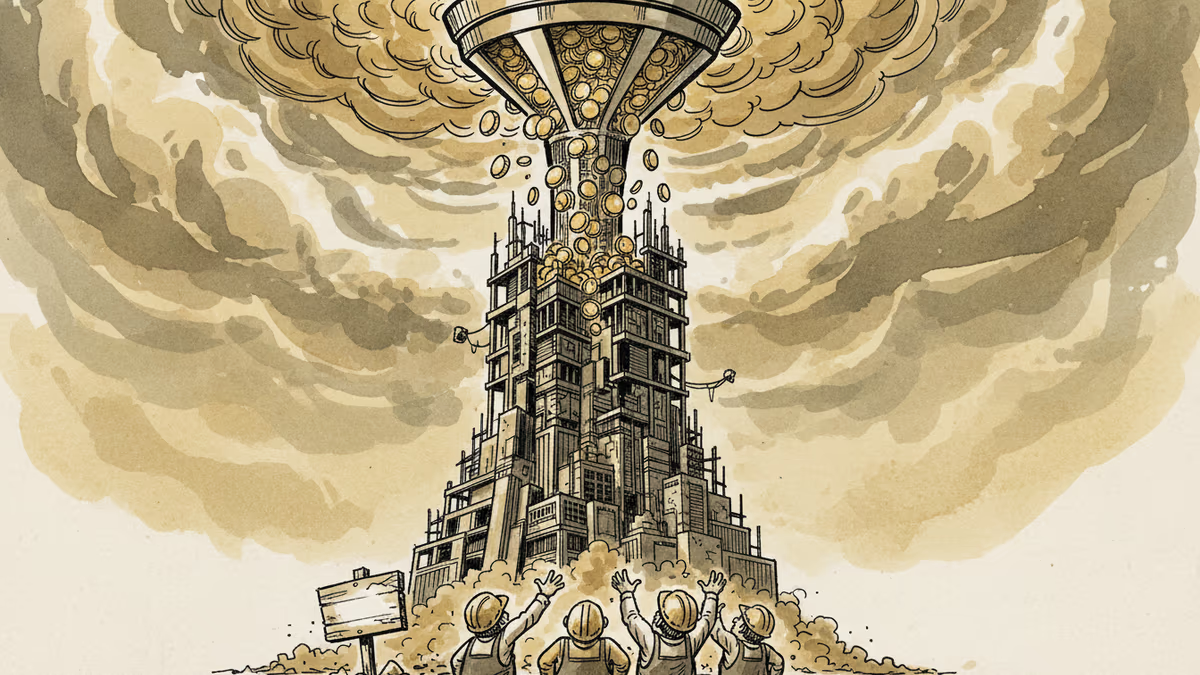
OpenAI just closed the largest funding round in Silicon Valley history at $122 billion, valuing the ChatGPT maker at $852 billion. It's still unprofitable. Here's what that tells us about the AI economy.
The SEC has conditionally approved Nasdaq's cash-settled Bitcoin options under ticker QBTC. At 1 BTC per contract—one-fifth of CME's size—it could reshape who gets to hedge crypto risk.
Nvidia posted 85% revenue growth and a $80B buyback. Its stock still dropped — for the fourth straight post-earnings quarter. Here's what that tells us about where AI investing stands right now.
China's consumer prices hit a three-year low in April 2026. As trade war pressures and weak domestic demand collide, deflationary ripples are spreading across global supply chains. Here's what it means for your investments and industries.
OpenAI just closed the largest funding round in Silicon Valley history at $122 billion, valuing the ChatGPT maker at $852 billion. It's still unprofitable. Here's what that tells us about the AI economy.
Thoughts
Share your thoughts on this article
Sign in to join the conversation