

PlayStation Portal's 'Upgrade' Is a Multi-Million Dollar Market Research Fail
Sony's PlayStation Portal cloud update fails its 'on-the-go' promise, revealing a major strategic error as the handheld market booms. An expert analysis.
The Lede: A Distress Signal Disguised as a Product
Sony's latest update to the PlayStation Portal, expanding its cloud streaming library, is being framed as a major step forward. But for executives, investors, and strategists, this move should be seen for what it is: a flawed, reactionary tactic that underscores a massive strategic vulnerability. The Portal's unexpected commercial success, despite its profound limitations, isn't a victory for Sony's current strategy; it's the loudest possible market signal that the company is ignoring a billion-dollar demand for a product it's too risk-averse to build: a true successor to the PlayStation Vita.
Why It Matters: The Strategic Disconnect
This update exposes a fundamental conflict at the heart of Sony's gaming division. The company is attempting to capture the high-margin, recurring revenue of a cloud subscription service (PS Plus Premium) while delivering it through hardware that fundamentally fails to support the core use case—true, reliable gaming on the go. The result is a frustrating user experience that damages brand trust. While competitors like Valve (Steam Deck) and Nintendo (Switch) build robust ecosystems around native handheld hardware, Sony is tinkering with a streaming accessory. This isn't just about a single product; it's about ceding the entire next-generation portable gaming market, a segment Sony once helped create.
The Analysis: A Flawed Premise on a Booming Battleground
The Illusion of Freedom: Cloud Gaming's Reality Check
The core failure of the Portal's cloud expansion lies in a misunderstanding of network technology. Sony's official recommendation of a 15 Mbps connection is dangerously misleading. As testing confirms, even a 37 Mbps connection can fail to launch a game. This isn't just about raw speed (bandwidth); it's about network quality—specifically latency, jitter, and packet loss. Public Wi-Fi networks in cafes, hotels, and airports are notoriously poor in these areas, making a stable, low-latency stream required for gaming nearly impossible. By marketing the Portal as a 'play anywhere' device, Sony is selling a promise its underlying technology cannot keep. The Portal remains what it has always been: a best-in-class in-home remote play accessory, not a true mobile gaming platform.

A Ghost in the Machine: The Lingering Fear of the Vita
To understand the Portal's existence, one must look back at the commercial failure of the PlayStation Vita. Despite being a technological marvel, the Vita was hamstrung by expensive proprietary memory cards and a lack of sustained first-party software support. The financial sting of that failure has clearly made Sony's leadership deeply cautious. The Portal is the embodiment of this caution: a low-risk, low-R&D accessory that leverages existing PS5 hardware. However, the market of 2025 is not the market of 2012. The runaway success of the Nintendo Switch and Steam Deck has proven a massive global appetite for premium, dedicated handheld gaming. Sony is fighting the last war, haunted by the ghost of the Vita, while its rivals are conquering new territory.
Ceding the High Ground: The Handheld Arms Race
The competitive landscape has been completely redefined. The narrative is no longer about a dedicated handheld competing with smartphones. It's about ecosystems. The Steam Deck allows PC gamers to take their vast libraries with them.The Nintendo Switch created the hybrid console market and dominates it.Even Microsoft is making inroads through partners like ASUS with the ROG Ally, pushing its Game Pass ecosystem.In this environment, Sony's offering is a tethered device that only works reliably in one location. Every hour a gamer spends on a Steam Deck during their commute is an hour not spent in the PlayStation ecosystem. This isn't just a hardware race; it's a battle for user engagement, and Sony is currently positioned to lose.
Investment Impact: Accidental Proof of Concept
Investors should view the Portal's sales figures not as a validation of the device itself, but as a massive, unsolicited market study. Sony has accidentally proven, with minimal investment, that there is immense pent-up demand for a PlayStation-branded handheld. The noise is this incremental, flawed software update. The signal is that Sony is sitting on a potential hardware goldmine. The key risk for Sony is not the potential cost of developing a 'Vita 2', but the opportunity cost of not doing so. Letting competitors solidify their dominance in the handheld space for another 3-5 years could be a strategic error with long-term consequences for its market share.
Actionable Guidance for Consumers
If you own a PS5 and primarily want a way to play in another room while someone else uses the main TV, the PlayStation Portal is an excellent, elegant solution. However, if your goal is to play your PlayStation games at a coffee shop, on a train, or in a hotel, do not buy this device based on the new cloud streaming features. The real-world performance is far from the marketing promise. Your money is better saved in anticipation of a potential true hardware release from Sony or invested in a competing platform like the Steam Deck that delivers on the 'play anywhere' promise today.
PRISM's Take
The PlayStation Portal is not a product strategy; it's a symptom of a strategy vacuum. Its commercial success is a happy accident that has inadvertently laid bare Sony's biggest weakness: a paralyzing fear of repeating past failures. This latest update, which fails to fix the device's fundamental connectivity issues for mobile use, only reinforces the absurdity of the situation. The market is screaming for a premium PlayStation handheld. Sony has the technology, the brand loyalty, and the world-class development studios to deliver a category-defining product. The Portal has proven the business case. The only question that remains is whether Sony will listen to its own accidental success story before its competitors make the conversation irrelevant.
Authors
Related Articles
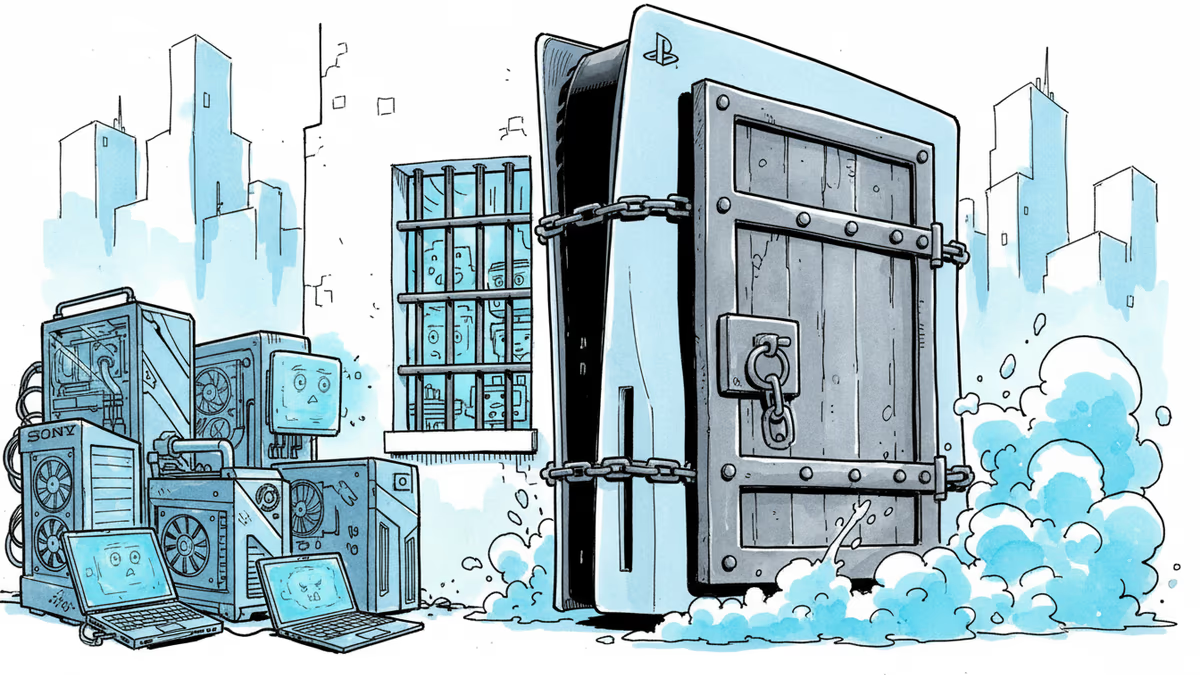
Sony is pulling its major single-player PlayStation games from PC. After six years of multiplatform expansion, the reversal raises hard questions about exclusivity, hardware sales, and who really controls gaming's future.
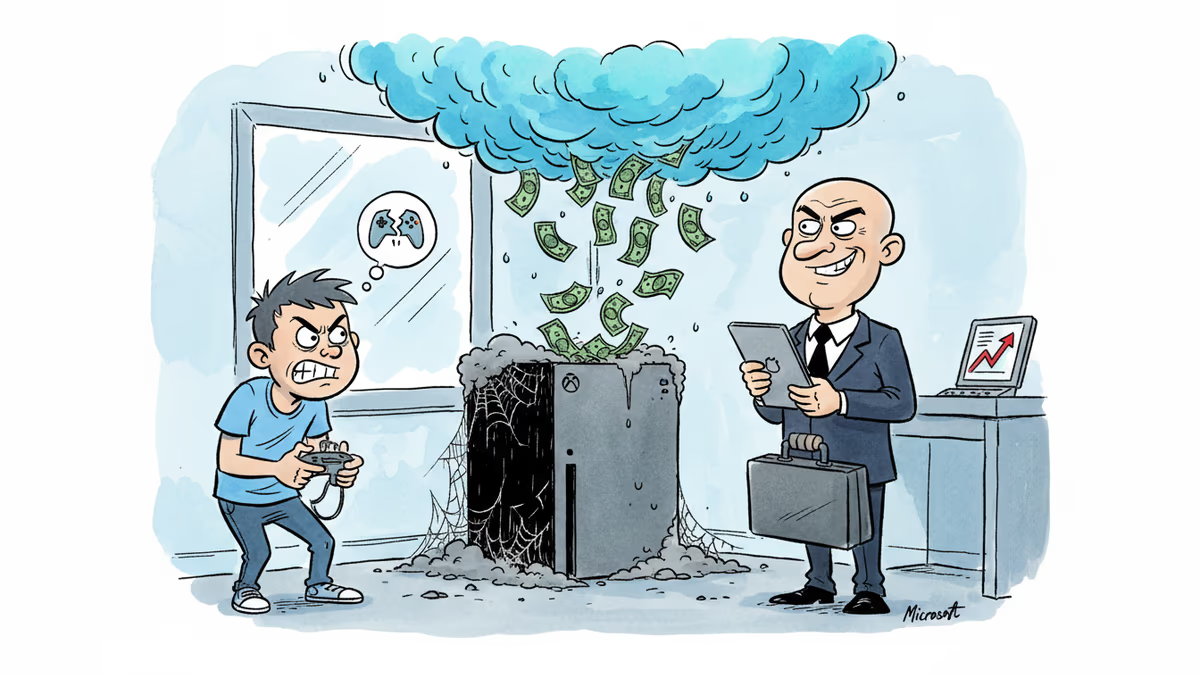
Xbox hardware revenue dropped 33% in Q1 2026, yet Microsoft posted $82.9B in total revenue. What this tells us about the future of gaming—and who actually loses.
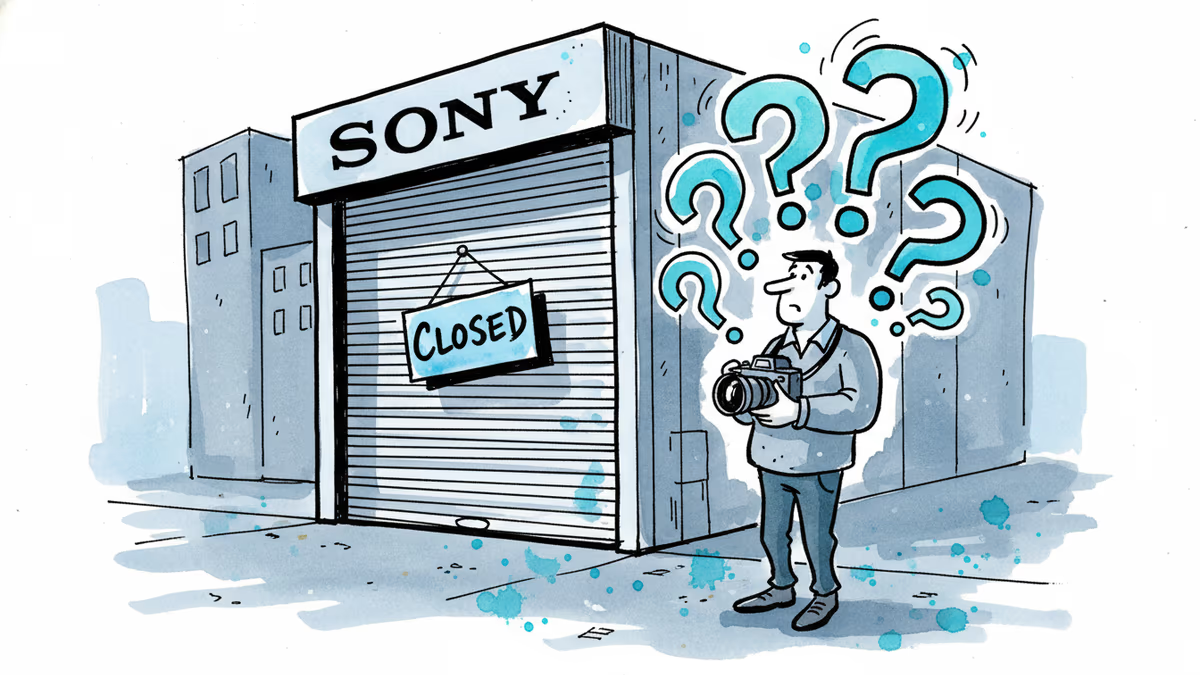
Sony halted orders for most of its CFexpress and SD card lineup on March 27, 2026 — the same day it raised PS5 prices. What does this mean for photographers, consumers, and Sony's broader strategy?
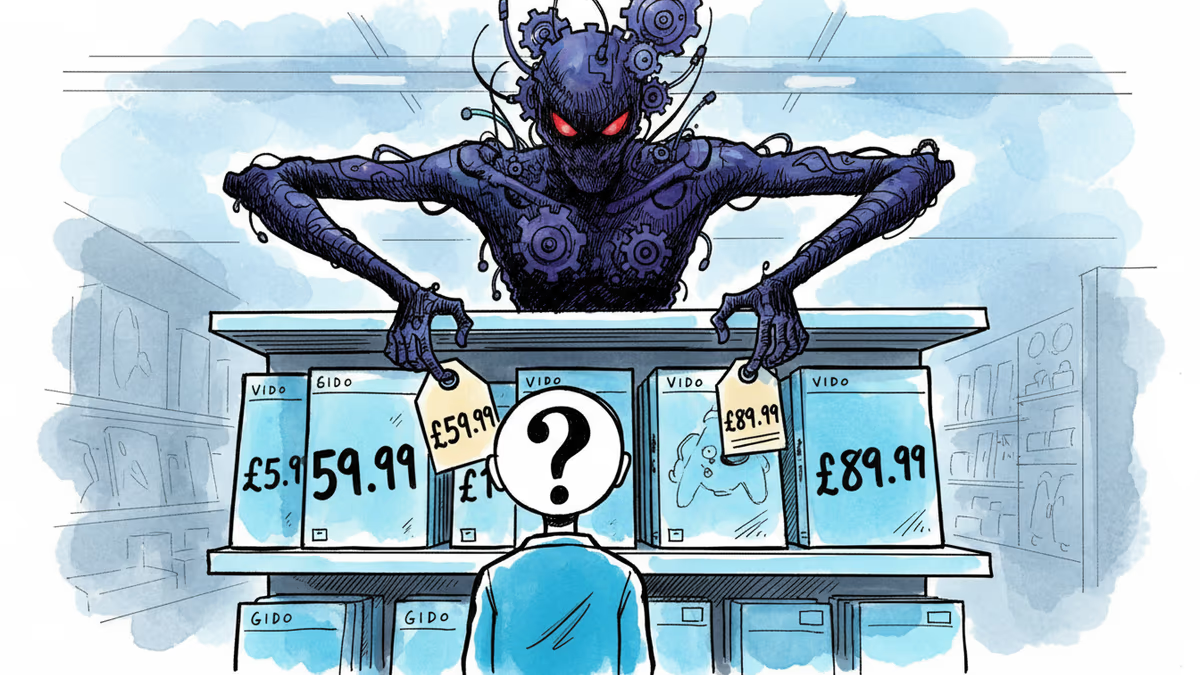
Sony's PlayStation Store has been quietly A/B testing personalized game prices across 150+ titles in 68 regions. Is dynamic pricing coming to gaming — and what does that mean for players?
Sony is pulling its major single-player PlayStation games from PC. After six years of multiplatform expansion, the reversal raises hard questions about exclusivity, hardware sales, and who really controls gaming's future.
Xbox hardware revenue dropped 33% in Q1 2026, yet Microsoft posted $82.9B in total revenue. What this tells us about the future of gaming—and who actually loses.
Sony halted orders for most of its CFexpress and SD card lineup on March 27, 2026 — the same day it raised PS5 prices. What does this mean for photographers, consumers, and Sony's broader strategy?
Sony's PlayStation Store has been quietly A/B testing personalized game prices across 150+ titles in 68 regions. Is dynamic pricing coming to gaming — and what does that mean for players?
Thoughts
Share your thoughts on this article
Sign in to join the conversation