

Pioneer Sphera Dolby Atmos CarPlay: Bringing Luxury Audio to Every Dashboard
Pioneer's new Sphera receiver brings Dolby Atmos to Apple CarPlay with a 10.1-inch screen. Learn how Pioneer Sphera Dolby Atmos CarPlay works with just 4 speakers.
Your old car is about to sound like a luxury Mercedes. According to reports from The Verge, audio giant Pioneer is shattering the exclusivity of spatial audio with its latest aftermarket receiver, the Sphera. For the first time, drivers don't need a high-end EV or a luxury sedan to experience the immersive depth of Dolby Atmos while on the road.
Pioneer Sphera Dolby Atmos CarPlay Features and Hardware
The centerpiece of the Pioneer Sphera is its massive 10.1-inch capacitive touchscreen. Despite the large display size, it's designed to fit into a standard single-DIN space, making it compatible with a vast range of older vehicles. It seamlessly integrates with Apple CarPlay to deliver theater-like sound quality through existing hardware.

| Feature | Pioneer Sphera Specification |
|---|---|
| Display Size | 10.1-inch Capacitive Screen |
| Mounting Type | Single-DIN (1-DIN) |
| Audio Support | Dolby Atmos via Apple CarPlay |
| Min. Speakers | 4 Speaker Channels |
| Price | TBD (Price Unconfirmed) |
Breaking the Luxury Barrier with Four Speakers
Until now, Dolby Atmos in cars required an expensive array of speakers—often upward of 15 to 30 units strategically placed throughout the cabin. Pioneer's breakthrough allows the Sphera to create an immersive soundstage with as few as four speakers. This technological leap democratizes high-fidelity audio, proving that software-driven spatial processing can compensate for hardware limitations.
Authors
Related Articles

Samsung Electronics' union branch revealed that 84% of survey respondents oppose the government's roughly $290 billion (₩400 trillion) semiconductor megaproject in Gwangju. Government, management, the union and shareholders are all reading the same national project in sharply different ways.
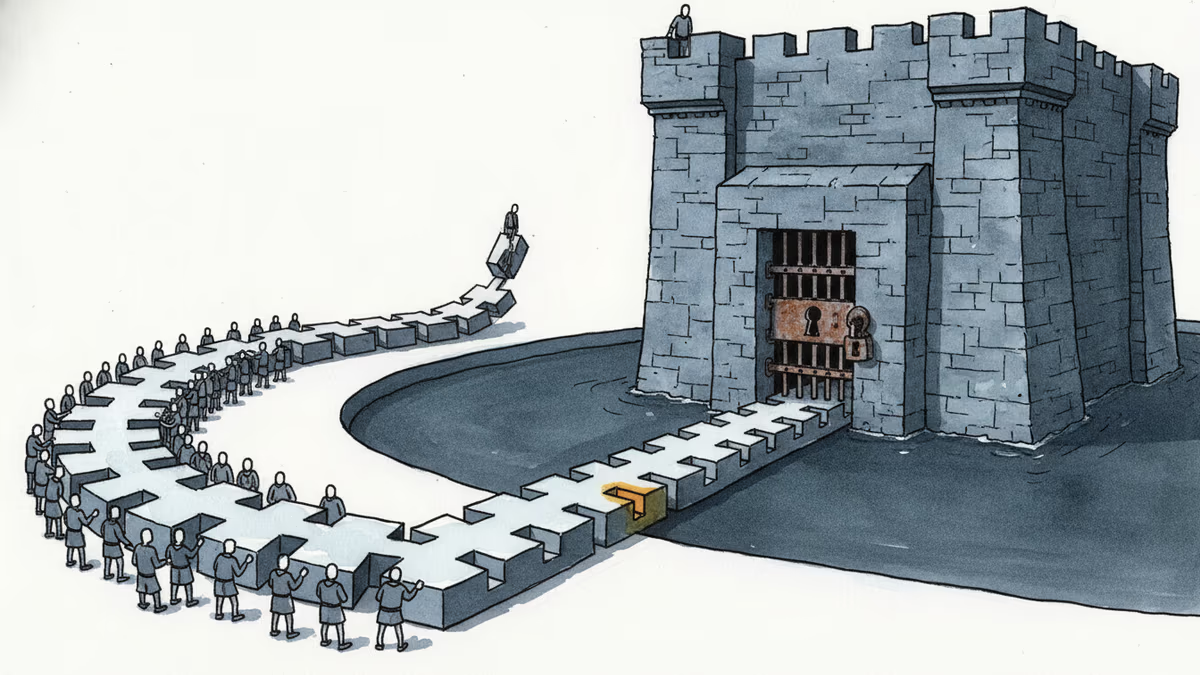
Nvidia shipped roughly a billion RISC-V cores in 2024, then announced it would run CUDA on the open standard. We break down how royalty-free instruction sets and open software stacks are trying to route around CUDA's lock-in. Part 2 of the Semiconductor Sovereignty series.
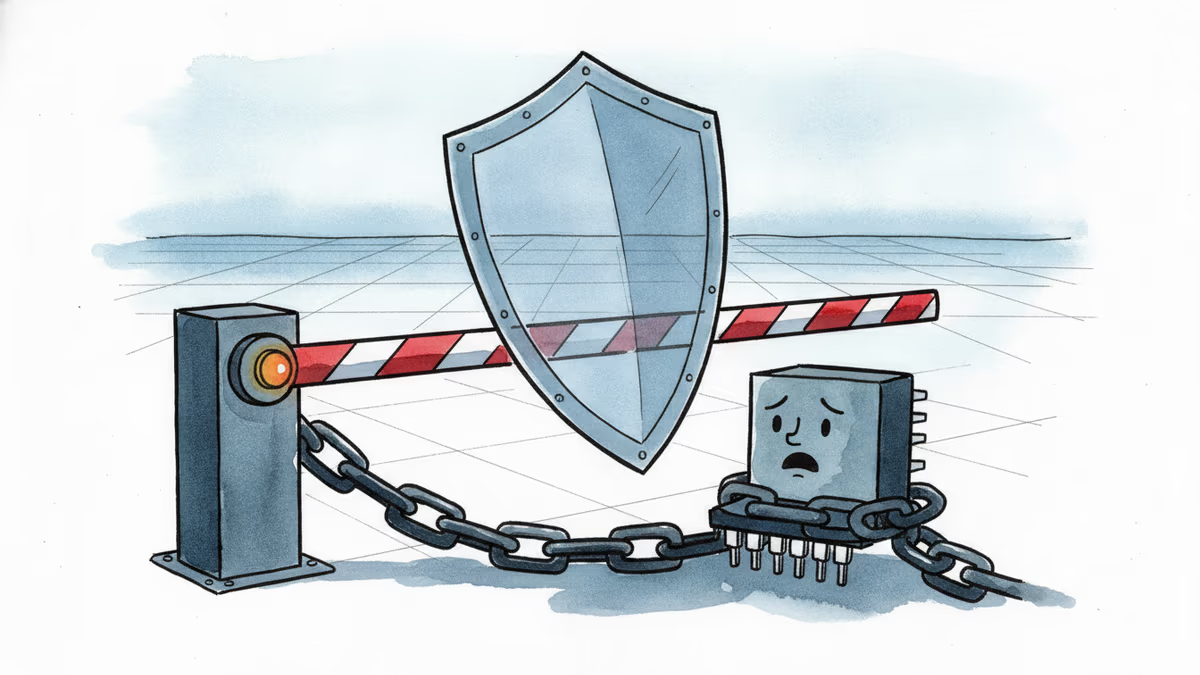
US AI-chip export controls split into three layers in the first half of 2026 — January easing, a May crackdown on circumvention, and a pending bill. Nvidia erased China from its guidance and still posted a record $81.6 billion quarter. A look at the export policy that both shields and cages it.
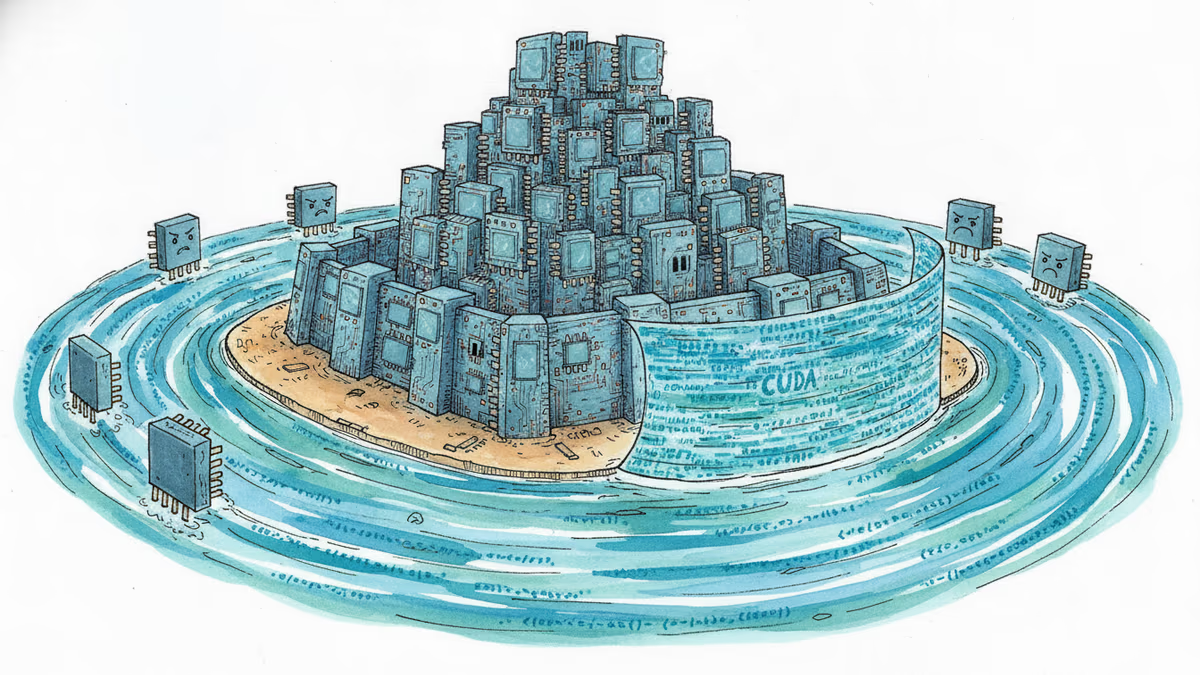
AMD's MI325X matches or beats Nvidia on memory and bandwidth — yet Nvidia's 86-92% share holds. The real moat is CUDA, 20 years in the making. Part 1 of 4.
Samsung Electronics' union branch revealed that 84% of survey respondents oppose the government's roughly $290 billion (₩400 trillion) semiconductor megaproject in Gwangju. Government, management, the union and shareholders are all reading the same national project in sharply different ways.
Nvidia shipped roughly a billion RISC-V cores in 2024, then announced it would run CUDA on the open standard. We break down how royalty-free instruction sets and open software stacks are trying to route around CUDA's lock-in. Part 2 of the Semiconductor Sovereignty series.
US AI-chip export controls split into three layers in the first half of 2026 — January easing, a May crackdown on circumvention, and a pending bill. Nvidia erased China from its guidance and still posted a record $81.6 billion quarter. A look at the export policy that both shields and cages it.
AMD's MI325X matches or beats Nvidia on memory and bandwidth — yet Nvidia's 86-92% share holds. The real moat is CUDA, 20 years in the making. Part 1 of 4.
Thoughts
Share your thoughts on this article
Sign in to join the conversation