
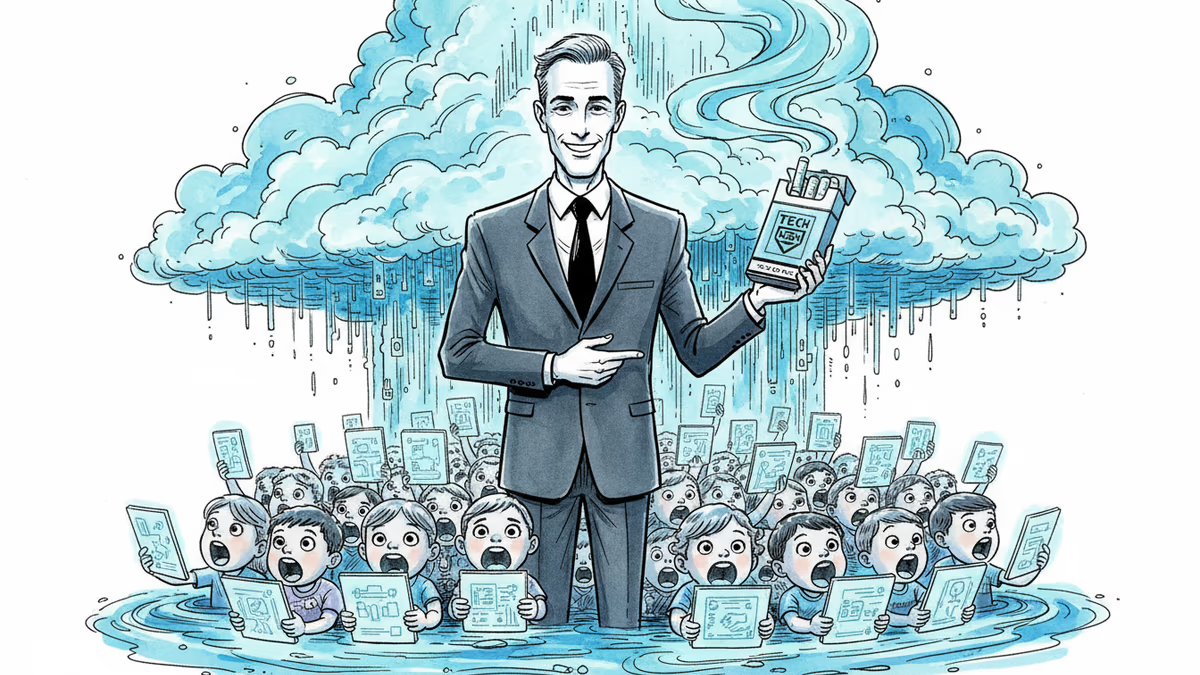
A Big Tech CEO Just Compared His Industry to Big Tobacco
Pinterest's CEO is calling for a government ban on social media for under-16s — and using his own platform's data to prove it won't hurt business. What happens next?
"When we make excuses for not acting in the public's best interest, tech CEOs sound like 20th-century tobacco executives who had to be shamed and sued into submission."
The person who said that wasn't a senator, a pediatrician, or a concerned parent. It was Bill Ready — the CEO of Pinterest — writing in Time magazine. A Big Tech executive just compared his own industry to Big Tobacco. That's worth sitting with for a moment.
What He's Actually Calling For
On March 20, 2026, Ready published an op-ed urging governments worldwide to ban social media access for users under 16. His argument isn't purely moral — it's backed by data. He pointed to rising rates of depression, anxiety, and declining concentration among young people, citing research that links these trends to unfiltered social media exposure. He called today's children participants in "the largest social experiment in history," one launched without "sufficient forethought about the consequences."
Critically, he didn't just call on others to act. He pointed to Pinterest itself as proof of concept. The platform already restricts social features for users under 16 — and Ready says it has continued to grow with Gen Z anyway. The industry's go-to counterargument — that safety measures kill engagement — doesn't hold up against Pinterest's own numbers, he argues.
His praise went to Australia, which became the first country to legally ban social media for under-16s in 2025. He said plainly: if tech companies won't protect kids, other governments should follow Australia's lead.
The Global Domino Effect
They already are. Malaysia, Spain, and Indonesia have all announced social media bans for minors. France's parliament just approved a ban for users under 15. Germany's ruling coalition has expressed support for similar measures. Across the U.S., individual states are advancing their own restrictions, even as federal action stalls.

The momentum is real — but so is the complexity. Age verification systems raise serious privacy concerns. Critics argue that determined teenagers will simply route around any restriction. And there's a deeper structural question: does banning access actually address the harm, or does it just push the problem underground?
Who's Uncomfortable Right Now
Not everyone in Silicon Valley is applauding Ready's op-ed.
For Meta, TikTok, and Snap, teenage users aren't an edge case — they're a foundational demographic. The advertising pipelines, the habit formation, the long-term user retention all run through adolescence. A hard legal ban doesn't just create a compliance headache; it threatens a core growth engine. These companies have consistently argued that parental controls and platform-level tools are sufficient. Ready is directly undermining that position.
There's also a political dimension. The Trump administration recently released an AI framework that explicitly shifts child online safety responsibility away from platforms and toward parents. Ready's call for government mandates runs counter to that direction. It's a rare moment where a tech CEO is asking for more regulation — not less — at a time when the White House is signaling the opposite.
Meanwhile, digital rights advocates have their own reservations. Blanket age bans could normalize invasive identity verification infrastructure. Who holds that data? How is it secured? The cure might introduce risks that outlast the problem it was meant to solve.
The Tobacco Analogy — How Far Does It Go?
The tobacco comparison is rhetorically powerful, but it's worth stress-testing. The tobacco industry spent decades funding research designed to obscure the link between smoking and cancer. The harm was direct, physical, and eventually undeniable. Social media's harms are real but more diffuse — mediated by individual use patterns, socioeconomic factors, pre-existing mental health conditions, and the specific design choices of each platform.
That complexity doesn't make the harms less serious. It does make them harder to regulate cleanly. A ban on cigarettes for minors is relatively simple to enforce at the point of sale. A ban on social media requires age verification at scale, cross-border enforcement, and decisions about what even counts as "social media" — questions that regulators are still fumbling through.
Authors
Related Articles
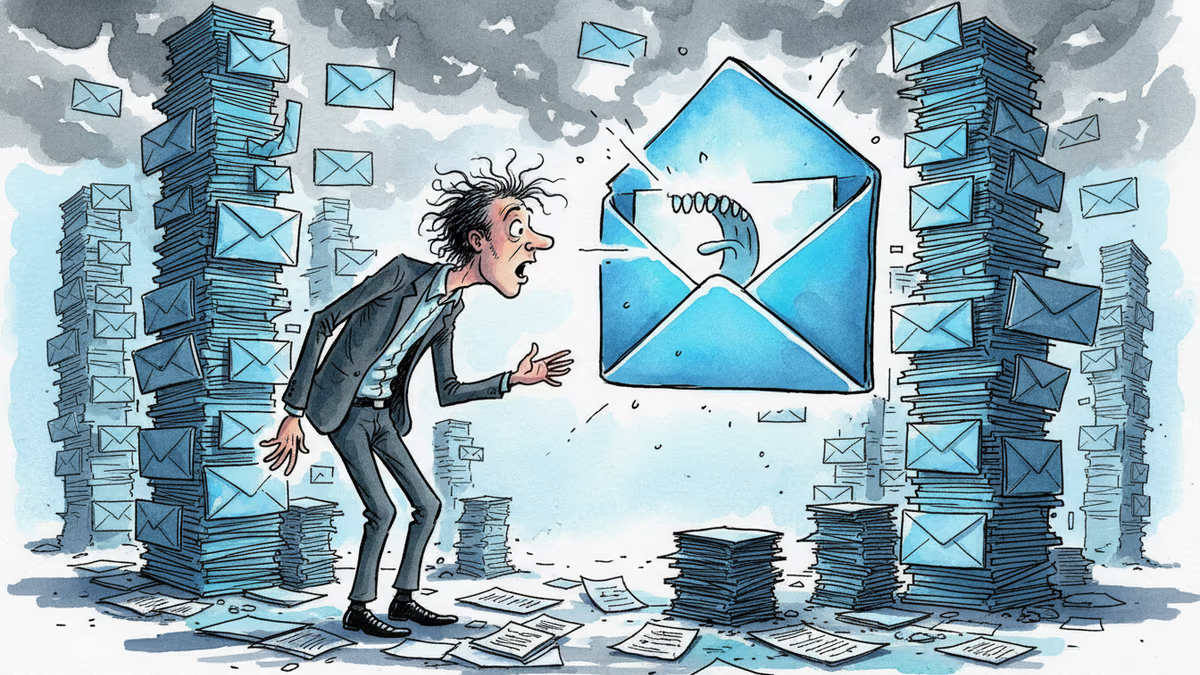
Google's Gmail Live lets you ask your inbox questions out loud. Announced at I/O 2026, it's AI's pitch to skeptics — and a reminder of how much Google already knows about you.
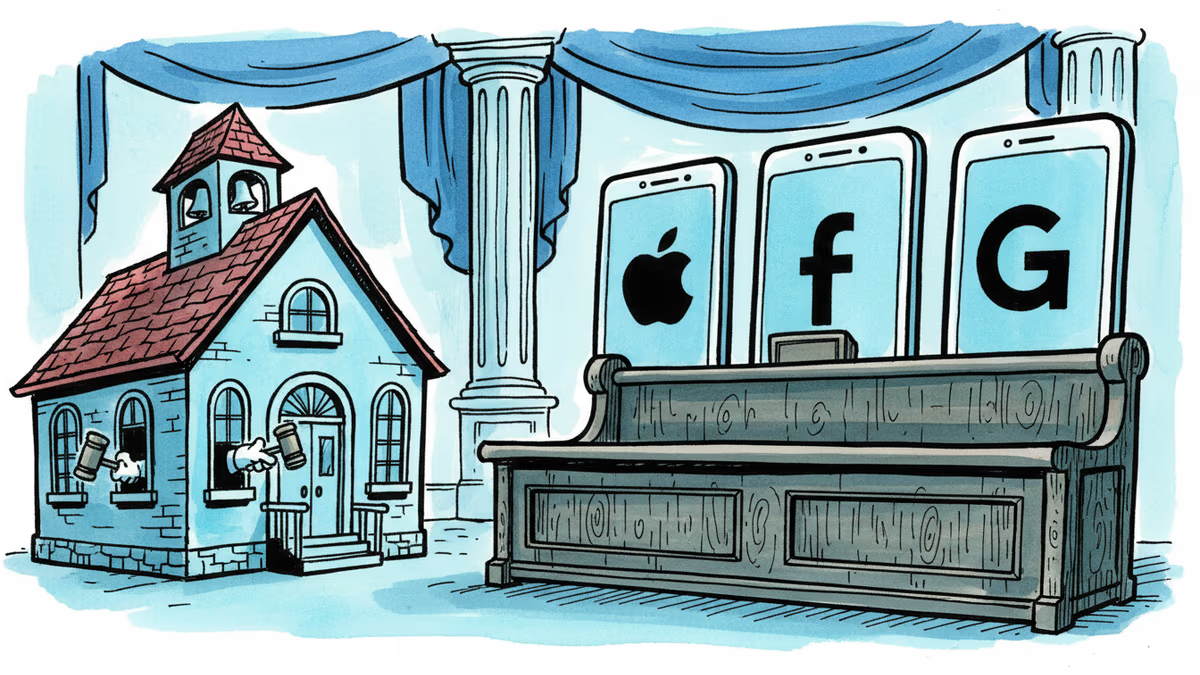
Snap, YouTube, and TikTok settled a landmark school district lawsuit over social media addiction. With 1,000+ similar cases pending, this could reshape Big Tech's liability landscape.

OpenAI has reorganized for the second time in a month, merging ChatGPT and Codex into a single agentic platform under president Greg Brockman's unified product leadership.
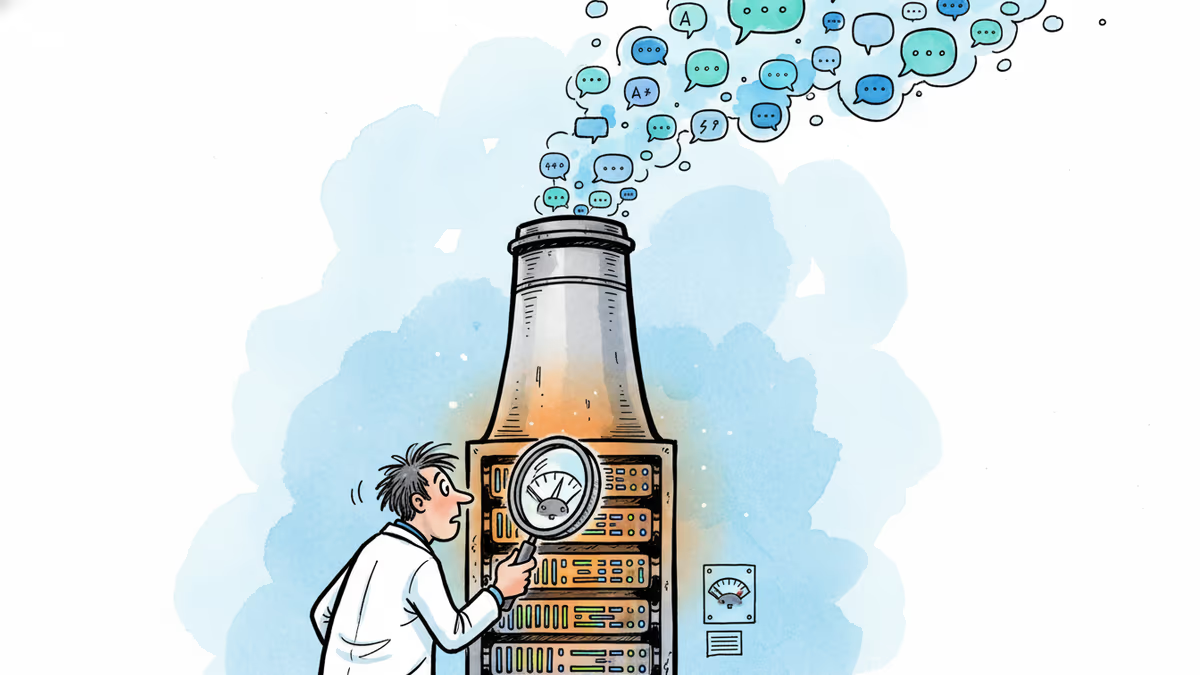
AI sustainability researcher Sasha Luccioni is launching a new venture to push for energy transparency in AI. Here's why Big Tech keeps the numbers hidden—and what's starting to change.
Google's Gmail Live lets you ask your inbox questions out loud. Announced at I/O 2026, it's AI's pitch to skeptics — and a reminder of how much Google already knows about you.
Snap, YouTube, and TikTok settled a landmark school district lawsuit over social media addiction. With 1,000+ similar cases pending, this could reshape Big Tech's liability landscape.
OpenAI has reorganized for the second time in a month, merging ChatGPT and Codex into a single agentic platform under president Greg Brockman's unified product leadership.
AI sustainability researcher Sasha Luccioni is launching a new venture to push for energy transparency in AI. Here's why Big Tech keeps the numbers hidden—and what's starting to change.
Thoughts
Share your thoughts on this article
Sign in to join the conversation