

Why Communities Fight Data Centers But Welcome Server Factories
Across America, data centers face fierce opposition while the factories that supply them sail through approvals. This selective resistance reveals a strategic blind spot.
At a Texas city council meeting last month, an odd scene unfolded. Pamela Griffin and fellow residents passionately opposed a data center project, then sat quietly as officials discussed a proposed server factory. No one spoke against the manufacturing facility. No one even asked questions.
This pattern is repeating across America. Data centers face unprecedented public resistance, with environmental costs driving much of the opposition. But the factories supplying servers, electrical equipment, and other components to these data centers? They're getting approved with barely a whisper of dissent.
The Supply Chain Blind Spot
Compal's planned 366,000-square-foot server factory in Taylor, Texas, exemplifies this disconnect. The Taiwanese manufacturer secured a $66 million lease and promised $200 million in total investment, creating 900 jobs. The city council unanimously approved $4.4 million in tax breaks with minimal discussion.
"Another home run," Mayor Dwayne Ariola declared, as if the factory's connection to the data center industry next door was invisible.
The logic seems straightforward: factories create more jobs and consume fewer natural resources than data centers. But supply chain experts warn this selective attention creates new vulnerabilities.
"At some point, people are going to figure out what the critical factory is that can bring all the data centers to their knees, and they will go after that," says Andy Tsay, a Santa Clara University professor studying global trade patterns.
The Activist's Dilemma

Griffin, a retired teacher fighting Taylor's second proposed data center, faces a strategic puzzle. Opposing factories could brand her group as anti-development. "I don't want to be seen as trying to stop everything from coming into Taylor," she explains. "If we stop the ones trying to get jobs in, then people will turn against us."
This reveals the resource constraints facing grassroots opposition. Masheika Allgood, who advises anti-data center groups through AllAI Consulting, notes the exhausting nature of these fights. "While it would be ideal to fight on all fronts, that's too much to ask of folks," she says.
Meanwhile, the data center industry deploys well-funded lobbying and PR campaigns. Factory developers likely have similar resources, creating an uneven battlefield for community activists.
Cities' Calculated Gamble
Municipalities see factories and data centers as complementary investments. Data centers generate substantial property tax revenue but few jobs. Factories boost employment but increase demand for public services like roads and schools. "Both types of projects can be very beneficial," says Jerrod Kingery, a Taylor spokesperson.
Nearby Georgetown made similar calculations, approving $1.8 million each in support for Compal and Pegatron factories. Public opposition was virtually nonexistent, despite some Facebook commenters initially confusing the factories with data centers.
The Bubble Risk
But what if the AI data center boom is a bubble? Some skeptics believe the massive infrastructure buildout exceeds actual demand. If they're right, or if data center opponents like Griffin start winning more battles, these manufacturing investments could become stranded assets.
Cities betting on both sides of the supply chain face this double exposure. Yet the immediate promise of jobs and economic growth has pushed longer-term concerns into the background.
Compal's head of US human resources told Taylor's council the company hopes to be "part of the community for many years to come." Whether that optimism proves justified may depend on battles being fought in council chambers far from the factory floor.
Authors
Related Articles
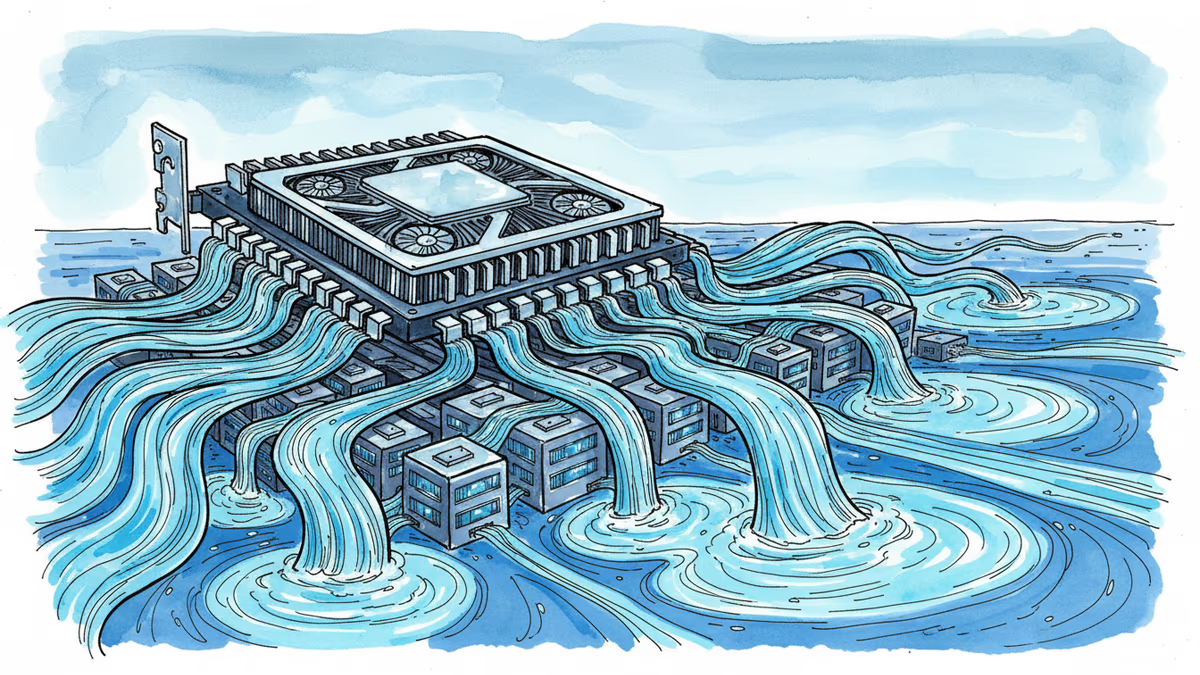
Nvidia's $2B investments in Lumentum and Coherent signal a shift from GPU wars to data transmission battles. The real bottleneck in AI isn't compute—it's connection.
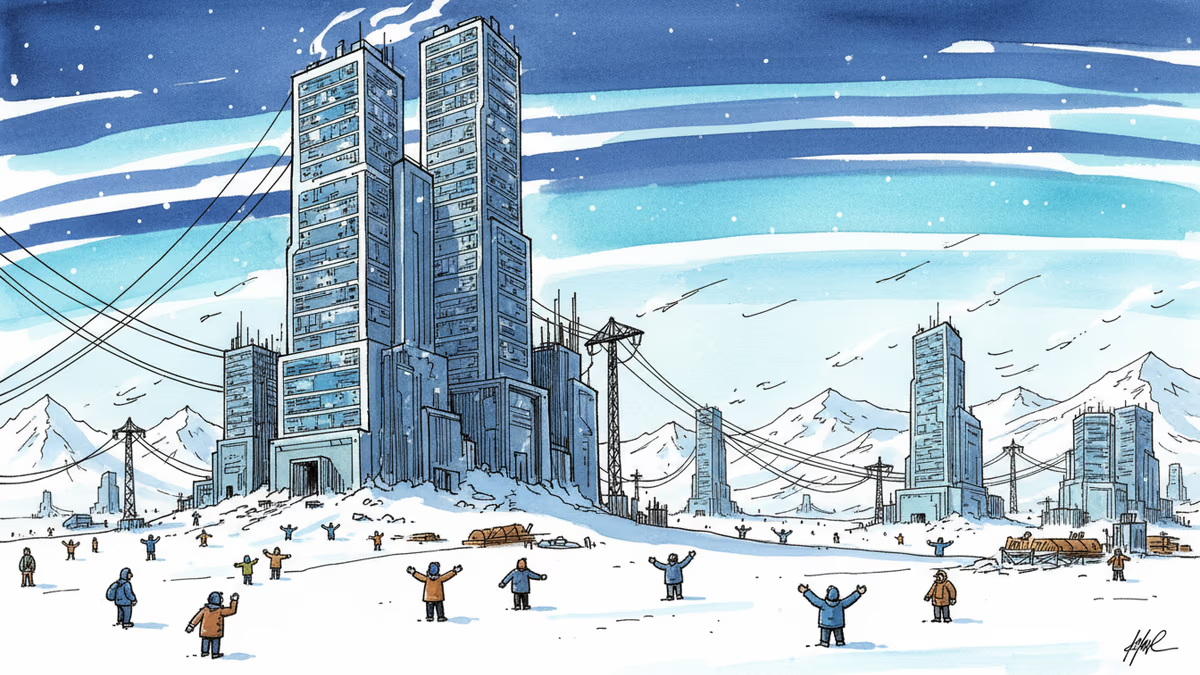
As Europe faces a power crisis, the Nordic countries have become the unexpected hotbed for AI data centers. What's driving this Arctic gold rush?
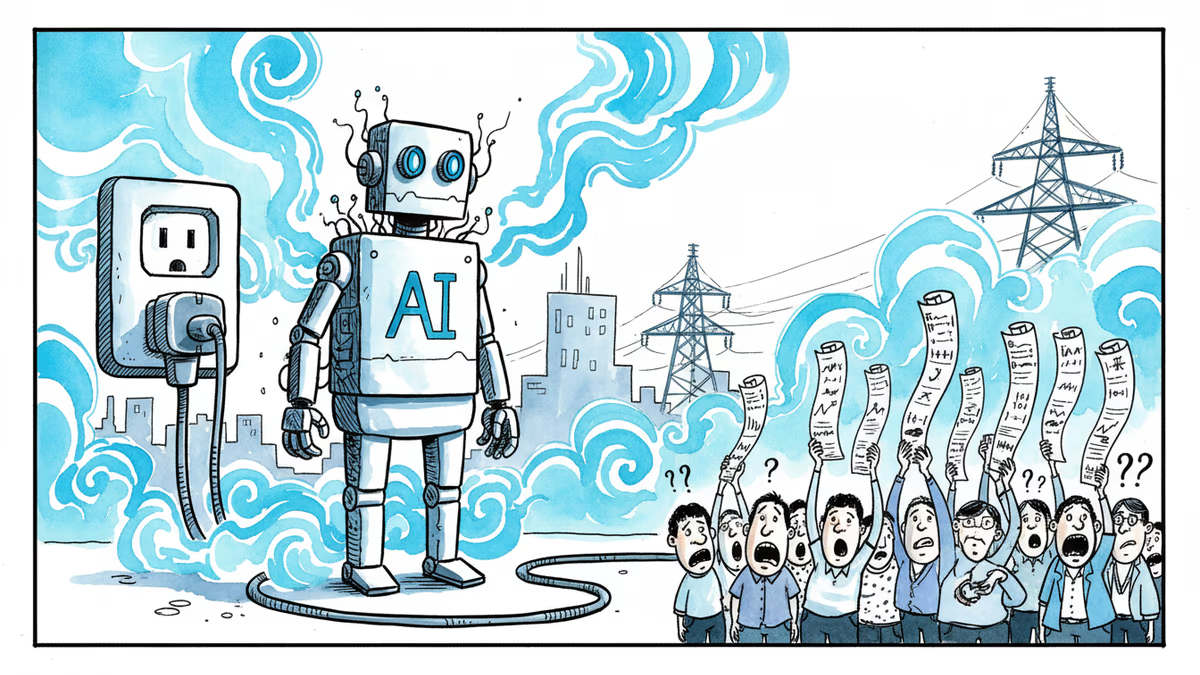
Anthropic promises to cover 100% of power grid upgrade costs for its data centers, but the debate over how AI companies should handle electricity expenses continues to spark controversy.

Glean's $7.2B valuation reveals the hidden battle for enterprise AI infrastructure. As AI agents replace chatbots, the real question isn't which AI is best—it's whose ecosystem you'll join.
Nvidia's $2B investments in Lumentum and Coherent signal a shift from GPU wars to data transmission battles. The real bottleneck in AI isn't compute—it's connection.
As Europe faces a power crisis, the Nordic countries have become the unexpected hotbed for AI data centers. What's driving this Arctic gold rush?
Anthropic promises to cover 100% of power grid upgrade costs for its data centers, but the debate over how AI companies should handle electricity expenses continues to spark controversy.
Glean's $7.2B valuation reveals the hidden battle for enterprise AI infrastructure. As AI agents replace chatbots, the real question isn't which AI is best—it's whose ecosystem you'll join.
Thoughts
Share your thoughts on this article
Sign in to join the conversation