
When AI Companies Draw Lines in Silicon
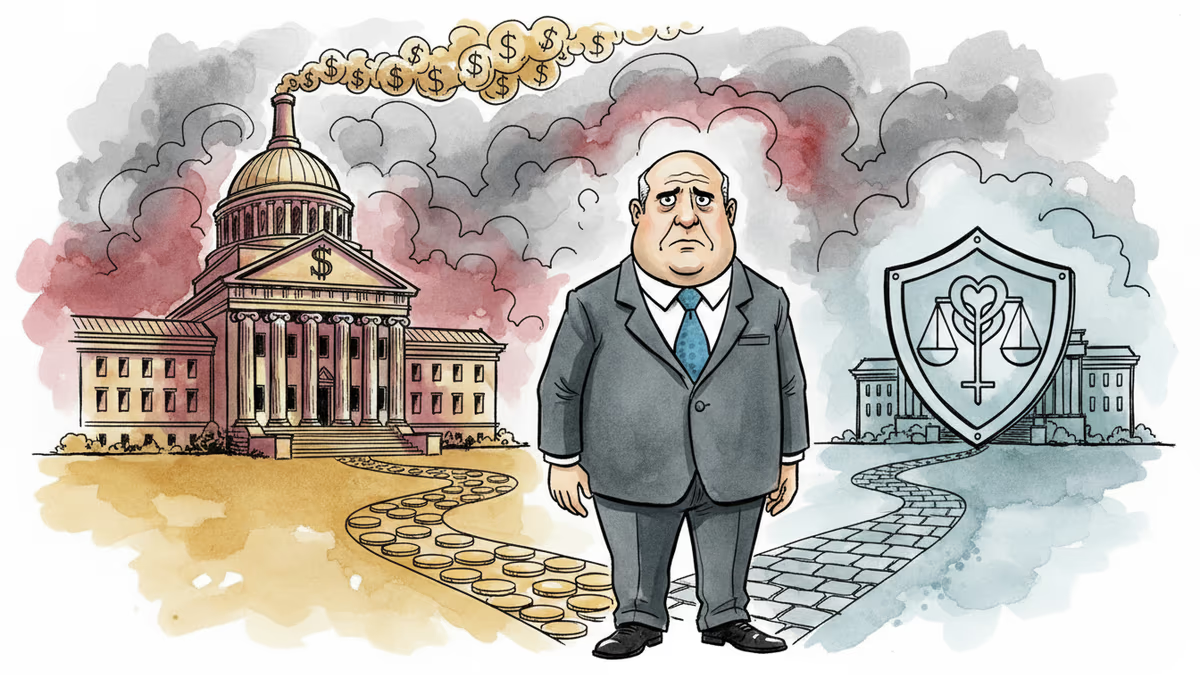
Anthropic's refusal to enable mass surveillance and autonomous weapons triggers unprecedented Pentagon blacklist, reshaping AI industry's relationship with government.
Six months. That's the grace period President Trump gave federal agencies to stop using all Anthropic products. But the real shock came next: Defense Secretary Pete Hegseth designated Anthropic as a "supply-chain risk to national security."
This isn't just a contract cancellation. It means any company doing business with the U.S. military must sever all commercial ties with Anthropic. It's unprecedented in the AI industry.
Two Red Lines
The conflict centers on two non-negotiables from Anthropic CEO Dario Amodei: no mass domestic surveillance, no fully autonomous weapons. The company's AI models simply won't power either.
The Pentagon called these restrictions "unduly restrictive." Secretary Hegseth had publicly criticized such constraints as hampering military operations. But Amodei doubled down Thursday, stating the "two requested safeguards" were non-negotiable.
What's striking is that other major AI companies like Google and OpenAI have expressed similar concerns privately, but only Anthropic drew the line publicly. Notably, employees from both Google and OpenAI signed an open letter supporting Anthropic's stance.
The Industry Splits
This incident exposes a deep fracture in Silicon Valley. On one side: companies prioritizing "technology neutrality" and government contracts. On the other: firms willing to sacrifice revenue for ethical principles.
Investor reactions are mixed. Some see Anthropic's principled stance as brand-building for the long term. Others worry about walking away from billions in government contracts. The company's valuation recently hit $60 billion – will this decision affect future funding rounds?

The ripple effects extend globally. European AI companies are watching closely, as similar ethical dilemmas emerge with their own defense partnerships. China's AI firms, meanwhile, face no such internal constraints, potentially creating competitive advantages.
New Rules of Engagement
This matters because it establishes a new relationship model between AI companies and government. Historically, tech firms rarely refused government demands outright. But AI's destructive potential changes everything.
Anthropic's choice forces other AI companies to pick sides. Compromise ethical principles for government contracts, or maintain standards and accept market penalties?
Interestingly, Anthropic offered to "enable a smooth transition to another provider," suggesting confidence in their technological edge. They're betting that their AI capabilities are valuable enough that private sector demand will compensate for lost government revenue.
The Broader Stakes
This isn't just about one company or one contract. It's about who controls AI development priorities. Should AI companies serve government objectives unconditionally, or maintain independent ethical standards?
The timing is crucial. As AI capabilities approach artificial general intelligence, these ethical frameworks become more consequential. Today's decisions about surveillance and autonomous weapons set precedents for tomorrow's more powerful systems.
Other democracies are watching too. Will they follow America's hardline approach, or create alternative frameworks that balance security needs with ethical constraints?
The question isn't whether Anthropic made the right choice – it's whether the industry can afford to keep making these choices company by company, rather than establishing clear, democratic oversight of AI development.
Authors
Related Articles

Samsung and SK unveiled a chip and AI investment package worth thousands of trillions of won on June 29. The headline number swings wildly by outlet, but the real contest isn't capital — it's water and power.

Viral videos show 2026 graduates jeering executives who praise AI at commencement ceremonies. It's not just rudeness — it's a signal about who pays for technological optimism.
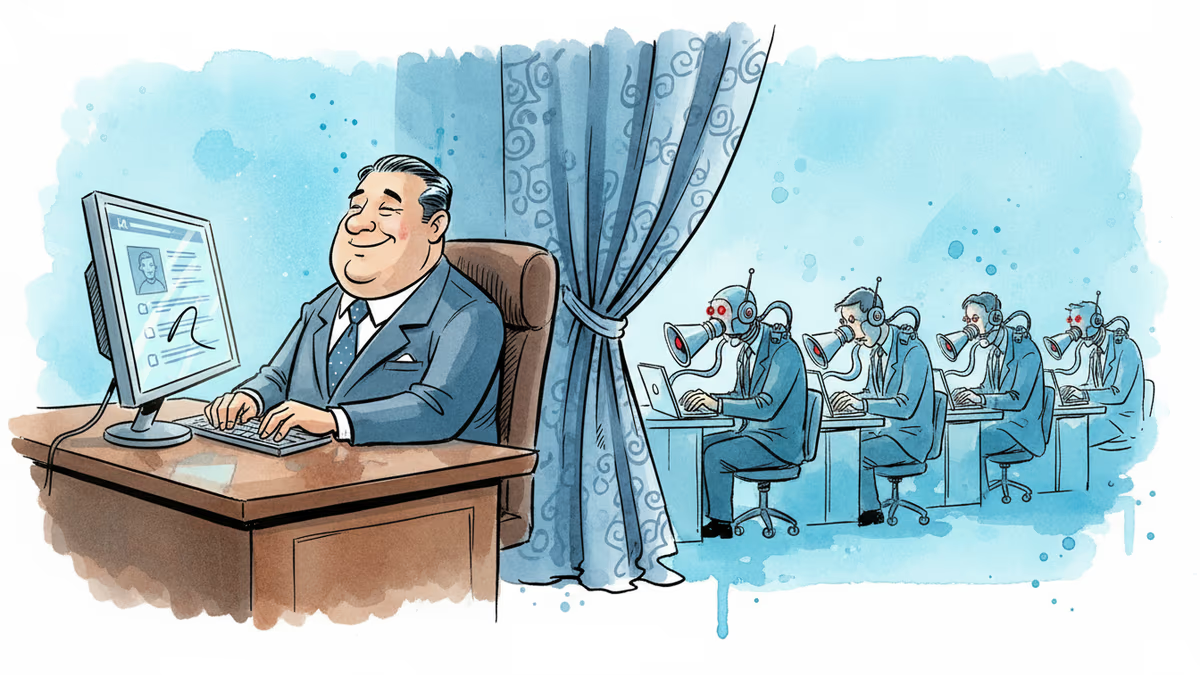
Filipino virtual assistants using AI to ghost-manage LinkedIn profiles for executives is now a structured industry. 30 comments a day, fake engagement rings, and a platform struggling to tell real from fabricated.
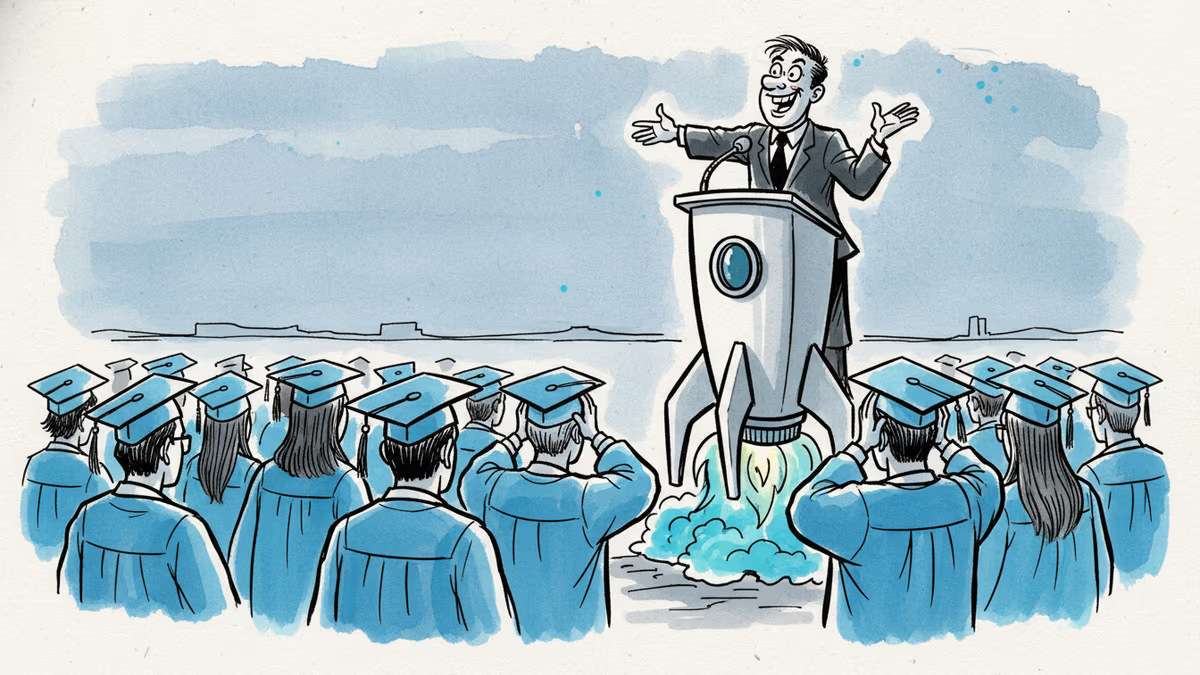
Two commencement speakers learned the hard way that AI enthusiasm doesn't land well with today's graduates. The backlash reveals a widening gap between tech optimism and Gen Z's economic reality.
Samsung and SK unveiled a chip and AI investment package worth thousands of trillions of won on June 29. The headline number swings wildly by outlet, but the real contest isn't capital — it's water and power.
Viral videos show 2026 graduates jeering executives who praise AI at commencement ceremonies. It's not just rudeness — it's a signal about who pays for technological optimism.
Filipino virtual assistants using AI to ghost-manage LinkedIn profiles for executives is now a structured industry. 30 comments a day, fake engagement rings, and a platform struggling to tell real from fabricated.
Two commencement speakers learned the hard way that AI enthusiasm doesn't land well with today's graduates. The backlash reveals a widening gap between tech optimism and Gen Z's economic reality.
Thoughts
Share your thoughts on this article
Sign in to join the conversation