
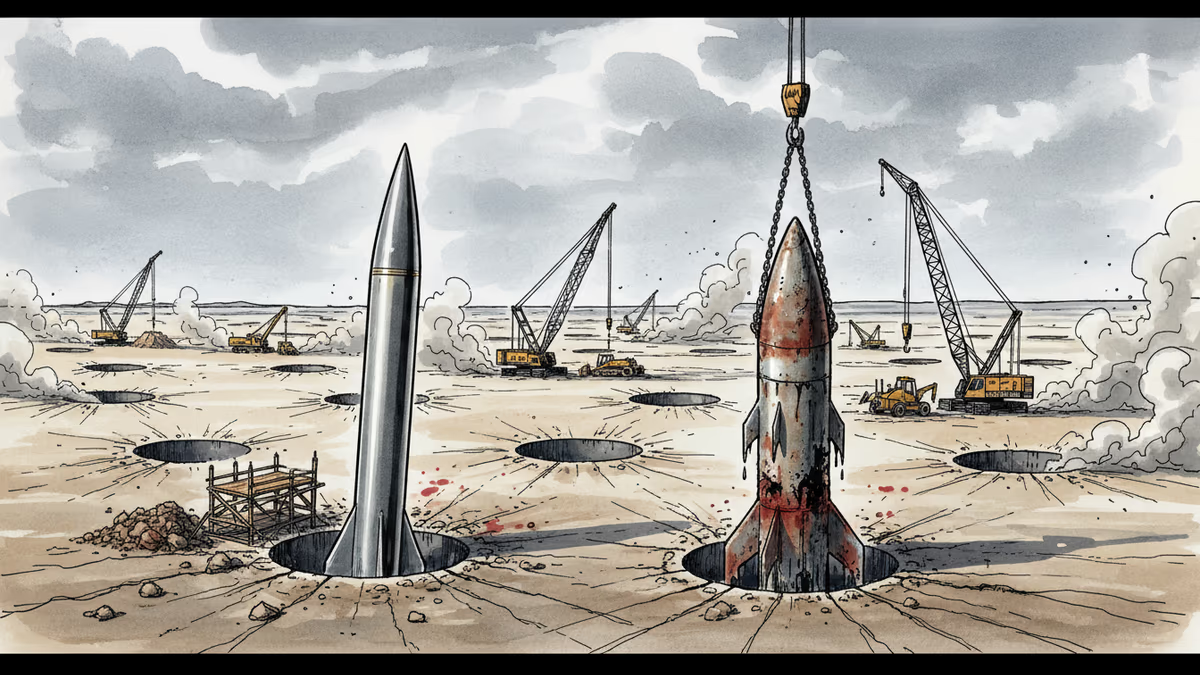
Why America Is Replacing Its 50-Year-Old Nuclear Arsenal
The US Air Force's new Sentinel ICBM will replace the aging Minuteman III fleet, but the true costs and timeline remain classified
450 Silos, 50 Years, and Countless Secrets
The US Air Force confirmed this week that its new Sentinel intercontinental ballistic missile remains on track for its first test flight next year. But here's what they won't tell you: when the 450 underground silos scattered across America's Great Plains will actually be finished, how much they'll really cost, or exactly how many nuclear warheads each Sentinel can carry.
After 50 years of service, the Minuteman III fleet is finally getting replaced. The question isn't just about new missiles—it's about what this $140 billion modernization says about America's view of the world in 2026.
The China Factor Nobody Talks About
The Pentagon projects China will triple its nuclear arsenal to 1,000 warheads by 2030, up from roughly 350 today. Russia still maintains over 6,000. These aren't just numbers on a spreadsheet—they're reshaping global power dynamics.
The Sentinel isn't simply a newer version of the Minuteman III. It's designed for a multipolar world where nuclear deterrence involves more than just two superpowers staring each other down. Enhanced accuracy, flexible payload options, and the ability to counter advanced missile defenses make it fundamentally different from its Cold War predecessor.
The Great Plains Construction Boom

Across Montana, North Dakota, and Wyoming, one of America's most secretive construction projects is underway. Contractors are either building new missile silos or retrofitting existing ones to house the Sentinel fleet. Each silo must withstand direct nuclear attack while maintaining communication with command centers.
The price tag has already ballooned 37% beyond original estimates. At $140 billion, this single weapons program costs more than the entire GDP of most countries. Yet Congress continues funding it with bipartisan support—a rare occurrence in today's political climate.
The Modernization Paradox
Here's the contradiction: America advocates for nuclear disarmament while simultaneously building weapons designed to remain operational until the 2070s. The Sentinel program embodies this tension between idealistic goals and strategic realities.
Allies see it differently. South Korea and Japan view American nuclear modernization as essential deterrence against North Korea and China. NATO members consider it crucial for extended deterrence in Europe.
Adversaries, predictably, frame it as escalatory. Russia and China point to Sentinel as evidence of American aggression, justifying their own nuclear buildups.
The Invisible War's New Weapons
The most powerful nuclear weapons are those never fired. Sentinel missiles will likely spend their entire service lives in underground silos, their mere existence shaping international relations through deterrence theory.
But deterrence is evolving. Cyber warfare, space-based assets, and hypersonic delivery systems are changing how nuclear strategy works. The Sentinel represents America's bet that traditional ICBMs remain relevant in this new landscape.
Authors
Related Articles
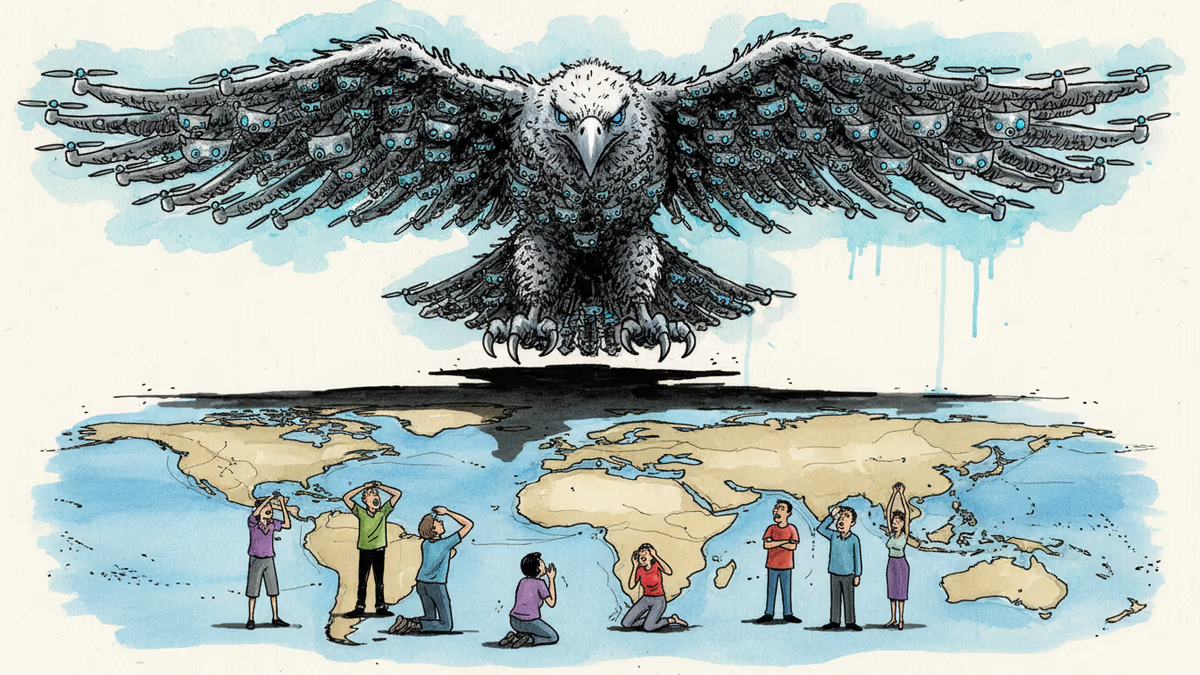
The US defense budget request for FY2027 includes $53.6 billion for drone and autonomous warfare—more than most nations spend on their entire military. What does this mean for global security and the future of war?
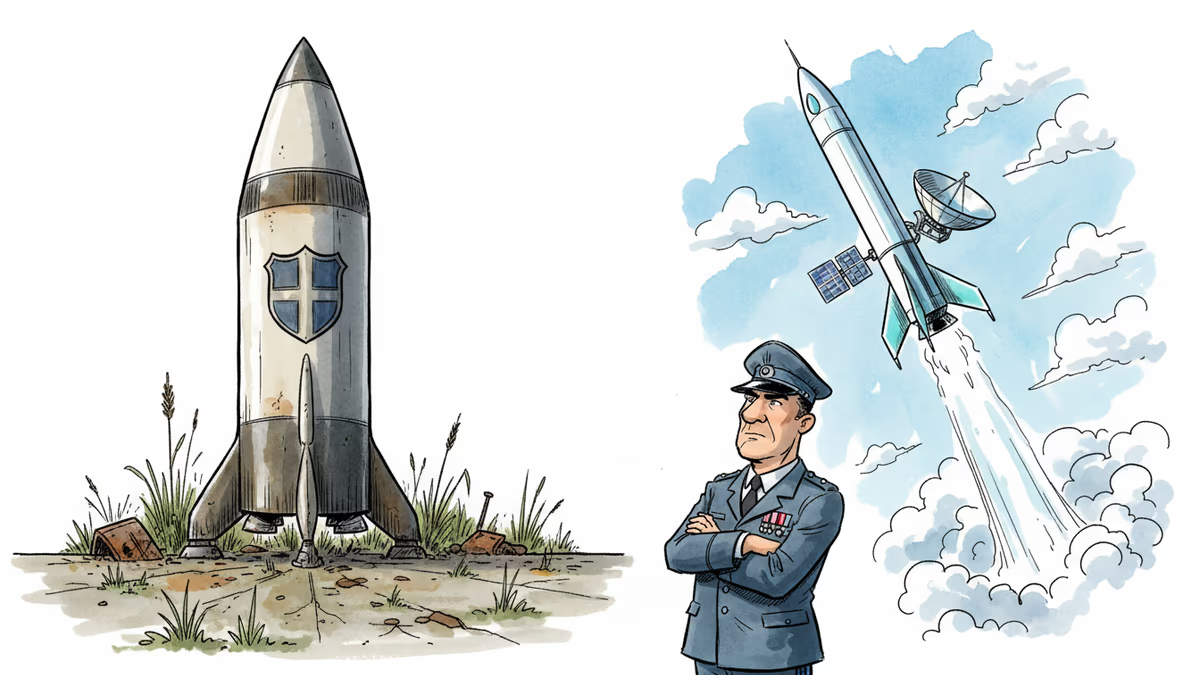
The US Space Force has transferred yet another GPS satellite launch from ULA to SpaceX — the fourth such move in just over a year. What this pattern reveals about the future of military space launches.
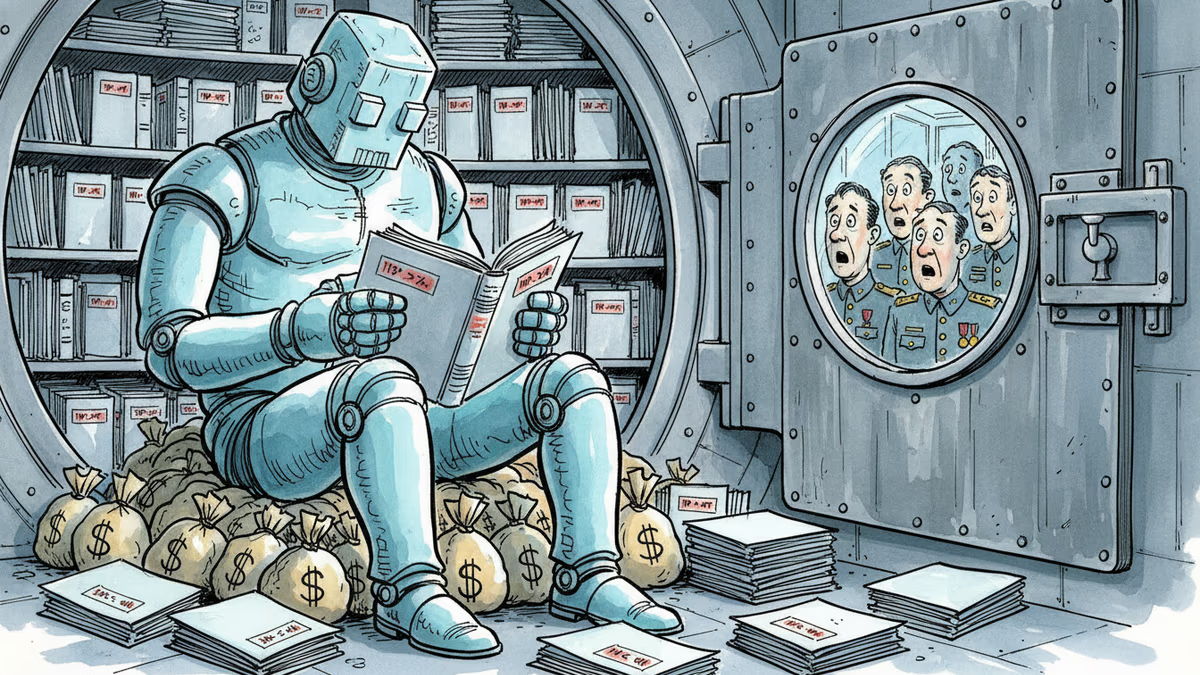
The Pentagon is exploring training AI models like OpenAI and xAI on classified military data. As tensions with Iran escalate, the plan raises urgent questions about security, accountability, and the future of AI in warfare.
After a $200M contract collapse, the Pentagon is building its own LLMs, signed deals with OpenAI and xAI, and labeled Anthropic a supply-chain threat. What this means for AI safety, defense tech, and the industry's ethical calculus.
The US defense budget request for FY2027 includes $53.6 billion for drone and autonomous warfare—more than most nations spend on their entire military. What does this mean for global security and the future of war?
The US Space Force has transferred yet another GPS satellite launch from ULA to SpaceX — the fourth such move in just over a year. What this pattern reveals about the future of military space launches.
The Pentagon is exploring training AI models like OpenAI and xAI on classified military data. As tensions with Iran escalate, the plan raises urgent questions about security, accountability, and the future of AI in warfare.
After a $200M contract collapse, the Pentagon is building its own LLMs, signed deals with OpenAI and xAI, and labeled Anthropic a supply-chain threat. What this means for AI safety, defense tech, and the industry's ethical calculus.
Thoughts
Share your thoughts on this article
Sign in to join the conversation