
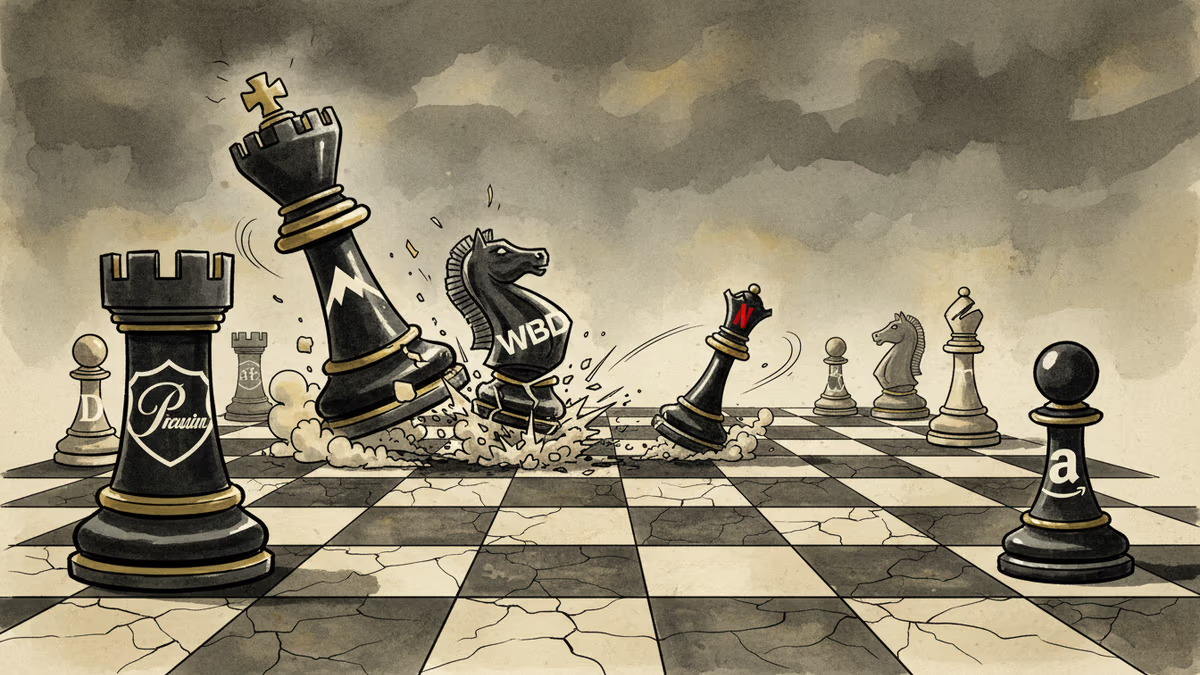
The $111 Billion Deal That Netflix Walked Away From
Paramount beats Netflix in Warner Bros. Discovery bidding war with Larry Ellison's backing. What this mega-merger means for streaming competition and media consolidation.
When $82.7 Billion Isn't Enough
Thursday night marked the end of Hollywood's biggest bidding war in decades. Paramount emerged victorious over Netflix in the battle for Warner Bros. Discovery, with a $111 billion offer that the streaming giant simply couldn't—or wouldn't—match.
Netflix had four business days to counter Paramount's$31-per-share proposal. Instead, co-CEOs Ted Sarandos and Greg Peters delivered a calculated retreat: "At the price required to match Paramount Skydance's latest offer, the deal is no longer financially attractive."
The decision will cost Netflix$2.8 billion in termination fees. But behind Paramount's winning bid lies a more interesting story: the $201 billion net worth of Oracle chairman Larry Ellison, whose financial backing made his son David Ellison's audacious play possible.
The New Media Mogul's Playbook
This isn't just an acquisition—it's the creation of a media empire. Paramount now controls everything from HBO and CNN to Discovery and HGTV, spanning studios, streaming, gaming, and linear television. The combined entity will carry $33 billion in debt, financed through Bank of America, Citi, and Apollo Global Management.
But David Ellison's track record raises questions. His management of CBS has drawn criticism for apparent political bias, with Trump administration critics facing increased scrutiny and conservative provocateur Bari Weiss installed as editor-in-chief. His father's status as a major Trump donor adds another layer of concern about editorial independence.

Meanwhile, significant job cuts are already on the horizon—a familiar refrain in media consolidation deals.
What This Means for Streaming Competition
For consumers, the implications are mixed. A larger, more integrated Paramount could offer better content bundles and more competitive pricing. The company's vast library—from HBO's prestige dramas to Discovery's reality programming—creates compelling cross-promotional opportunities.
But media consolidation historically leads to reduced competition and higher prices. With Disney, Netflix, Amazon, and now a super-sized Paramount dominating the landscape, independent creators and smaller platforms face an increasingly uphill battle.
Netflix shares jumped 10% in after-hours trading, suggesting investors see the failed acquisition as a bullet dodged rather than an opportunity missed. The company can now focus resources on content creation and international expansion without the operational complexity of integrating linear TV networks.
The Regulatory Wild Card
One crucial factor remains unaddressed: regulatory approval. The deal creates a media conglomerate that would control significant portions of news, entertainment, and sports programming. With the current administration's mixed signals on big tech and media consolidation, approval isn't guaranteed.
European regulators, already skeptical of American tech dominance, may also scrutinize the deal's impact on global content distribution and pricing.
Authors
Related Articles
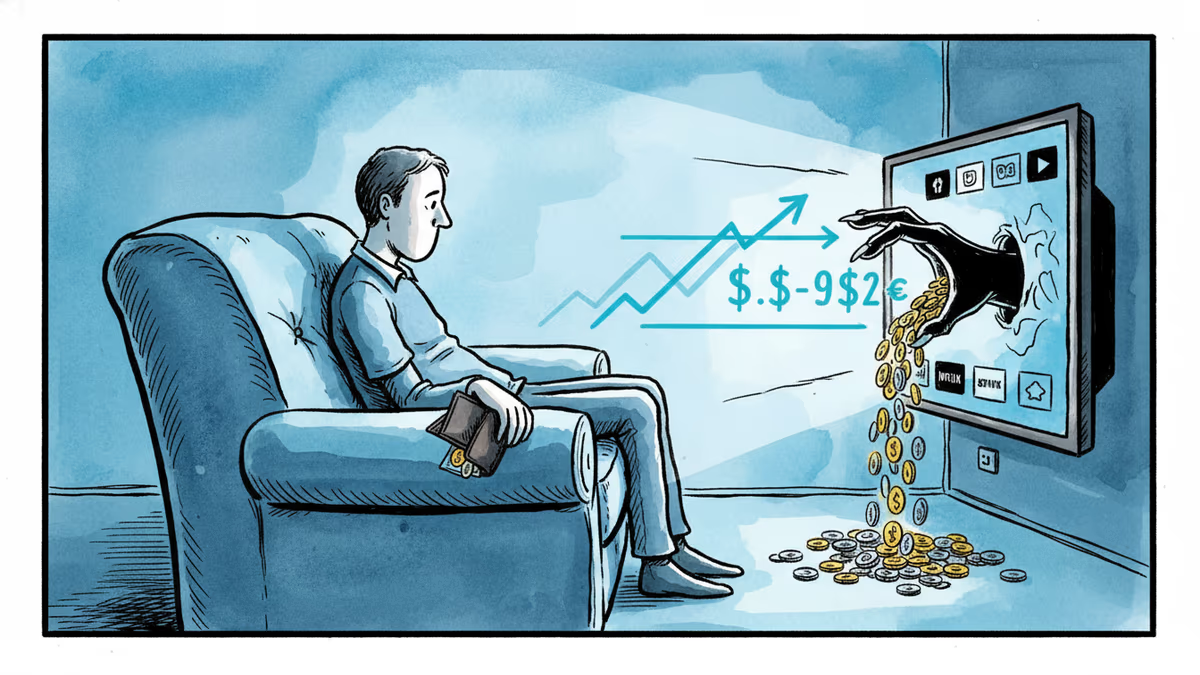
Netflix has hiked prices across all plans, including its ad-supported tier, just 14 months after its last increase. What this means for subscribers, competitors, and the future of streaming economics.
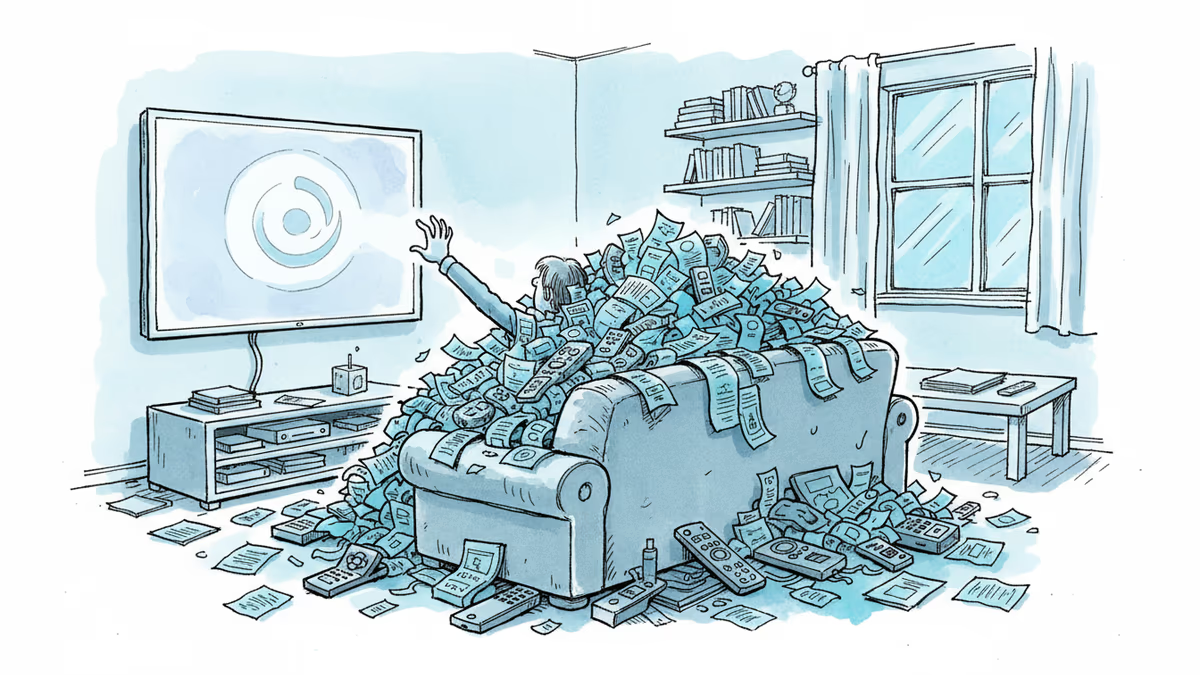
Streaming prices have doubled in a decade. Netflix, Disney, HBO Max — every platform is charging more and adding ads. Here's why, and what it means for you.
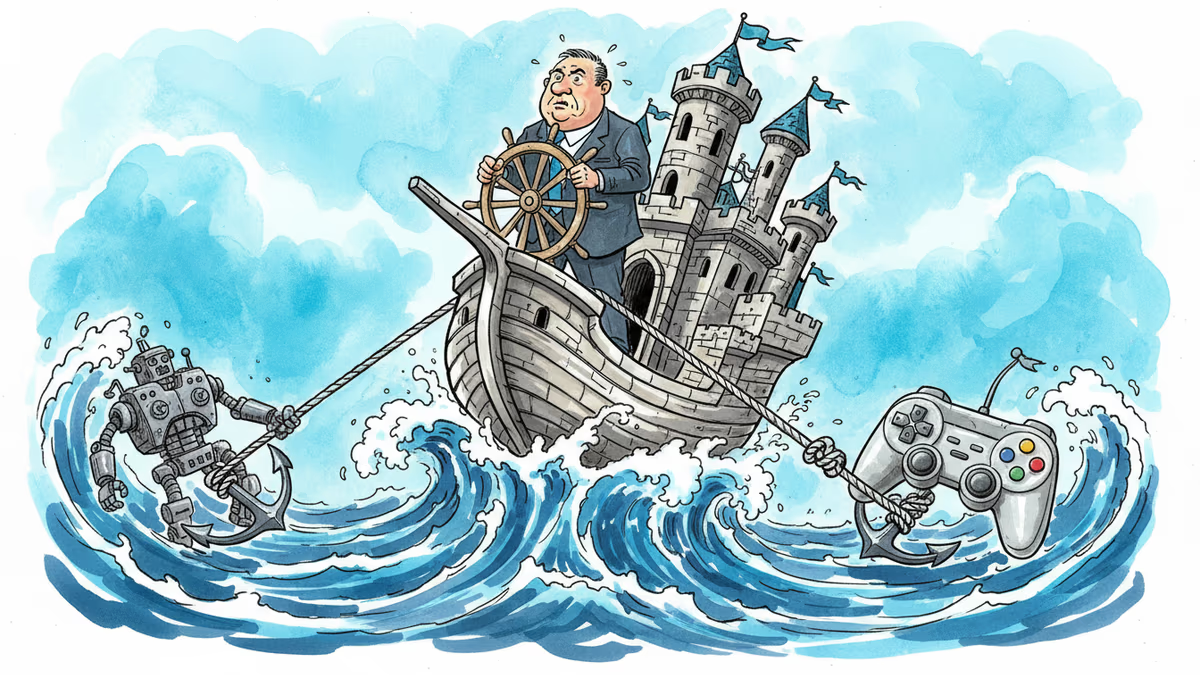
Days into his tenure, Disney CEO Josh D'Amaro faces simultaneous crises: OpenAI's Sora shutdown threatens a $1B AI deal, while Epic's layoffs cast doubt on a $1.5B metaverse plan.
An FCC enforcement chief privately offered to help Chairman Brendan Carr's pressure campaign against ABC—while holding direct authority over the very stations being targeted. What this reveals about regulatory independence.
Netflix has hiked prices across all plans, including its ad-supported tier, just 14 months after its last increase. What this means for subscribers, competitors, and the future of streaming economics.
Streaming prices have doubled in a decade. Netflix, Disney, HBO Max — every platform is charging more and adding ads. Here's why, and what it means for you.
Days into his tenure, Disney CEO Josh D'Amaro faces simultaneous crises: OpenAI's Sora shutdown threatens a $1B AI deal, while Epic's layoffs cast doubt on a $1.5B metaverse plan.
An FCC enforcement chief privately offered to help Chairman Brendan Carr's pressure campaign against ABC—while holding direct authority over the very stations being targeted. What this reveals about regulatory independence.
Thoughts
Share your thoughts on this article
Sign in to join the conversation