
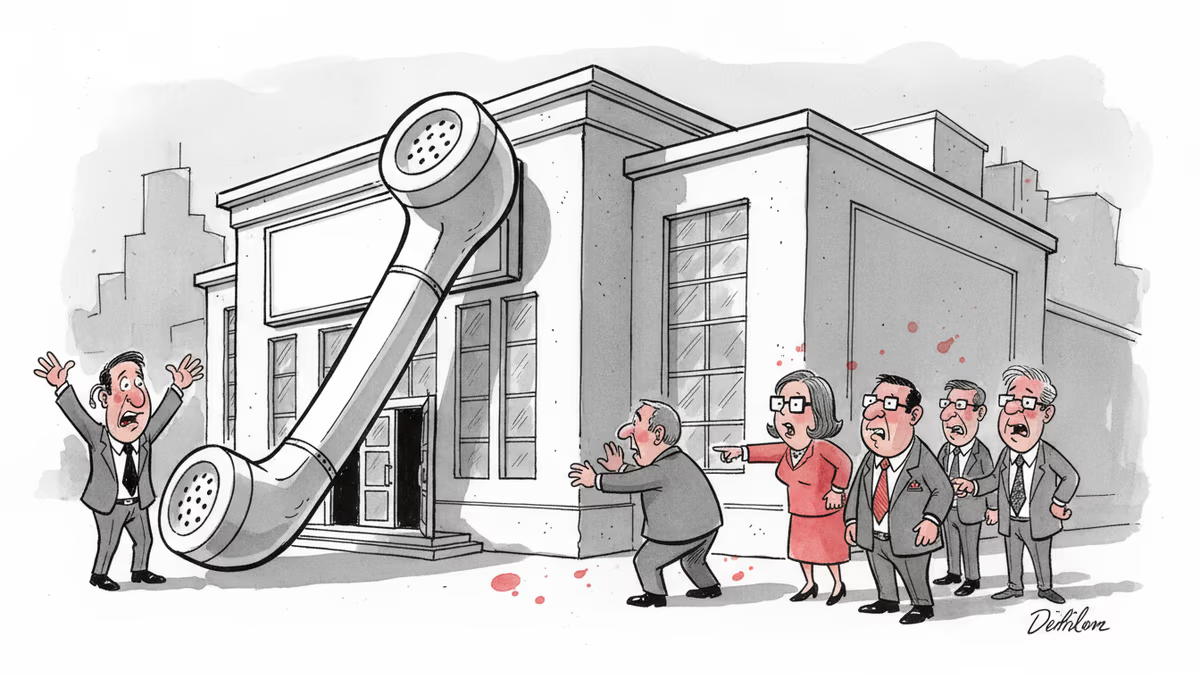
When Network Lawyers Ban Political Interviews
CBS lawyers directly called to ban a Democratic candidate interview due to FCC equal-time threats. The clash between broadcast autonomy and political fairness rules is escalating.
The Phone Call That Changed Everything
Stephen Colbert dropped a bombshell on live television. CBS network lawyers had directly called his show to ban an interview with Texas Democratic Senate candidate James Talarico. The reason? Fear of the Federal Communications Commission's equal-time rule enforcement.
"He was supposed to be here, but we were told in no uncertain terms by our network's lawyers, who called us directly, that we could not have him on the broadcast," Colbert revealed on last night's Late Show. The host didn't stop there: "Then I was told in some uncertain terms that not only could I not have him on, I could not mention me not having him on."
This wasn't just internal network politics. It was the direct result of FCC Chairman Brendan Carr's recent warning that late-night and daytime talk shows might lose their "bona fide news" exemption from equal-time requirements.
A 70-Year-Old Rule Gets New Teeth
The equal-time rule, rooted in the 1934 Communications Act, requires broadcasters to provide equal opportunities to political candidates. If you give airtime to one candidate, you must offer the same to their opponents. But "bona fide news programs" have long been exempt.
The game-changer? Carr's FCC is questioning whether talk shows still qualify for this exemption. After ABC's The View interviewed Talarico, the commission launched an investigation—the first of its kind in 40 years.
The timing is crucial. With three weeks until the election, networks are suddenly second-guessing decades of programming decisions. The chilling effect is immediate and widespread.

Networks vs. Regulators: A Battle of Interpretations
From the networks' perspective, this feels like moving the goalposts mid-game. Talk shows have operated under news exemptions for decades, conducting interviews that serve the public interest. Sudden rule reinterpretation creates an impossible production environment.
The FCC's stance centers on fairness. If talk show hosts display clear political bias—and hosts like Jimmy Kimmel and Stephen Colbert certainly do—their candidate interviews could unfairly influence elections. The commission argues this violates the spirit of equal access.
Political reactions split predictably. Republicans have long claimed late-night shows favor Democrats, viewing this as overdue enforcement. Democrats cry foul over free speech and press independence violations.
But there's a third perspective often overlooked: the audience. Viewers tune into these shows expecting entertainment mixed with commentary, not sterile equal-time segments. The rule might "protect" fairness while destroying what makes these programs watchable.
The Broader Media Landscape Shift
This controversy reflects deeper changes in how we consume political information. Traditional news programs maintain clear editorial boundaries, but talk shows blur entertainment and journalism. As audiences increasingly get news from non-traditional sources, regulators struggle to apply old rules to new formats.
Consider the implications: If talk shows face equal-time requirements, what about podcasts? YouTube channels? Social media influencers? The FCC's current focus on broadcast television seems almost quaint in our digital age.
Meanwhile, streaming platforms like Netflix and Amazon Prime remain largely unregulated. They could theoretically host the political content that broadcast networks now fear to touch.
The real question isn't whether Colbert should interview Democratic candidates—it's whether 70-year-old broadcast rules can meaningfully govern how Americans consume political information in 2026.
Authors
Related Articles
Josh D'Amaro took over Disney with a bold Disney Plus vision. Days later, he's in a First Amendment fight with the Trump administration over The View. What does this mean for media freedom?
An FCC enforcement chief privately offered to help Chairman Brendan Carr's pressure campaign against ABC—while holding direct authority over the very stations being targeted. What this reveals about regulatory independence.
The White House sparked controversy by opening an Iran strike video with Call of Duty footage. Examining the gamification of government communication and its implications.
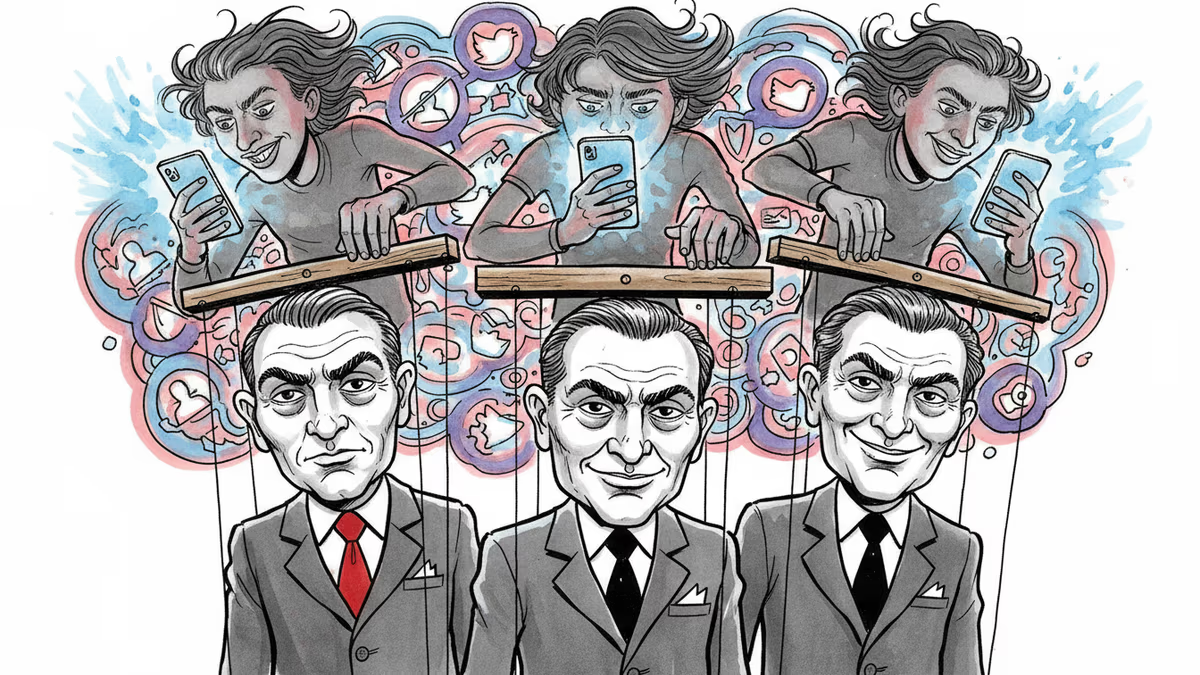
A Texas House race reveals how social media creators are reshaping political campaigns. As 2026 midterms approach, the relationship between politicians and digital influencers presents new challenges for campaign strategists.
Josh D'Amaro took over Disney with a bold Disney Plus vision. Days later, he's in a First Amendment fight with the Trump administration over The View. What does this mean for media freedom?
An FCC enforcement chief privately offered to help Chairman Brendan Carr's pressure campaign against ABC—while holding direct authority over the very stations being targeted. What this reveals about regulatory independence.
The White House sparked controversy by opening an Iran strike video with Call of Duty footage. Examining the gamification of government communication and its implications.
A Texas House race reveals how social media creators are reshaping political campaigns. As 2026 midterms approach, the relationship between politicians and digital influencers presents new challenges for campaign strategists.
Thoughts
Share your thoughts on this article
Sign in to join the conversation