
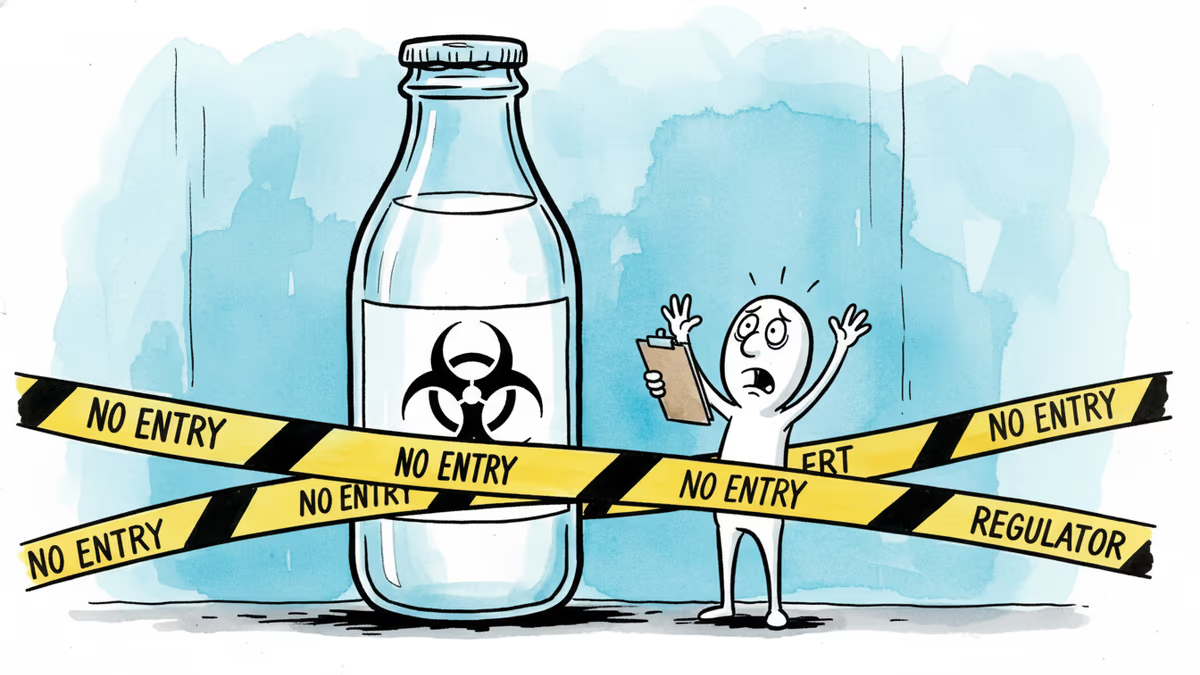
Nine Sick, No Recall: Raw Farm's Defiance
Nine people across three states have been sickened in an E. coli outbreak linked to Raw Farm's unpasteurized dairy. The company refuses to recall. What does this reveal about food safety systems?
Nine people are sick. One nearly lost their kidneys. And the company says it's not their problem.
On March 27, the FDA reported that an E. coli outbreak linked to unpasteurized dairy products from California-based Raw Farm has grown to nine confirmed cases across three states—up by two since the outbreak was first announced earlier this month. Of those nine, three required hospitalization. One patient developed Hemolytic Uremic Syndrome (HUS), a life-threatening complication that causes acute kidney failure.
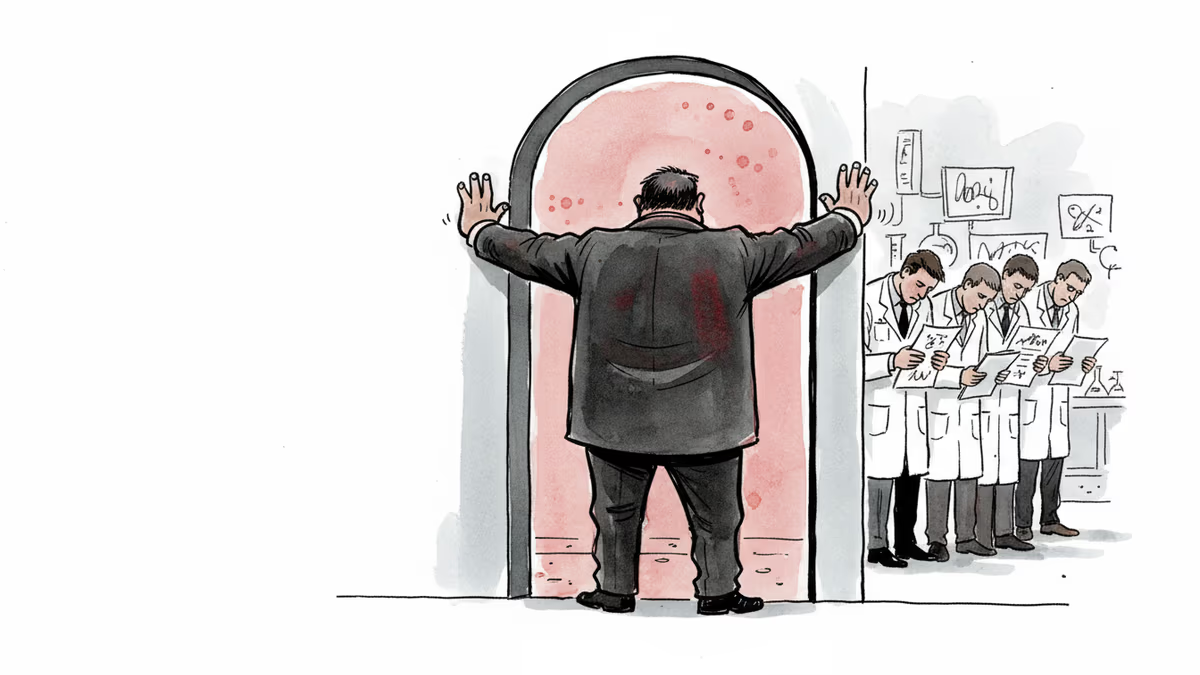
Despite mounting evidence, Raw Farm continues to deny any link to the outbreak and has refused to issue a voluntary recall.
What the Evidence Shows
FDA investigators interviewed eight of the nine patients. Every single one reported consuming unpasteurized dairy. Seven of the eight named Raw Farm specifically: five ate Raw Farm's raw cheddar cheese, and two drank Raw Farm's raw milk. The eighth patient couldn't recall the brand.
Beyond the patient interviews, whole genome sequencing of E. coli isolates from the patients showed high genetic similarity—the kind of result that, in outbreak investigation, strongly points to a single common source.
In most food safety scenarios, this combination of epidemiological and genomic evidence would trigger an immediate voluntary recall. Here, it hasn't.
The Raw Milk Debate Is Older Than This Outbreak
Raw milk—unpasteurized milk sold directly for human consumption—sits at the intersection of food safety science and personal liberty politics in the United States. Advocates argue that pasteurization destroys beneficial enzymes and bacteria, and that consumers have the right to choose what they eat. Some small-scale dairy farmers market raw milk as a premium, artisanal product.

The FDA and CDC have maintained for decades that unpasteurized dairy is one of the riskiest foods available to consumers, linked to pathogens including E. coli, Salmonella, Listeria, and Campylobacter. Raw milk is 150 times more likely to cause illness than pasteurized milk, according to CDC data.
Currently, raw milk sales are legal in more than 30 states, though interstate commerce in raw milk is banned under federal law. Raw Farm operates legally within California. The political winds around raw milk have also been shifting: earlier in 2025, there were renewed legislative discussions in several states about expanding raw milk access, partly energized by broader anti-regulatory sentiment.
Three Parties, Three Very Different Problems
For public health officials, this case exposes a structural gap in the U.S. food recall system. The FDA's authority to mandate a recall is limited. When a company refuses to act voluntarily, the agency's options narrow considerably—it can issue public warnings, but forced recalls require additional legal steps that take time. Time that sick patients don't have.
For consumers who buy raw dairy, the calculus is about informed choice. The argument for personal freedom holds weight only when consumers have full, accurate information about risk. Marketing language around "natural," "living," and "unprocessed" foods doesn't always make pathogen risk legible to the average shopper.
For Raw Farm and the raw dairy industry, the reputational stakes are significant. Denying a link while patients are being interviewed and genome sequences are being matched is a high-risk communications strategy. If the evidence ultimately confirms causation, the delay in action will be part of the story.
Why This Moment Matters Beyond One Outbreak
This isn't just a story about nine sick people and one stubborn company. It's a stress test of how food safety governance works—or doesn't—when a manufacturer and a regulator disagree.
The FDA's voluntary recall system assumes a baseline of corporate cooperation. Raw Farm's refusal reveals what happens when that assumption breaks down. And it raises a question that goes beyond raw milk: in an era where "natural" and "unprocessed" carry enormous marketing power, how do regulators communicate risk without being dismissed as anti-consumer or anti-choice?
There's also the HUS patient to consider. Hemolytic Uremic Syndrome is most common in children under five. It can cause permanent kidney damage. The gap between "nine cases" as a statistic and one person facing kidney failure is where public health policy has to live.
Authors
Related Articles
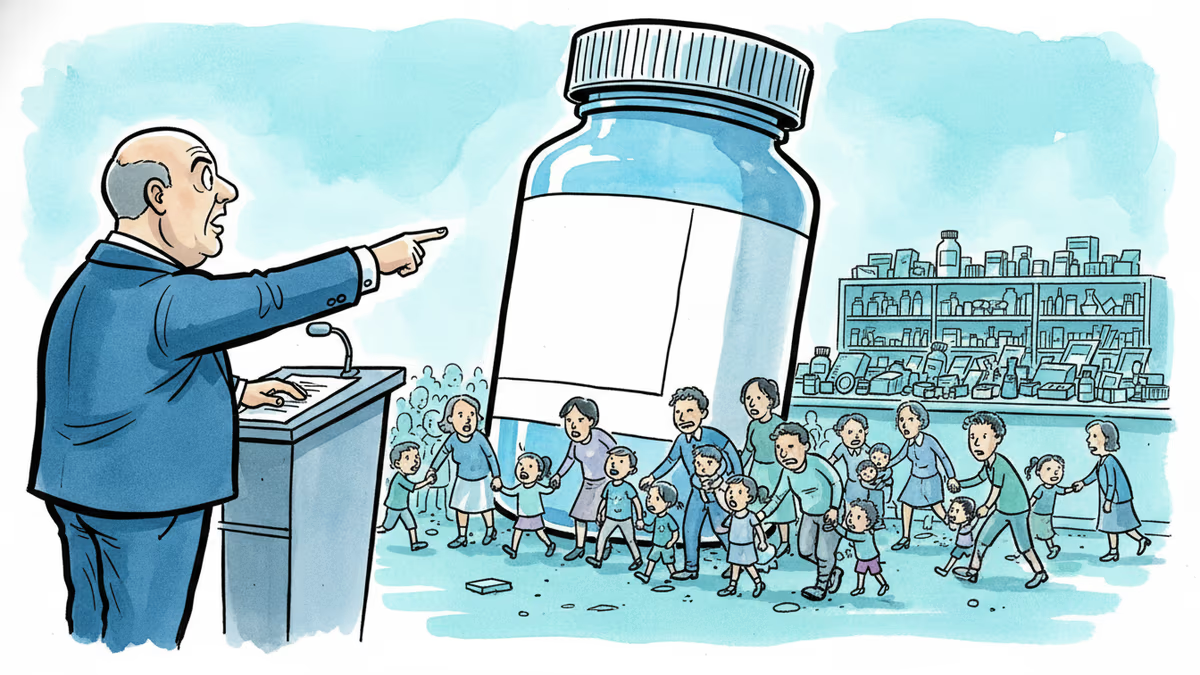
After Trump administration officials publicly promoted leucovorin as a potential autism treatment, new prescriptions for children surged 71% in three months. What happens when government rhetoric moves faster than science?
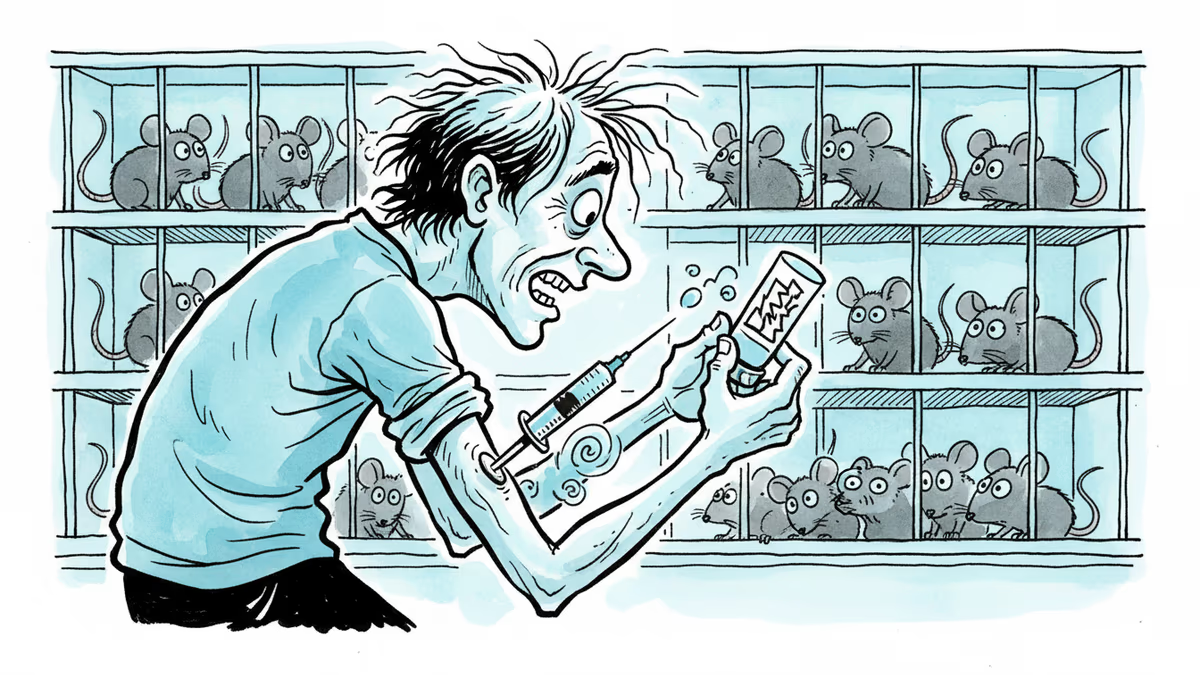
Experimental peptides flood the wellness market with animal data as evidence. Why millions inject unapproved compounds sold with research disclaimers, and what regulators plan to do about it.
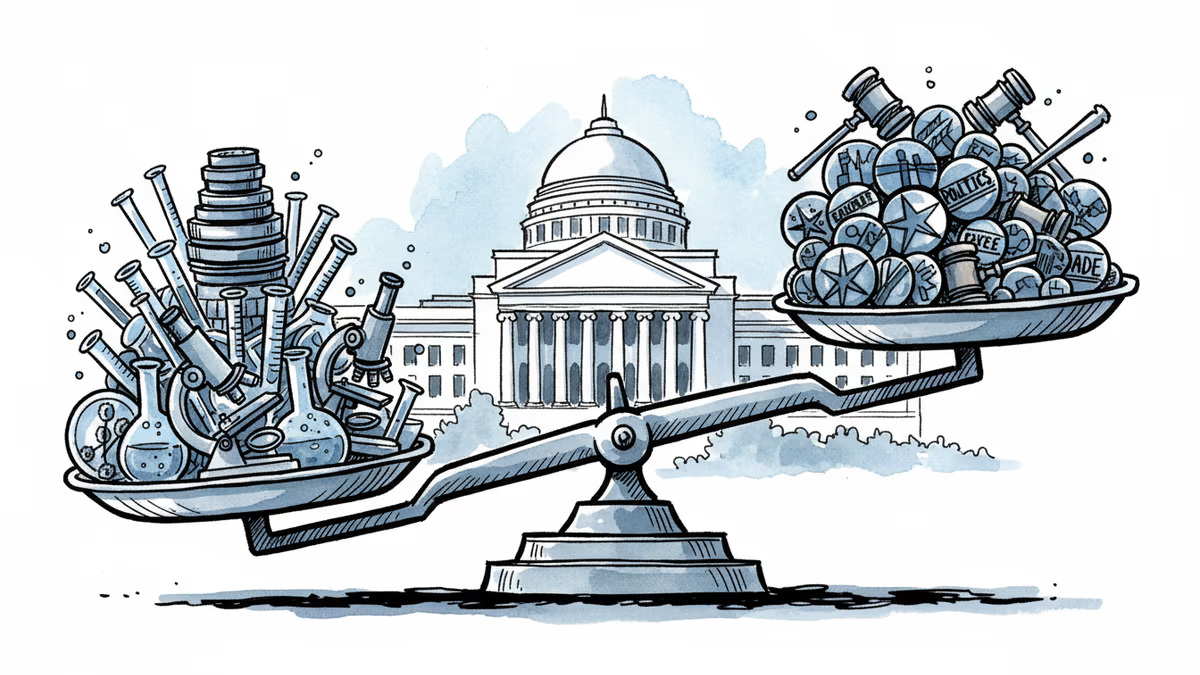
Trump appointee overruled FDA scientists to reject Moderna's mRNA flu vaccine, then reversed course within a week after public backlash. Political interference in vaccine approval raises concerns.
Trump's top vaccine regulator at FDA single-handedly blocked Moderna's mRNA flu vaccine review despite strong internal opposition from career scientists.
After Trump administration officials publicly promoted leucovorin as a potential autism treatment, new prescriptions for children surged 71% in three months. What happens when government rhetoric moves faster than science?
Experimental peptides flood the wellness market with animal data as evidence. Why millions inject unapproved compounds sold with research disclaimers, and what regulators plan to do about it.
Trump appointee overruled FDA scientists to reject Moderna's mRNA flu vaccine, then reversed course within a week after public backlash. Political interference in vaccine approval raises concerns.
Trump's top vaccine regulator at FDA single-handedly blocked Moderna's mRNA flu vaccine review despite strong internal opposition from career scientists.
Thoughts
Share your thoughts on this article
Sign in to join the conversation