
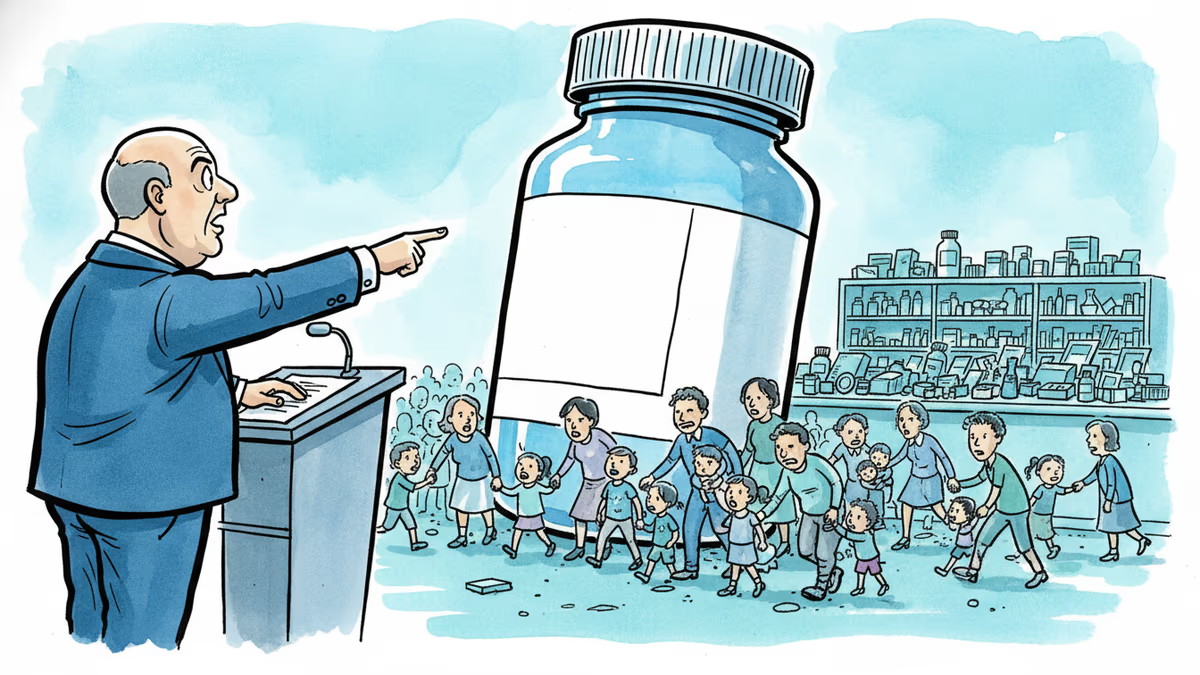
One White House Announcement. Prescriptions Up 71%.
After Trump administration officials publicly promoted leucovorin as a potential autism treatment, new prescriptions for children surged 71% in three months. What happens when government rhetoric moves faster than science?
A government official steps to a podium. "Hundreds of thousands of kids will benefit," he says. Three months later, prescriptions for that drug jump 71%.
What Actually Happened
In September 2025, the Trump administration announced what it called "bold actions" on autism. The centerpiece was an unusual endorsement: leucovorin, a decades-old generic drug typically used to reduce the toxic side effects of chemotherapy or treat certain types of anemia, was being promoted as a promising autism treatment.
FDA Commissioner Marty Makary stated in an official press release that "a growing body of evidence suggests" the drug could be helpful. At a White House press event, he went further—suggesting it might help "20, 40, 50 percent of kids with autism." The remarks were recorded, amplified, and spread quickly through parent communities and media.
The real-world impact of those words was measured in a study published last week in The Lancet. In the three months following the administration's announcement, new outpatient prescriptions of leucovorin for children aged 5 to 17 rose by 71%.
Why the Number Matters
The prescription increase itself isn't the problem. The question is what drove it.
The clinical evidence linking leucovorin to autism improvement is limited and contested. There is meaningful research suggesting it may help a specific subset of autistic children who have a metabolic condition called cerebral folate deficiency—but that's a far narrower population than the broad claims suggested at the White House. The "20 to 50 percent" figure cited by Makary had no clearly cited source at the time of the announcement.
In short: government rhetoric moved faster than the science, and prescribing behavior followed the rhetoric.

Three Very Different Reactions
For parents of autistic children, the surge is understandable, if not entirely surprising. There are currently no FDA-approved drugs that directly address the core symptoms of autism spectrum disorder—communication difficulties, social challenges, repetitive behaviors. Medications exist to manage associated symptoms like irritability, but nothing that targets the condition itself. Into that void, a senior government official saying "this might help half your kids" is a powerful signal. Desperation doesn't require peer-reviewed citations.
For pediatric neurologists and clinicians, the picture is more troubling. Leucovorin is generally considered safe, but no drug is without risk, and prescribing it at scale to children without a clear diagnostic indication raises legitimate concerns. The deeper worry: families spending time, money, and emotional energy on an unvalidated treatment may be displacing evidence-based interventions—behavioral therapy, speech therapy, occupational therapy—that have decades of research behind them.
For regulatory scholars and health policy experts, this episode is a case study in the weight of institutional speech. The FDA commissioner's remarks were not a drug approval. They were not clinical guidelines. They were comments at a press event. And yet they functionally reshaped prescribing behavior across the country. The question of accountability—who is responsible when government enthusiasm outpaces evidence—remains largely unanswered.
The Broader Pattern
This isn't the first time a public health announcement has moved markets and medicine simultaneously. During the COVID-19 pandemic, presidential endorsements of hydroxychloroquine triggered similar surges in prescriptions—and similar shortages for patients who actually needed the drug for lupus and rheumatoid arthritis. The pattern is consistent: high-profile endorsement → demand surge → clinical community scrambles to respond.
What's different here is the population involved. Autism affects an estimated 1 in 36 children in the United States, according to the CDC's most recent data. The families navigating that diagnosis are often exhausted, frequently underserved by existing healthcare systems, and acutely vulnerable to hope. That vulnerability doesn't disappear because a treatment lacks rigorous evidence—it just makes the stakes of misleading communication higher.
What Comes Next
The Lancet study documenting the 71% prescription surge is descriptive—it measures what happened, not whether it helped or harmed. Researchers and clinicians will now be watching for follow-up data: Did outcomes improve for the children who received leucovorin? Were there adverse effects? Did access to the drug become constrained for patients with established medical needs?
For the FDA and the broader regulatory community, the episode raises a harder institutional question. Commissioners and senior officials routinely speak at public events. The line between "sharing promising early research" and "de facto endorsement that reshapes clinical practice" is blurry—and apparently, consequential.
Authors
Related Articles
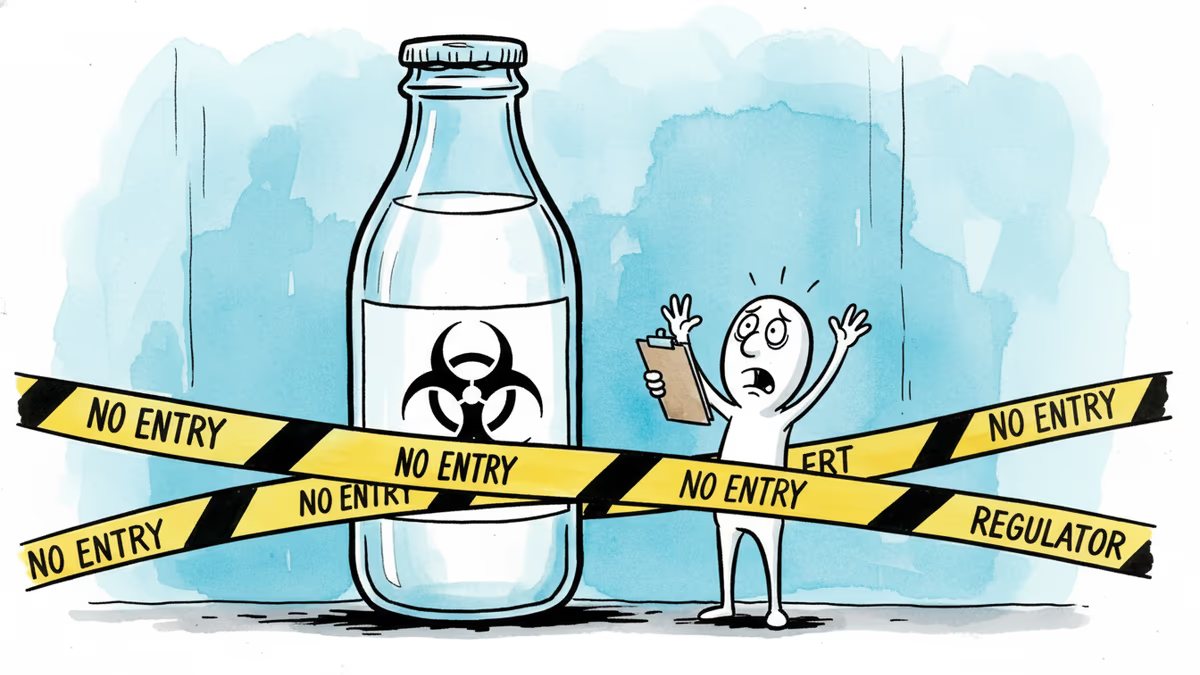
Nine people across three states have been sickened in an E. coli outbreak linked to Raw Farm's unpasteurized dairy. The company refuses to recall. What does this reveal about food safety systems?
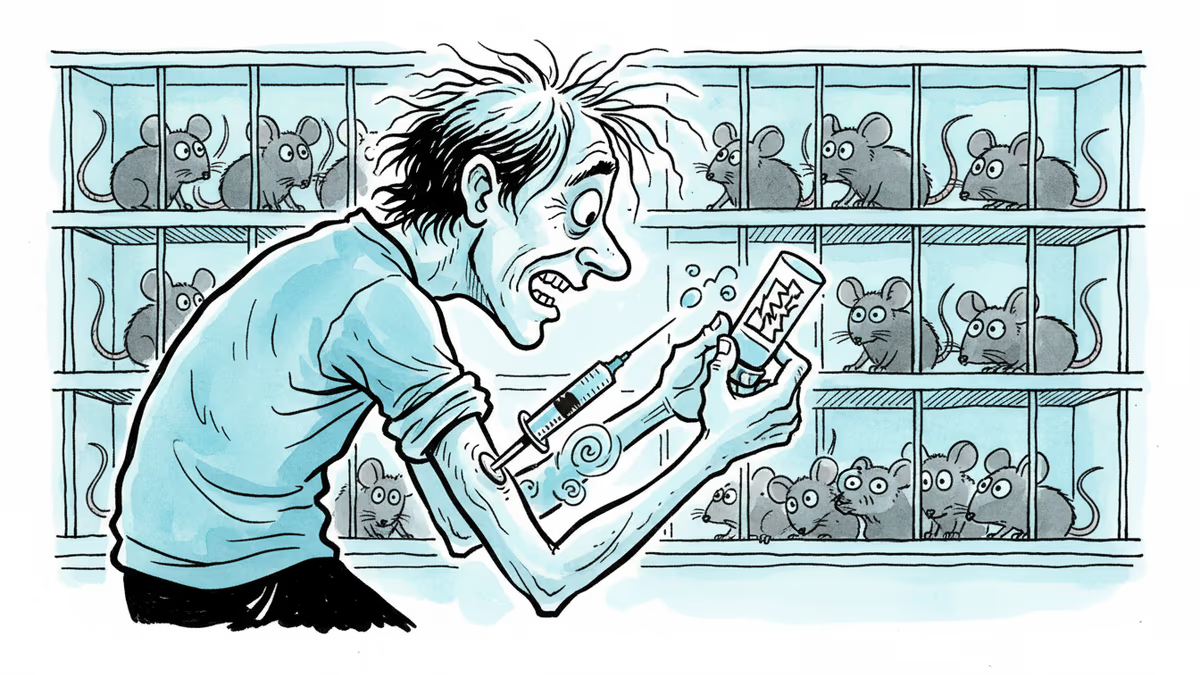
Experimental peptides flood the wellness market with animal data as evidence. Why millions inject unapproved compounds sold with research disclaimers, and what regulators plan to do about it.
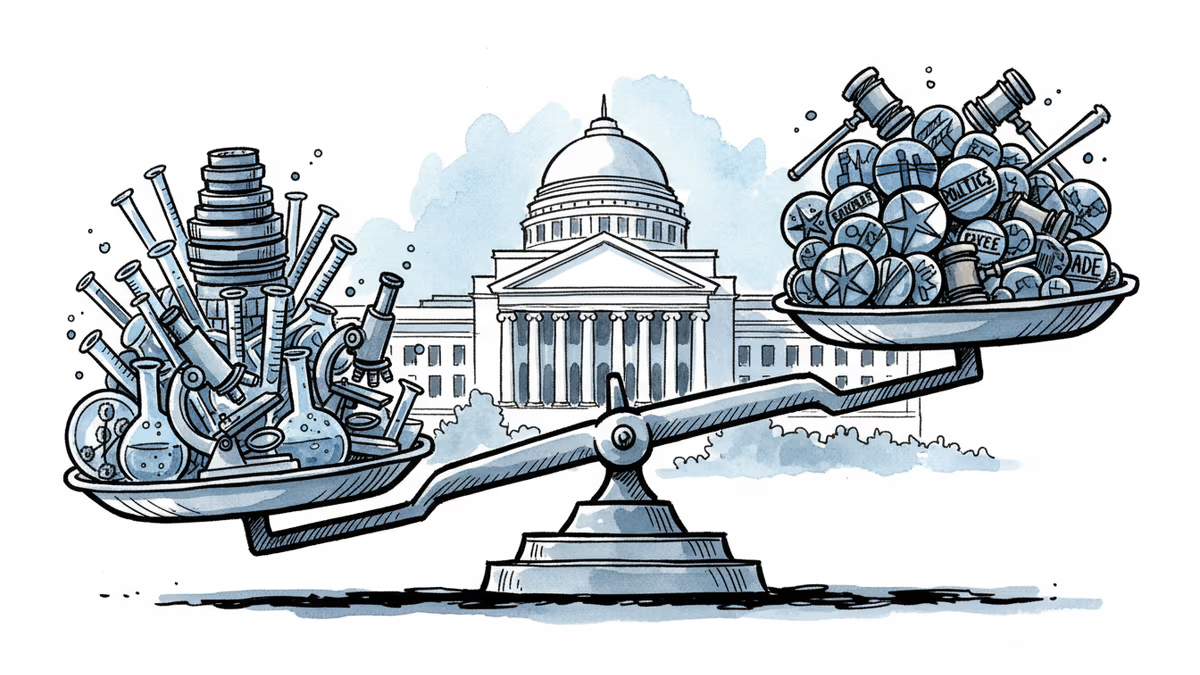
Trump appointee overruled FDA scientists to reject Moderna's mRNA flu vaccine, then reversed course within a week after public backlash. Political interference in vaccine approval raises concerns.

Trump's top vaccine regulator at FDA single-handedly blocked Moderna's mRNA flu vaccine review despite strong internal opposition from career scientists.
Nine people across three states have been sickened in an E. coli outbreak linked to Raw Farm's unpasteurized dairy. The company refuses to recall. What does this reveal about food safety systems?
Experimental peptides flood the wellness market with animal data as evidence. Why millions inject unapproved compounds sold with research disclaimers, and what regulators plan to do about it.
Trump appointee overruled FDA scientists to reject Moderna's mRNA flu vaccine, then reversed course within a week after public backlash. Political interference in vaccine approval raises concerns.
Trump's top vaccine regulator at FDA single-handedly blocked Moderna's mRNA flu vaccine review despite strong internal opposition from career scientists.
Thoughts
Share your thoughts on this article
Sign in to join the conversation