

The 2026 AI Operating Systems Race: Killing the App Model
Silicon Valley giants are battling to dominate the 2026 AI operating systems race. Explore how AI agents are threatening the app-based business model and why OpenAI's Jerry Tworek is departing.
The era of tapping through apps is ending. Silicon Valley giants like Amazon, Meta, and OpenAI are racing to develop 'operating systems' for AI-powered devices—and 2026 is the year these efforts are finally hitting the mainstream.
The 2026 AI Operating Systems Race: A Shift in Control
These new systems are built around AI agents that act on a user's behalf, eliminating the need to visit individual apps or websites. While this promise of seamless automation sounds ideal for consumers, it's a potential nightmare for app developers. Companies like Uber and DoorDash rely on keeping users within their platforms to serve ads and upsell services.
Resistance is already mounting. Amazon recently sued Perplexity for scraping its site to perform purchases. Meanwhile, Rabbit CEO Jesse Lyu noted that major developers are reluctant to grant API access because they make money through advertisements. However, others are leaning in; Expedia and Ticketmaster have already integrated with ChatGPT and Alexa+ as early agentic features.

Internal Friction: Jerry Tworek Departs OpenAI
As the platform war heats up, internal friction is surfacing at OpenAI. Jerry Tworek, the VP of Research, announced his departure on Monday. Tworek's exit follows a disagreement with Chief Scientist Jakub Pachocki regarding the company's research direction.
A December reorganization left Tworek with fewer resources for his specific research bets, as leadership sided with Pachocki. This departure highlights the increasing tension in AI labs as they prioritize specific breakthroughs amidst fierce competition from Google and Anthropic.
Authors
Related Articles
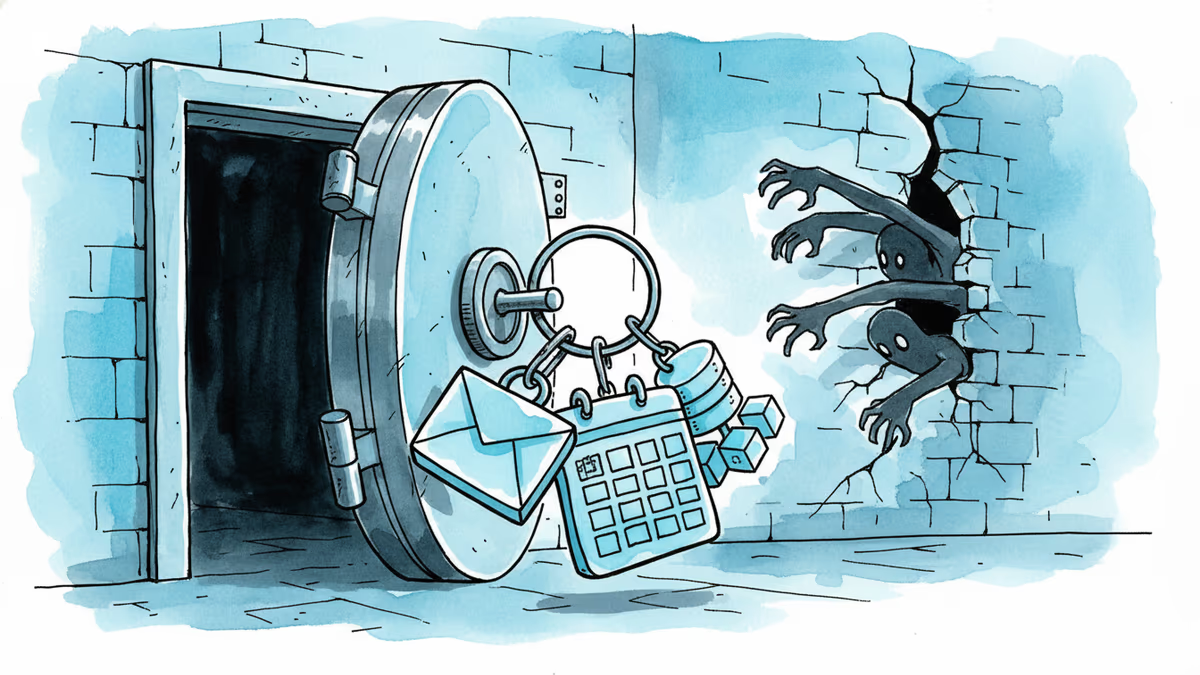
A critical vulnerability in Starlette—downloaded 325 million times per week—puts millions of AI agent servers at risk, exposing stored credentials for email, databases, and third-party services.

A small but growing group of developers has gone all-in on AI coding agents like Claude Code and OpenClaw. History suggests the rest of us won't be far behind.
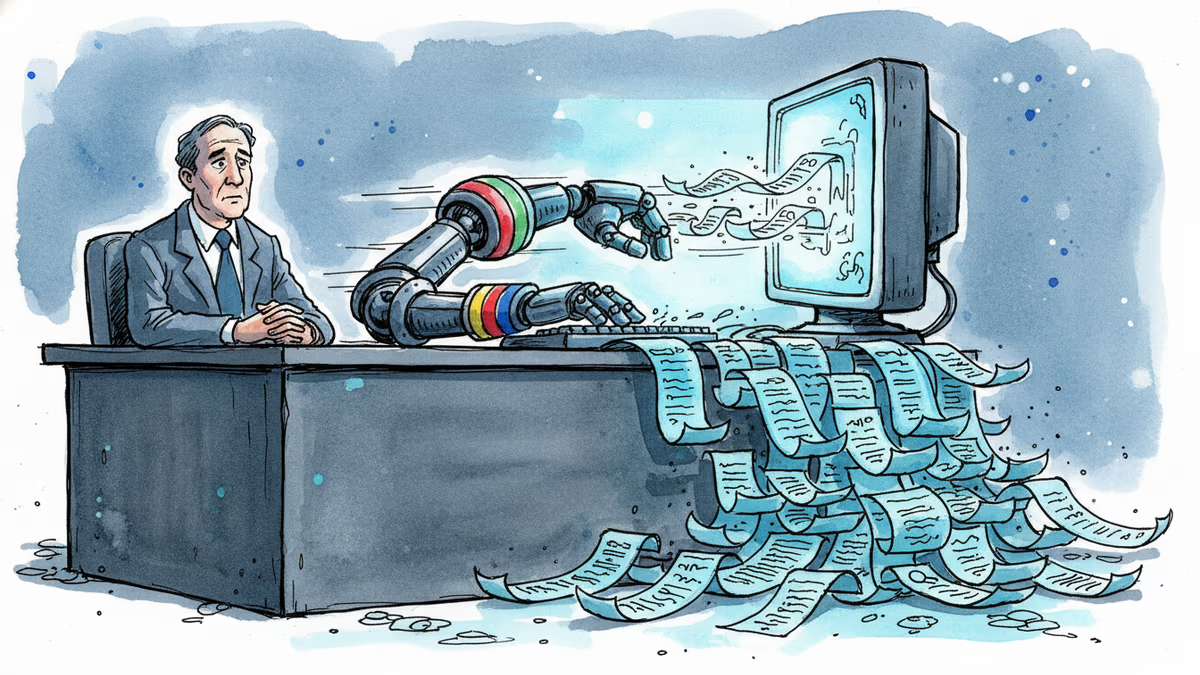
Google is building AI agents that search the web proactively, without user prompting. That's not just a product update — it's a fundamental shift in who controls the information you receive.

OpenAI has reorganized for the second time in a month, merging ChatGPT and Codex into a single agentic platform under president Greg Brockman's unified product leadership.
A critical vulnerability in Starlette—downloaded 325 million times per week—puts millions of AI agent servers at risk, exposing stored credentials for email, databases, and third-party services.
A small but growing group of developers has gone all-in on AI coding agents like Claude Code and OpenClaw. History suggests the rest of us won't be far behind.
Google is building AI agents that search the web proactively, without user prompting. That's not just a product update — it's a fundamental shift in who controls the information you receive.
OpenAI has reorganized for the second time in a month, merging ChatGPT and Codex into a single agentic platform under president Greg Brockman's unified product leadership.
Thoughts
Share your thoughts on this article
Sign in to join the conversation