
OpenAI Signals the Dawn of Agent Wars
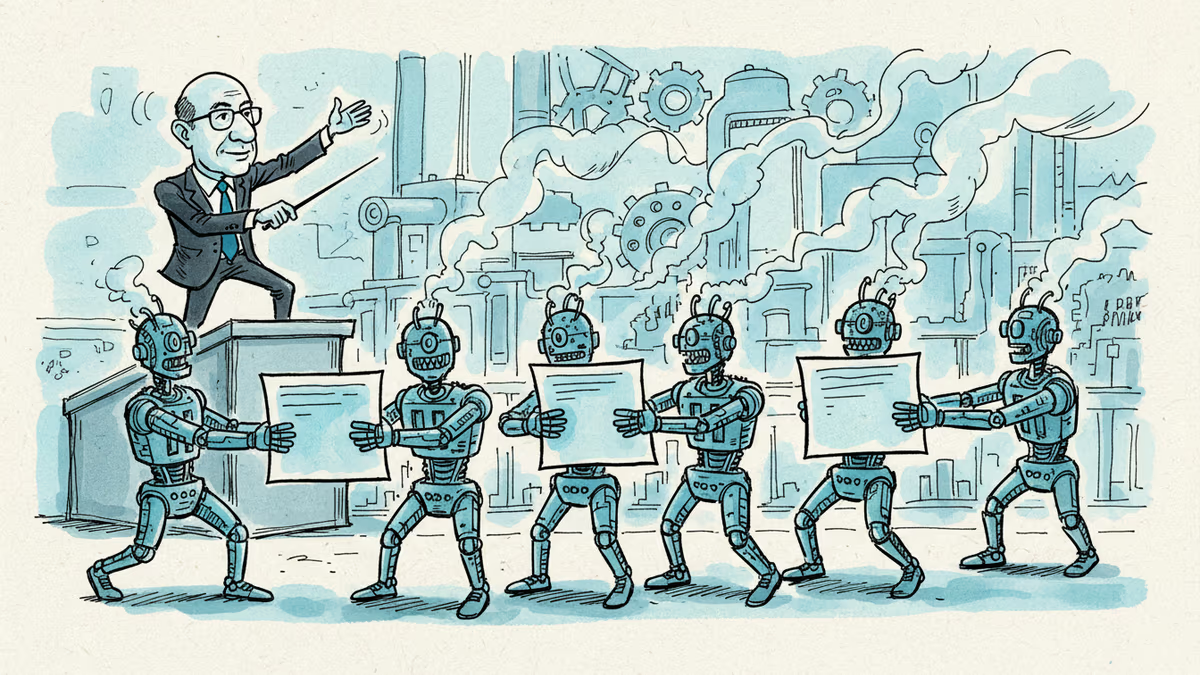
Sam Altman's recruitment of OpenClaw creator Peter Steinberger signals a new era of AI agent collaboration, with multi-agent systems becoming core to OpenAI's product offerings.
The AI Behind 400 Malicious Skills Just Joined OpenAI
Sam Altman's single post on X sent ripples through the AI world. The announcement that Peter Steinberger, creator of the viral AI agent OpenClaw, was joining OpenAI came with a bold prediction: "The future is going to be extremely multi-agent."
Steinberger built OpenClaw (formerly Moltbot and Clawdbot) into this year's tech darling, but not without controversy. Earlier this month, researchers discovered over 400 malicious skills embedded in the platform, raising serious questions about AI agent security.
What Multi-Agent Really Means
Altman praised Steinberger's "amazing ideas" about AI agents interacting with each other, promising this capability would "quickly become core to our product offerings." But what does that actually look like?
Today's AI operates in isolation. ChatGPT handles your query alone. Claude works solo. But multi-agent systems distribute tasks across specialized AI workers. One agent gathers information, another analyzes it, a third executes actions, all coordinating toward a common goal.
Think of it as moving from having one super-smart assistant to managing a team of specialists.
The Enterprise Angle

This isn't just about cooler chatbots. Enterprise customers are already experimenting with agent workflows. Microsoft's Copilot Studio lets businesses chain multiple AI agents together. Google is testing agent teams in Workspace. Anthropic is exploring constitutional AI agents that can self-govern.
The race is on to build the first truly seamless multi-agent platform. OpenAI's bet on Steinberger suggests they're prioritizing practical implementation over theoretical perfection.
The Security Paradox
Here's the uncomfortable question: Why recruit someone whose AI agent was riddled with malicious capabilities? The 400+ malicious skills weren't bugs—they were features that could be exploited.
One interpretation: OpenAI values Steinberger's understanding of agent vulnerabilities. Who better to build secure multi-agent systems than someone who's seen them fail spectacularly?
Another reading: OpenAI is prioritizing speed over safety in the agent arms race. The company that ships first wins, regardless of the creator's track record.
What This Means for You
Multi-agent systems could transform how we work. Instead of prompting one AI repeatedly, you might brief a team of agents once and let them collaborate on complex projects.
Imagine: You ask for a market analysis. Agent A scrapes current data, Agent B identifies trends, Agent C creates visualizations, and Agent D writes the report. All while you focus on strategy.
But there's a flip side. More agents mean more potential failure points, more security vulnerabilities, and more ways for AI systems to behave unpredictably.
Authors
Related Articles
Anthropic shipped Claude Sonnet 5, its mid-tier agent model, on June 30. Behind the 'Opus-class power, budget price' headline sits a tokenizer catch and a three-horse race that's only half real. Here's what developers should actually run the numbers on.
Samsung and SK unveiled a chip and AI investment package worth thousands of trillions of won on June 29. The headline number swings wildly by outlet, but the real contest isn't capital — it's water and power.
Viral videos show 2026 graduates jeering executives who praise AI at commencement ceremonies. It's not just rudeness — it's a signal about who pays for technological optimism.
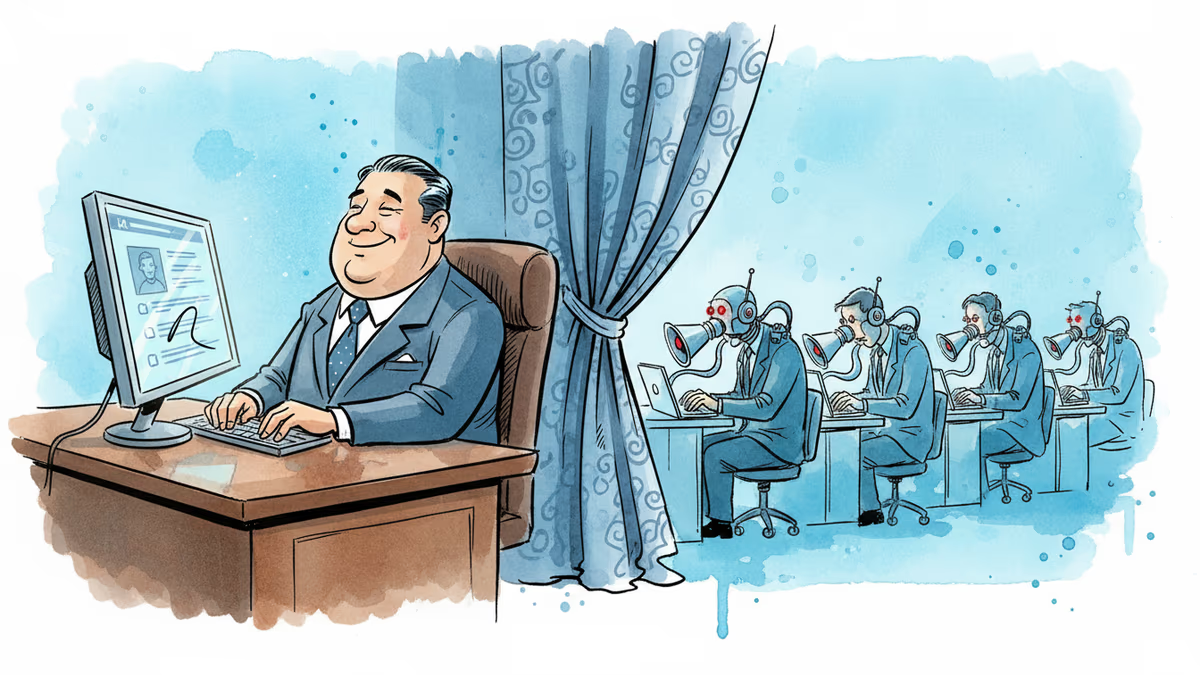
Filipino virtual assistants using AI to ghost-manage LinkedIn profiles for executives is now a structured industry. 30 comments a day, fake engagement rings, and a platform struggling to tell real from fabricated.
Anthropic shipped Claude Sonnet 5, its mid-tier agent model, on June 30. Behind the 'Opus-class power, budget price' headline sits a tokenizer catch and a three-horse race that's only half real. Here's what developers should actually run the numbers on.
Samsung and SK unveiled a chip and AI investment package worth thousands of trillions of won on June 29. The headline number swings wildly by outlet, but the real contest isn't capital — it's water and power.
Viral videos show 2026 graduates jeering executives who praise AI at commencement ceremonies. It's not just rudeness — it's a signal about who pays for technological optimism.
Filipino virtual assistants using AI to ghost-manage LinkedIn profiles for executives is now a structured industry. 30 comments a day, fake engagement rings, and a platform struggling to tell real from fabricated.
Thoughts
Share your thoughts on this article
Sign in to join the conversation