

Why the Viral AI Creator Chose OpenAI Over Independence
Peter Steinberger's decision to join OpenAI with OpenClaw reveals shifting dynamics in AI agent development and big tech acquisition strategies
The Three-Week Journey from Viral Hit to OpenAI
OpenClaw went from unknown to internet sensation in mere weeks. The "AI that actually does things" promised to manage calendars, book flights, and even join social networks populated entirely by other AI assistants. Now its creator, Austrian developer Peter Steinberger, has joined OpenAI.
The move wasn't about money or prestige. "It's not really exciting for me" to build a large company, Steinberger wrote in his announcement. Instead, he chose what he saw as "the fastest way to bring this to everyone."
Sam Altman confirmed Steinberger will "drive the next generation of personal agents" at OpenAI, while OpenClaw itself becomes an open-source project under foundation stewardship.
Three Names, One Vision
OpenClaw's path to prominence wasn't smooth. Originally called Clawdbot, it faced legal pressure from Anthropic over similarity to Claude. The rename to Moltbot didn't stick either—Steinberger simply preferred "OpenClaw" better.

But the name changes masked deeper innovation. Unlike traditional chatbots, OpenClaw demonstrated genuine task execution capabilities. Its ability to navigate complex workflows and even interact with other AI agents in dedicated social networks showcased the potential of autonomous AI assistants.
The Startup Dilemma: Scale vs. Speed
Steinberger's choice reflects a broader tension in tech innovation. He could have built OpenClaw into a standalone company, potentially worth millions. Instead, he prioritized distribution and impact over ownership.
This decision echoes similar moves across the AI landscape. Talented developers increasingly face a choice: maintain independence with limited reach, or join established platforms with global infrastructure. The economics favor the latter, but at what cost to innovation diversity?
Beyond Chatbots: The Agent Economy Emerges
OpenClaw's viral success signals a shift from conversational AI to actionable AI agents. Users don't just want to chat—they want AI that completes tasks, manages workflows, and integrates with existing systems.
This evolution puts pressure on established players. Google's Assistant, Amazon's Alexa, and Apple's Siri were built for voice queries, not complex task execution. OpenAI's acquisition of proven agent technology could leapfrog these incumbents in the emerging personal automation market.
Authors
Related Articles

Samsung and SK unveiled a chip and AI investment package worth thousands of trillions of won on June 29. The headline number swings wildly by outlet, but the real contest isn't capital — it's water and power.

Viral videos show 2026 graduates jeering executives who praise AI at commencement ceremonies. It's not just rudeness — it's a signal about who pays for technological optimism.
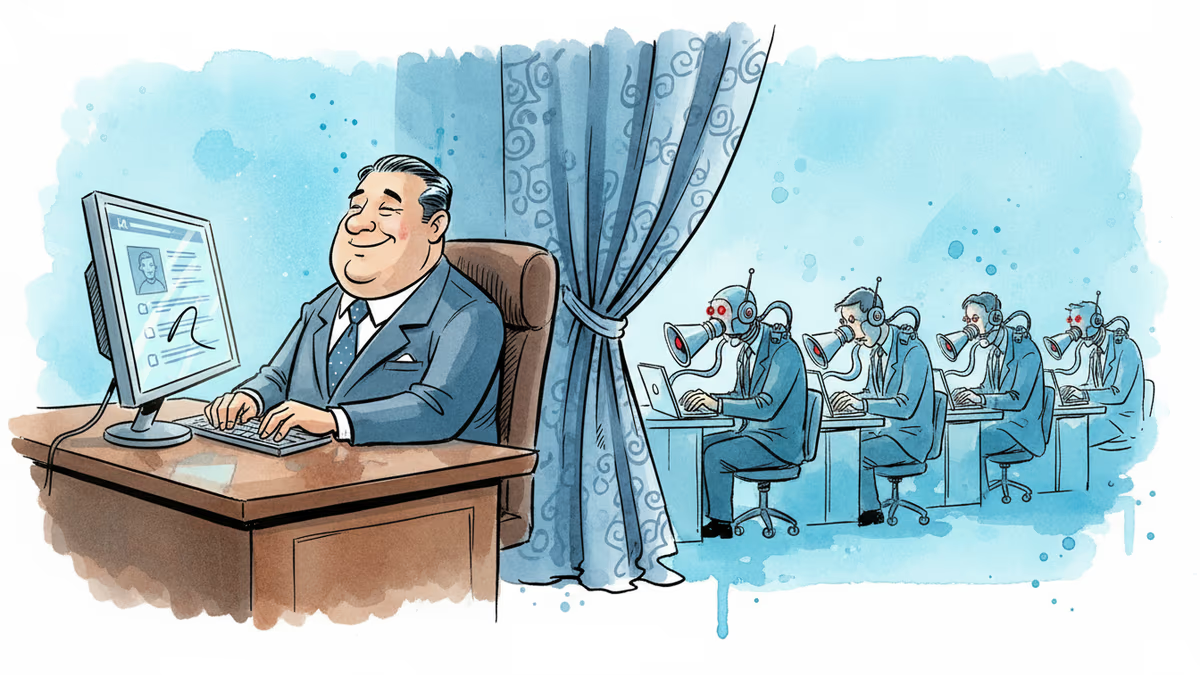
Filipino virtual assistants using AI to ghost-manage LinkedIn profiles for executives is now a structured industry. 30 comments a day, fake engagement rings, and a platform struggling to tell real from fabricated.
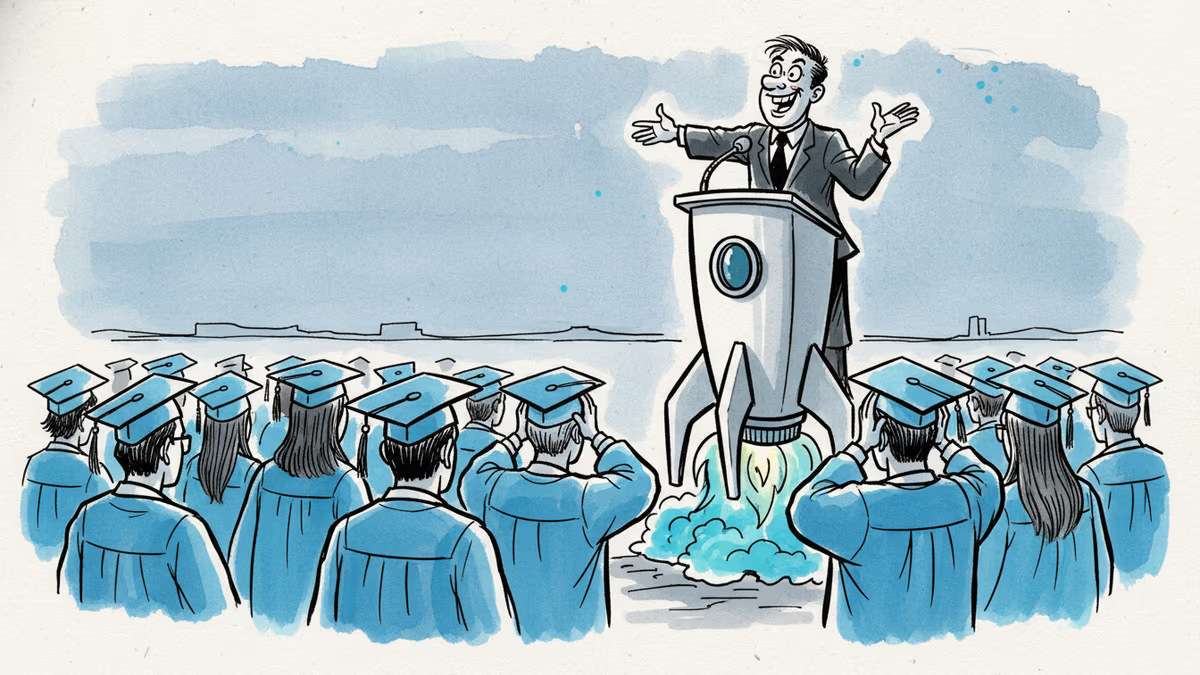
Two commencement speakers learned the hard way that AI enthusiasm doesn't land well with today's graduates. The backlash reveals a widening gap between tech optimism and Gen Z's economic reality.
Samsung and SK unveiled a chip and AI investment package worth thousands of trillions of won on June 29. The headline number swings wildly by outlet, but the real contest isn't capital — it's water and power.
Viral videos show 2026 graduates jeering executives who praise AI at commencement ceremonies. It's not just rudeness — it's a signal about who pays for technological optimism.
Filipino virtual assistants using AI to ghost-manage LinkedIn profiles for executives is now a structured industry. 30 comments a day, fake engagement rings, and a platform struggling to tell real from fabricated.
Two commencement speakers learned the hard way that AI enthusiasm doesn't land well with today's graduates. The backlash reveals a widening gap between tech optimism and Gen Z's economic reality.
Thoughts
Share your thoughts on this article
Sign in to join the conversation