

OpenAI's GPT-5.2 Isn't About Better Chat. It's About Building Your AI Workforce.
OpenAI's new GPT-5.2 model signals a major shift from creative AI to reliable 'agentic workflows.' We analyze why this changes the enterprise AI landscape.
The Lede: OpenAI Re-Engineers the AI Race
OpenAI's announcement of GPT-5.2 is deceptively simple, but it represents one of the most significant strategic pivots in the generative AI race. Forget the hype around a full version leap to GPT-5; the real story is in the model's stated purpose: powering ‘faster, more reliable agentic workflows’ for professional work. This isn't an upgrade for your chatbot; it's the foundation for building a scalable, digital workforce. OpenAI is shifting the goalposts from creative co-pilots to dependable, autonomous agents, a move that directly targets the multi-trillion-dollar enterprise automation market.
Why It Matters: The End of AI as a Toy
For the past two years, enterprise adoption of LLMs has been hampered by a critical flaw: unreliability. Hallucinations, inconsistencies, and an inability to follow complex, multi-step instructions have relegated even the most powerful models like GPT-4 to the role of a brilliant but erratic intern. GPT-5.2's focus on ‘reliability’ is a direct assault on this problem.
The second-order effects are profound:
- The Bar for Enterprise AI is Raised: Simple Q&A bots and content generators are now table stakes. The new competitive frontier is reliable process automation. Platforms that cannot support robust, multi-step agentic workflows will be seen as legacy technology.
- From Prompt Engineer to Workflow Architect: The key skill is no longer just crafting the perfect prompt, but designing, managing, and debugging complex chains of AI-powered tasks. This changes the talent profile companies need to hire.
- Accelerated Commoditization: As the foundational models become more capable of agency, the value shifts from the model itself to the proprietary data and unique workflows a business can build on top of it.
The Analysis: Deconstructing the 'Agent-First' Strategy

From 'Creative Spark' to 'Corporate Cog'
The evolution of OpenAI's flagship models tells a clear story of market maturation. GPT-3 was a technological marvel, a source of creative inspiration. GPT-4 became a powerful co-pilot, capable of augmenting professional tasks. GPT-5.2, however, is being positioned as a dependable workhorse—a 'corporate cog' designed for integration into mission-critical business processes. This is AI's industrial revolution moment, moving from artisanal experimentation to mass-producible, reliable output.
The Battlefield for 'Agentic Workflows'
OpenAI is not operating in a vacuum. This move is a strategic counter to a new breed of competitors and a clear signal to partners like Microsoft. While Google's Gemini aims for deep integration into its ecosystem and Anthropic's Claude 3.5 Sonnet competes on speed and cost-effectiveness for enterprise tasks, GPT-5.2 is designed to be the definitive engine for AI agents. The emphasis on long-context, reasoning, and vision isn't just about understanding long documents; it's about giving an agent the memory and sensory input needed to execute tasks like 'review the last quarter's sales reports, analyze the visual trends in the slide deck, and draft a summary email to the leadership team.' This is a direct challenge to specialized agent platforms and a play to become the default 'operating system' for autonomous AI.
What '.2' and 'Reliable' Really Signal
The '.2' version number is telling. It suggests optimization and hardening, not a radical architectural overhaul. This points to a massive engineering effort focused on predictability and consistency. For developers and enterprise CTOs, 'reliable' means:
- Reduced Hallucinations: Higher factuality and less confabulation, critical for tasks involving data analysis or financial reporting.
- Consistent Structured Output: The ability to reliably return data in a specified format (like JSON), which is the lifeblood of any automated workflow.
- Improved Instruction Following: Better adherence to complex, multi-part prompts, reducing the need for elaborate prompt engineering and error-checking.
PRISM's Take
GPT-5.2 is not the AGI leap many were speculating about, and that's precisely why it's so important. It represents a pragmatic, market-driven maturation of artificial intelligence. OpenAI is signaling that the era of dazzling demos is over, and the era of dependable, industrial-scale deployment has begun. The winners in this next phase won't be the companies with the cleverest chatbots; they will be the ones who successfully build, manage, and scale a reliable workforce of AI agents. With GPT-5.2, OpenAI has made it clear it intends to be the primary engine supplier for that workforce.
This content is AI-generated based on source articles. While we strive for accuracy, errors may occur. We recommend verifying with the original source.
Related Articles
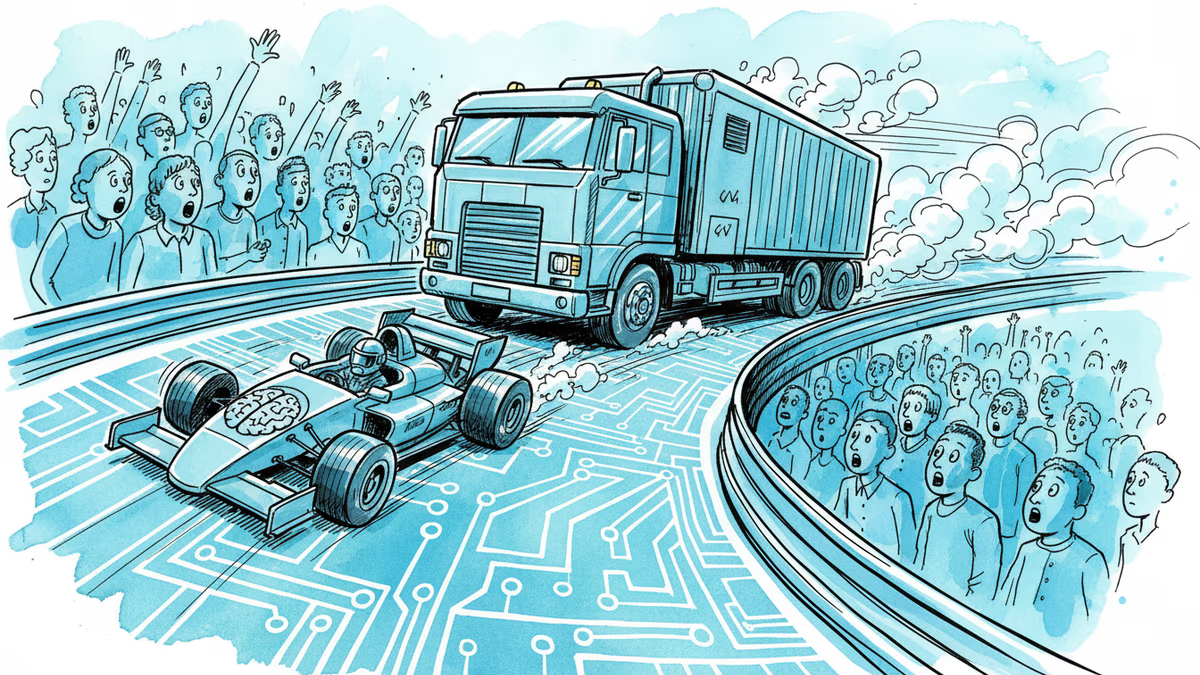
Cerebras Systems has refiled for an IPO targeting mid-May, backed by a $23B valuation, a reported $10B OpenAI deal, and an AWS partnership. What does this mean for Nvidia's dominance and the AI chip landscape?
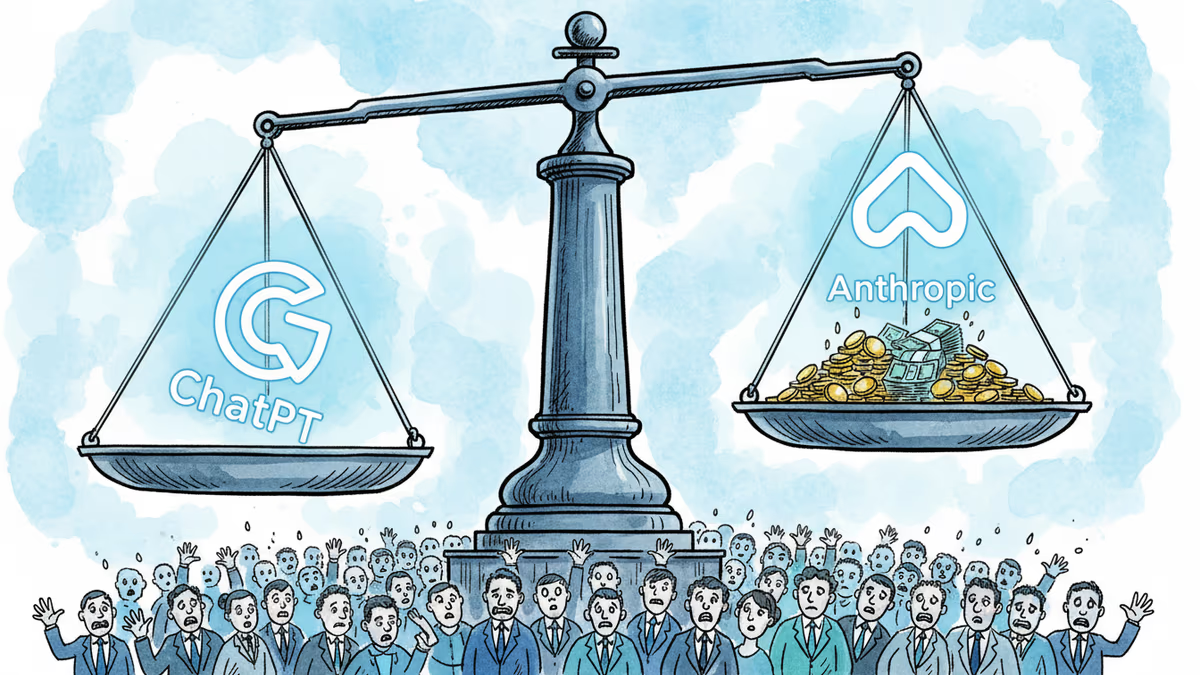
OpenAI's $852B valuation is drawing skepticism from its own backers as Anthropic's ARR tripled in three months. The secondary market is already voting with its feet.
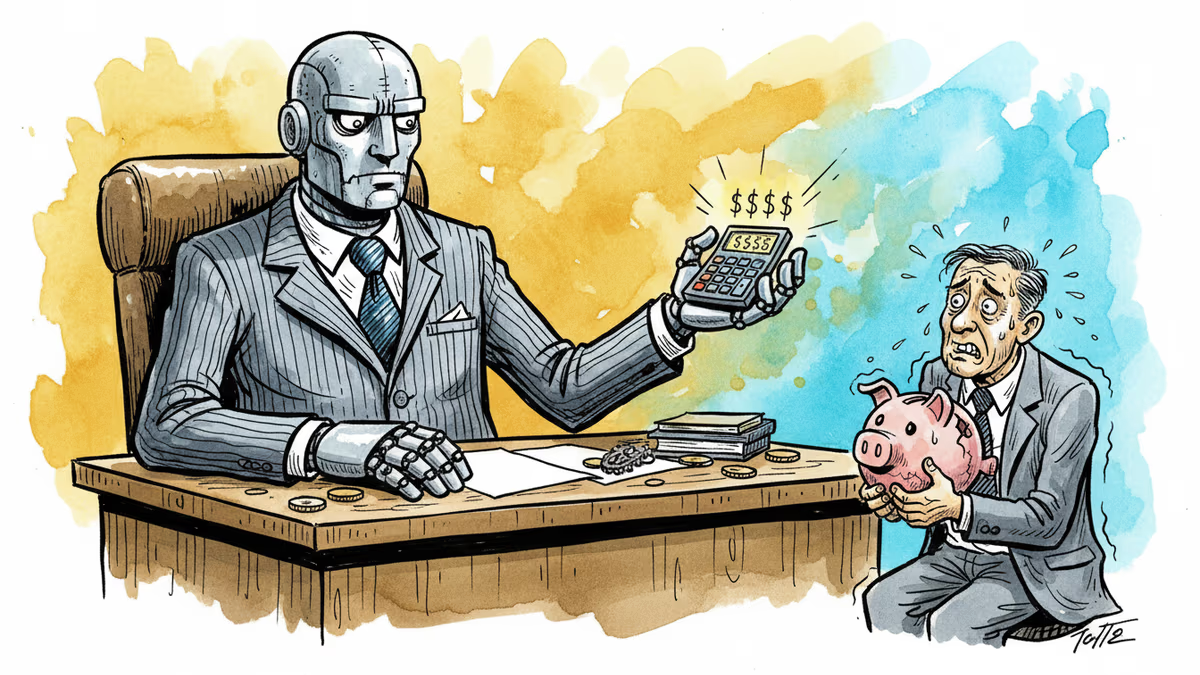
OpenAI acquired Hiro Finance, an AI-powered personal finance startup. Is this just a talent grab, or is the ChatGPT maker quietly building a financial services empire?

Stanford's 2026 AI Index reveals AI adoption outpacing PCs and the internet, junior dev jobs falling 20%, and the benchmarks we use to measure AI progress are broken. Here's what the data actually says.
Cerebras Systems has refiled for an IPO targeting mid-May, backed by a $23B valuation, a reported $10B OpenAI deal, and an AWS partnership. What does this mean for Nvidia's dominance and the AI chip landscape?
OpenAI's $852B valuation is drawing skepticism from its own backers as Anthropic's ARR tripled in three months. The secondary market is already voting with its feet.
OpenAI acquired Hiro Finance, an AI-powered personal finance startup. Is this just a talent grab, or is the ChatGPT maker quietly building a financial services empire?
Stanford's 2026 AI Index reveals AI adoption outpacing PCs and the internet, junior dev jobs falling 20%, and the benchmarks we use to measure AI progress are broken. Here's what the data actually says.
Thoughts
Share your thoughts on this article
Sign in to join the conversation