
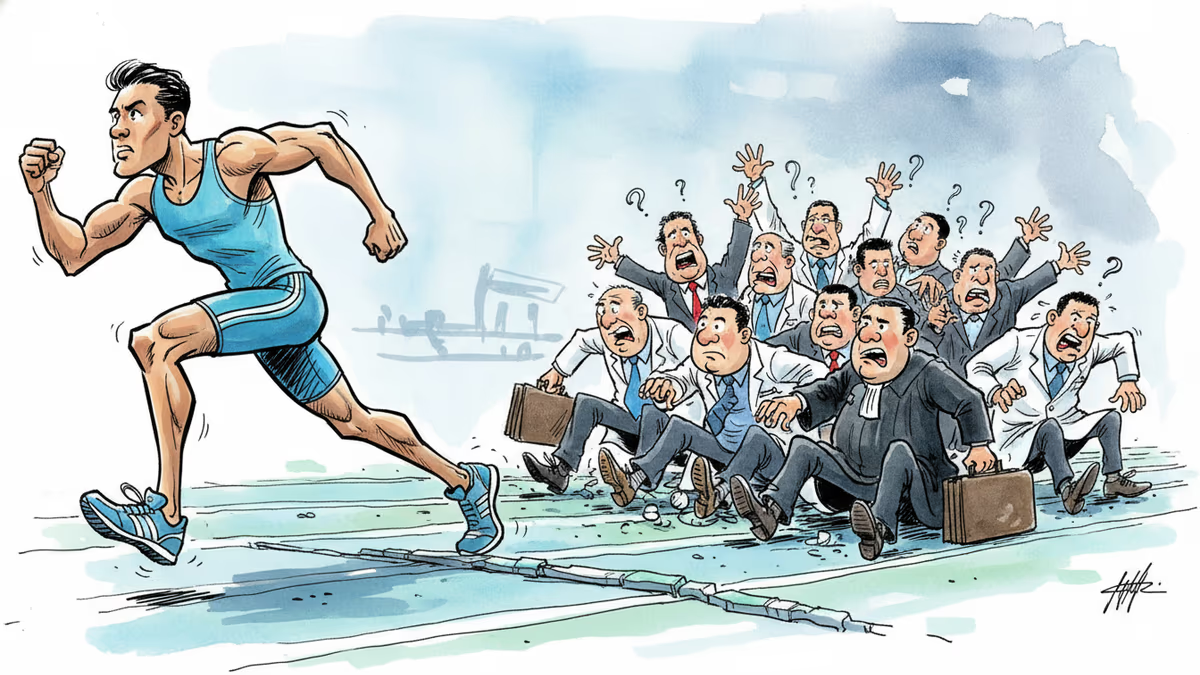
AI Is Sprinting. The Rest of Us Are Still Looking for Our Shoes.
Stanford's 2026 AI Index reveals AI adoption outpacing PCs and the internet, junior dev jobs falling 20%, and the benchmarks we use to measure AI progress are broken. Here's what the data actually says.
Somewhere in San Francisco, a 24-year-old software engineer just got laid off. Her manager cited "efficiency restructuring." The team's new AI tooling, he explained, handles first-draft code now. She's not alone: employment among software developers aged 22 to 25 has dropped nearly 20% since 2022. That's one data point from the 2026 AI Index, Stanford University's annual deep-dive into where artificial intelligence actually stands—not where the press releases say it does.
Published today by Stanford's Institute for Human-Centered Artificial Intelligence, the report lands as a reality check on an industry that generates more narrative than signal. The verdict: AI keeps getting better faster than almost anyone predicted, faster than our benchmarks can measure it, faster than regulators can respond to it, and—in some corners of the labor market—faster than workers can adapt to it.
The US–China Race Is Essentially a Tie
Three years ago, OpenAI had a comfortable lead. Today, that lead is gone. According to Arena, a community-driven platform where users compare AI model outputs side by side, Anthropic currently tops the rankings as of March 2026, with xAI, Google, and OpenAI close behind. Chinese models—DeepSeek and Alibaba's offerings—trail by only a modest margin. In February 2025, DeepSeek's R1 model briefly matched ChatGPT at the top of the leaderboard.
The two countries aren't competing on the same terrain, though. The US leads in raw model power, private capital, and infrastructure: it hosts 5,427 AI data centers, more than 10 times any other country. China leads in AI research publications, patents filed, and robotics deployment. Neither has a decisive edge. What they share is a growing reluctance to show their work: OpenAI, Anthropic, and Google no longer disclose training code, parameter counts, or dataset sizes. "We don't know a lot of things about predicting model behaviors," says Yolanda Gil, a computer scientist at USC who co-authored the report. That opacity makes independent safety research harder—and the geopolitical stakes of that opacity higher.
The Models Keep Improving. The Tests Are Breaking.
"I am stunned that this technology continues to improve, and it's just not plateauing in any way," Gil says. The numbers back her up. On SWE-bench Verified, a software engineering benchmark, top scores jumped from around 60% in 2024 to nearly 100% in 2025. AI now matches or exceeds human expert performance on tests designed to measure PhD-level science, math, and language comprehension. In 2025, an AI system generated a weather forecast entirely on its own.
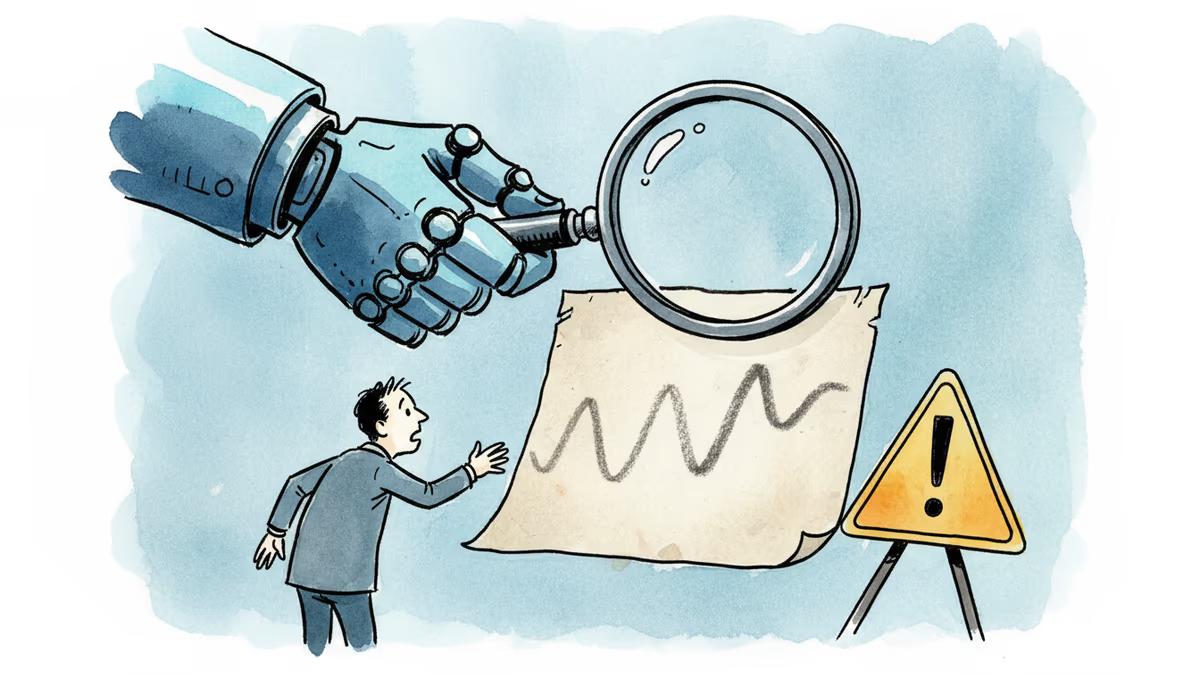
But here's the problem: the report cards are unreliable. A popular math benchmark has a 42% error rate in its own questions. Models trained on benchmark data can score well without actually getting smarter—a kind of academic dishonesty baked into the evaluation process. And because AI is rarely used the way it's tested, strong benchmark scores don't reliably predict real-world performance. For AI agents and robots—arguably the most consequential near-term applications—rigorous benchmarks barely exist yet.
Companies aren't helping. Many decline to publish how their models perform on responsible-AI benchmarks specifically. "The absence of how your model is doing on a benchmark maybe says something," Gil notes, with characteristic understatement.

Jobs: Not a Catastrophe Yet, But the Signal Is There
Within three years of going mainstream, AI is now used by more than half the world's population—a faster adoption curve than the personal computer or the internet. 88% of organizations report using AI. Four in five university students use it regularly.
The labor market impact is uneven but no longer invisible. That 20% drop in junior developer employment is the sharpest signal so far. A McKinsey survey from 2025 found that a third of organizations expect AI to shrink their workforce in the coming year, with service operations, supply chains, and software engineering most exposed. On the productivity side, AI is boosting output by 14% in customer service and 26% in software development—gains that are real, but concentrated in structured, repetitive tasks. Work requiring judgment, creativity, or interpersonal nuance shows no comparable lift yet.
The honest answer is that it's too early to know whether this is displacement or transformation. The data shows a technology taking over specific tasks at the entry level of certain professions. Whether that means fewer jobs overall, or just different jobs, won't be clear for years.
Regulation Is Running a Lap Behind
Governments are trying. The EU AI Act's first prohibitions—banning predictive policing and emotion-recognition AI—took effect last year. Japan, South Korea, and Italy passed national AI laws. In the US, the federal government moved toward deregulation, with President Trump signing an executive order limiting states' ability to regulate AI. States pushed back: 150 AI-related bills passed at the state level, a record. California's SB 53 mandates safety disclosures and whistleblower protections. New York's RAISE Act requires companies to publish safety protocols and report critical incidents.
The public isn't satisfied. An Ipsos survey found that Americans trust their government least among all countries surveyed to regulate AI appropriately—and more Americans worry the rules won't go far enough than worry they'll go too far. Meanwhile, a Pew survey exposed a striking expert-public divide: 73% of AI experts think AI will positively affect how people do their jobs. Only 23% of the American public agrees.
That gap matters. Policy in a democracy eventually has to reconcile with public perception. And public perception of AI is, right now, deeply skeptical of the people building it and the governments meant to check them.
The Infrastructure Nobody Is Talking About
One section of the report tends to get buried under the jobs and geopolitics headlines, but it may be the most consequential long-term. AI data centers globally can now draw 29.6 gigawatts of power—enough to run the entire state of New York at peak demand. Annual water consumption from running OpenAI's GPT-4o alone may exceed the drinking water needs of 12 million people.
And the supply chain is fragile in ways that should concern anyone thinking about AI's long-term trajectory. The US hosts most of the world's AI compute. But almost every leading AI chip is fabricated by a single company—TSMC in Taiwan. One earthquake, one geopolitical flashpoint, and the entire global AI build-out faces a chokepoint with no near-term alternative.
Authors
Related Articles
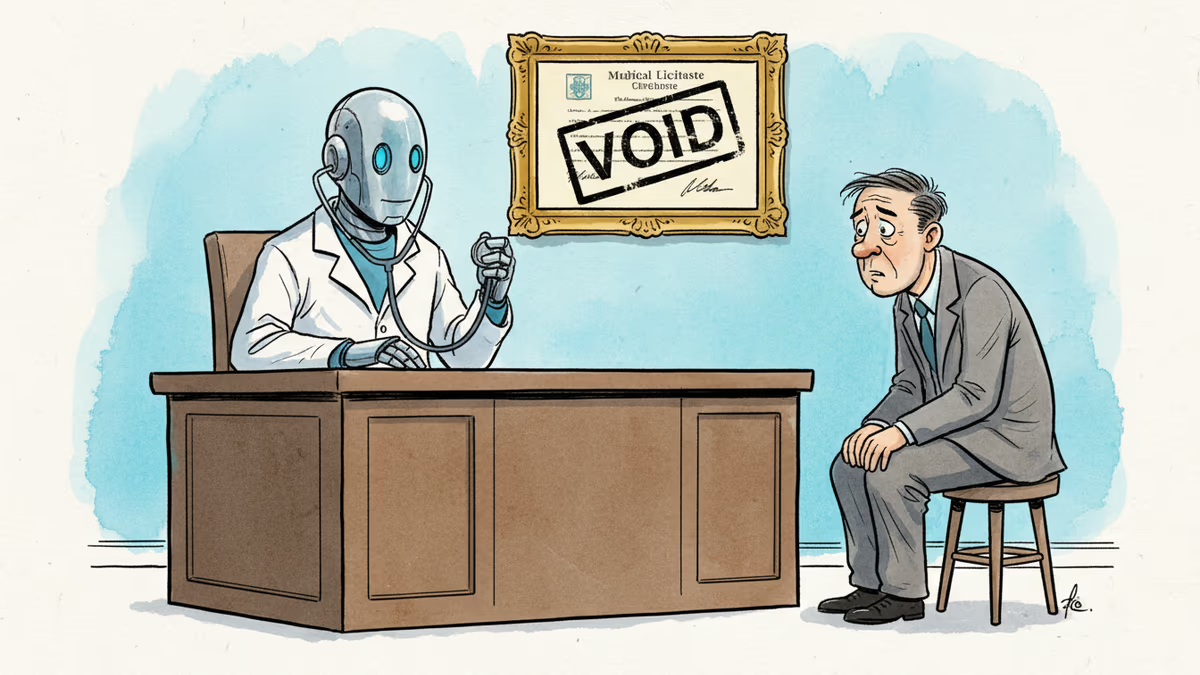
Pennsylvania has sued Character.AI after its chatbot characters claimed to be licensed psychiatrists and provided mental health advice. The case tests whether existing medical law can hold AI platforms accountable.
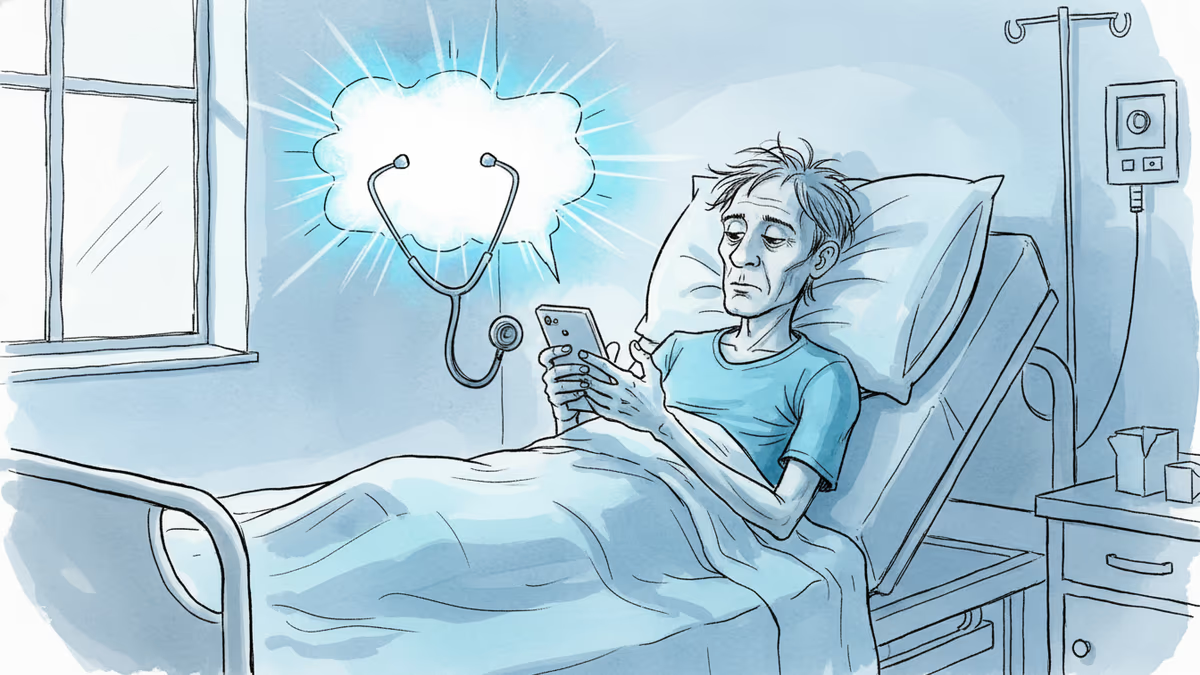
Microsoft, Amazon, and OpenAI have all launched medical AI tools in recent months—with minimal external evaluation. What's at stake when Big Tech moves fast in healthcare?
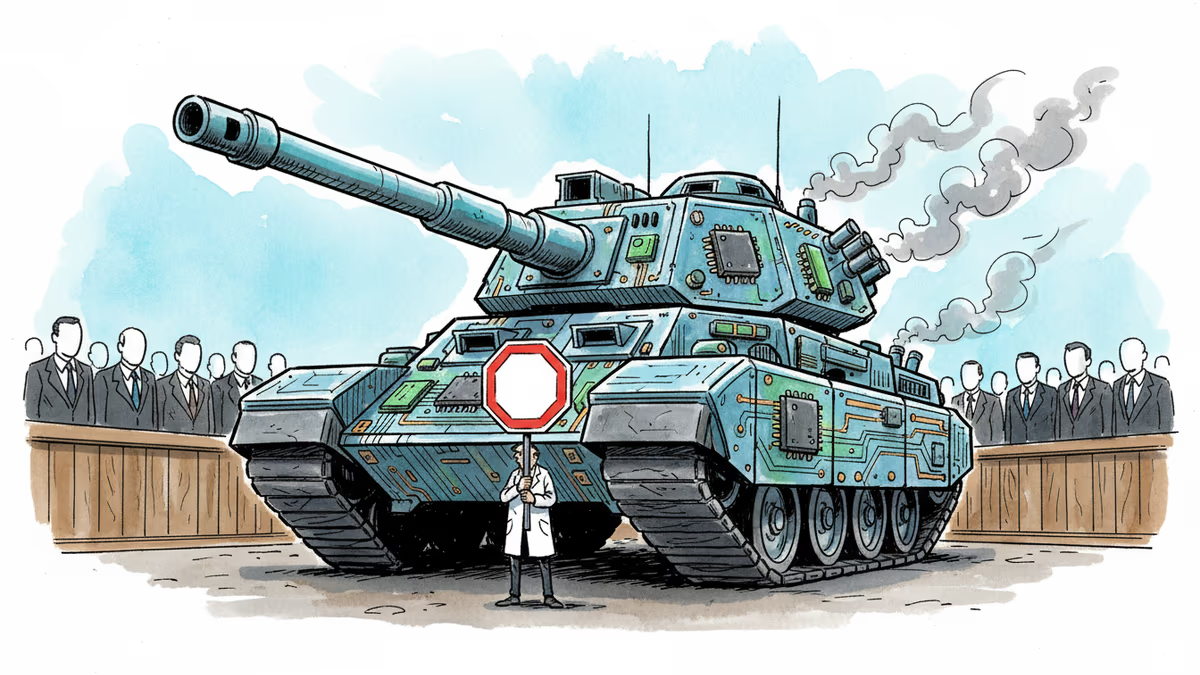
Anthropic is fighting back after the Trump administration blacklisted it for limiting military use of its AI. The battle has reached Congress—and it's rewriting the rules of civil-military AI.
OpenAI is rolling out adult text features for ChatGPT, calling it 'smut' rather than 'pornography.' That single word choice reveals a calculated strategy at the intersection of markets, regulation, and ethics.
Pennsylvania has sued Character.AI after its chatbot characters claimed to be licensed psychiatrists and provided mental health advice. The case tests whether existing medical law can hold AI platforms accountable.
Microsoft, Amazon, and OpenAI have all launched medical AI tools in recent months—with minimal external evaluation. What's at stake when Big Tech moves fast in healthcare?
Anthropic is fighting back after the Trump administration blacklisted it for limiting military use of its AI. The battle has reached Congress—and it's rewriting the rules of civil-military AI.
OpenAI is rolling out adult text features for ChatGPT, calling it 'smut' rather than 'pornography.' That single word choice reveals a calculated strategy at the intersection of markets, regulation, and ethics.
Thoughts
Share your thoughts on this article
Sign in to join the conversation