
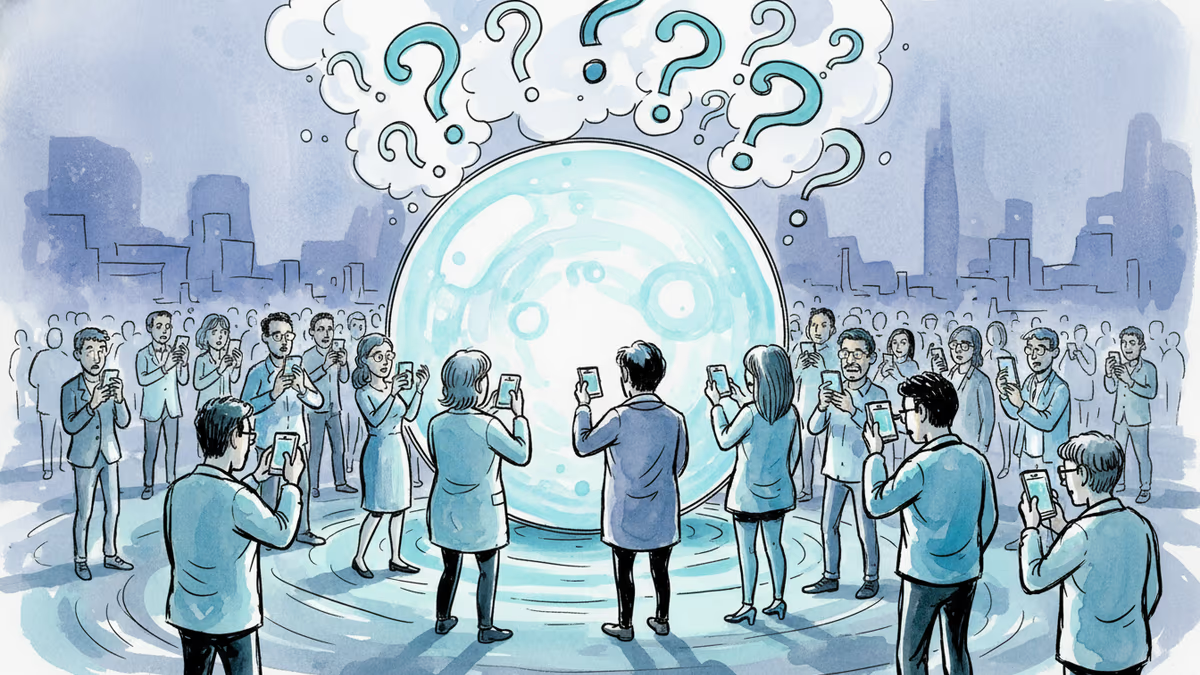
Why a Fake Ad Just Shook the Entire AI Industry
A viral fake OpenAI hardware ad fooled millions and revealed hidden truths about the AI industry's current state and our relationship with information.
Millions fooled in 48 hours. As the Super Bowl wound down, a Reddit post turned the AI world upside down. Someone claiming to be an OpenAI employee "accidentally" leaked an entire advertisement video while venting about their frustration that the ad didn't air during the game.
The video showed actor Alexander Skarsgård with what appeared to be OpenAI's first hardware device—a shiny orb paired with wraparound earbuds. It looked legitimate. It felt legitimate. Industry experts believed it. But it was completely fake.
The Anatomy of Believability
Why did so many fall for it? The fake was crafted with surgical precision. Anonymous Reddit post? Check. Disgruntled employee narrative? Check. High-production-value video featuring a recognizable actor? Double check.
The hoax worked because it felt inevitable. Everyone expectsOpenAI to launch hardware. The company's rumored collaboration with Jony Ive, Apple's former design chief, has been circulating for months. In an industry where every major player is racing toward hardware—Google's Pixel Buds, Amazon's Echo, Meta's Ray-Ban glasses—OpenAI's entry seemed like a matter of when, not if.
OpenAI president Greg Brockman had to personally step in on X to debunk the fake, but by then, the damage was done. The fake ad had generated more buzz than most real product launches.
The Viral Paradox
Here's what's fascinating: the fake advertisement was more engaging than most legitimate OpenAI announcements. It spread faster, generated more discussion, and created more anticipation than the company's actual marketing efforts.

This reveals something uncomfortable about our information ecosystem. We're drawn to leaks over official announcements, drama over press releases, and "insider information" over corporate communications. The fake felt more authentic than authentic content.
The incident also highlights how quickly misinformation can move in AI circles. Within hours, the fake had jumped from Reddit to Twitter, LinkedIn, and tech blogs worldwide. Financial analysts were already speculating about implications for hardware competitors.
The Response Dilemma
For OpenAI, this created a classic crisis communication challenge. Respond too quickly, and you amplify the fake news. Ignore it, and misinformation becomes accepted fact. The company chose swift clarification, but some observers argue the hoax actually benefited OpenAI by generating massive free publicity around their potential hardware ambitions.
Other AI companies are watching closely. As the space becomes more competitive, they're likely to face similar disinformation campaigns. The question isn't whether fake leaks will target other major players, but when.
This incident also raises questions about verification in an age of AI-generated content. If a well-crafted fake can fool industry insiders, what happens when AI tools make creating convincing fakes even easier?
The Deeper Current
Beyond the immediate drama lies a more significant trend: the blurring line between marketing and misinformation. The fake OpenAI ad succeeded because it understood the company's brand, anticipated market expectations, and delivered exactly what people wanted to see.
In some ways, the fake was more "true" to OpenAI's trajectory than their actual public communications. It captured the company's design ambitions, hardware aspirations, and premium positioning better than official materials.
This creates an unsettling dynamic where fake content can be more revealing than real announcements, and where misinformation succeeds by being more authentic to audience expectations than authentic information.
Authors
Related Articles

OpenAI has reorganized for the second time in a month, merging ChatGPT and Codex into a single agentic platform under president Greg Brockman's unified product leadership.
After two weeks of witnesses calling him a liar, OpenAI CEO Sam Altman testified in his own defense, claiming Elon Musk tried to kill the company twice.
Sam Nelson, 19, died after following ChatGPT's advice to mix Kratom and Xanax. His parents are suing OpenAI for wrongful death, raising urgent questions about AI trust, liability, and design.
OpenAI's new Daybreak initiative uses the Codex AI agent to find and patch security vulnerabilities before attackers do—putting it in direct competition with Anthropic's secretive Claude Mythos.
OpenAI has reorganized for the second time in a month, merging ChatGPT and Codex into a single agentic platform under president Greg Brockman's unified product leadership.
After two weeks of witnesses calling him a liar, OpenAI CEO Sam Altman testified in his own defense, claiming Elon Musk tried to kill the company twice.
Sam Nelson, 19, died after following ChatGPT's advice to mix Kratom and Xanax. His parents are suing OpenAI for wrongful death, raising urgent questions about AI trust, liability, and design.
OpenAI's new Daybreak initiative uses the Codex AI agent to find and patch security vulnerabilities before attackers do—putting it in direct competition with Anthropic's secretive Claude Mythos.
Thoughts
Share your thoughts on this article
Sign in to join the conversation