
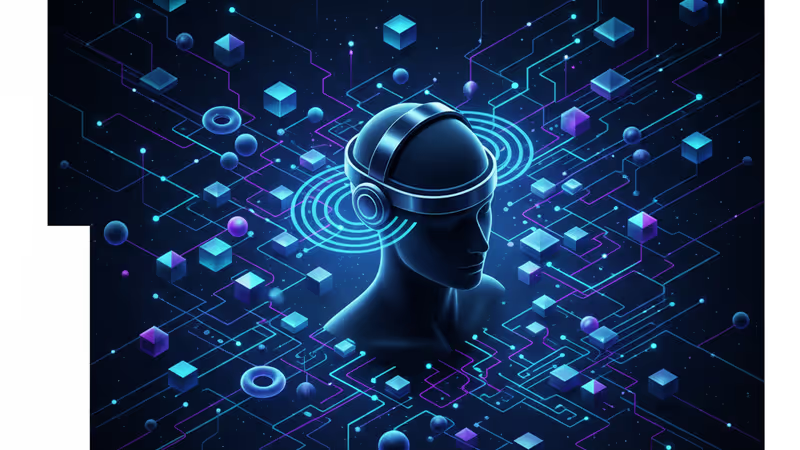
OpenAI's $252 Million Bet: Why Sam Altman's Merge Labs is the Future of BCI
OpenAI has invested $252 million in Sam Altman's neurotech startup Merge Labs. Discover how they plan to use ultrasound and AI to link brains to computers without surgery.
While Elon Musk wants to drill into your skull, Sam Altman wants to use sound to read your mind. On Thursday, OpenAI announced its massive investment in Merge Labs, a neurotech startup co-founded by its billionaire CEO Sam Altman. It's a bold move to bridge the gap between human thought and artificial intelligence.
Merge Labs raised a staggering $252 million in funding from a heavy-hitting group including OpenAI, Bain Capital, and video game legend Gabe Newell. The company's name draws inspiration from the Silicon Valley concept of "the merge"—the hypothetical point where humans and machines become one. Altman, who previously invested $1.3 billion in Musk's Neuralink, is now doubling down on a different path.
Merge Labs vs Neuralink: A Non-Invasive Approach
Unlike Neuralink, which requires surgical implants, Merge Labs isn't looking to put hardware inside your brain tissue. Instead, they're developing technology that uses molecules and ultrasound to transmit and receive information from neurons. It's a "broadly accessible" form factor that aims to be equal parts biology, device, and AI.

OpenAI isn't just a silent investor. They'll collaborate with Merge on scientific foundation models to help interpret messy brain signals. By building an AI operating system for the brain, OpenAI hopes to create interfaces that can reliably adapt to individual users. This puts them in direct competition with Nvidia, which is already working with BCI startup Synchron.
The Next Frontier of Human Evolution
While Neuralink has already implanted its device in 12 volunteers, and Synchron has 10 participants, Merge Labs is the new contender with a high-bandwidth, non-surgical promise. Their roots in the nonprofit Forest Neurotech suggest a focus on mental health and brain injury, but the ultimate goal is clearly the seamless integration of AI into human consciousness.
Authors
Related Articles
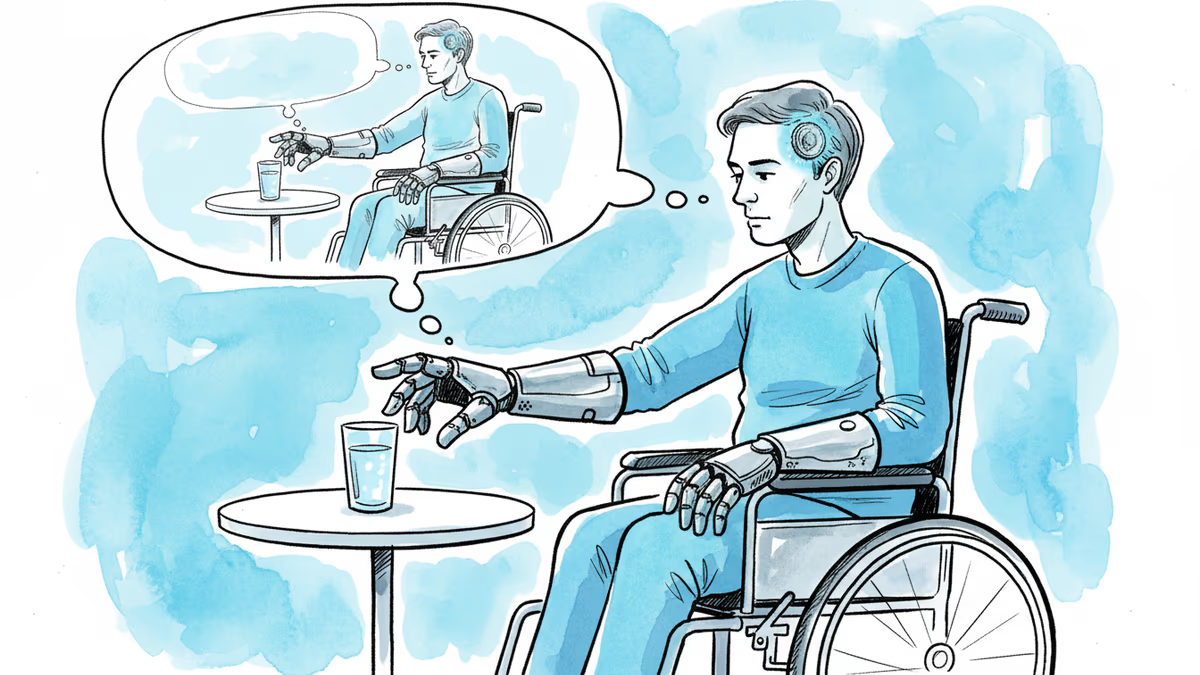
China's NEO brain implant is now a legally sold medical device — the world's first commercial BCI. What this means for Neuralink, global regulators, and the future of human-machine interfaces.
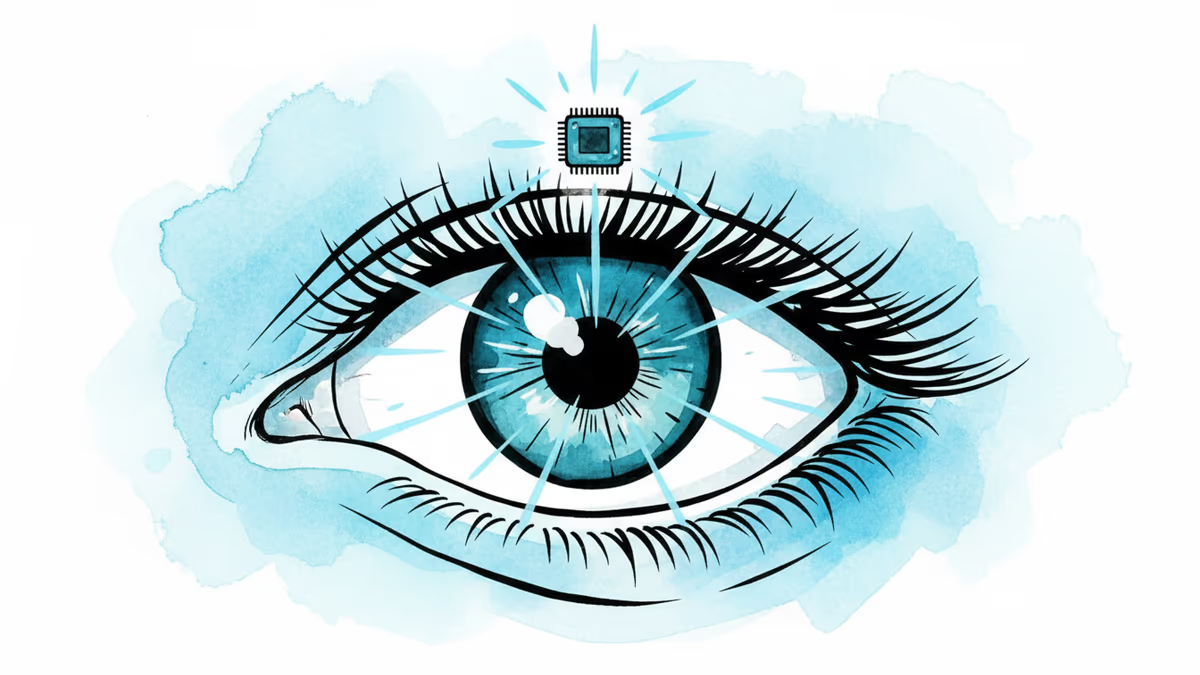
Max Hodak's Science Corp raises $230M for rice-grain sized chip that restores vision to blind patients. Could beat Neuralink as first BCI company to commercialize
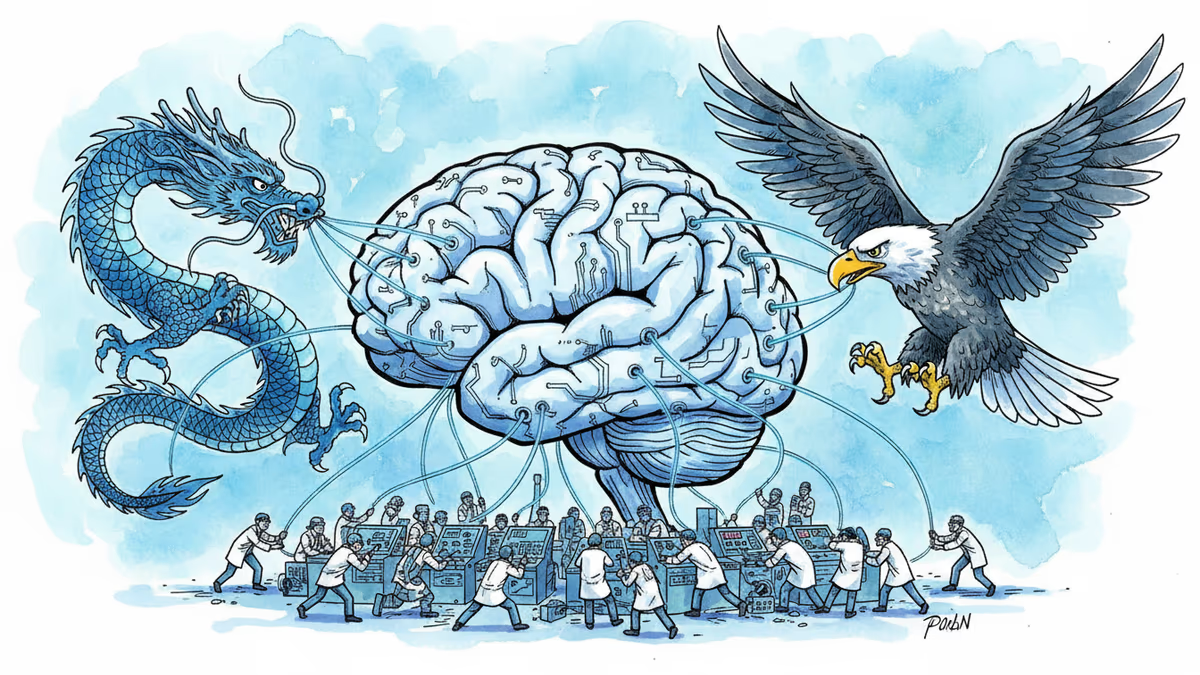
China's BCI industry rapidly scales from research to commercialization with strong policy support, insurance coverage, and growing investment, challenging US leaders like Neuralink.

BCI technology is evolving to decode facial gestures. Researchers at UPenn use macaque models to map neural circuitry, aiming to restore emotional nuance for paralysis patients.
China's NEO brain implant is now a legally sold medical device — the world's first commercial BCI. What this means for Neuralink, global regulators, and the future of human-machine interfaces.
Max Hodak's Science Corp raises $230M for rice-grain sized chip that restores vision to blind patients. Could beat Neuralink as first BCI company to commercialize
China's BCI industry rapidly scales from research to commercialization with strong policy support, insurance coverage, and growing investment, challenging US leaders like Neuralink.
BCI technology is evolving to decode facial gestures. Researchers at UPenn use macaque models to map neural circuitry, aiming to restore emotional nuance for paralysis patients.
Thoughts
Share your thoughts on this article
Sign in to join the conversation