
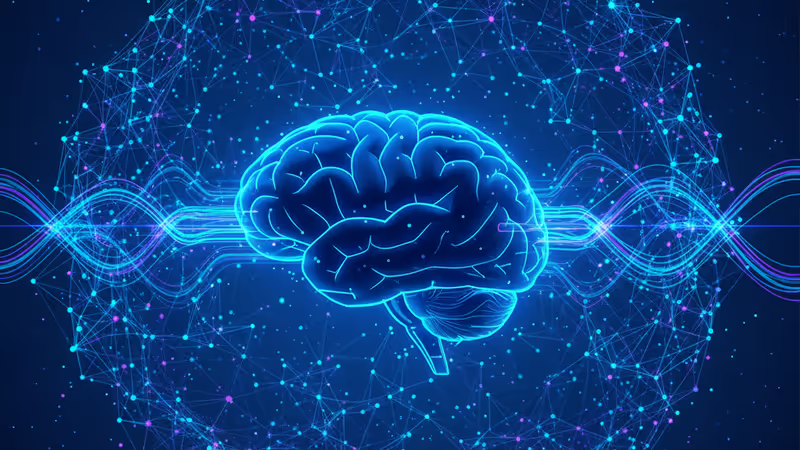
OpenAI Merge Labs Seed Round Investment: Sam Altman’s Quest to Merge Biology and AI
OpenAI leads a $250 million seed round for Sam Altman's BCI startup, Merge Labs. The deal aims to develop non-invasive brain-AI interfaces using ultrasound technology.
Sam Altman's long-held vision of humans and machines becoming one has secured a massive financial backer. OpenAI has led a $250 million seed round for Merge Labs, a brain-computer interface (BCI) startup co-founded by Altman himself. According to sources familiar with the deal, OpenAI wrote the largest check in the round, valuing the stealth-stage company at a staggering $850 million.
OpenAI Merge Labs Seed Round Investment: Challenging Neuralink
Merge Labs isn't taking the surgical route popularized by Elon Musk's Neuralink. Instead of invasive electrodes, the startup aims to use molecules and deep-reaching ultrasound to transmit information to and from neurons. This non-invasive approach could lower the barrier to entry for BCIs, moving the technology from specialized medical use cases to a broader consumer reality.

As part of the investment, OpenAI will collaborate with Merge Labs on developing scientific foundation models. These models are designed to interpret the complex, "noisy" signals of the human brain, allowing AI to adapt to individual users and understand intent with high reliability.
The Strategy Behind Circular Deals
The deal deepens the "circular" nature of Sam Altman's investment portfolio. By using OpenAI's resources to back his personal ventures like Merge Labs, Altman creates a self-reinforcing ecosystem. If Merge Labs succeeds, it could serve as a direct "remote control" for OpenAI software, driving more users and data back into the parent company. This mirrors previous arrangements with Altman-backed companies like Helion Energy and Oklo.
Authors
Related Articles
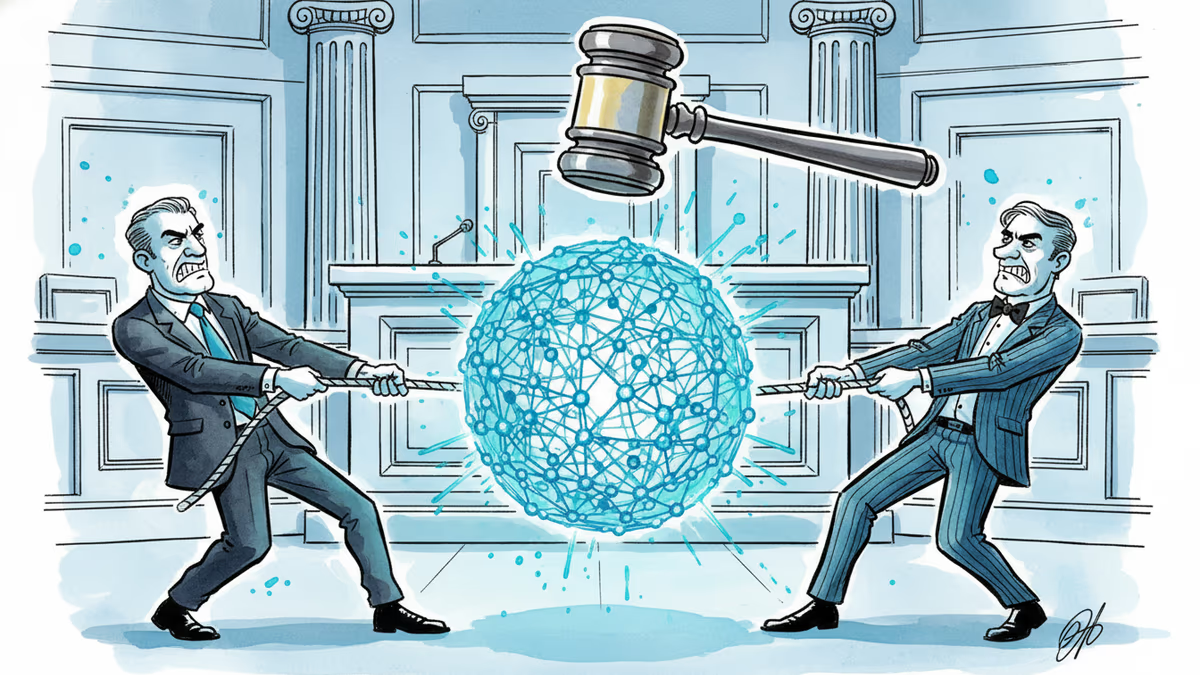
Elon Musk and Sam Altman head to trial this week in a case that could determine whether OpenAI survives as a for-profit company—and who leads it. Here's what's really at stake.
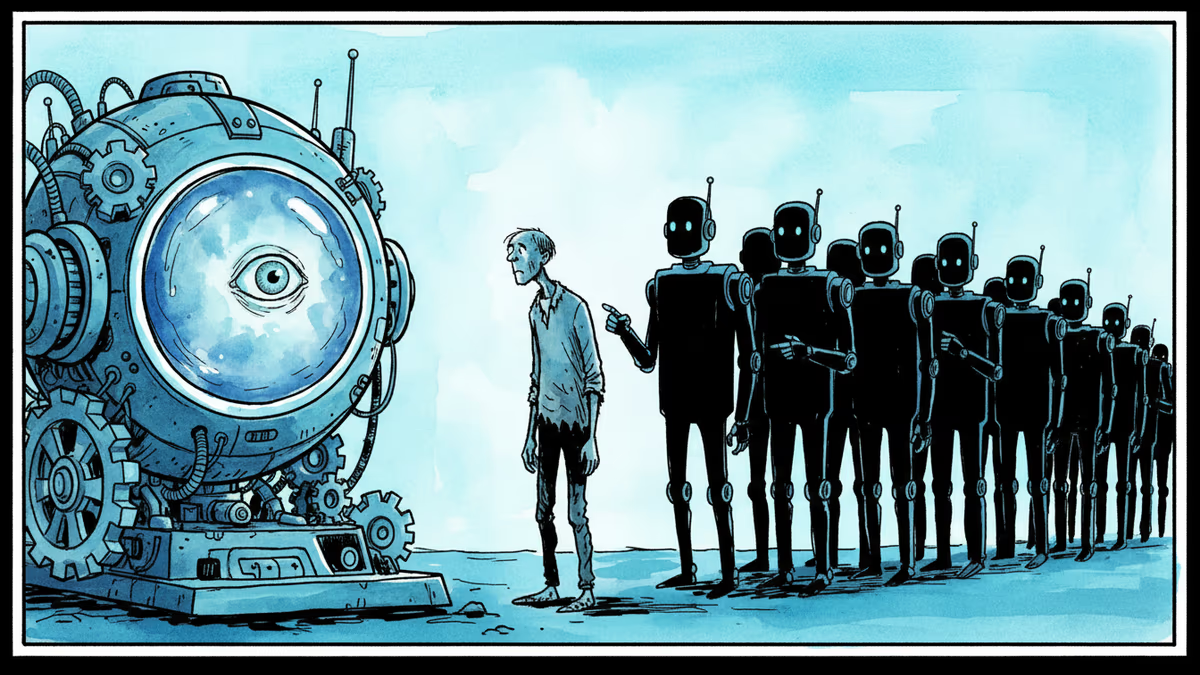
Tinder now rewards users who scan their irises at a World orb with free in-app boosts. As AI agents flood dating apps, 'being human' is becoming a verified status — and a business model.
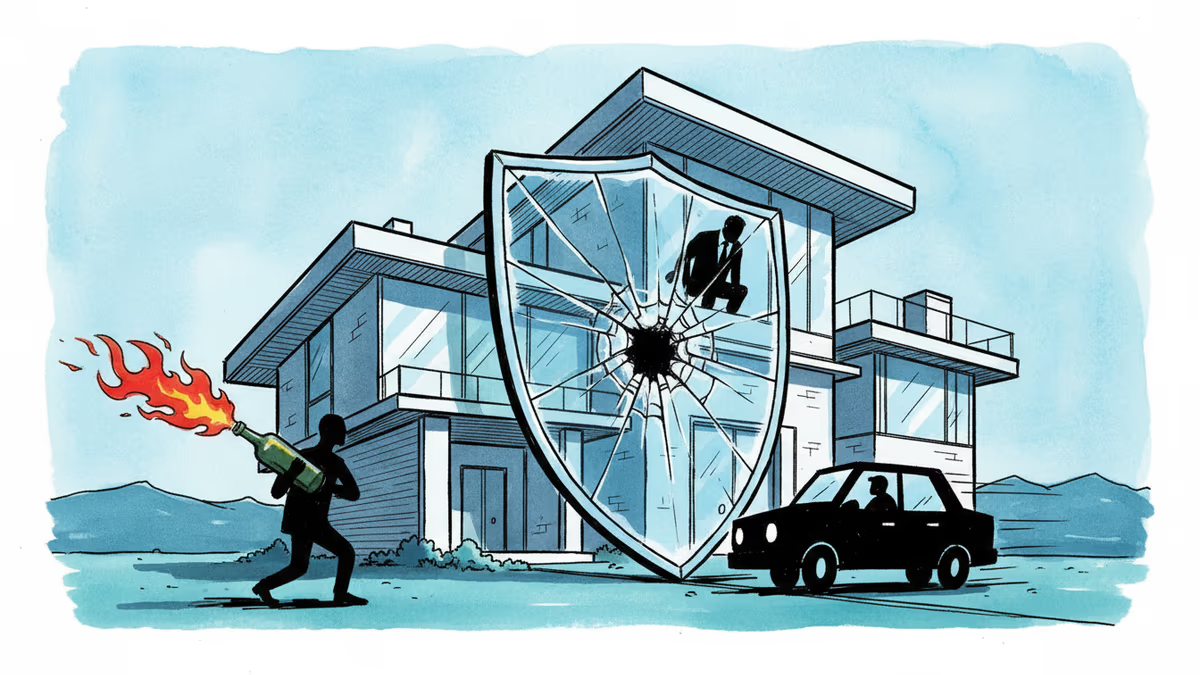
OpenAI CEO Sam Altman's San Francisco residence was attacked twice in three days — first a Molotov cocktail, then a shooting. What does this say about tech power, public anger, and the real-world risks facing AI leaders?
Elon Musk promised minds merged with AI. Neuralink delivered a brain-controlled cursor. The gap between the two reveals something important about how Silicon Valley sells the future.
Elon Musk and Sam Altman head to trial this week in a case that could determine whether OpenAI survives as a for-profit company—and who leads it. Here's what's really at stake.
Tinder now rewards users who scan their irises at a World orb with free in-app boosts. As AI agents flood dating apps, 'being human' is becoming a verified status — and a business model.
OpenAI CEO Sam Altman's San Francisco residence was attacked twice in three days — first a Molotov cocktail, then a shooting. What does this say about tech power, public anger, and the real-world risks facing AI leaders?
Elon Musk promised minds merged with AI. Neuralink delivered a brain-controlled cursor. The gap between the two reveals something important about how Silicon Valley sells the future.
Thoughts
Share your thoughts on this article
Sign in to join the conversation