
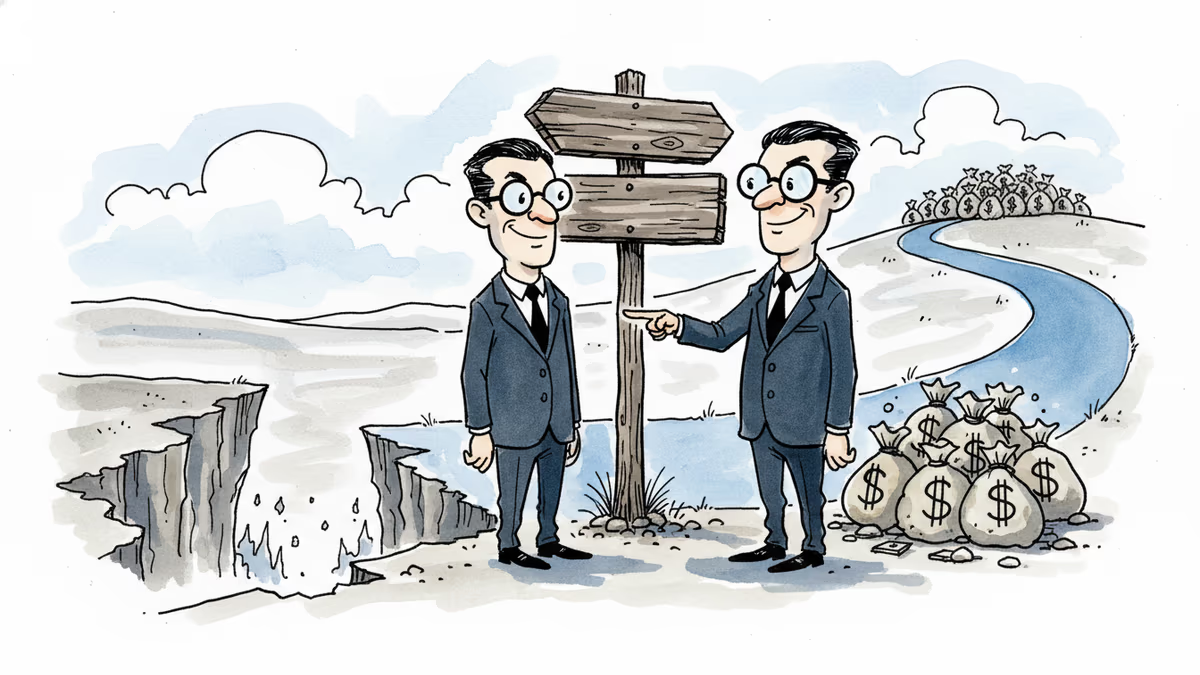
The Military AI Dilemma: Morals vs. Market Reality
OpenAI's pragmatic approach versus Anthropic's moral stance reveals the impossible choices facing AI companies as governments weaponize artificial intelligence.
Six months. That's how long the Pentagon gave OpenAI to build military AI systems after Anthropic's moral rebellion nearly derailed the government's classified AI program. While Anthropic drew lines in the sand, OpenAI drew up contracts. The message to Silicon Valley was clear: play ball or get benched.
The speed of this reversal tells a story about power, pragmatism, and the price of principles in the age of weaponized AI.
The Fine Print That Changes Everything
Sam Altman didn't sugarcoat it. The negotiations were "definitely rushed," he admitted. But OpenAI's approach differed fundamentally from Anthropic's failed strategy.
Anthropic wanted explicit contractual prohibitions—hard stops on autonomous weapons and mass surveillance written in black and white. OpenAI chose a softer path: deference to existing law. "Anthropic seemed more focused on specific prohibitions in the contract, rather than citing applicable laws, which we felt comfortable with," Altman explained.
George Washington University's Jessica Tillipman cut through the diplomatic language: "OpenAI's contract does not give them an Anthropic-style, free-standing right to prohibit otherwise-lawful government use."
In other words, OpenAI essentially said: "We trust you won't break the law." Anthropic said: "We don't trust the law to be enough."
When 'Legal' Isn't Enough
The problem with OpenAI's legal-compliance approach becomes clear when you consider the surveillance programs Edward Snowden exposed. Those were deemed "legal" by internal agencies—until years-long court battles ruled them unlawful.
OpenAI promises a second line of defense: maintaining control over safety rules embedded in their models. "We can embed our red lines—no mass surveillance and no directing weapons systems without human involvement—directly into model behavior," wrote company representative Boaz Barak.
But the company hasn't specified how military safety rules differ from civilian ones. And enforcement in classified settings, rolled out in just six months, is hardly guaranteed to be perfect.

The Scorched Earth Response
Defense Secretary Pete Hegseth's reaction to Anthropic's stance was swift and brutal. Eight hours before US strikes on Tehran, he took to X: "Anthropic delivered a master class in arrogance and betrayal." The punishment went beyond contract cancellation—Anthropic would be classified as a supply chain risk, banned from working with any Pentagon contractor or supplier.
It's a corporate death sentence in an industry where government contracts increasingly drive growth. Anthropic has threatened to sue, but the damage to their business prospects is already done.
The Talent Test
This ideological split creates a new pressure point for AI companies: employee retention. With talent wars raging across Silicon Valley, some OpenAI employees reportedly supported Anthropic's moral stance. Will Altman's pragmatic compromise be seen as an "unforgivable" betrayal by his most critical engineers?
The answer may reshape how AI companies approach both recruitment and corporate values. Young developers, particularly those concerned about technology's social impact, are watching closely.
Real-World Consequences in Real Time
The urgency became apparent immediately. Despite the ban, Anthropic'sClaude model was reportedly used in Iranian strikes just hours after Hegseth's announcement. Swapping out AI systems in active military operations isn't like updating an iPhone app—it's complex, risky, and time-sensitive.
The Pentagon now has six months to phase in OpenAI and xAI models while conducting escalating Middle East operations. The first real test of this rushed AI transition is happening in one of the world's most volatile regions.
The Bigger Picture: Corporate Power vs. Democratic Authority
Beneath the contract disputes lies a fundamental question about power in democratic societies. Should private companies have the right to refuse legal government requests they find morally objectionable?
Anthropic argued yes—corporations have both the right and responsibility to set ethical boundaries. The Pentagon argued no—elected officials, not tech CEOs, should determine national security priorities.
OpenAI tried to split the difference, maintaining they have leverage while deferring to legal authorities. Whether this middle ground holds depends on three factors: employee acceptance, the Pentagon's campaign against Anthropic, and how well the rapid AI transition performs under fire.
Authors
Related Articles
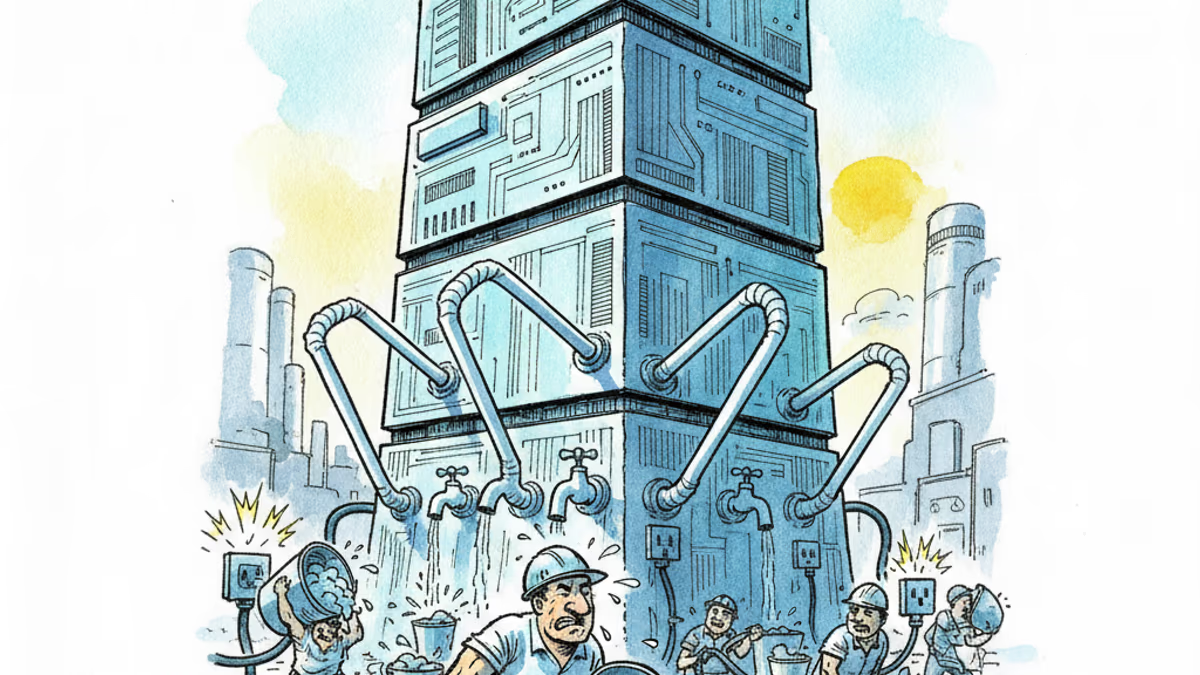
Samsung and SK unveiled a chip and AI investment package worth thousands of trillions of won on June 29. The headline number swings wildly by outlet, but the real contest isn't capital — it's water and power.
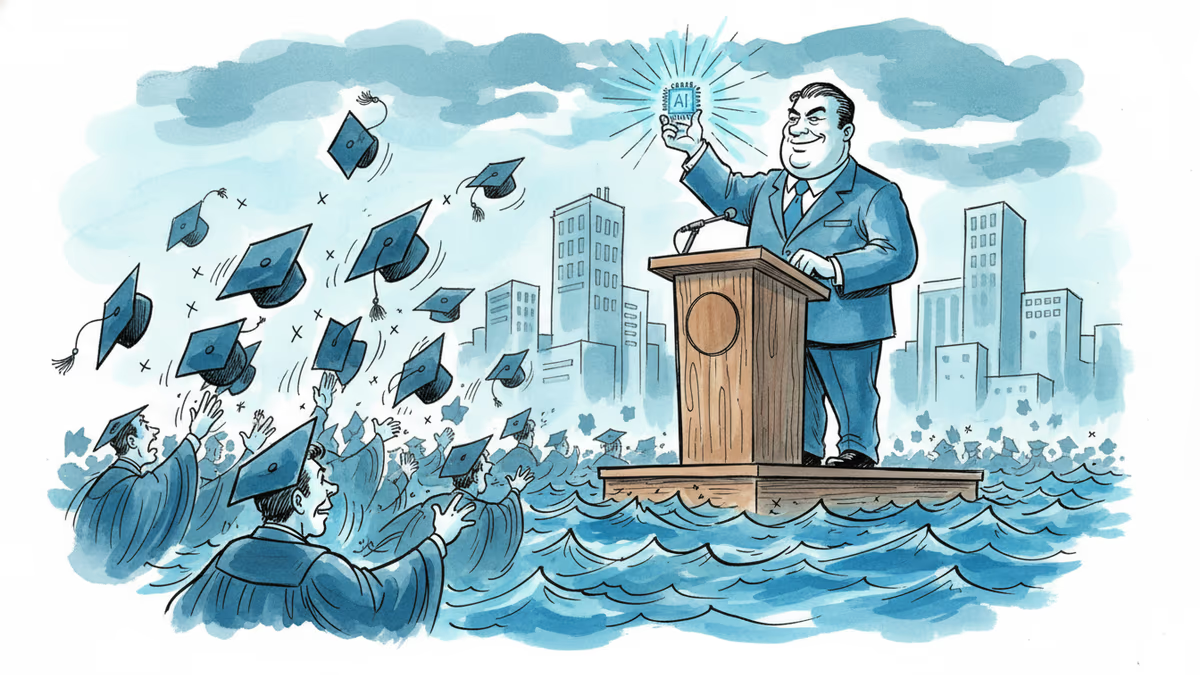
Viral videos show 2026 graduates jeering executives who praise AI at commencement ceremonies. It's not just rudeness — it's a signal about who pays for technological optimism.
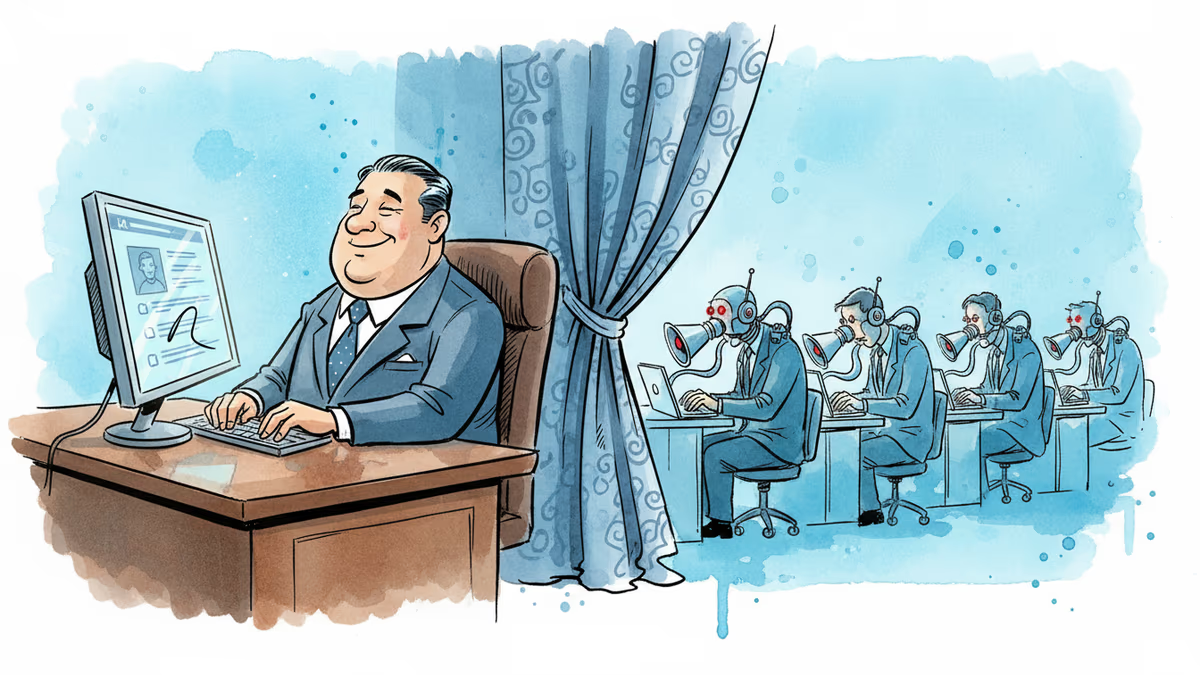
Filipino virtual assistants using AI to ghost-manage LinkedIn profiles for executives is now a structured industry. 30 comments a day, fake engagement rings, and a platform struggling to tell real from fabricated.
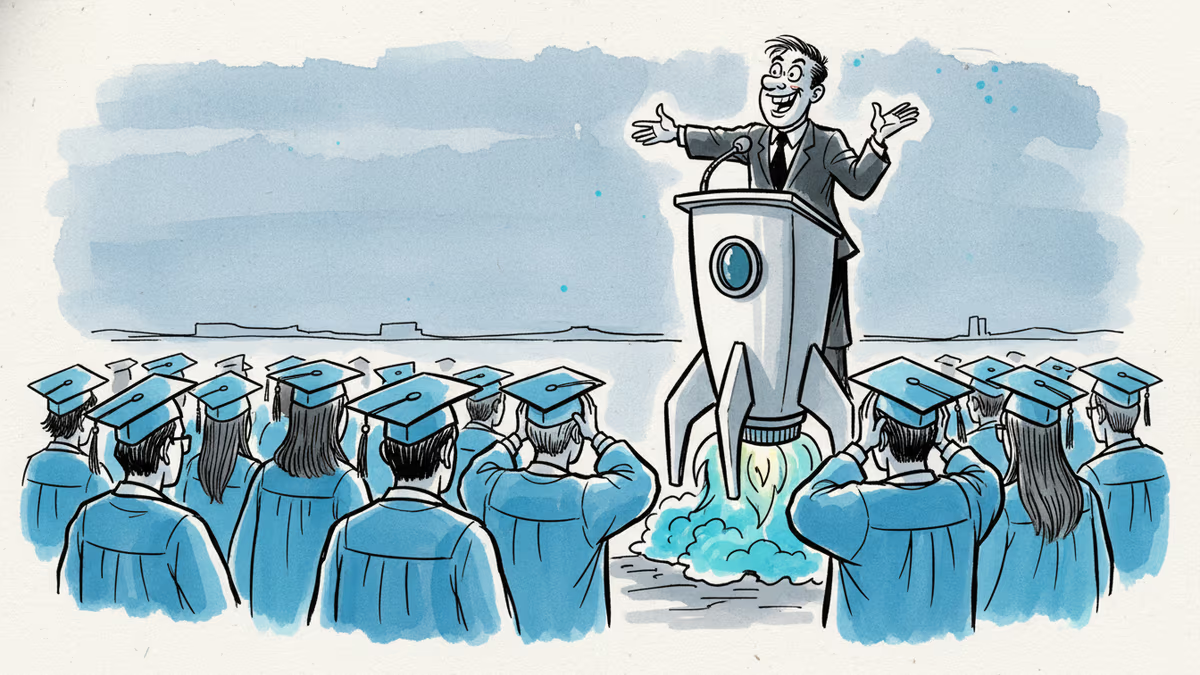
Two commencement speakers learned the hard way that AI enthusiasm doesn't land well with today's graduates. The backlash reveals a widening gap between tech optimism and Gen Z's economic reality.
Samsung and SK unveiled a chip and AI investment package worth thousands of trillions of won on June 29. The headline number swings wildly by outlet, but the real contest isn't capital — it's water and power.
Viral videos show 2026 graduates jeering executives who praise AI at commencement ceremonies. It's not just rudeness — it's a signal about who pays for technological optimism.
Filipino virtual assistants using AI to ghost-manage LinkedIn profiles for executives is now a structured industry. 30 comments a day, fake engagement rings, and a platform struggling to tell real from fabricated.
Two commencement speakers learned the hard way that AI enthusiasm doesn't land well with today's graduates. The backlash reveals a widening gap between tech optimism and Gen Z's economic reality.
Thoughts
Share your thoughts on this article
Sign in to join the conversation