
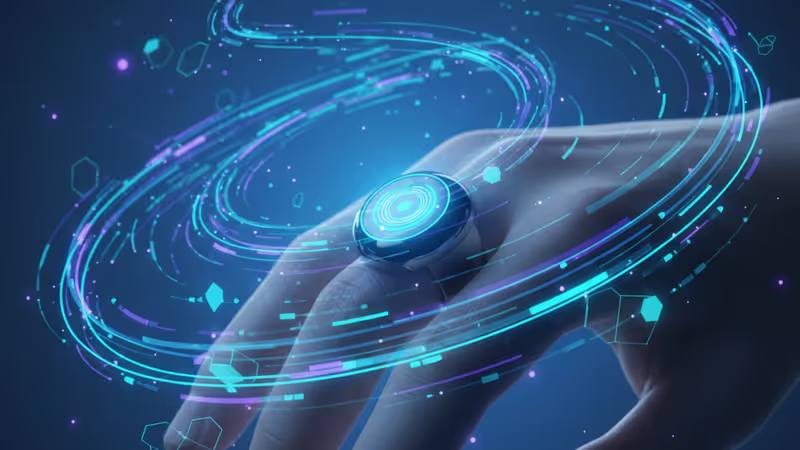
OpenAI Audio-First Personal Device 2026: The Post-Screen Era Begins
OpenAI is developing an audio-first personal device for 2026, led by Jony Ive. This move signals a shift away from screens toward ambient, conversational AI interfaces.
Screens are fading into background noise, and audio is taking center stage. According to reporting from The Information, OpenAI has spent the last two months unifying its engineering and research teams to overhaul its audio models. This massive internal shift is a preparation for an OpenAI audio-first personal device expected to launch in about one year. The move signals a future where we interact with technology through natural dialogue rather than digital displays.
Building the OpenAI Audio-First Personal Device
OpenAI's new audio model, slated for release in early 2026, is reported to sound significantly more natural. Unlike current systems, it's designed to handle interruptions seamlessly and can speak while the user is still talking. This model will likely power a family of screenless devices—possibly glasses or smart speakers—that function less like tools and more like constant companions.
The Industry Shift Toward Ambient Audio

The entire tech industry is placing massive bets on audio. Meta just rolled out a feature for its Ray-Ban smart glasses using a five-microphone array to enhance directional listening. Google is experimenting with 'Audio Overviews' for search results, and Tesla is integrating Grok into its vehicles for natural voice control. While early attempts like the Humane AI Pin faced challenges, new contenders like Sandbar and Eric Migicovsky's new venture are building AI rings expected to debut in 2026.
Jony Ive’s Mission: Audio as a Cure for Screen Addiction
Central to OpenAI's hardware ambitions is former Apple design chief Jony Ive. Following OpenAI's $6.5 billion acquisition of his firm 'io' in May 2025, Ive has focused on reducing device addiction. He views audio-first design as an opportunity to 'right the wrongs' of previous gadgets, creating a more presence-focused interaction with the world.
Authors
Related Articles
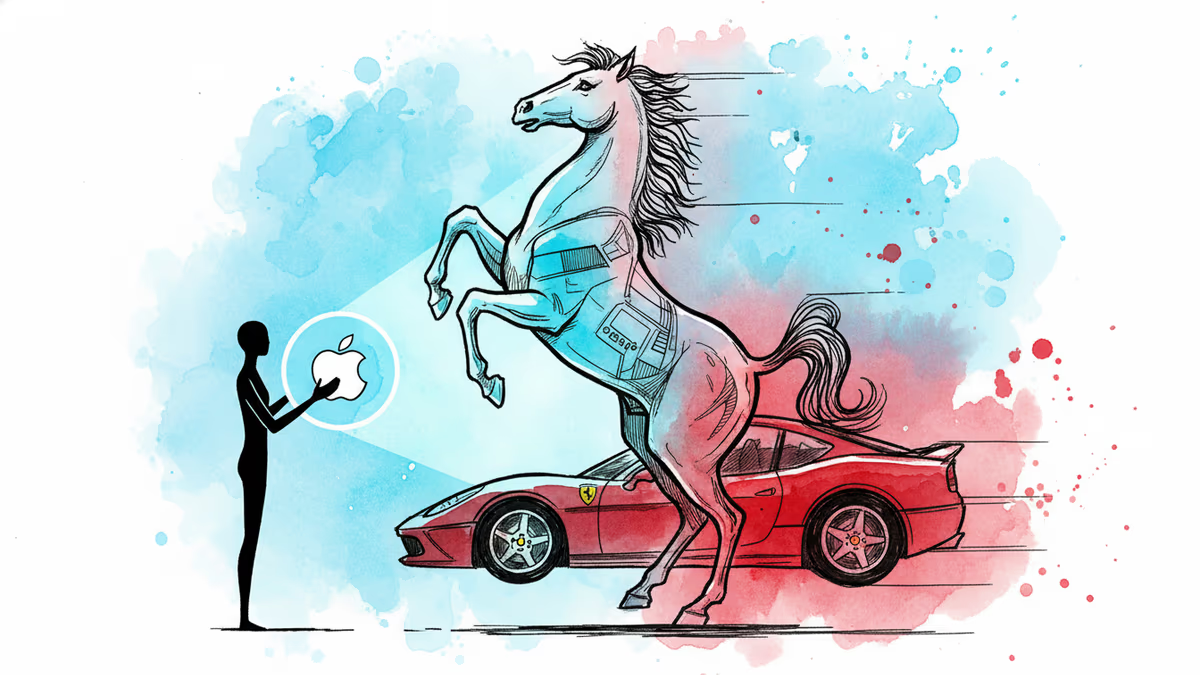
The Ferrari Luce is finally here — 1,000 hp, a 122 kWh battery, and an interior designed by the team behind the iPhone. But the real story is what Ferrari risked to build it.
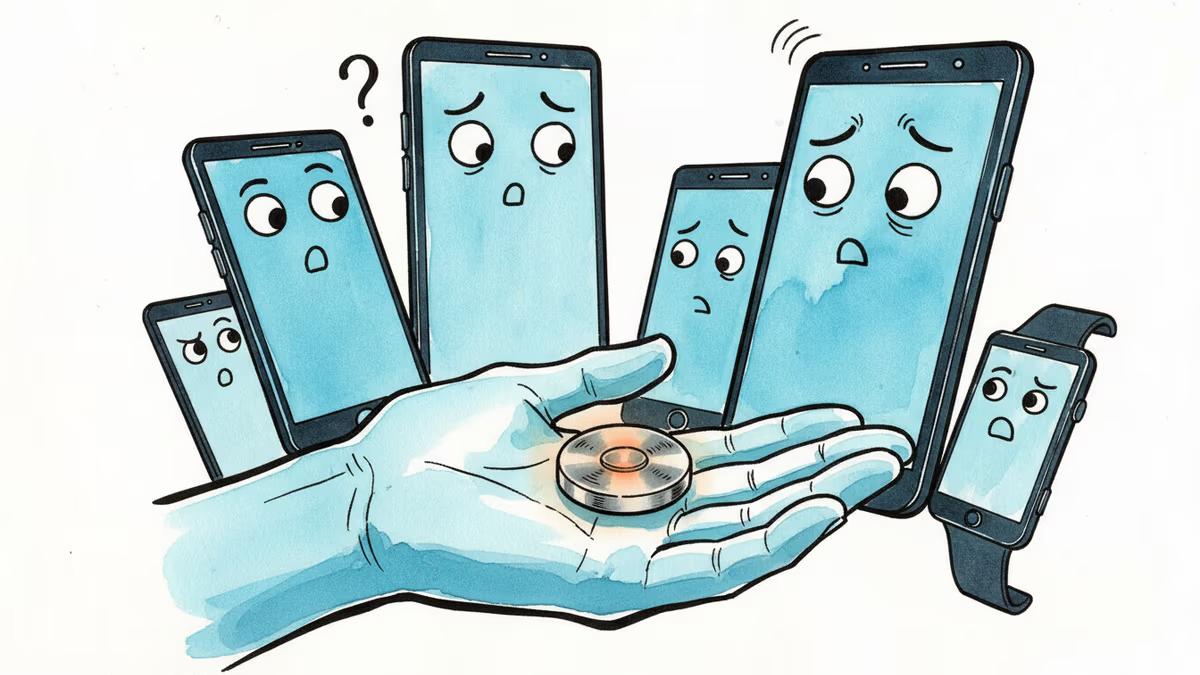
Two ex-Apple engineers built an AI puck that only listens when you press it. At $179, Button is a deliberate bet that dedicated AI hardware beats the Swiss Army knife approach of smartphones.

A South Korean startup called Absolics is betting that glass substrates can cut AI chip energy consumption. Here's why that matters beyond the data center.

A material humans have shaped for thousands of years is about to become the backbone of next-gen AI chips. Here's why the semiconductor industry is betting on glass—and what's at stake.
The Ferrari Luce is finally here — 1,000 hp, a 122 kWh battery, and an interior designed by the team behind the iPhone. But the real story is what Ferrari risked to build it.
Two ex-Apple engineers built an AI puck that only listens when you press it. At $179, Button is a deliberate bet that dedicated AI hardware beats the Swiss Army knife approach of smartphones.
A South Korean startup called Absolics is betting that glass substrates can cut AI chip energy consumption. Here's why that matters beyond the data center.
A material humans have shaped for thousands of years is about to become the backbone of next-gen AI chips. Here's why the semiconductor industry is betting on glass—and what's at stake.
Thoughts
Share your thoughts on this article
Sign in to join the conversation