
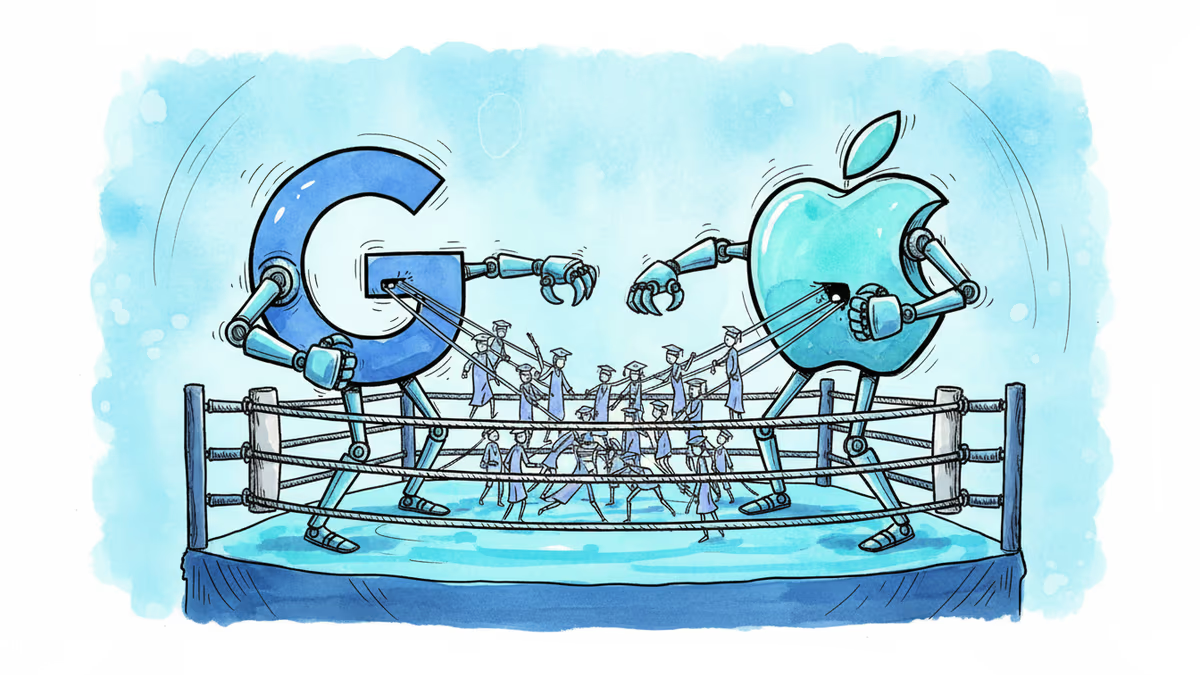
OpenAI Takes the Fight to Google's London Backyard
OpenAI announces London as its largest research hub outside the US, setting up direct competition with Google DeepMind for top British AI talent. The global AI talent war enters a new phase.
The Battle for Britain's Best Brains
OpenAI just declared war on Google DeepMind's home turf. The company announced plans to turn its London office into its largest research hub outside the United States, setting up a direct confrontation with Google's AI powerhouse in the heart of Britain.
This isn't just another office expansion. Since establishing its UK presence in 2023, OpenAI is now making a serious play for the cream of British university talent. While the company hasn't revealed specific hiring numbers, calling London its "largest" non-US hub sends a clear message about its ambitions.
"The UK brings together world class talent and leading scientific institutions and universities," said Mark Chen, OpenAI's chief research officer. It's "an ideal place to deliver the important research which will ensure our AI is safe, useful and benefits everyone."
Google's Fortress Under Siege
Google DeepMind has owned London's AI scene for years. Led by British researcher Demis Hassabis, the lab has built deep relationships with Oxford and Cambridge universities through sponsored professorships, research funding, and collaborative projects. It's been a comfortable monopoly on Britain's best minds.
Now OpenAI wants a piece of that action. The competition is already heating up. At Oxford's latest careers fair, the floor was packed with undergraduates hunting for technical roles and recruiters desperate for AI talent.

"The demand and supply is increasing on both sides, even within a year," says Jonathan Black, director of Oxford's careers service. "To have something like this turn up is a really positive sign."
More Than Just Talent Grabbing
OpenAI's London team won't just be contributing to products like Codex and GPT-5.2. They'll "own" specific aspects of model development—safety, reliability, and performance evaluation. That's not outsourcing; that's trust.
This represents a fundamental shift in how American tech giants operate overseas. Instead of treating international offices as satellite operations, OpenAI is distributing core AI development across continents. It's a vote of confidence that could reshape how the industry thinks about global research.
Liz Kendall, the UK's science and technology secretary, called it "a huge vote of confidence in the UK's world-leading position at the cutting edge of AI research."
The Infrastructure Arms Race
The announcement coincides with Britain's massive push to scale data center and power infrastructure. The country is racing to meet the voracious computing demands of AI companies like OpenAI. It's not just about talent anymore—it's about building the physical backbone to support AI development.
This creates an interesting dynamic. Countries aren't just competing for AI companies' research operations; they're competing to become AI-ready nations. The winners get jobs, investment, and technological leadership. The losers get left behind.
Authors
Related Articles
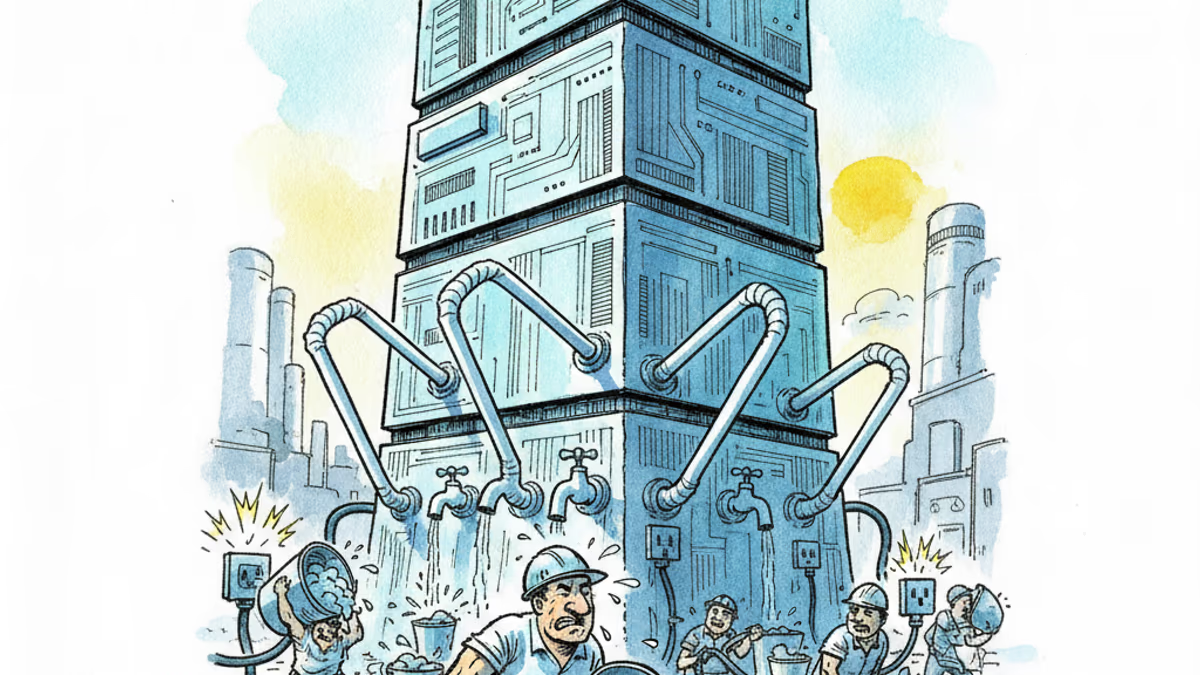
Samsung and SK unveiled a chip and AI investment package worth thousands of trillions of won on June 29. The headline number swings wildly by outlet, but the real contest isn't capital — it's water and power.
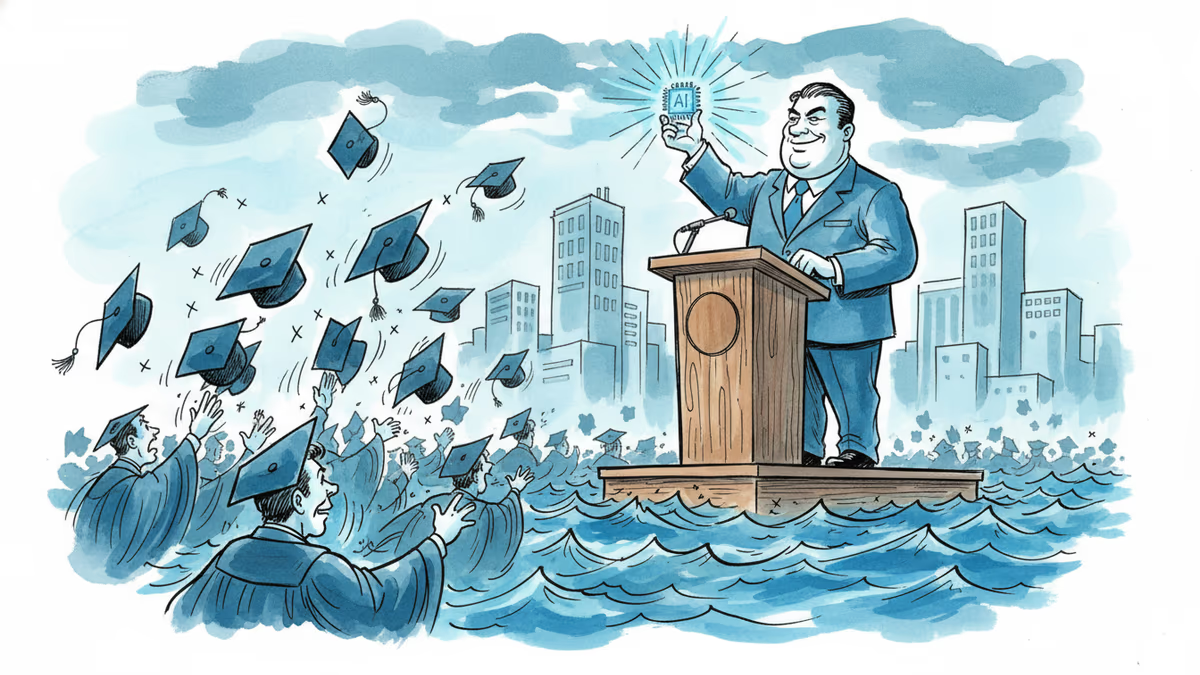
Viral videos show 2026 graduates jeering executives who praise AI at commencement ceremonies. It's not just rudeness — it's a signal about who pays for technological optimism.

Filipino virtual assistants using AI to ghost-manage LinkedIn profiles for executives is now a structured industry. 30 comments a day, fake engagement rings, and a platform struggling to tell real from fabricated.
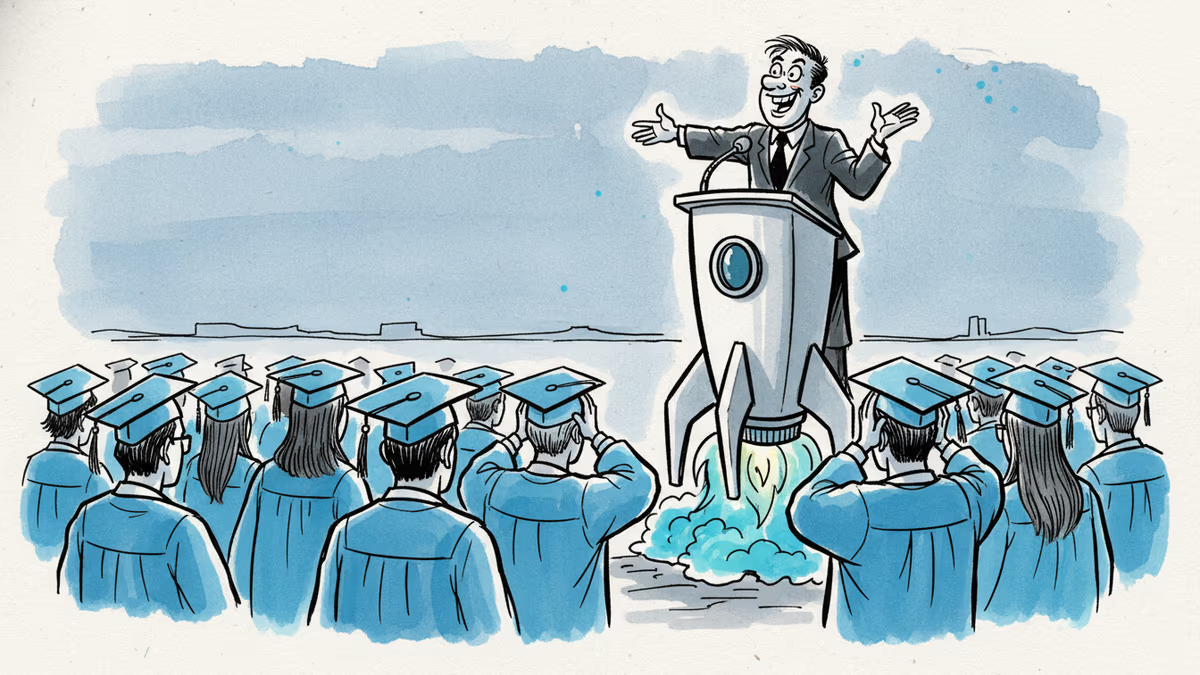
Two commencement speakers learned the hard way that AI enthusiasm doesn't land well with today's graduates. The backlash reveals a widening gap between tech optimism and Gen Z's economic reality.
Samsung and SK unveiled a chip and AI investment package worth thousands of trillions of won on June 29. The headline number swings wildly by outlet, but the real contest isn't capital — it's water and power.
Viral videos show 2026 graduates jeering executives who praise AI at commencement ceremonies. It's not just rudeness — it's a signal about who pays for technological optimism.
Filipino virtual assistants using AI to ghost-manage LinkedIn profiles for executives is now a structured industry. 30 comments a day, fake engagement rings, and a platform struggling to tell real from fabricated.
Two commencement speakers learned the hard way that AI enthusiasm doesn't land well with today's graduates. The backlash reveals a widening gap between tech optimism and Gen Z's economic reality.
Thoughts
Share your thoughts on this article
Sign in to join the conversation