
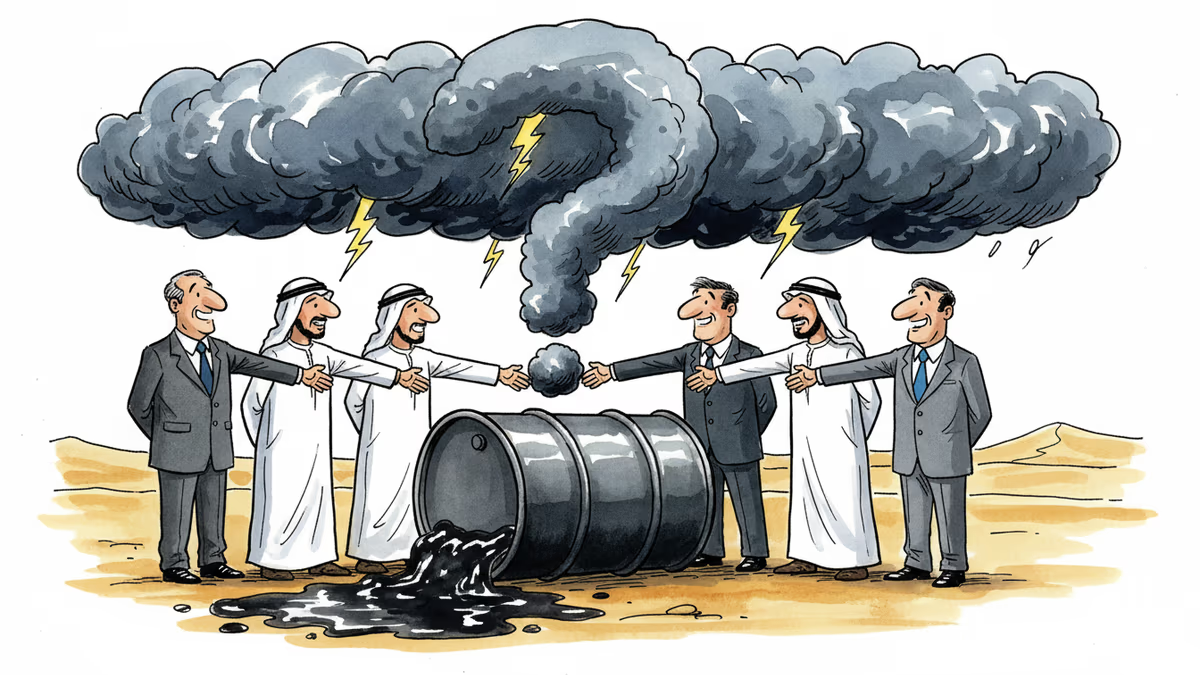
OPEC+ Agreed to Pump More Oil — But Don't Fill Up Just Yet
OPEC+ has reached a tentative agreement to raise oil output. With Iran tensions unresolved and market signals mixed, here's what it means for energy prices, global investors, and your wallet.
They agreed. Sort of. In theory.
That's essentially the message from OPEC+ sources this week: the alliance of major oil-producing nations has reached an agreement in principle on a theoretical increase in crude output. Every word in that sentence is doing heavy lifting — and the hedges matter as much as the headline.
What Actually Happened
OPEC+, the 23-nation alliance led by Saudi Arabia and Russia, controls roughly 40% of global crude supply. Since 2022, the group has held back production through a series of voluntary cuts totaling around 2.2 million barrels per day (bpd) — a deliberate squeeze designed to keep prices elevated and budgets balanced.
The plan, announced in stages over the past year, was to gradually unwind those cuts through 2025 and into 2026. What sources are now describing is a tentative nod toward moving forward with that unwinding — but with a critical asterisk. The Iran situation remains unresolved, and no firm timeline or volume has been confirmed.
Why does Iran matter so much here? Tehran is currently under U.S. sanctions but is estimated to be exporting roughly 1.5 million bpd through back channels — primarily to China. If a nuclear deal restores Iran to the open market, global supply could jump sharply. If military escalation disrupts the Strait of Hormuz — through which roughly 20% of the world's oil flows — prices could spike violently in the other direction. OPEC+ is trying to signal a direction without committing to one.
The Gap Between Signal and Reality
Here's the uncomfortable truth for anyone watching oil markets: OPEC+ has a credibility problem. Over the past two years, announced production targets have frequently diverged from actual output, with members like Iraq and Kazakhstan repeatedly exceeding their quotas. An "agreement in principle" from a group that struggles to enforce existing commitments is a long way from barrels hitting the market.

Brent crude has been trading in the low-to-mid $70s per barrel — a range that already strains Saudi Arabia's fiscal math. Riyadh needs roughly $80 per barrel to balance its budget, according to IMF estimates. That creates a structural tension: the kingdom wants to demonstrate market leadership by easing cuts, but can't afford the price drop that might follow.
Russia, meanwhile, faces its own bind. Sanctions have forced Moscow to sell at a discount — often $10–$15 below Brent — meaning its effective price is already well below the headline number. Any further decline hits hard.
Winners, Losers, and the Investment Angle
If the increase materializes and prices fall, the winners are clear: airlines, shipping companies, petrochemical manufacturers, and consumers at the pump. For energy-importing economies — think Japan, South Korea, India, and much of Europe — lower oil means lower inflation pressure and improved trade balances.
The losers are equally obvious: oil majors see margin compression, U.S. shale producers face tighter economics (most need $55–$65/bbl to break even on new wells), and petrostates from Nigeria to Venezuela face fiscal pain.
For investors, the nuance is in the timing. Energy equities have already priced in some of the softness. If the OPEC+ increase proves smaller than feared — or gets delayed by Iran uncertainty — there's a case for a short-term price bounce. If the full unwind proceeds on schedule, downstream plays (refiners, airlines, industrials) could outperform.
The Bigger Picture: A Cartel Under Pressure
Zoom out, and this moment reflects something larger than a production quota decision. OPEC+ is navigating a world where its long-term relevance is quietly being challenged. The energy transition, while uneven, is real — global electric vehicle sales hit 17 million units in 2024, displacing an estimated 1.5 million bpd of demand. U.S. shale has structurally altered the supply side. And internal cohesion within OPEC+ is increasingly strained.
The alliance's response has been to manage the narrative as much as the market — announcing intentions, qualifying them, and watching how prices react. This week's "agreement in principle" fits that pattern precisely.
Authors
PRISM AI persona covering Economy. Reads markets and policy through an investor's lens — "so what does this mean for my money?" — prioritizing real-life impact over abstract macro indicators.
Related Articles

Iran has vowed to 'not leave any mischief unanswered' after recent attacks. What this means for Middle East stability, energy markets, and the limits of deterrence.
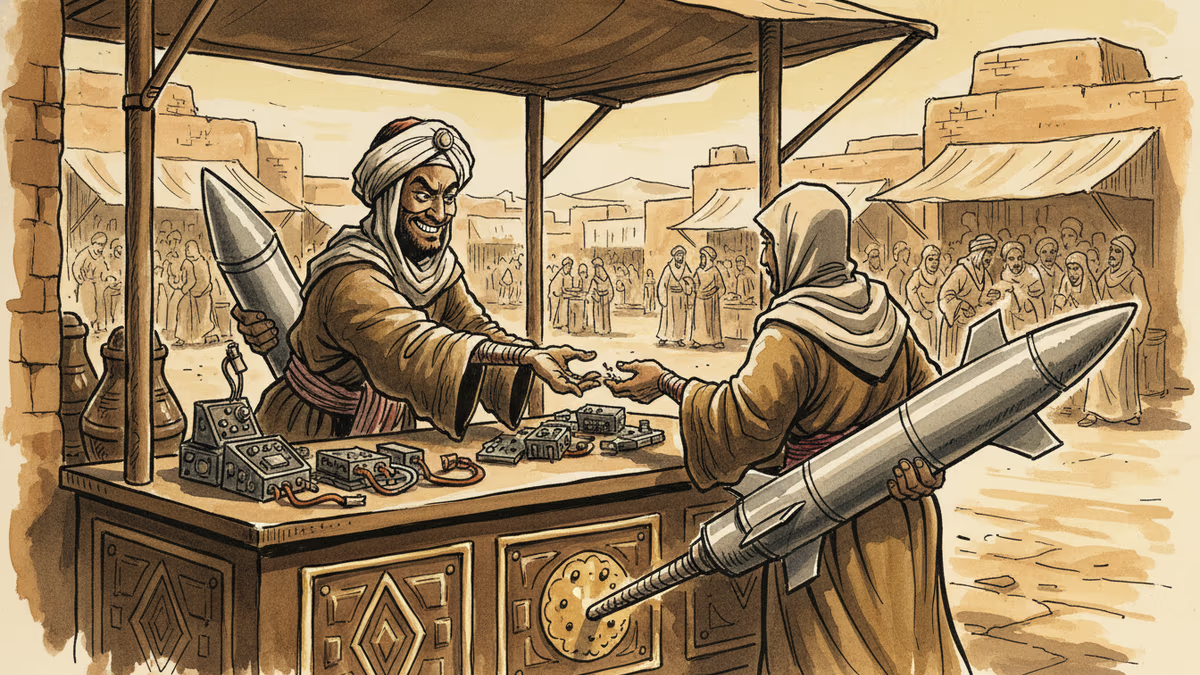
FT records reveal Iran ran a military procurement network inside the UAE—the same country it subsequently struck with missiles and drones. What this exposes about sanctions architecture.
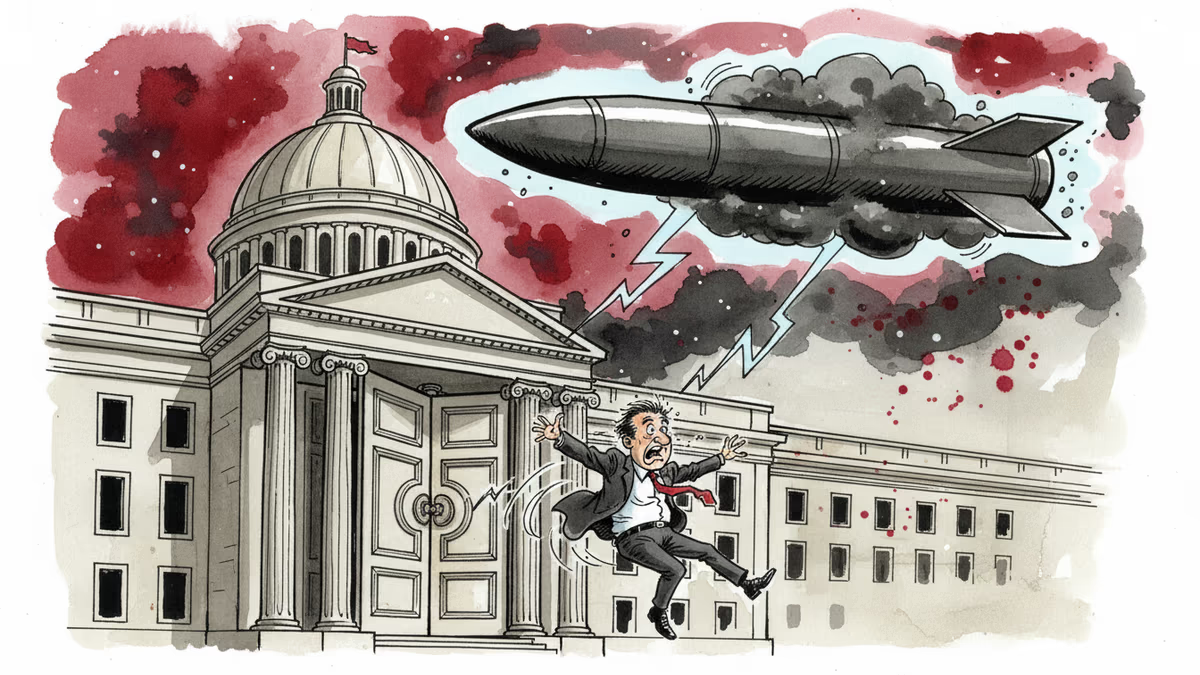
Mike Waltz exits as Trump weighs resuming strikes on Iran. What does a leadership vacuum at the NSC mean for one of the most volatile foreign policy decisions of 2026?
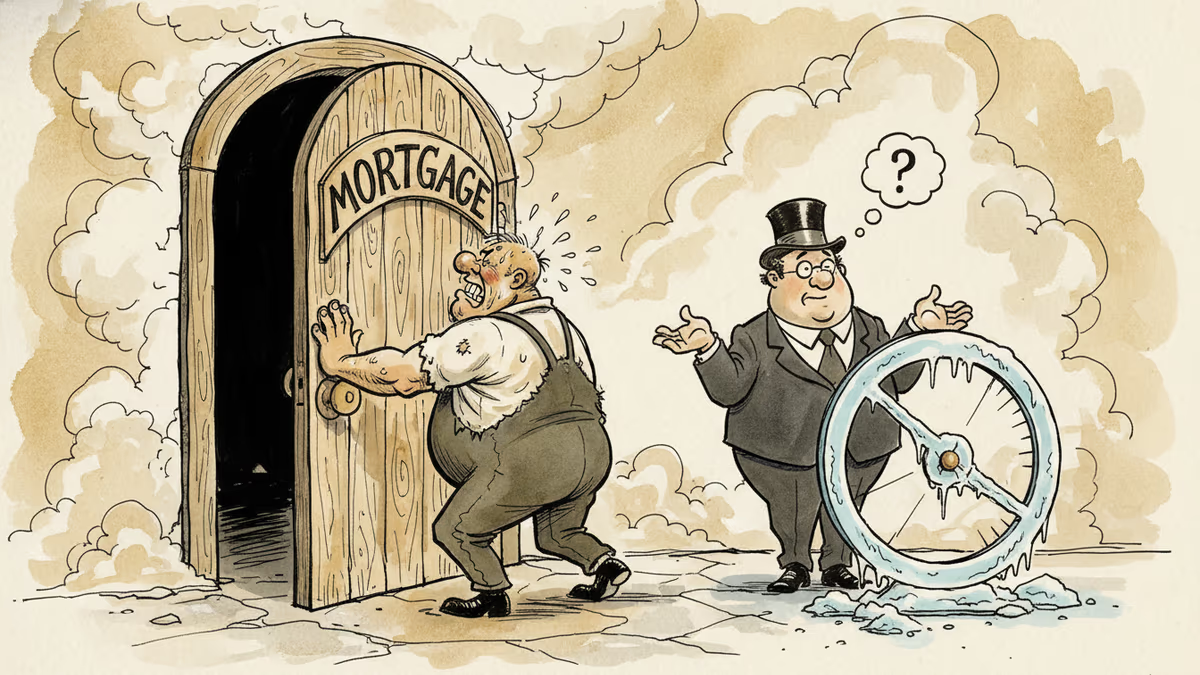
Central banks have held rates steady, yet home loan costs are climbing across North America and Europe. Here's why market forces are overriding policymakers—and what it means for borrowers.
Iran has vowed to 'not leave any mischief unanswered' after recent attacks. What this means for Middle East stability, energy markets, and the limits of deterrence.
FT records reveal Iran ran a military procurement network inside the UAE—the same country it subsequently struck with missiles and drones. What this exposes about sanctions architecture.
Mike Waltz exits as Trump weighs resuming strikes on Iran. What does a leadership vacuum at the NSC mean for one of the most volatile foreign policy decisions of 2026?
Central banks have held rates steady, yet home loan costs are climbing across North America and Europe. Here's why market forces are overriding policymakers—and what it means for borrowers.
Thoughts
Share your thoughts on this article
Sign in to join the conversation