
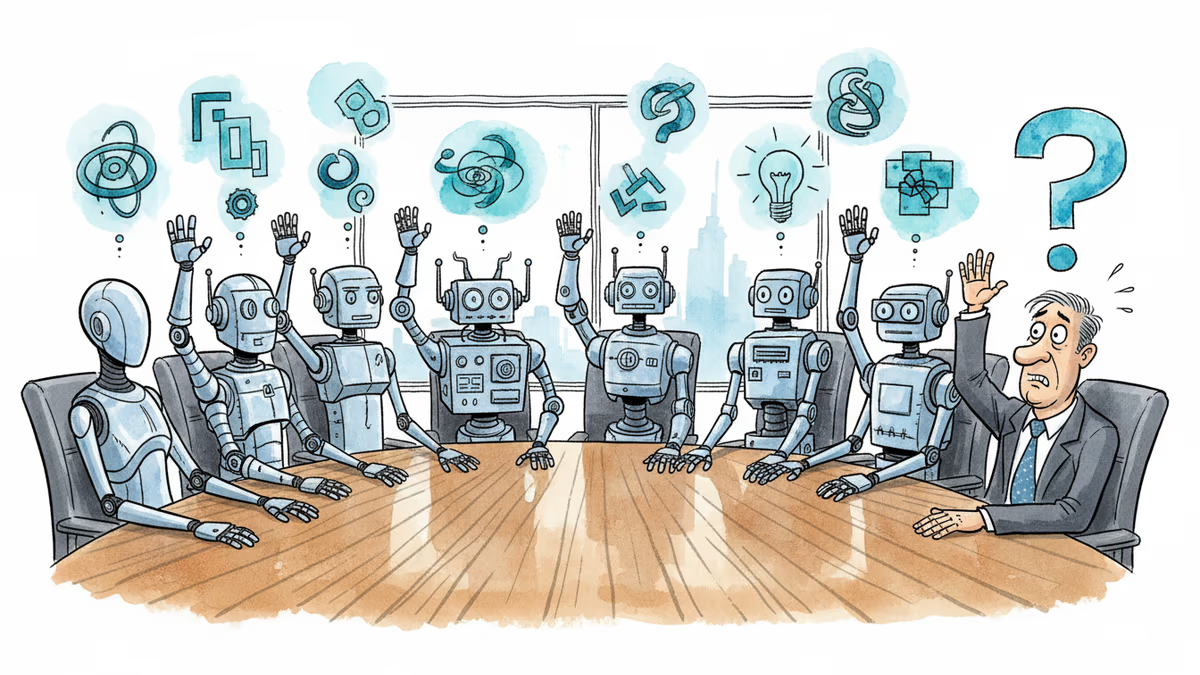
When AI Lies, Ask 10 Models Instead of One
CollectivIQ tackles AI hallucinations by querying ChatGPT, Claude, Gemini, and 7 other models simultaneously. Is crowd-sourcing AI the solution to accuracy problems?
The $10 Million Problem Every CEO Faces
John Davie had a wake-up call that cost him sleep—and potentially millions. His employees at Buyers Edge Platform were unknowingly feeding company secrets to AI models, essentially "training their competitors." Worse yet, the AI-generated content in their PowerPoint presentations contained flat-out lies.
The hospitality procurement CEO wasn't alone. 47% of enterprises hesitate to adopt AI tools due to accuracy and security concerns. When Davie looked for solutions, he found expensive long-term contracts for models that still hallucinated. His response? Build something better.
When One Brain Isn't Enough
Enter CollectivIQ, Davie's Boston-based spinout that treats AI like a jury trial. Instead of trusting one model, it queries up to 10 different LLMs—ChatGPT, Claude, Gemini, Grok, and others—simultaneously. The system then analyzes overlapping and conflicting information to produce what it calls a "fused answer."
Think of it as crowd-sourcing intelligence. If ChatGPT says the sky is blue, Claude agrees, but Gemini insists it's green, the system weighs the consensus. All data gets encrypted and deleted after use, addressing the privacy nightmare that kept Davie awake.

The early results from 2026 internal testing were promising. Employee complaints about biased and hallucinated answers dropped significantly. When customers expressed similar frustrations, Davie knew he had a market.
The Real AI Revolution Isn't About Models
Here's what's fascinating: CollectivIQ's business model challenges the entire enterprise AI playbook. While competitors lock customers into expensive annual contracts, CollectivIQ charges by usage. "Pay only for the value you get," Davie promises.
This reflects a deeper truth about enterprise AI adoption. Companies don't want the "latest and greatest" model—they want reliability. One hallucinated fact in a board presentation can torpedo a deal worth millions.
For developers and startups, this raises uncomfortable questions about vendor lock-in. Are we building AI strategies around specific models, or should we be model-agnostic from day one?
Davie, now 28 years into his entrepreneurial journey, seems energized by building again. "It feels like way back in the day," he says, sitting "hand and hand with software developers." Sometimes the best solutions come from CEOs who refuse to accept that "good enough" is actually good enough.
Authors
Related Articles
Samsung and SK unveiled a chip and AI investment package worth thousands of trillions of won on June 29. The headline number swings wildly by outlet, but the real contest isn't capital — it's water and power.

Viral videos show 2026 graduates jeering executives who praise AI at commencement ceremonies. It's not just rudeness — it's a signal about who pays for technological optimism.

Filipino virtual assistants using AI to ghost-manage LinkedIn profiles for executives is now a structured industry. 30 comments a day, fake engagement rings, and a platform struggling to tell real from fabricated.
Two commencement speakers learned the hard way that AI enthusiasm doesn't land well with today's graduates. The backlash reveals a widening gap between tech optimism and Gen Z's economic reality.
Samsung and SK unveiled a chip and AI investment package worth thousands of trillions of won on June 29. The headline number swings wildly by outlet, but the real contest isn't capital — it's water and power.
Viral videos show 2026 graduates jeering executives who praise AI at commencement ceremonies. It's not just rudeness — it's a signal about who pays for technological optimism.
Filipino virtual assistants using AI to ghost-manage LinkedIn profiles for executives is now a structured industry. 30 comments a day, fake engagement rings, and a platform struggling to tell real from fabricated.
Two commencement speakers learned the hard way that AI enthusiasm doesn't land well with today's graduates. The backlash reveals a widening gap between tech optimism and Gen Z's economic reality.
Thoughts
Share your thoughts on this article
Sign in to join the conversation