

World's Largest Manga Piracy Network Shut Down in Japan-China Joint Operation
Bato.to operator arrested in coordinated investigation between Japanese publishers and Chinese authorities. A turning point in the global fight against digital piracy?
Twelve years after its launch, Bato.to—one of the world's most recognizable manga piracy platforms—has finally been shut down. Japan's Content Overseas Distribution Association (CODA) announced on November 19th that Chinese authorities arrested an individual suspected of operating Bato.to and approximately 60 related sites, including xbato.com and mangapark.io.
The Scanlation Empire
Since 2014, Bato.to had become the epicenter of "scanlation" culture—where manga and comics are scanned, translated, and redistributed online. The arrested operator has reportedly admitted to running this vast network that served millions of readers worldwide who couldn't access official translations.
But this shutdown represents more than just another piracy site going dark. It marks a potential turning point in how the global entertainment industry tackles cross-border digital piracy.
A New Model for International Copyright Enforcement
What makes this case particularly significant is the unprecedented cooperation between Japanese publishers and Chinese authorities. Digital piracy is inherently borderless—servers in one country, operators in another, users scattered globally. This complexity has long made enforcement a game of whack-a-mole.

The successful Japan-China collaboration could become a template for future international copyright protection efforts. Major streaming platforms like Netflix and Disney+ face similar challenges with piracy networks that exploit jurisdictional gaps. This case demonstrates that when content creators and law enforcement agencies coordinate across borders, even the most sophisticated piracy operations can be dismantled.
The Fan Culture Dilemma
Yet the shutdown reveals a deeper tension in digital content distribution. For many manga fans, scanlation sites weren't just sources of "free" content—they were often the only way to access works that received delayed or no official translations. This created a peculiar ecosystem where passionate fans simultaneously supported and undermined the industry they loved.
The challenge extends beyond manga. Korean webtoons, Chinese manhua, and other Asian comics face similar distribution bottlenecks in Western markets. While platforms like Crunchyroll and VIZ Media have expanded their catalogs, gaps remain—gaps that piracy sites have historically filled.
The Economics of Access
From a business perspective, the manga industry has been grappling with how to monetize global demand effectively. Japan's manga exports have grown significantly, but publishers argue that piracy undermines their ability to invest in new titles and creators. The question isn't just about lost revenue—it's about whether sustainable business models can emerge when free alternatives are readily available.
Some publishers are experimenting with simultaneous global releases and more aggressive digital strategies. Shonen Jump+ offers free chapters with ads, while platforms like ComiXology provide legal alternatives. But the success of these models depends partly on reducing the appeal of piracy sites.
Authors
Related Articles
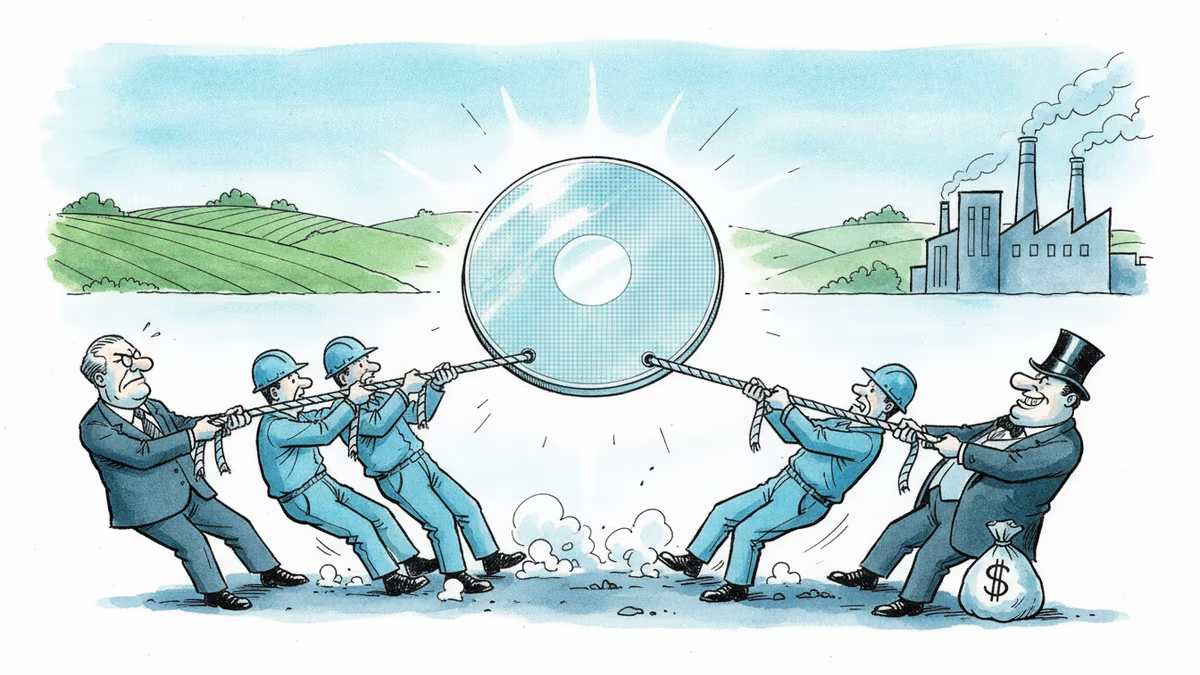
Samsung Electronics' union branch revealed that 84% of survey respondents oppose the government's roughly $290 billion (₩400 trillion) semiconductor megaproject in Gwangju. Government, management, the union and shareholders are all reading the same national project in sharply different ways.

Nvidia shipped roughly a billion RISC-V cores in 2024, then announced it would run CUDA on the open standard. We break down how royalty-free instruction sets and open software stacks are trying to route around CUDA's lock-in. Part 2 of the Semiconductor Sovereignty series.
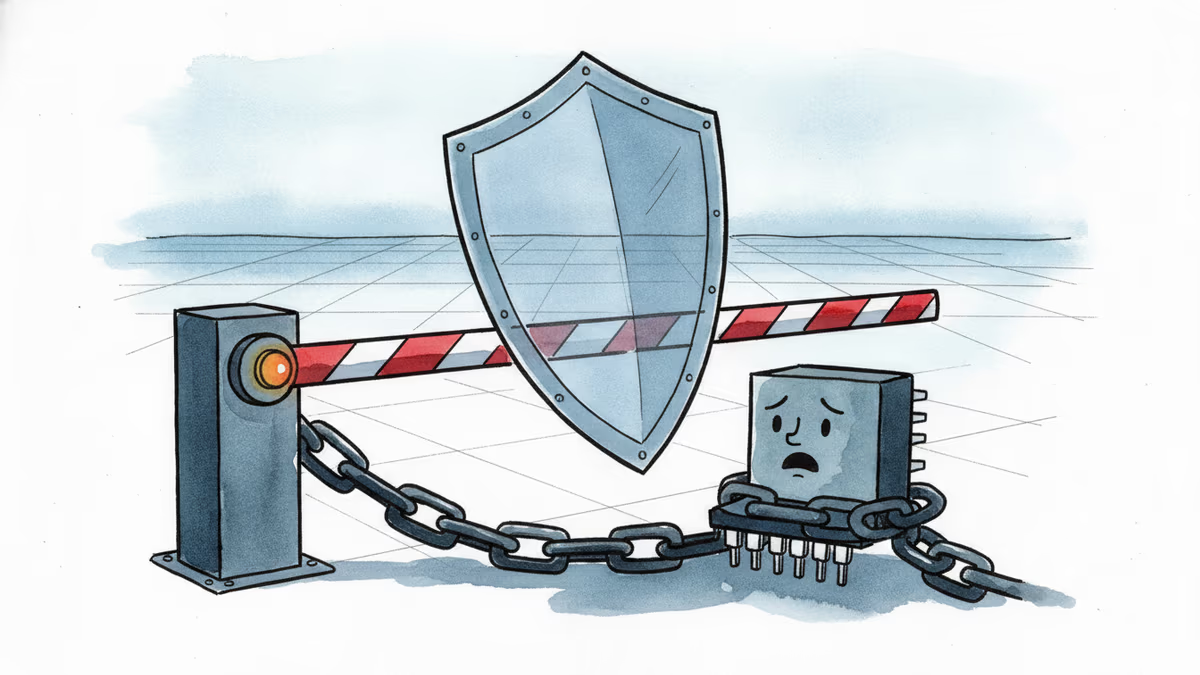
US AI-chip export controls split into three layers in the first half of 2026 — January easing, a May crackdown on circumvention, and a pending bill. Nvidia erased China from its guidance and still posted a record $81.6 billion quarter. A look at the export policy that both shields and cages it.
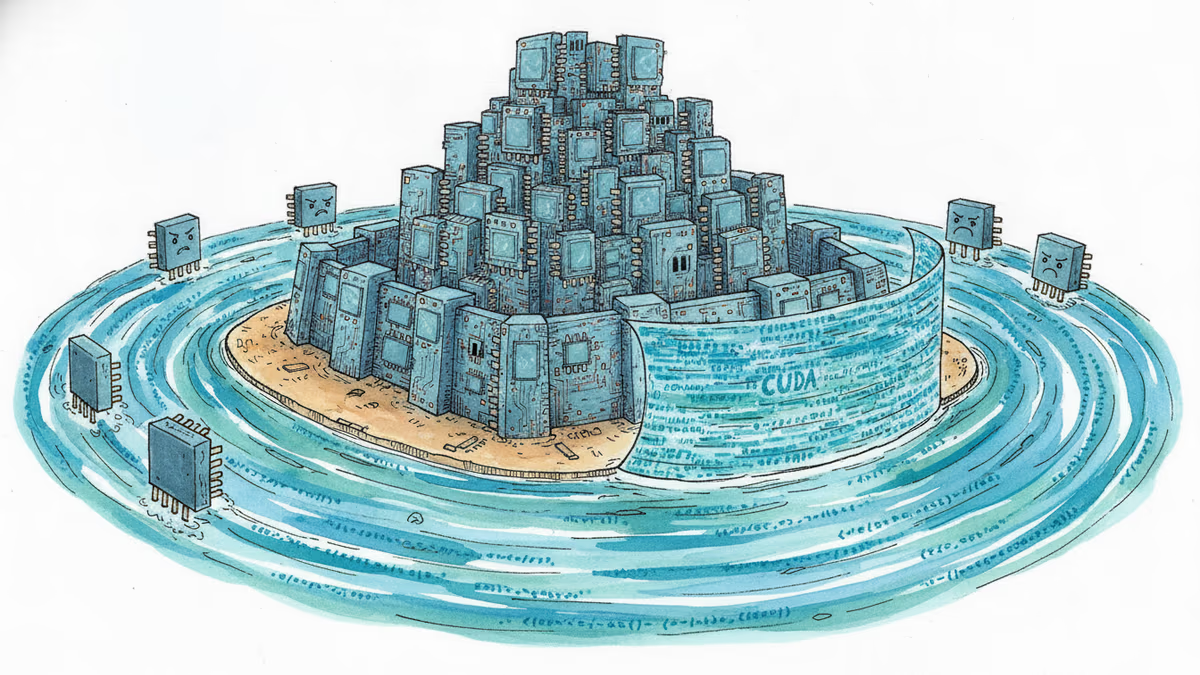
AMD's MI325X matches or beats Nvidia on memory and bandwidth — yet Nvidia's 86-92% share holds. The real moat is CUDA, 20 years in the making. Part 1 of 4.
Samsung Electronics' union branch revealed that 84% of survey respondents oppose the government's roughly $290 billion (₩400 trillion) semiconductor megaproject in Gwangju. Government, management, the union and shareholders are all reading the same national project in sharply different ways.
Nvidia shipped roughly a billion RISC-V cores in 2024, then announced it would run CUDA on the open standard. We break down how royalty-free instruction sets and open software stacks are trying to route around CUDA's lock-in. Part 2 of the Semiconductor Sovereignty series.
US AI-chip export controls split into three layers in the first half of 2026 — January easing, a May crackdown on circumvention, and a pending bill. Nvidia erased China from its guidance and still posted a record $81.6 billion quarter. A look at the export policy that both shields and cages it.
AMD's MI325X matches or beats Nvidia on memory and bandwidth — yet Nvidia's 86-92% share holds. The real moat is CUDA, 20 years in the making. Part 1 of 4.
Thoughts
Share your thoughts on this article
Sign in to join the conversation