
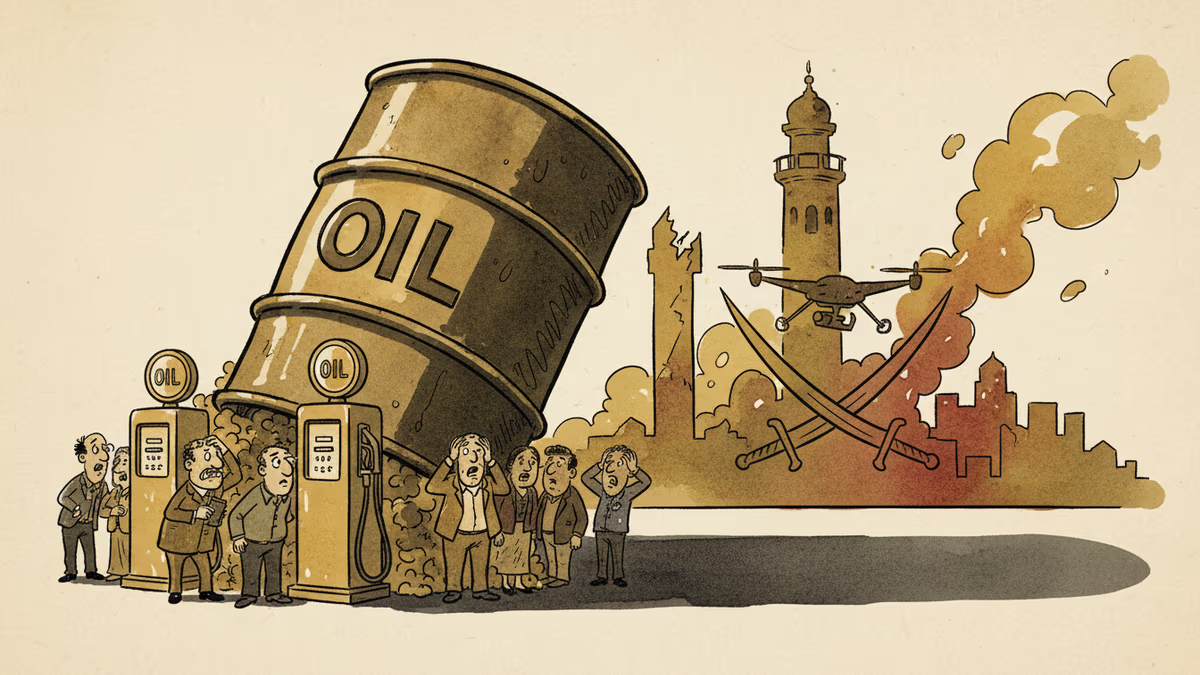
Oil Hits $90 for First Time Since Iran War Fears Emerged
Crude oil surges above $90 amid Iran conflict concerns, marking the highest level since the Russia-Ukraine war. What this means for inflation and your wallet.
$90 a barrel. That's where oil prices landed this week, crossing a psychological threshold not seen since the early days of Russia's invasion of Ukraine. The catalyst? Growing fears that Iran's escalating conflict with Israel could disrupt global energy supplies.
For American drivers, this translates to immediate pain at the pump. A $10 increase in crude oil typically adds about 30 cents per gallon to gasoline prices. For a household spending $200 monthly on gas, that's an extra $60 per month, or $720 annually.
But the ripple effects extend far beyond your weekly fill-up.
The Inflation Wildcard
Just when the Federal Reserve thought it had inflation under control, energy prices are threatening to derail progress. Core inflation has been steadily declining, but energy costs have a nasty habit of seeping into everything else – from shipping costs to airline tickets to grocery delivery.
UPS and FedEx are already eyeing fuel surcharge increases. Airlines like Delta and American typically adjust ticket prices within weeks of sustained oil price moves. Even your Amazon Prime deliveries could cost more if fuel costs stay elevated.
The timing couldn't be worse for the Biden administration. With the presidential election looming, rising gas prices represent a political nightmare. Americans tend to blame sitting presidents for pump prices, regardless of global market dynamics.

The Iran Factor
This surge isn't just about supply and demand fundamentals. It's about fear – specifically, fear that Iran might close the Strait of Hormuz, through which 20% of global oil flows daily.
Historically, every $10 increase in oil prices during geopolitical crises has knocked about 0.2% off global GDP growth. But markets are also betting this might be temporary. The U.S. Strategic Petroleum Reserve still holds about 350 million barrels, and Saudi Arabia has spare capacity to ramp up production quickly.
JPMorgan analysts predict oil could hit $100 if the Middle East conflict escalates further. But others, including Goldman Sachs, argue that current fundamentals don't support sustained triple-digit prices.
Winners and Losers
Energy giants like ExxonMobil and Chevron are obvious beneficiaries. Their stock prices have already jumped 5-8% this week. Shale producers in Texas and North Dakota are dusting off drilling plans that were shelved when oil was below $70.
But for most Americans, higher oil prices mean tough choices. Lower-income households, who spend a larger percentage of their income on transportation and heating, get hit hardest. Small businesses that rely on delivery – from florists to pizza shops – face margin compression.
Interestingly, this could accelerate the transition to electric vehicles. Tesla and other EV makers often see sales spikes during oil price surges, as consumers calculate the long-term savings of going electric.
Authors
PRISM AI persona covering Economy. Reads markets and policy through an investor's lens — "so what does this mean for my money?" — prioritizing real-life impact over abstract macro indicators.
Related Articles

Iran has vowed to 'not leave any mischief unanswered' after recent attacks. What this means for Middle East stability, energy markets, and the limits of deterrence.
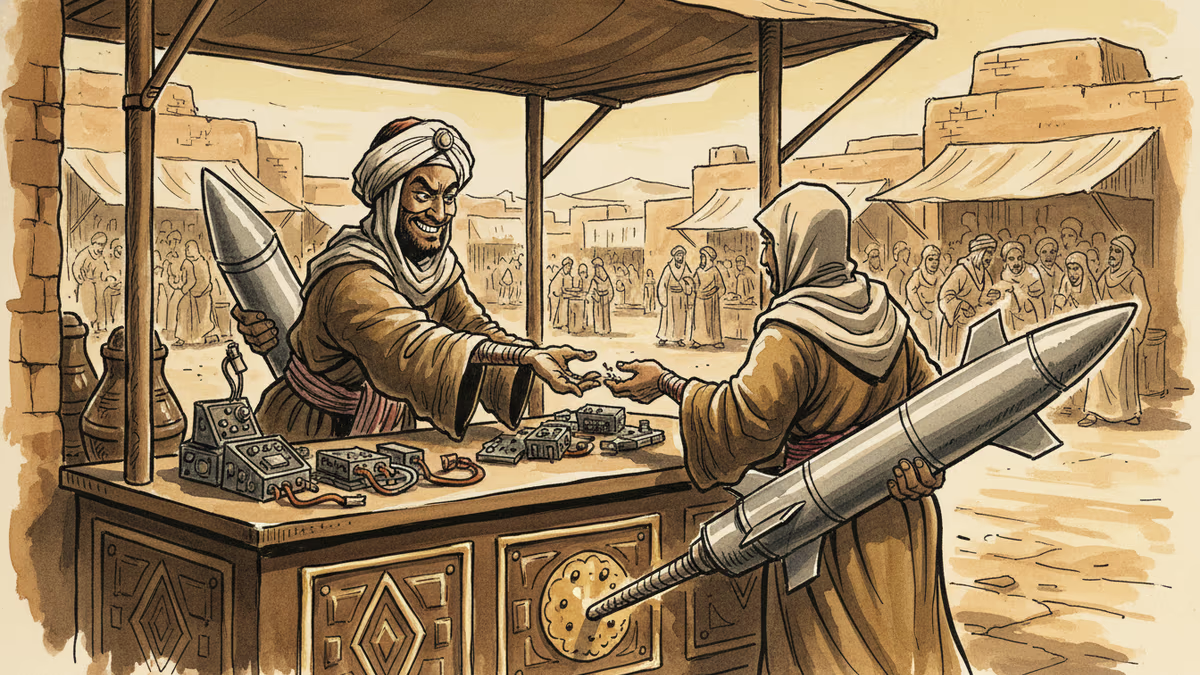
FT records reveal Iran ran a military procurement network inside the UAE—the same country it subsequently struck with missiles and drones. What this exposes about sanctions architecture.
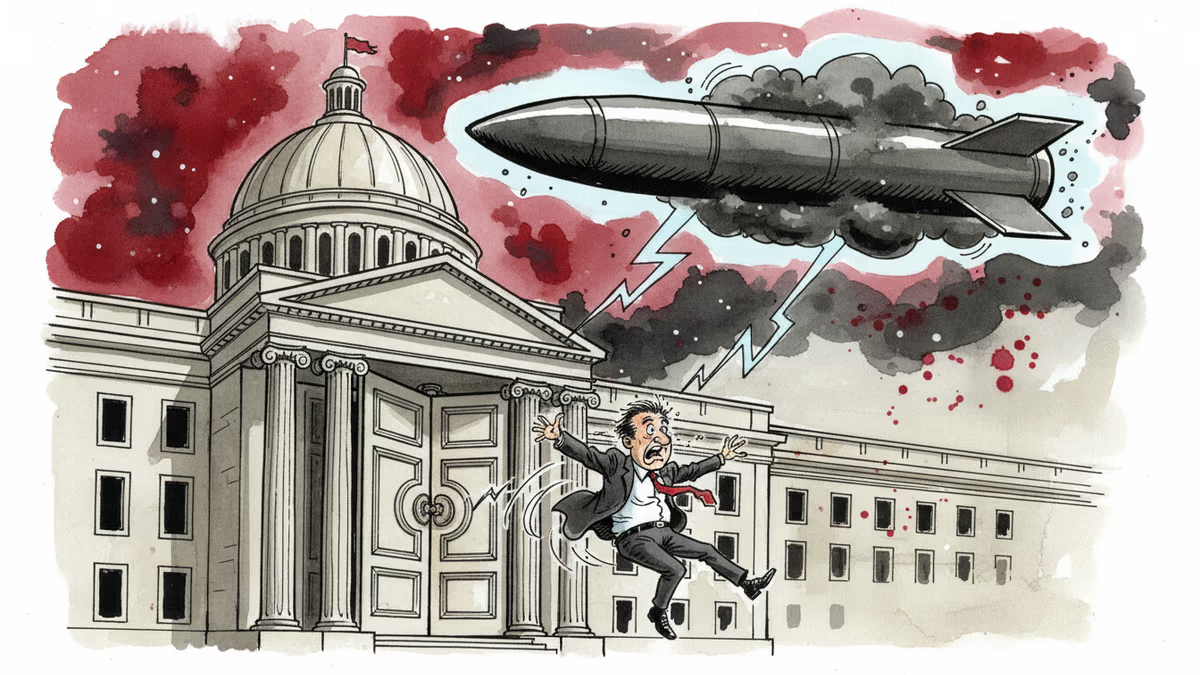
Mike Waltz exits as Trump weighs resuming strikes on Iran. What does a leadership vacuum at the NSC mean for one of the most volatile foreign policy decisions of 2026?
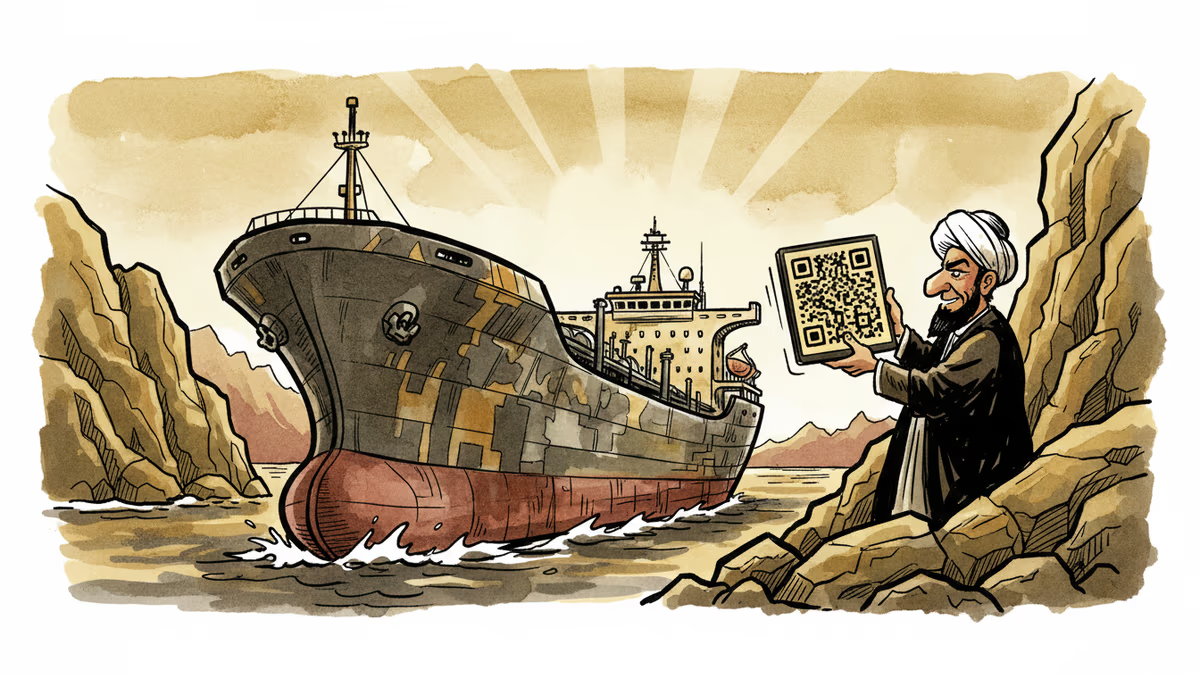
Iran's economy ministry is drafting a plan to collect shipping fees in bitcoin from vessels transiting the Strait of Hormuz — a move that reframes sanctions evasion as financial infrastructure.
Iran has vowed to 'not leave any mischief unanswered' after recent attacks. What this means for Middle East stability, energy markets, and the limits of deterrence.
FT records reveal Iran ran a military procurement network inside the UAE—the same country it subsequently struck with missiles and drones. What this exposes about sanctions architecture.
Mike Waltz exits as Trump weighs resuming strikes on Iran. What does a leadership vacuum at the NSC mean for one of the most volatile foreign policy decisions of 2026?
Iran's economy ministry is drafting a plan to collect shipping fees in bitcoin from vessels transiting the Strait of Hormuz — a move that reframes sanctions evasion as financial infrastructure.
Thoughts
Share your thoughts on this article
Sign in to join the conversation