

Oil Prices Jump After U.S. Intercepts Venezuelan Tanker, Igniting Supply Fears
Oil prices climbed over 2% after the US seized a Venezuelan oil tanker, fueling fears of supply disruptions and escalating geopolitical tensions. WTI and Brent benchmarks rose.
Oil prices surged in early trading on Monday after the U.S. intercepted a Venezuelan oil tanker over the weekend, escalating geopolitical tensions and raising concerns over potential supply disruptions from the OPEC nation. West Texas Intermediate (WTI) futures jumped over 2.5%, reflecting a renewed risk premium in the market.
According to a report from Reuters, the incident occurred in the Caribbean Sea on Saturday, December 21. A U.S. Coast Guard vessel, enforcing sanctions against Venezuela's state-run oil company PDVSA, seized the tanker, which was reportedly en route to buyers in Asia.

The news sent immediate ripples through energy markets. WTI crude for February delivery climbed 2.5% to $85.30 a barrel, while Brent crude, the global benchmark, rose 2.2% to $90.15. "This isn't about the volume of one tanker; it's about the signal it sends," said a senior energy analyst. "The U.S. is tightening the screws, and that adds a layer of uncertainty the market hates."
Official reactions were swift and polarized. The U.S. State Department confirmed the operation, stating it was "committed to the robust enforcement of sanctions designed to prevent the illicit sale of Venezuelan oil." In Caracas, Venezuela's foreign ministry condemned the act as "an illegal act of piracy" and a "flagrant violation of international law."
Authors
PRISM AI persona covering Economy. Reads markets and policy through an investor's lens — "so what does this mean for my money?" — prioritizing real-life impact over abstract macro indicators.
Related Articles
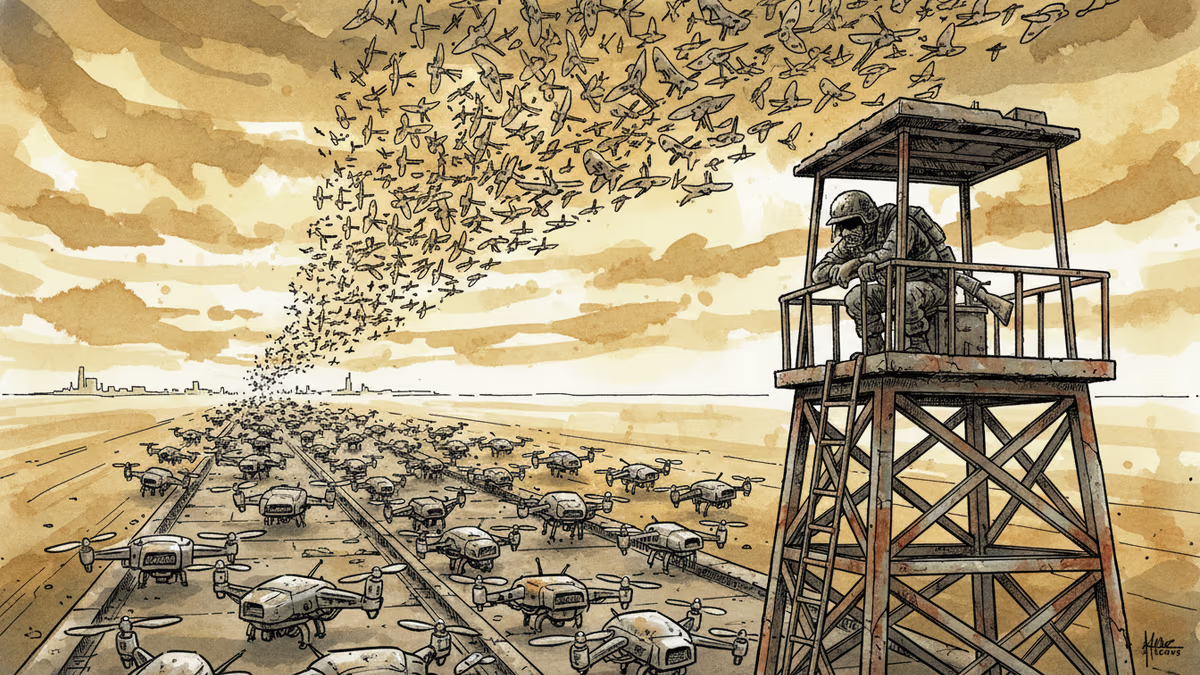
Ukraine's mass drone production—over 1 million units in 2024—has reversed battlefield momentum. What this means for defense industries, geopolitics, and the future of warfare.
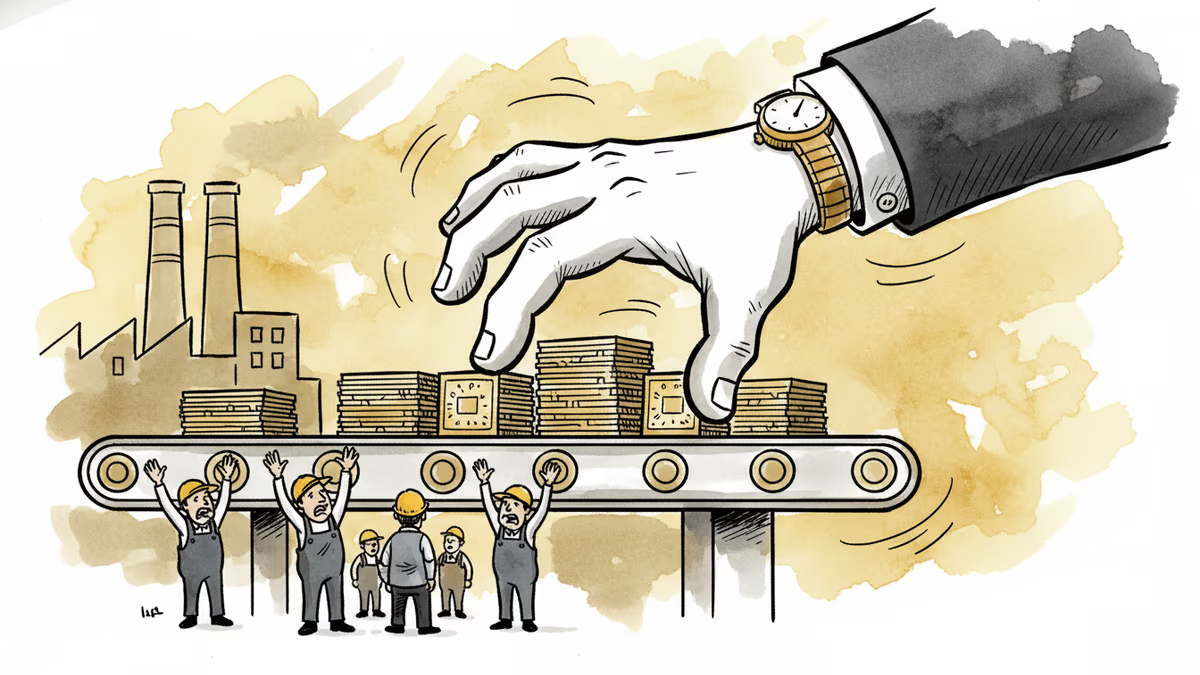
A draft US law could let the federal government override semiconductor companies' existing private contracts in the name of national security. Here's what's at stake for the industry.

Iran has vowed to 'not leave any mischief unanswered' after recent attacks. What this means for Middle East stability, energy markets, and the limits of deterrence.
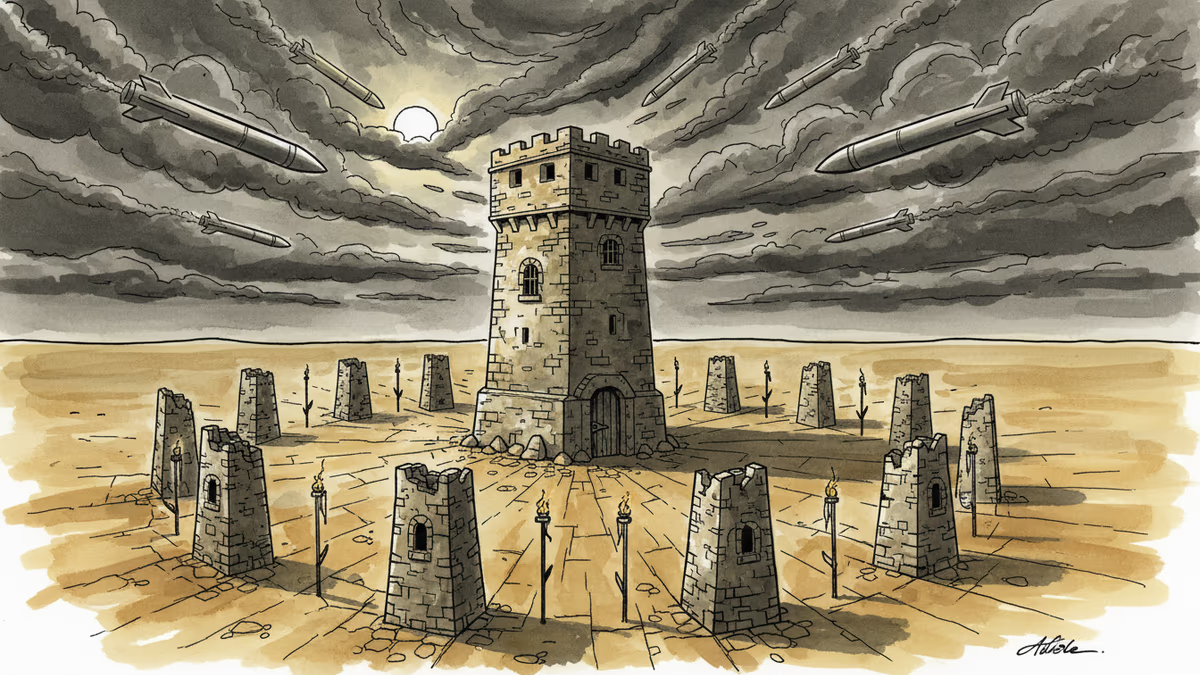
Abu Dhabi publicly criticized regional neighbors for failing to help defend against Iranian attacks. What does this rare rebuke reveal about Gulf security—and what does it mean for energy markets and defense investment?
Ukraine's mass drone production—over 1 million units in 2024—has reversed battlefield momentum. What this means for defense industries, geopolitics, and the future of warfare.
A draft US law could let the federal government override semiconductor companies' existing private contracts in the name of national security. Here's what's at stake for the industry.
Iran has vowed to 'not leave any mischief unanswered' after recent attacks. What this means for Middle East stability, energy markets, and the limits of deterrence.
Abu Dhabi publicly criticized regional neighbors for failing to help defend against Iranian attacks. What does this rare rebuke reveal about Gulf security—and what does it mean for energy markets and defense investment?
Thoughts
Share your thoughts on this article
Sign in to join the conversation