
#Energy Market
Total 30 articles
Venezuela's legislature has passed a bill to loosen state control over its oil industry for the first time since 2007. Explore the impact of the Venezuela oil sector deregulation 2026.
On Jan 21, 2026, TEPCO partially restarted the world's largest nuclear plant, Kashiwazaki-Kariwa, after 15 years. Explore the economic and energy implications for Japan.
Oil prices stay steady as fading Iranian protests reduce the chance of a US attack. Discover how the oil prices Iran protests impact 2026 energy stability.

PRISM by Liabooks
Place your ad in this space
[email protected]
Syrian government forces have seized the Omar oil field, the nation's largest, from Kurdish SDF forces. This shift in energy control marks a critical turning point in post-Assad Syria.

Oil prices fall as the likelihood of a US strike on Iran diminishes. Explore the causes of the oil price drop and US Iran tensions' impact on global markets.
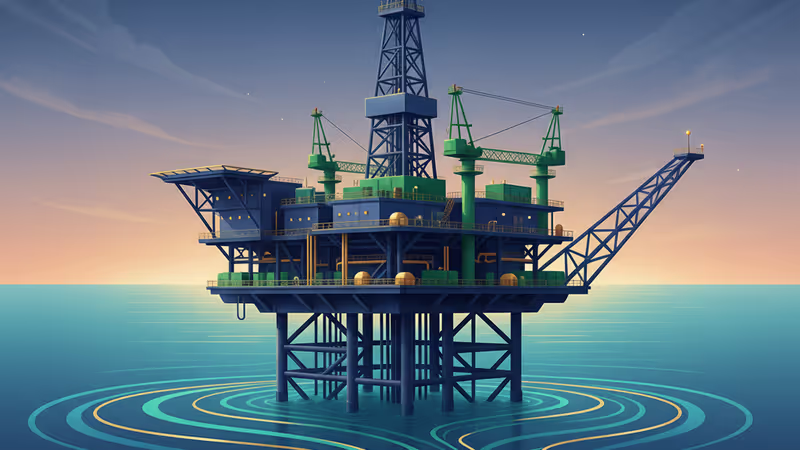
Oil prices fell more than 2% as remarks from Donald Trump calmed investor concerns regarding Iran. Read the analysis of this energy market shift.

Global oil prices pause their rally as Venezuela resumes shipments on January 14, 2026. However, Iran concerns continue to shadow the energy market outlook.
PRISM by Liabooks
Place your ad in this space
[email protected]
Oil prices rally as Iran oil supply disruption concerns grow. Brent hits $82 amid geopolitical tensions, impacting global inflation forecasts for 2026.
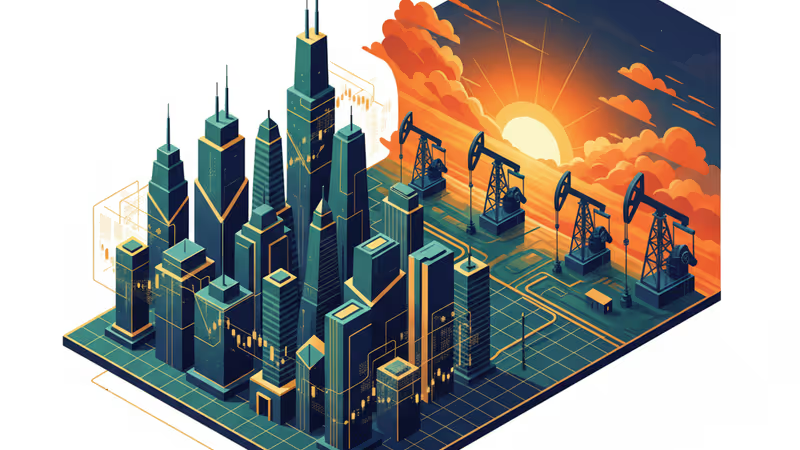
ExxonMobil is studying a return to Venezuela as Chevron prepares an immediate production bump. Discover how this impacts global energy security and oil prices.

US forces seized the Olina oil tanker near Curacao on January 9, 2026. This marks the 5th capture in the US Venezuelan oil tanker seizure campaign, signaling a total naval blockade.

US authorities seized Russian and Venezuelan-linked oil tankers on January 8, 2026, marking an escalation in Trump's 'oil push' strategy and causing a spike in crude prices.
PRISM by Liabooks
Place your ad in this space
[email protected]
US oil giants are demanding legal guarantees before committing capital to Venezuela. Discover why security is now more important than oil reserves.
