

Iran Oil Exports Hit 7-Year High as China Defies U.S. Sanctions
Iran's crude oil exports have climbed 5% in 2025 to a 7-year high, driven by massive purchases from China that defy U.S. sanctions. What does this mean for oil prices and geopolitics?
Iran's crude oil exports have surged to their highest level in seven years, demonstrating the limits of U.S. pressure as China continues to purchase heavily discounted oil from the Islamic republic. This defiant trade is reshaping energy flows and testing Washington's ability to enforce its economic sanctions.
According to industry estimates, Iranian crude exports have climbed by **5%** in 2025, reaching a peak not seen since the U.S. reimposed sanctions in 2018. The resilience of Tehran's oil trade is almost entirely thanks to one major buyer: China. While most nations avoid Iranian crude for fear of U.S. retaliation, Beijing has prioritized its energy security and strategic partnership with Tehran.
**Why this matters:** The steady flow of sanctioned Iranian oil acts as a shadow supply in the global market. It creates a ceiling for oil prices, potentially offsetting production cuts by OPEC+ and keeping a lid on global inflation. For consumers, it means slightly lower pressure at the pump, but for policymakers, it signals a major geopolitical shift.
This trade is largely conducted through a clandestine network of 'dark fleet' tankers that turn off their transponders to avoid detection. This cat-and-mouse game on the high seas highlights the growing sophistication of sanctions evasion techniques, backed by a superpower.
This content is AI-generated based on source articles. While we strive for accuracy, errors may occur. We recommend verifying with the original source.
Related Articles
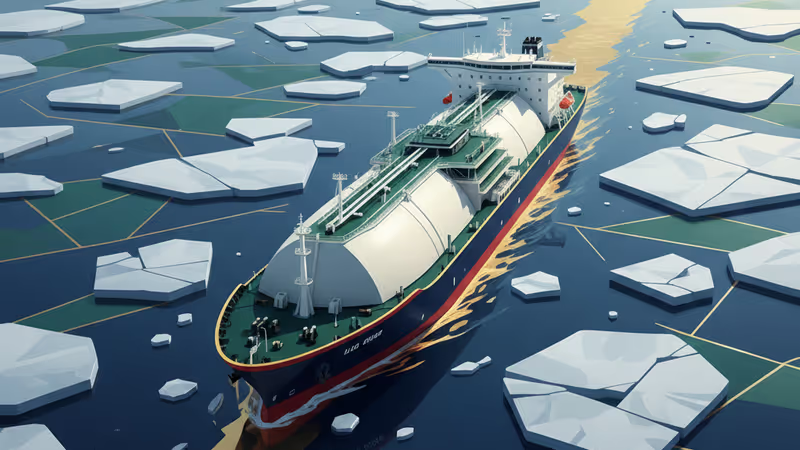
A Chinese-owned tanker, the Kunpeng, has loaded the first LNG cargo from Russia's sanctioned Arctic LNG 2 plant, testing the effectiveness of U.S. sanctions and potentially impacting global energy markets.

Japan announces plans for a deep-sea rare earth processing facility by 2027 on Minamitorishima island, aiming to tap vast reserves 6,000 meters deep to reduce its critical mineral reliance on China.

Oil prices climbed after the U.S. intercepted a tanker near Venezuela, fueling concerns over supply disruptions and geopolitical instability. We analyze the market impact on your portfolio.

Fusion Power Inc.'s nuclear fusion breakthrough causes an 8% drop in WTI oil prices. Analyze the market impact, investment risks, and long-term implications for energy portfolios.