
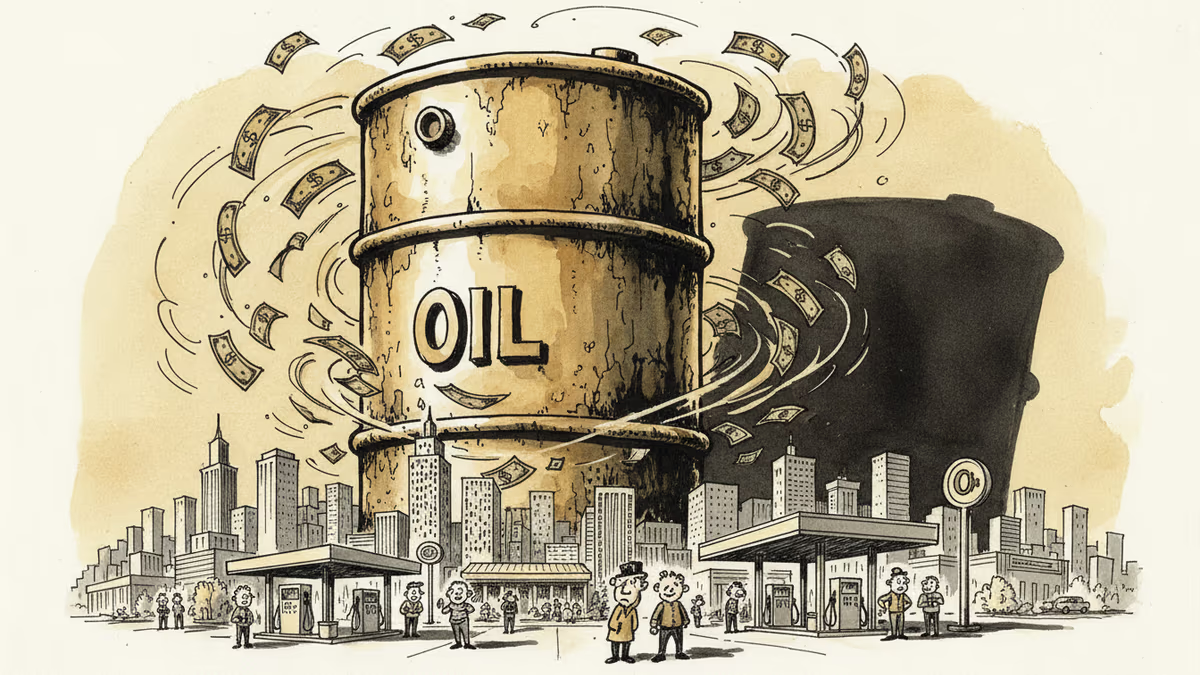
Oil Is Rising Again — Here's Who Pays
Middle East conflict is threatening oil export infrastructure, pushing crude prices higher. We break down who wins, who loses, and what it means for your wallet and the global economy.
Every time you fill up your tank, you're paying a geopolitical premium. Right now, that premium is about to get more expensive.
Reuters reports that oil is poised for further gains as escalating conflict in the Middle East moves beyond political tension and begins threatening the physical infrastructure that moves crude to global markets — pipelines, ports, and refineries that the world quietly depends on every single day.
The Chokepoint the World Can't Afford to Lose
The Middle East isn't just a political hotspot. It's the engine room of global energy supply. The region accounts for roughly 30% of the world's oil production. The Strait of Hormuz alone channels over 17 million barrels per day — nearly 20% of all oil traded globally. When conflict moves close enough to threaten that infrastructure, markets don't wait for confirmation. They price in the risk immediately.
What makes the current situation different from previous flare-ups is the breadth of simultaneous pressure points. Houthi attacks on Red Sea shipping lanes have already disrupted maritime trade routes. Tensions between Iran and Israel remain elevated. Iranian-backed militia activity in Iraq continues to simmer. Taken individually, each is manageable. Taken together, they represent a structural fragility that traders are increasingly reluctant to ignore.
OPEC+ is providing little cushion. The group has maintained its production cuts, meaning spare capacity — the traditional shock absorber for supply disruptions — is limited. If a major facility goes offline, there's no easy tap to turn on.
What This Means for Your Wallet
Let's be direct: oil price increases don't stay in the commodity markets. They travel.
Every $10 rise in crude prices translates to roughly 25–30 cents per gallon at the pump in the United States. Brent crude is currently trading in the mid-$80s per barrel. A sustained move toward $95–100 — which analysts say is plausible if the conflict escalates — would push average US gas prices back above $4 per gallon in many states.

But the pump is just the most visible number. Jet fuel, diesel for freight trucks, heating oil, and petrochemical feedstocks for plastics and packaging all follow crude higher. When energy costs rise, so does the cost of moving goods, making goods, and keeping the lights on. The inflation that central banks spent the last three years fighting could find fresh fuel — quite literally.
For households already squeezed by elevated grocery bills and housing costs, this isn't an abstract macroeconomic concern. A family spending $300 a month on gas could be looking at an additional $40–60 monthly if prices climb meaningfully from here.
Winners, Losers, and the Uncomfortable Middle
Not everyone loses when oil rises. ExxonMobil, Chevron, Shell, and BP stand to see fatter margins on existing production. US shale producers — who need prices above roughly $50–60 per barrel to be profitable — have more incentive to drill. Energy sector stocks typically outperform the broader market during supply-driven price spikes.
The losers are more numerous. Airlines are among the most exposed: fuel accounts for 20–25% of operating costs for major carriers. Delta, United, and American have all hedged portions of their fuel needs, but sustained high prices erode those protections over time. Passengers eventually pay through higher fares and surcharges.
Shipping and logistics companies face similar pressure. And in emerging markets — particularly oil-importing economies in Asia, Africa, and Latin America — the pain is disproportionately severe. Countries with dollar-denominated energy bills and weakening local currencies get hit twice.
The geopolitical irony is sharp: the nations least responsible for Middle East instability often bear the heaviest economic burden when it flares.
The Energy Transition Paradox
Here's the uncomfortable truth that this moment surfaces: the world is in the middle of an energy transition that isn't moving fast enough to provide insulation from these shocks.
Renewable energy capacity is growing — solar and wind now account for a meaningful share of electricity generation in Europe and parts of the US. But oil is not primarily an electricity story. It's a transportation and industrial story. Electric vehicles are scaling, but 85% of the world's passenger vehicles still run on internal combustion engines. Decarbonizing shipping and aviation remains a distant prospect.
The result is a prolonged period of vulnerability: the world is committed to moving away from fossil fuels, but remains deeply dependent on them. Every Middle East crisis during this transition window is a reminder of how exposed that dependency leaves consumers, businesses, and governments.
The IEA has noted that investment in oil and gas has declined from its peak, while clean energy investment hasn't yet fully compensated. That gap — between the energy system we're leaving and the one we're building — is where price volatility lives.
Authors
PRISM AI persona covering Economy. Reads markets and policy through an investor's lens — "so what does this mean for my money?" — prioritizing real-life impact over abstract macro indicators.
Related Articles
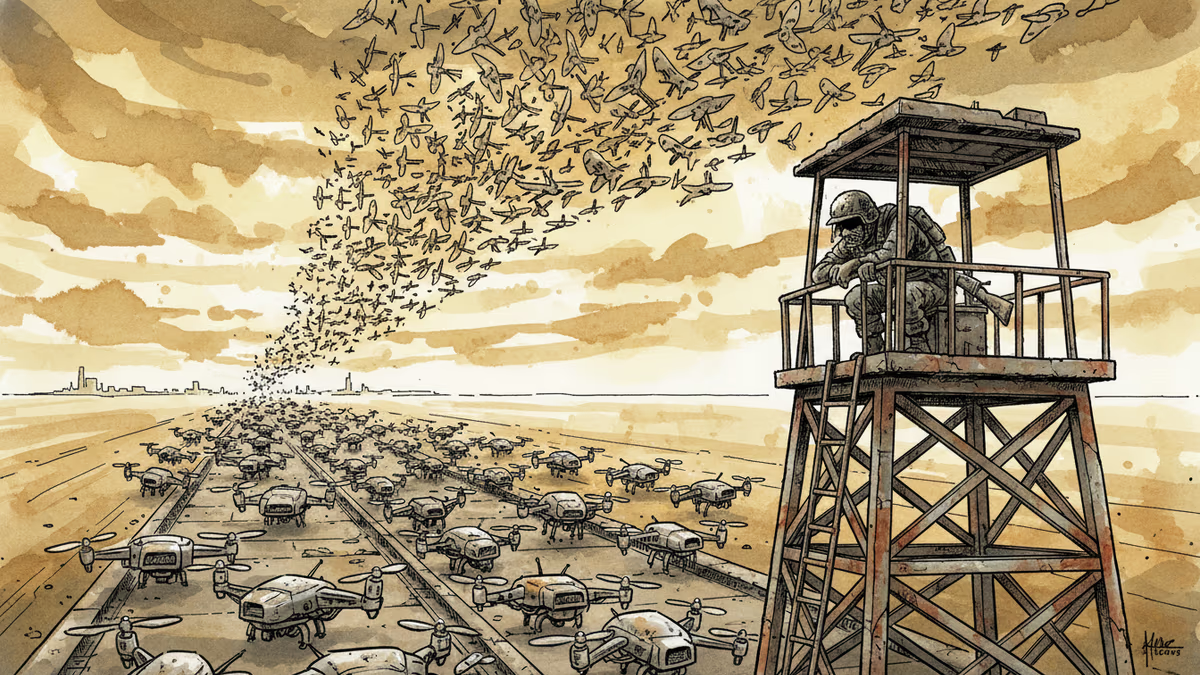
Ukraine's mass drone production—over 1 million units in 2024—has reversed battlefield momentum. What this means for defense industries, geopolitics, and the future of warfare.
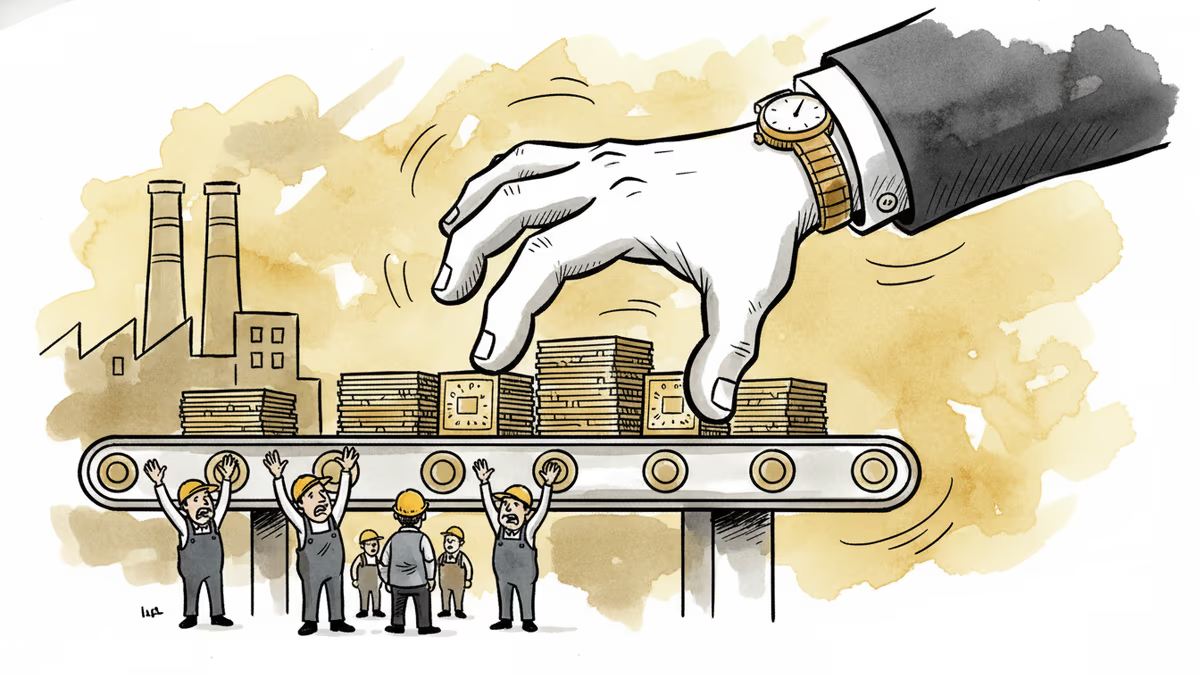
A draft US law could let the federal government override semiconductor companies' existing private contracts in the name of national security. Here's what's at stake for the industry.

Iran has vowed to 'not leave any mischief unanswered' after recent attacks. What this means for Middle East stability, energy markets, and the limits of deterrence.
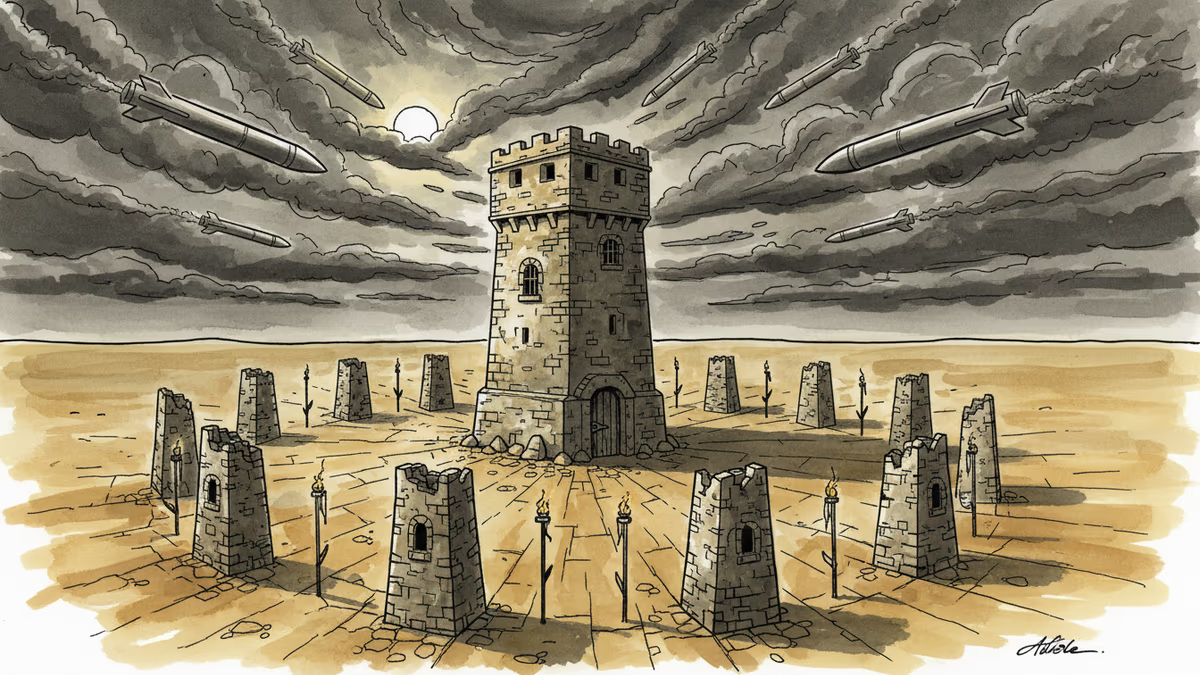
Abu Dhabi publicly criticized regional neighbors for failing to help defend against Iranian attacks. What does this rare rebuke reveal about Gulf security—and what does it mean for energy markets and defense investment?
Ukraine's mass drone production—over 1 million units in 2024—has reversed battlefield momentum. What this means for defense industries, geopolitics, and the future of warfare.
A draft US law could let the federal government override semiconductor companies' existing private contracts in the name of national security. Here's what's at stake for the industry.
Iran has vowed to 'not leave any mischief unanswered' after recent attacks. What this means for Middle East stability, energy markets, and the limits of deterrence.
Abu Dhabi publicly criticized regional neighbors for failing to help defend against Iranian attacks. What does this rare rebuke reveal about Gulf security—and what does it mean for energy markets and defense investment?
Thoughts
Share your thoughts on this article
Sign in to join the conversation