
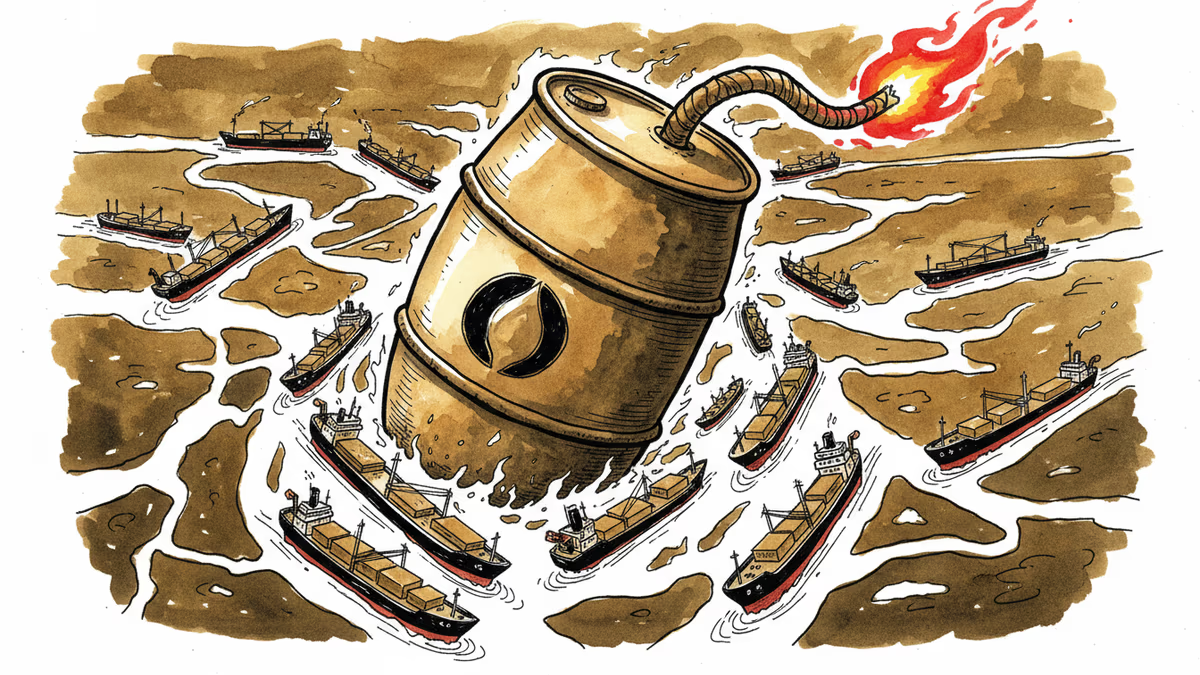
$100 Oil Looms as Trump's Iran Strike Backfires
Oil prices surge 13% after Iran's leader killed. Strait of Hormuz traffic near zero. Analysts predict crude could hit $100+ as Middle East chaos spreads.
$80 a barrel. That's where Brent crude landed Monday morning, a 13% jump from Friday's close. Two days after Trump's forces killed Iran's Supreme Leader Ali Khamenei, oil markets are pricing in scenarios that seemed unthinkable just weeks ago: $100+ oil by month's end.
This isn't just another geopolitical risk premium. The Strait of Hormuz—through which one in five barrels of global oil flows—has become a shipping graveyard. Insurance companies are jacking up policies. Drone strikes are hitting Saudi refineries. And the White House appears to have no plan for what comes next.
The $3 Trillion Chokepoint
"As long as I have been in the oil market, Iran and the closure of the Strait of Hormuz has been kind of the ultimate risk scenario for prices," says Canadian oil researcher Rory Johnston. The strait isn't officially closed, but traffic has dropped to "near zero" as ships voluntarily reroute around the chaos.
Usually, OPEC would respond to supply disruptions by cranking up production elsewhere. But when the emergency reserves are "on the other side of the problem area," Johnston explains, "it doesn't do as much good." Think of it like a garden hose with a kink—no matter how much water you pump in, the flow stays restricted.
The weekend brought worse news. Saudi Aramco shut down a major refinery after drone strikes. Qatar LNG halted production, sending European gas prices spiking. "The more desperate Iran becomes," warns Clayton Seigle from the Center for Strategic and International Studies, "the greater likelihood for it to use energy as leverage."
Trump's Energy Gamble

The timing couldn't be more politically awkward. With midterms looming and inflation still a voter concern, Trump launched a military operation that could send gas prices soaring. Politico reports Democrats are already crafting messaging around energy costs, while analysts predict consumers could see pump prices jump "as early as this week."
For US oil producers, it's complicated. After a brutal year of low prices—Harold Hamm even shut down North Dakota shale operations for the first time in 30 years—higher crude could be a lifeline. The 2022 Ukraine invasion sent oil to nearly $130, delivering windfall profits to American drillers.
But the disorganized aftermath of the Khamenei assassination is spooking even oil bulls. "It seems like our plan was to take out Khamenei and then hope for the best," says Tyson Slocum from Public Citizen. "For all of Trump saying, 'Hey, we knew exactly where he was'—apparently we didn't do the same for Iran's attack capabilities."
The Ripple Effect Economy
Oil at $100+ doesn't just mean expensive gas. Plastics, fertilizers, shipping costs—the entire petrochemical supply chain would feel the squeeze. European manufacturers already dealing with energy security issues post-Ukraine could face another crisis.
The insurance market is already adjusting. Lloyd's of London reportedly increased premiums for Gulf shipping by 300% over the weekend. Some tanker operators are pulling out entirely, creating an artificial shortage even if oil keeps flowing through alternative routes.
What Happens Next?
Seigle identifies the key variables: "Does the Iranian government move to quickly end the fighting, or does it gear up for protracted conflict? Do the neighboring Gulf states more assertively back the US-Israeli offensive, or even actively join it?"
The market is watching for signals from both Washington and Tehran. Iran's response to the September 2019 Saudi facility attacks—which temporarily spiked oil 15%—offers a template. But this time feels different. The stakes are higher, the chaos more widespread, and Trump's strategy less clear.
Authors
Related Articles
Amazon, Google, Meta and others pledge to pay for their data centers' power infrastructure, but the agreement lacks enforcement and ignores basic economics

A massive dispute over Iran's supreme leader prediction market exposes the dark side of betting on world events. How Kalshi's rule interpretation sparked trader revolt.
As Europe faces a power crisis, the Nordic countries have become the unexpected hotbed for AI data centers. What's driving this Arctic gold rush?
Massive fossil fuel outages during East Coast snowstorm show grid vulnerabilities, while Texas batteries prove their worth. What does this mean for energy security in an era of extreme weather?
Amazon, Google, Meta and others pledge to pay for their data centers' power infrastructure, but the agreement lacks enforcement and ignores basic economics
A massive dispute over Iran's supreme leader prediction market exposes the dark side of betting on world events. How Kalshi's rule interpretation sparked trader revolt.
As Europe faces a power crisis, the Nordic countries have become the unexpected hotbed for AI data centers. What's driving this Arctic gold rush?
Massive fossil fuel outages during East Coast snowstorm show grid vulnerabilities, while Texas batteries prove their worth. What does this mean for energy security in an era of extreme weather?
Thoughts
Share your thoughts on this article
Sign in to join the conversation