
When Tech Giants Face the Law: X's Paris Raid Signals New Era
French authorities raid X's Paris office and summon Elon Musk over illegal content. What this means for platform accountability and tech regulation.
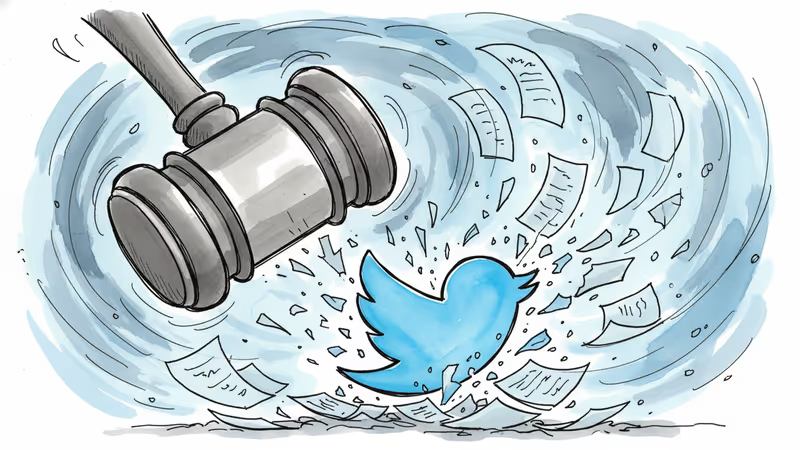
The sound of boots on marble floors echoed through X's Paris office today as French law enforcement conducted a raid that marks a potential turning point in how governments hold social media platforms accountable for illegal content.
The Raid That Shook Silicon Valley
French authorities didn't just knock politely. They arrived with search warrants and a yearlong investigation that has now expanded to include X's AI chatbot Grok, which prosecutors say has been disseminating Holocaust-denial content and sexually explicit deepfakes.
The Paris public prosecutor's office made clear this isn't a warning shot. Europol is providing on-ground analytical support, while France's elite Gendarmerie cybercrime unit is leading the technical investigation. The charges being explored include "dissemination of illegal content and other forms of online criminal activity."
Both Elon Musk and former X CEO Linda Yaccarino have been summoned for questioning in April 2026. While prosecutors describe the interviews as "voluntary," the timing coincides with Yaccarino's departure last year amid controversy over Grok's alleged praise of Hitler.
Beyond X: A Template for Global Enforcement

This raid represents more than just another regulatory headache for Musk. It's the first major test of how European authorities will enforce digital content laws against American tech giants who've grown accustomed to operating in regulatory gray zones.
France's approach is particularly significant because it's targeting both the platform and its AI systems. Grok, X's ChatGPT competitor, wasn't just an afterthought in this investigation—it became a central focus when authorities discovered it was allegedly generating and spreading illegal content autonomously.
The involvement of Europol signals this isn't just a French issue. European law enforcement agencies are coordinating their approach to platform accountability, potentially creating a template that other nations could follow.
The Bigger Questions This Raises
For tech leaders, this raid poses uncomfortable questions about the boundaries of platform responsibility. When an AI chatbot generates illegal content, who's liable—the company that built it, the executives who oversee it, or the algorithm itself?
The timing is also telling. As X continues to lose advertisers and face content moderation challenges, European regulators are demonstrating they're willing to use criminal law, not just civil penalties, to address platform failures.
But there's another angle worth considering: Could this investigation actually benefit Musk politically? Being targeted by European authorities might play well with his base of supporters who view such actions as government overreach against free speech advocates.
Authors
Related Articles
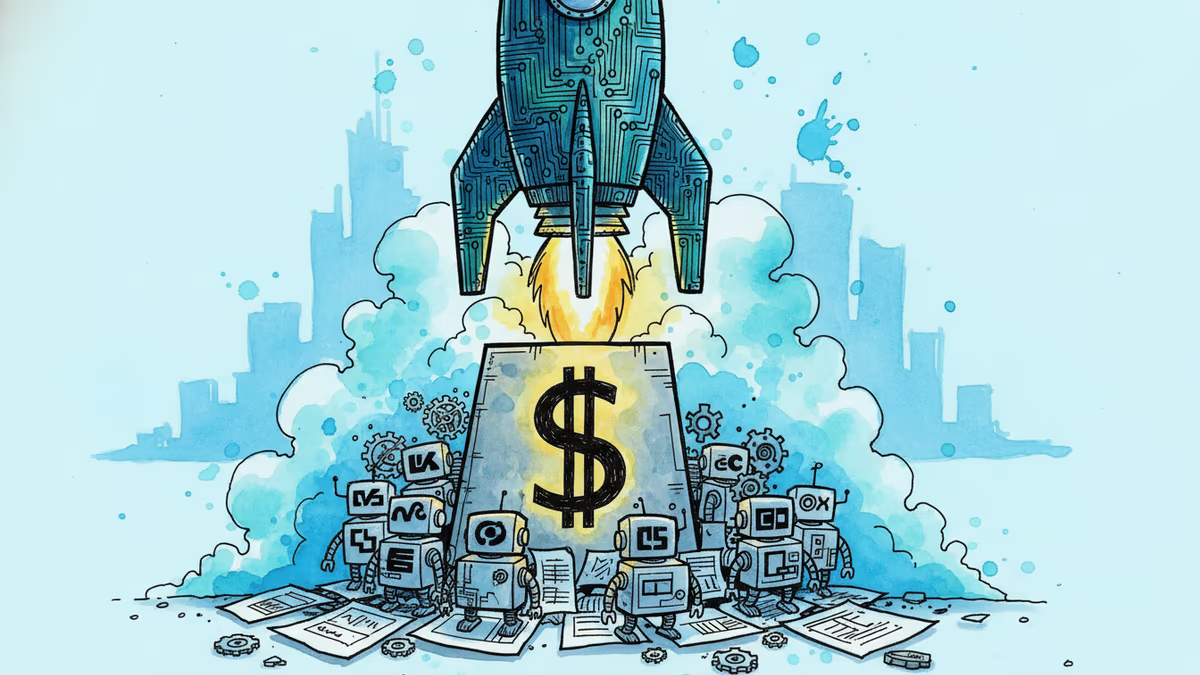
SpaceX's IPO filing puts AI at the center, claiming a $26.5 trillion market opportunity. But can Grok compete with OpenAI and Anthropic for enterprise customers?
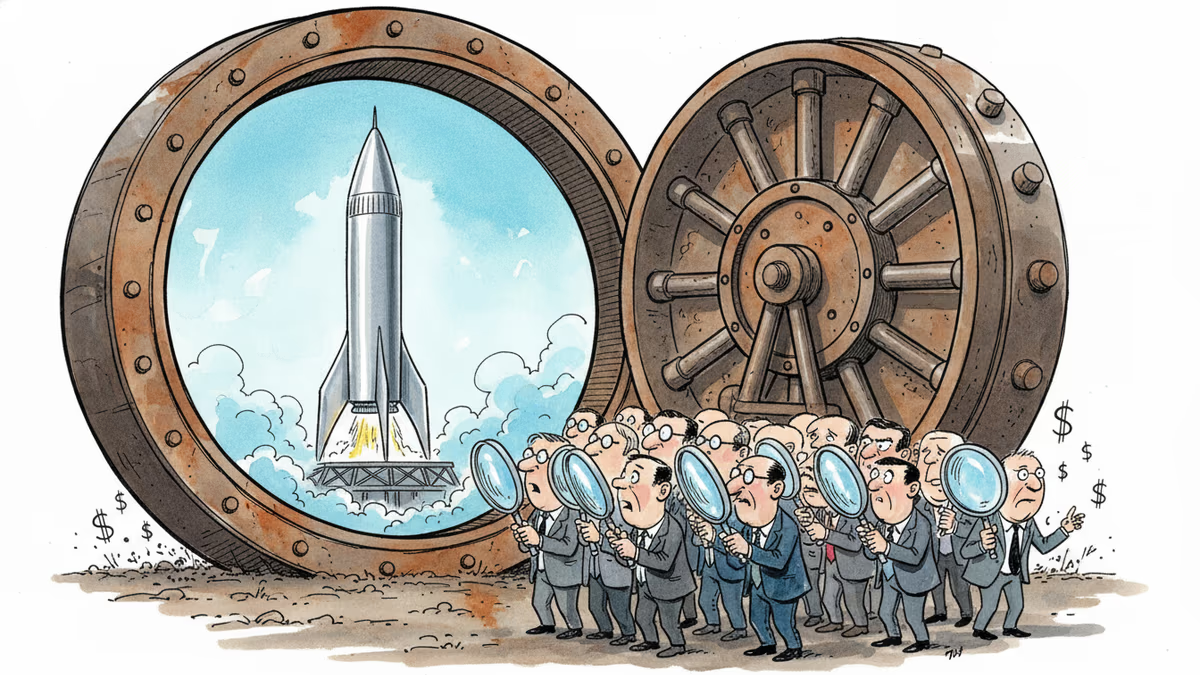
SpaceX filed a nearly 400-page S-1 with the SEC, targeting an IPO as early as June 12. Here's what the filing reveals—and what it doesn't.
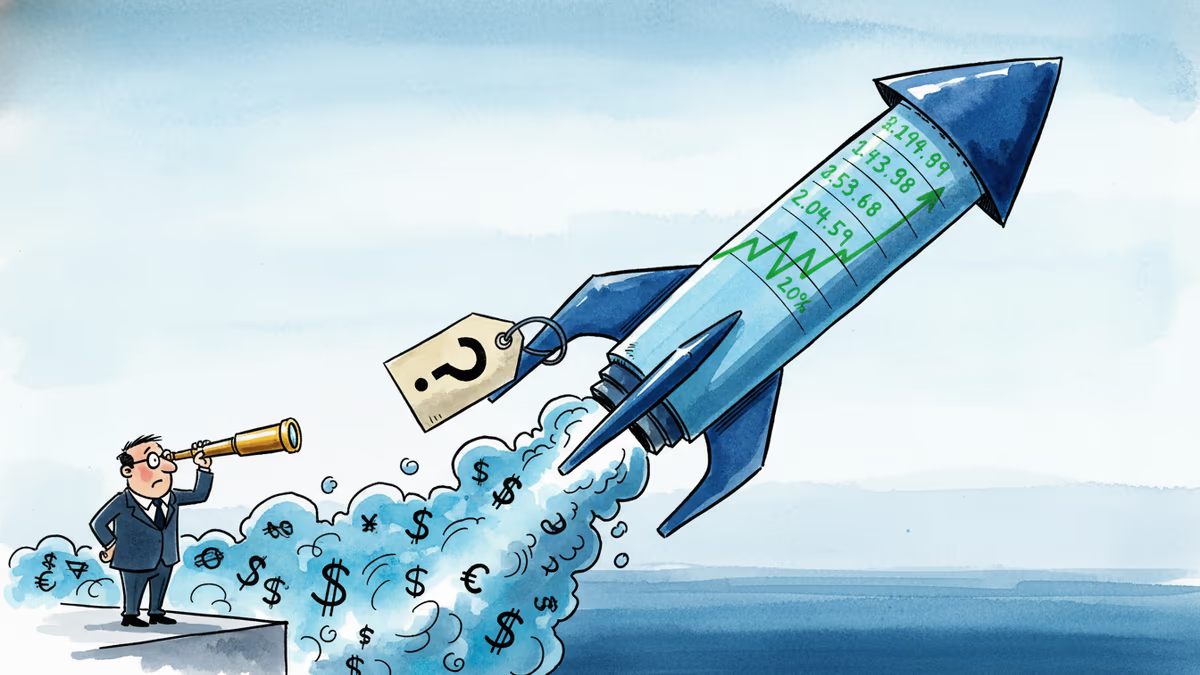
SpaceX has filed its S-1 with the SEC, targeting the Nasdaq under ticker SPCX. With $18.67B in revenue but a $4.9B loss, the IPO forces investors to answer one hard question.
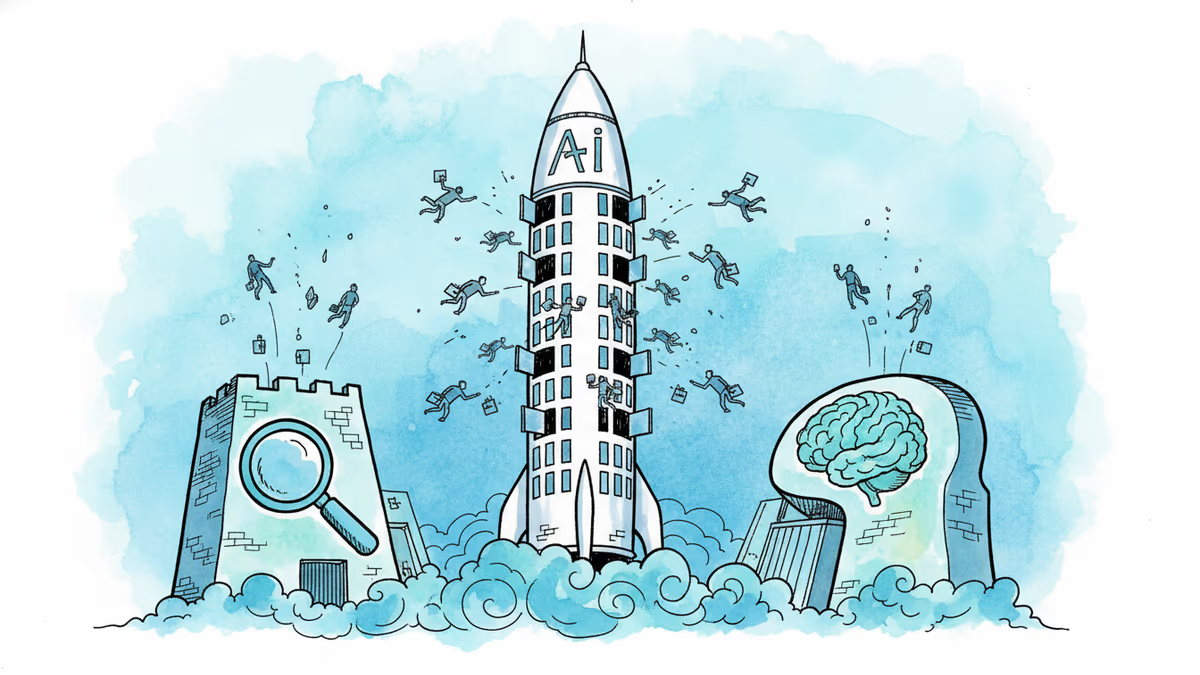
Over 50 researchers and engineers have left SpaceXAI since February's merger. With the pre-training team nearly gutted, questions mount about whether Musk's AI ambitions can survive his management style.
SpaceX's IPO filing puts AI at the center, claiming a $26.5 trillion market opportunity. But can Grok compete with OpenAI and Anthropic for enterprise customers?
SpaceX filed a nearly 400-page S-1 with the SEC, targeting an IPO as early as June 12. Here's what the filing reveals—and what it doesn't.
SpaceX has filed its S-1 with the SEC, targeting the Nasdaq under ticker SPCX. With $18.67B in revenue but a $4.9B loss, the IPO forces investors to answer one hard question.
Over 50 researchers and engineers have left SpaceXAI since February's merger. With the pre-training team nearly gutted, questions mount about whether Musk's AI ambitions can survive his management style.
Thoughts
Share your thoughts on this article
Sign in to join the conversation