

India's Supreme Court to Meta: 'Stop Playing with Privacy Rights'
India's Supreme Court delivers sharp criticism of Meta's WhatsApp data practices, questioning how users can meaningfully consent in a monopolistic market. A potential turning point for global tech regulation.
With 500 million users, India represents WhatsApp's largest market. But this week, Meta found itself facing unexpectedly sharp questions from the country's highest court about how it monetizes that massive user base.
A Court That Wouldn't Back Down
India's Supreme Court delivered an unusually pointed rebuke to Meta on Tuesday, warning it would not allow the tech giant to "play with the right to privacy" of Indian users. The comments came as Meta appealed a ₹2.13 billion ($23.6 million) penalty imposed over WhatsApp's 2021 privacy policy changes.
Chief Justice Surya Kant cut to the heart of the matter with a vivid example: How can "a poor woman selling fruits on the street" or a domestic worker be expected to understand how their data is being used? The question highlighted a fundamental tension in the digital economy—the gap between corporate data practices and user comprehension.
The judges repeatedly pressed Meta's lawyers on how users can meaningfully consent to data-sharing practices when WhatsApp functions as the default communications platform. Justice Joymalya Bagchi pushed further, demanding details about the commercial value of behavioral data and its use in targeted advertising, arguing that even anonymized information carries economic worth.
Meta's defense centered on technical protections: messages are end-to-end encrypted and inaccessible even to the company, they argued. The privacy policy in question didn't weaken user protections or allow chat content to be used for advertising. But the court seemed more interested in what happens beyond message content—the metadata, usage patterns, and behavioral insights that fuel Meta's advertising machine.
The Monopoly Question
The case stems from WhatsApp's 2021 policy update that required Indian users to accept broader data-sharing terms with Meta or stop using the service. India's competition regulator found this constituted abuse of WhatsApp's dominant market position—a ruling that was upheld on appeal before reaching the Supreme Court.

Calling the messaging service a monopoly in practice, the court ordered Meta and WhatsApp to refrain from sharing "a single piece of information" while the appeal is pending. The scope of the case has since widened, with the IT ministry joining as a party at the competition regulator's suggestion.
The timing is significant. WhatsApp faces heightened scrutiny globally, with U.S. authorities reportedly examining claims that WhatsApp chats may not be as private as the company asserts. In India specifically, new SIM-binding rules aimed at curbing fraud could limit how widely small businesses use the messaging service.
Beyond India's Borders
This case represents more than a regional regulatory dispute. India's approach could establish precedents for how dominant platforms operate in markets where they've become essential infrastructure. The court's focus on meaningful consent in monopolistic conditions echoes similar concerns raised by regulators in Europe and elsewhere.
For Meta, India represents a critical growth market for its advertising business. Any restrictions on data collection and sharing could significantly impact the company's ability to deliver targeted advertising—the foundation of its business model. The $23.6 million penalty, while relatively modest for Meta, signals India's willingness to challenge big tech practices.
The case also highlights broader questions about digital colonialism and whether global tech companies can impose uniform privacy policies across diverse markets with varying levels of digital literacy and regulatory frameworks.
The Consent Paradox
The Supreme Court's questions illuminate a fundamental paradox of the digital economy. Platforms like WhatsApp become so integral to daily communication that refusing their terms effectively means digital exclusion. This creates what economists call a "take-it-or-leave-it" scenario that challenges traditional notions of informed consent.
Government lawyers argued that personal data is not only collected but also commercially exploited—a distinction that could prove crucial as courts worldwide grapple with the economic value of user information. The case adjourns until February 9, giving Meta and WhatsApp time to explain their data practices in greater detail.
Authors
Related Articles

The FTC fined Cox Media and two ad firms $930,000 — not for actually eavesdropping on users, but for falsely claiming they could. The case raises uncomfortable questions about surveillance capitalism.

SolarSquare is raising $55-60M at a $450-500M valuation, more than doubling its worth in 18 months. Here's what's driving investor conviction in India's residential solar market.
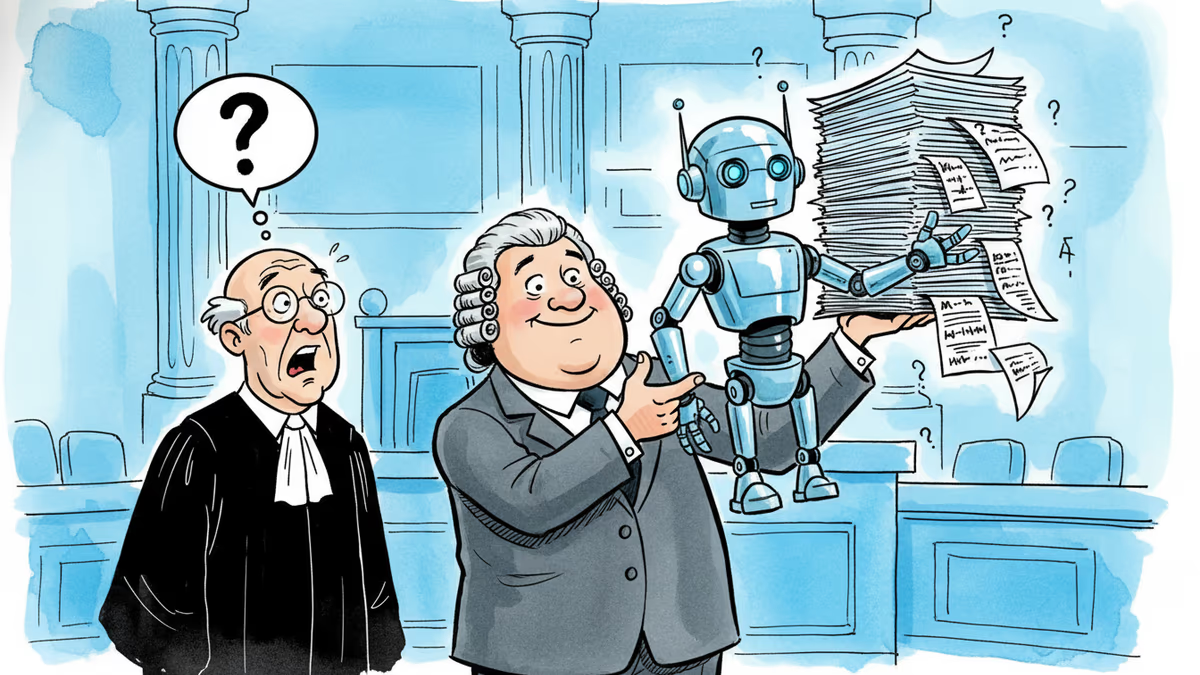
A law firm marketing itself on AI-powered legal success submitted fake citations in a federal appeal. Now its lawyers face sanctions — and the broader AI legal industry faces a credibility crisis.
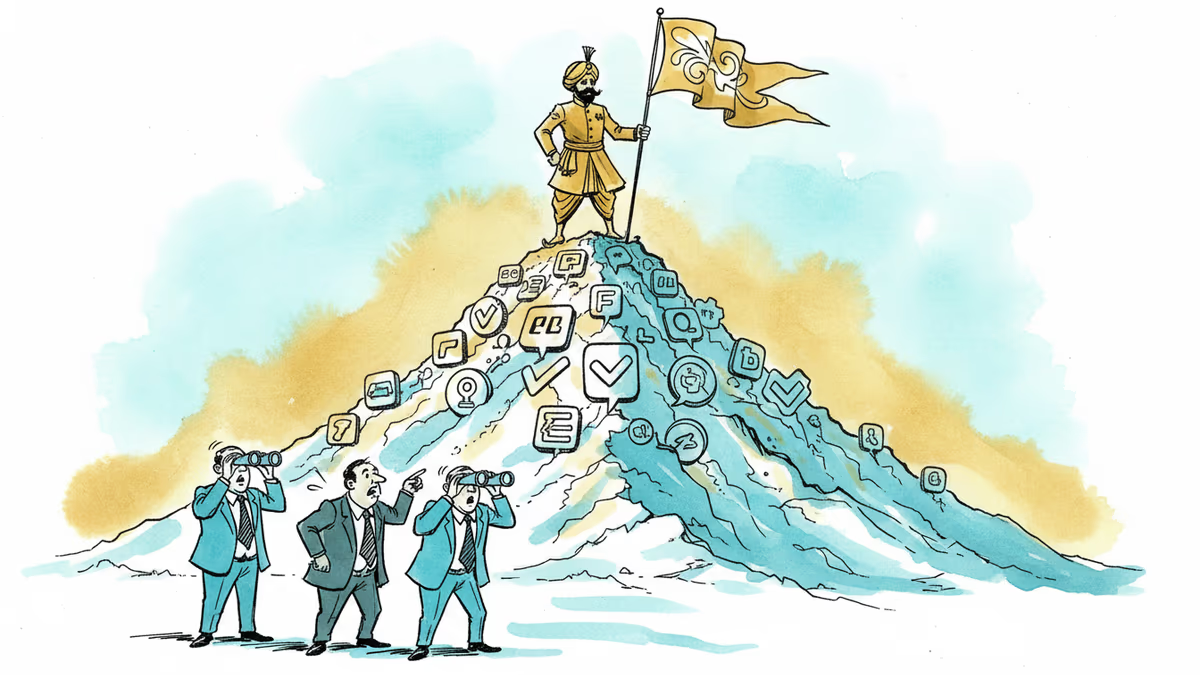
Indian venture capital has quietly displaced Silicon Valley in its own backyard. Only one American VC made India's top 10 investor list last year. Here's why that matters beyond India.
The FTC fined Cox Media and two ad firms $930,000 — not for actually eavesdropping on users, but for falsely claiming they could. The case raises uncomfortable questions about surveillance capitalism.
SolarSquare is raising $55-60M at a $450-500M valuation, more than doubling its worth in 18 months. Here's what's driving investor conviction in India's residential solar market.
A law firm marketing itself on AI-powered legal success submitted fake citations in a federal appeal. Now its lawyers face sanctions — and the broader AI legal industry faces a credibility crisis.
Indian venture capital has quietly displaced Silicon Valley in its own backyard. Only one American VC made India's top 10 investor list last year. Here's why that matters beyond India.
Thoughts
Share your thoughts on this article
Sign in to join the conversation