
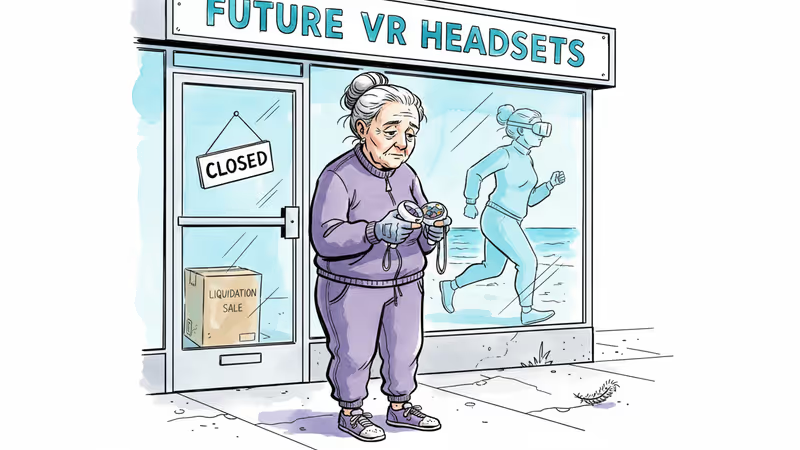
When 69-Year-Old Grandmothers Can't Save Your VR Startup
Meta shuts down VR fitness game Supernatural despite loyal fanbase, signaling a harsh reality check for the VR industry's niche successes.
Sherry Dickson doesn't fit the typical VR user profile. At 69, the retired elementary school teacher straps on her Meta Quest headset five days a week for 60-90 minute sessions. She's not exploring virtual worlds or attending digital concerts—she's working out in Supernatural, a VR fitness game that built one of the most devoted communities in virtual reality.
Now that community is mourning. Meta recently shuttered three VR studios, including Within, the company behind Supernatural. The closure raises an uncomfortable question: if a game with such passionate users couldn't survive, what does that say about VR's future?
The Loyalty That Wasn't Enough
Supernatural represented something rare in the VR space—a product that people used regularly, not just occasionally. Users like Dickson formed tight-knit communities, sharing workout achievements and motivating each other through virtual fitness challenges. The game successfully bridged the gap between gaming and practical health benefits.
Yet passionate users weren't enough to keep the lights on. While exact subscriber numbers remain undisclosed, the game's active online communities suggested a substantial, engaged user base. Meta's decision to close Within anyway signals a harsh reality: niche success doesn't guarantee survival in today's VR market.
The math is brutal. Meta has lost tens of billions on VR investments, and CEO Mark Zuckerberg faces mounting pressure to show returns. In this environment, even profitable niche products become expendable if they don't contribute to massive scale.
The VR Reality Check
Meta's studio closures reflect broader challenges facing the VR industry. Despite years of hype and investment, VR adoption remains stubbornly slow. Most consumers still see VR headsets as expensive gaming accessories rather than essential computing platforms.

The fitness angle seemed promising—it offered practical value beyond entertainment. But competing against established fitness solutions like Peloton, fitness apps, and traditional gyms proved difficult. VR's advantages—immersive environments, gamification—weren't compelling enough to overcome its disadvantages: cost, setup complexity, and social isolation.
For companies like Apple entering the mixed reality space and startups building VR applications, Supernatural's fate serves as a sobering reminder. Technical excellence and user engagement don't automatically translate to business sustainability.
The Innovator's Dilemma in Action
The Supernatural shutdown exemplifies a classic innovator's dilemma. The product succeeded at what it set out to do—make fitness fun and accessible through VR. Users genuinely loved it. But in a world where companies need massive scale to justify continued investment, passionate niche audiences aren't enough.
This dynamic isn't unique to VR. We've seen similar stories across tech: beloved products with small but devoted followings getting axed by larger companies focused on billion-user platforms. Google Reader, Windows Phone, countless startup acquisitions that never saw the light of day.
The difference is that VR was supposed to be different. It was meant to be the next computing platform, not another niche technology. Supernatural's closure suggests that transformation is taking longer—and proving more expensive—than anticipated.
What This Means for VR's Future
Meta's studio closures don't spell doom for VR, but they do suggest a strategic shift. Instead of betting on diverse applications, Meta appears to be doubling down on core gaming and social experiences that can achieve massive scale.
For consumers, this means fewer experimental VR applications in the short term. For developers, it's a reminder that VR success requires not just great user experiences but also clear paths to massive adoption.
The irony is bitter: at a time when VR technology is finally becoming good enough for mainstream use, the business realities are forcing companies to abandon the very applications that demonstrate VR's unique value.
Authors
Related Articles

A law firm marketing itself on AI-powered legal success submitted fake citations in a federal appeal. Now its lawyers face sanctions — and the broader AI legal industry faces a credibility crisis.
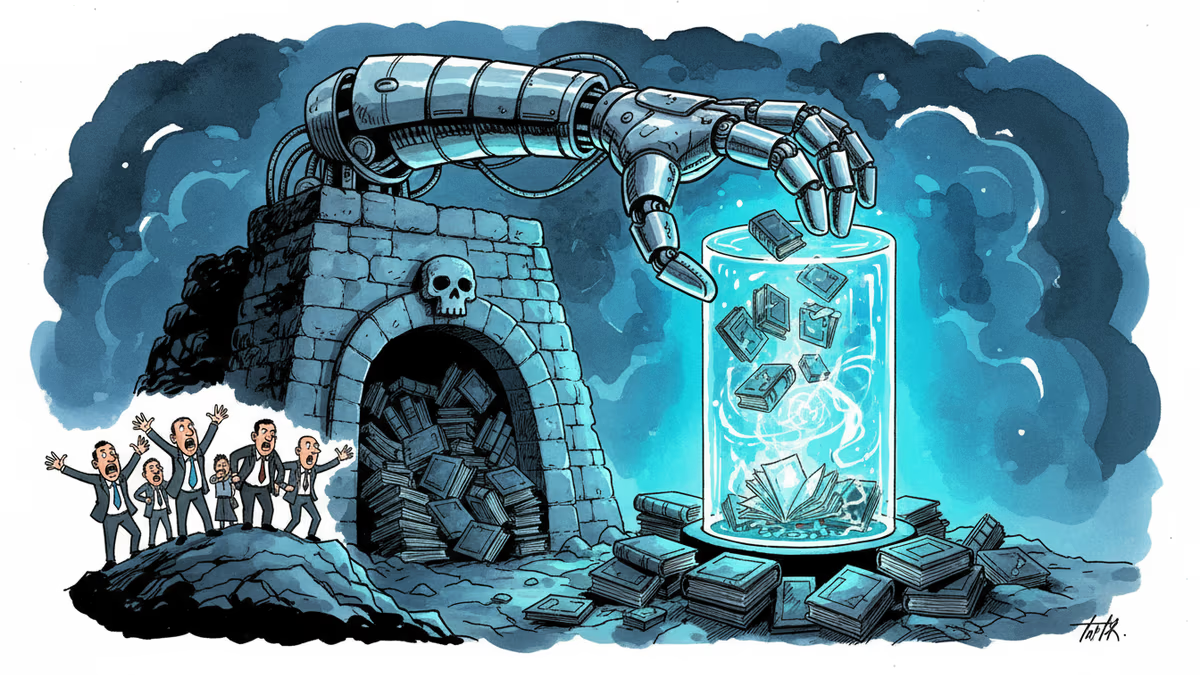
Five major publishers and author Scott Turow have filed a class action lawsuit against Meta, alleging the company used illegal pirate sites like LibGen to train its Llama AI models without permission.

New Mexico already won $375 million from Meta. Now it wants something harder to give: a court order forcing Facebook, Instagram, and WhatsApp to redesign themselves. A three-week trial starts Monday.
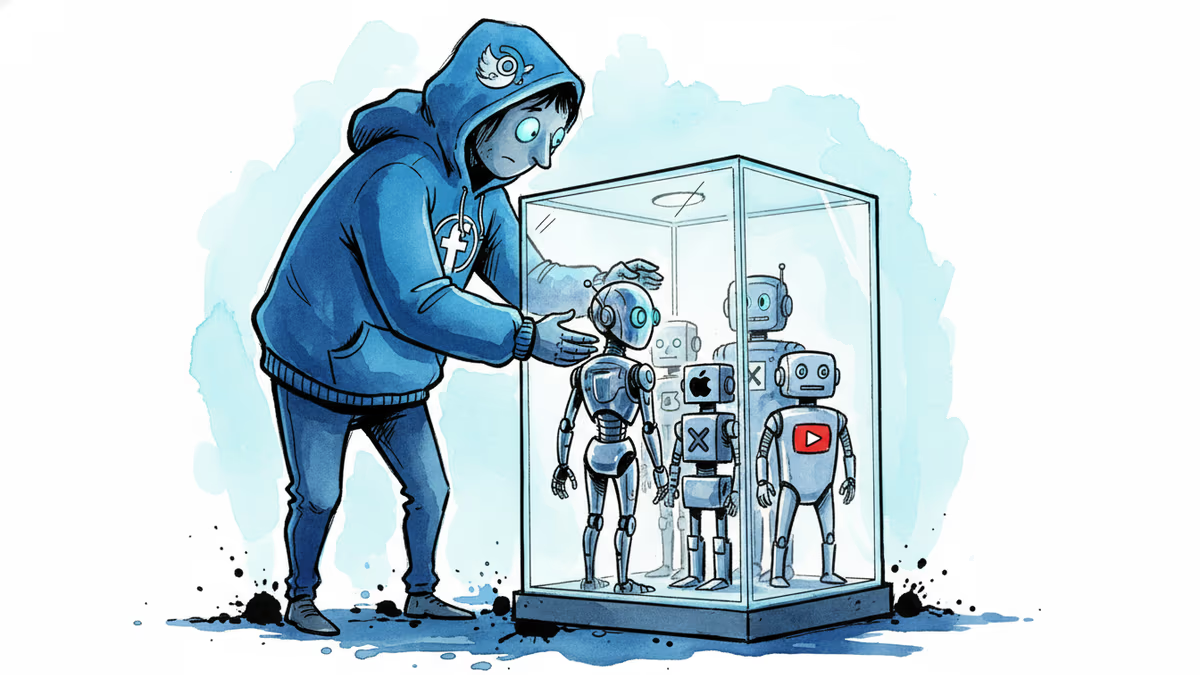
Meta acquired humanoid robotics startup ARI, adding to a Big Tech arms race in physical AI. The real prize isn't a robot product — it's a new way to train intelligence.
A law firm marketing itself on AI-powered legal success submitted fake citations in a federal appeal. Now its lawyers face sanctions — and the broader AI legal industry faces a credibility crisis.
Five major publishers and author Scott Turow have filed a class action lawsuit against Meta, alleging the company used illegal pirate sites like LibGen to train its Llama AI models without permission.
New Mexico already won $375 million from Meta. Now it wants something harder to give: a court order forcing Facebook, Instagram, and WhatsApp to redesign themselves. A three-week trial starts Monday.
Meta acquired humanoid robotics startup ARI, adding to a Big Tech arms race in physical AI. The real prize isn't a robot product — it's a new way to train intelligence.
Thoughts
Share your thoughts on this article
Sign in to join the conversation